The Horn of Africa needs reconciliation, not new borders

Recent arguments advocating for the international recognition of an integral part of Somalia called Somaliland rest on a series of assumptions that deserve closer scrutiny. While proponents portray Somaliland as a unified, stable, and strategically indispensable state deserving immediate recognition, the realities on the ground tell a far more complicated story.
The first and most fundamental misconception is that the former British Somaliland Protectorate exists today as a coherent political entity. It does not.
The territory that briefly gained independence in June 1960 ceased to exist when it voluntarily united with the Trust Territory of Somalia to form the Somali Republic. More importantly, the geographic and political boundaries claimed by today’s Somaliland administration are neither uncontested nor uniformly accepted by the populations living within them.
Over the past two years, the eastern regions of Sool, Sanaag, and parts of Cayn (SSC) have demonstrated precisely this reality. Following prolonged conflict and popular mobilisation, local communities overwhelmingly rejected rule from Hargeisa and established the North Eastern administration, which has since aligned itself with the Federal Government of Somalia. The people of these regions have made clear that they do not share Somaliland’s secessionist project and instead seek their future within a federal Somali state alongside the vast majority of the Somali people. This development alone undermines the central claim that Somaliland represents a unified political community exercising uncontested authority over the territory it claims.
In the west of the Somaliland region, growing political movements in Awdal have increasingly questioned Hargeisa’s perceived monopoly over political and economic decision-making. Calls for a distinct regional administration have gained momentum, reflecting longstanding grievances regarding political representation, economic development, and governance. These dynamics suggest that the future political map of northwestern Somalia is far more fluid than some advocates of recognition acknowledge.
Recognition advocates frequently point to Somaliland’s stability. Yet, stability cannot be measured solely by the existence of institutions or periodic elections. Genuine stability requires political inclusion, territorial legitimacy, and social consensus. None of these conditions currently exists within the Somali territory of Somaliland.
The reality is that the Somaliland secessionist project faces significant internal opposition. Political disagreements, clan-based tensions, territorial disputes, and competing visions of governance remain unresolved. International recognition cannot erase these challenges. Indeed, it risks intensifying them by encouraging zero-sum political calculations among communities that already feel excluded from decision-making processes.
Equally problematic is the argument that Somaliland’s recognition should be driven primarily by geopolitical competition in the Red Sea. The Horn of Africa should not become another arena where local political disputes are transformed into instruments of broader regional rivalries. Moreover, the attempts to frame Somaliland as a strategic asset in competition with Iran, the Houthis, China, or other global actors overlook a basic reality: sustainable security arrangements cannot be built on unresolved sovereignty disputes.
History offers numerous examples of external powers pursuing short-term strategic gains only to discover that local realities ultimately prevail. Durable partnerships emerge from political legitimacy and regional consensus, not from efforts to bypass internationally recognised states.
Recent developments surrounding Israel’s engagement in the region further illustrate this danger. Rather than producing greater cohesion, external involvement has generated new political tensions and heightened anxieties among local communities concerned about militarisation, foreign influence, and the future direction of regional governance.
The disingenuous assumption that foreign recognition of the Somaliland part of Somalia automatically translates into stability is not supported by any evidence. Moreover, recognition of Somaliland would not simply affect Somalia, as it would carry implications far beyond the Horn of Africa.
The African Union has consistently maintained its commitment to preserving inherited borders and resolving disputes through dialogue. This principle has been essential in preventing countless territorial conflicts across the continent. Creating exceptions without a broad regional consensus risks opening debates that many African states have spent decades working to contain.
The path to lasting peace and stability in Somalia, like in most post-conflict states, lies not in fragmentation but in reconciliation, dialogue, and constitutional settlement among Somalis themselves. Significant progress has already been made through federal institutions, expanding political participation, and locally driven governance arrangements. While challenges remain, they are best addressed through inclusive internal political processes rather than externally imposed outcomes in line with international law.
The Somali government remains committed to dialogue, reconciliation, and constitutional processes that allow all Somali communities to participate in shaping the country’s future. Sustainable peace and stability globally and, specifically, in the Horn of Africa at this most challenging time in human history will be achieved not through fragmentation, but inclusive political solutions that strengthen cooperation, legitimacy, and national unity.
The views expressed in this article are the author’s own and do not necessarily reflect Al Jazeera’s editorial stance.
Related Topics
Keywords
Related Stories
UN peacekeeping mission in Western Sahara ends after 35 years, UN chief says
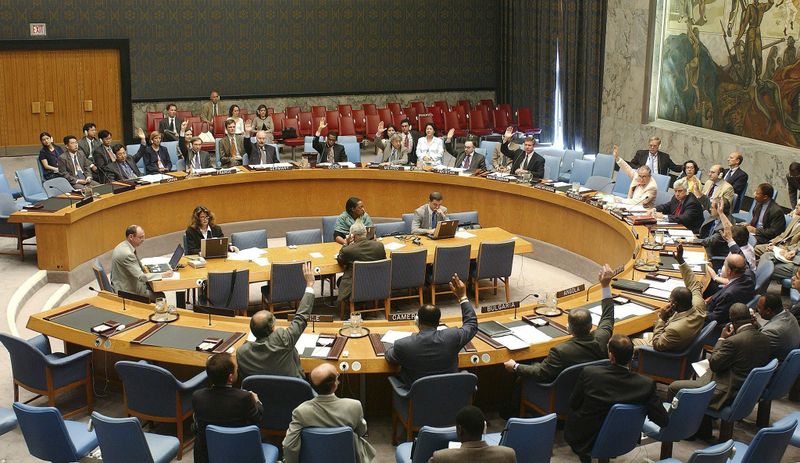
Nov 1 (Reuters) - The 35-year-old UN peacekeeping mission in the Western Sahara region will come to an end after the Security Council failed to renew its mandate, the UN chief said on Sunday.
CONGRESS IN THE BALANCE: A blue tsunami, a tide, or chaos as usual — the US midterm election
With just hours to go before the American midterm election takes place, the day before South Africa’s own local election, control of both houses of the American Congress hangs in the balance.
DIVISIVE WORDS: ‘We never called for literal killing’ — Malema appeals for farm killings to stop.
EFF leader Julius Malema says the chant “Kill the boer, kill the farmer” was never meant literally and has appealed for farm killings to stop.
TRC ROULETTE : Victims’ families place key hidden evidence before Khampepe inquiry
A physical inspection of old lever arch files by the legal team representing the families of apartheid victims at the Khampepe Commission strengthens Anton Ackermann’s claim that a disputed 2006 memo was forged, reshaping the Khampepe inquiry into delayed apartheid prosecutions.

Top Stories
UN peacekeeping mission in Western Sahara ends after 35 years, UN chief says

Week 8 overreactions: Time for Vikings to bench Kyler Murray? Colts should fire Steichen?

NFL Week 8 winners and losers: Cowboys suffer epic collapse, Joe Burrow delivers historic heroics

How Antonelli 'blew everyone away' to make Formula 1 history

Why is Ashton Jeanty not getting carries? Another Raider emerges as Vegas' top RB in Week 8

Russia and Ukraine accuse each other of hacking emergency alert apps

NFL Week 8 grades for every team: Cowboys get an 'F' for choking, Steelers surge to 'A+'

Ukraine air raid app apparently hacked as users receive false radiation threat, Air Force says
Latest
UN peacekeeping mission in Western Sahara ends after 35 years, UN chief says
Week 8 overreactions: Time for Vikings to bench Kyler Murray? Colts should fire Steichen?
NFL Week 8 winners and losers: Cowboys suffer epic collapse, Joe Burrow delivers historic heroics
How Antonelli 'blew everyone away' to make Formula 1 history
Why is Ashton Jeanty not getting carries? Another Raider emerges as Vegas' top RB in Week 8
Russia and Ukraine accuse each other of hacking emergency alert apps
NFL Week 8 grades for every team: Cowboys get an 'F' for choking, Steelers surge to 'A+'
Ukraine air raid app apparently hacked as users receive false radiation threat, Air Force says