Thembekwayo, Hinton offer small businesses a roadmap to growth in new book

Globally acclaimed entrepreneur and speaker Vusi Thembekwayo has challenged the belief that bigger businesses have an inherent advantage over smaller competitors, detailing that strategy, execution, and access to capital are critical to building sustainable enterprises.
Thembekwayo makes the case in 'Underdogs: How Small Players Can Become Business Titans', co-authored with business adviser and finance educator Michael Hinton and published by Jonathan Ball Publishers.
The book delves into how smaller businesses can compete against established companies by identifying market opportunities, responding to customer needs and using their limited resources strategically.
However, Thembekwayo said the book did not seek to romanticise the challenges facing small businesses or suggest that determination alone could overcome financial and operational constraints.
“One of the things we were careful not to do in the book was to romanticise the challenges of running a small business. The book is not about saying to the reader no challenges are running a business.”
Instead, the authors examine businesses that have competed against larger players, drawing lessons that entrepreneurs can apply to their own circumstances.
“If you’re running a small business and you are an underdog, this is a practical guide about what other underdogs did and what you can learn from them,” Thembekwayo said.
The book also challenges the conventional pursuit of becoming the biggest player in a market, explaining that smaller businesses can build a competitive position by understanding their customers, identifying gaps in the market and developing systems that support growth.
But in South Africa, where access to funding remains a major concern for entrepreneurs, Thembekwayo said sound ideas and effective business strategies had to be matched by adequate financial resources.
“To be clear, those are not competing, those are not mutually exclusive. So it’s not that you either need good ideas and good strategy or you need funding. You need all of those.”
He said businesses also needed capable management teams, effective execution, operational excellence, continuous improvement and the ability to attract skilled employees.
“There is no universe where a limitation of funding resources does not constrain the growth of a business,” he said.
Thembekwayo cited research putting South Africa’s funding gap for micro, small and medium-sized enterprises at $350 billion. He also pointed to an increase in the number of funding providers and products, arguing that this had not resolved the financing challenges confronting businesses.
“What South Africa needs is patient, early-stage risk capital,” he said, calling for banks and the state to play a role in providing funding to businesses at earlier stages of development.
He argued that the timing of funding was as important as its availability, particularly for entrepreneurs seeking to move from establishing a business to expanding its operations.
“Money itself is not the constraint. It’s when the money finds you.”
Thembekwayo said the ability to scale was another factor separating businesses that grow from those that remain focused on survival.
“Scale is a science. Scale is not a wish. Scale is not a religion. Scale is science,” he said.
He identified five areas entrepreneurs should prioritise: strategy, customers and competitors, autonomy and automation, leadership, and energy.
These include establishing a clear business strategy, understanding the target market, developing systems and standard operating procedures, investing in employee development and building leadership capacity.
“You cannot scale beyond yourself. That doesn’t happen,” he said, asserting that entrepreneurs had to develop their leadership abilities rather than remain the sole drivers of their businesses.
The book draws on companies including Nando’s, Canva, and Under Armour to illustrate how businesses have identified opportunities and built their market positions.
Thembekwayo cited Nando’s as an example of founders backing an unconventional vision, while Canva demonstrated the importance of positioning a business within an ecosystem that offers access to networks and opportunities.
“There is no amount of ingenuity and character that can outcompete ecosystem,” he said, arguing that entrepreneurs needed to consider where they operated and how close they were to customers and potential partners.
Hinton, who has spent more than 25 years working with leading African brands and corporate boardrooms and lectures at the Gordon Institute of Business Science (GIBS), said the lessons in the book were directly relevant to owners of small and medium-sized businesses.
“None of the businesses in this book began with perfect circumstances. What they had was the discipline to keep going and the willingness to do things differently from the big players. That is available to any business owner, whatever the size of the business,” Hinton said.
Related Topics
Keywords
Related Stories
Okorocha chasing shadows, Uzodimma says, vows to appeal court judgement
Uzodimma dismisses Okorocha’s court victory as temporary, describes the former governor as “chasing shadows” and vows to overturn the judgement on appeal. The post Okorocha chasing shadows, Uzodimma says, vows to appeal court judgement appeared first on Premium Times Nigeria.

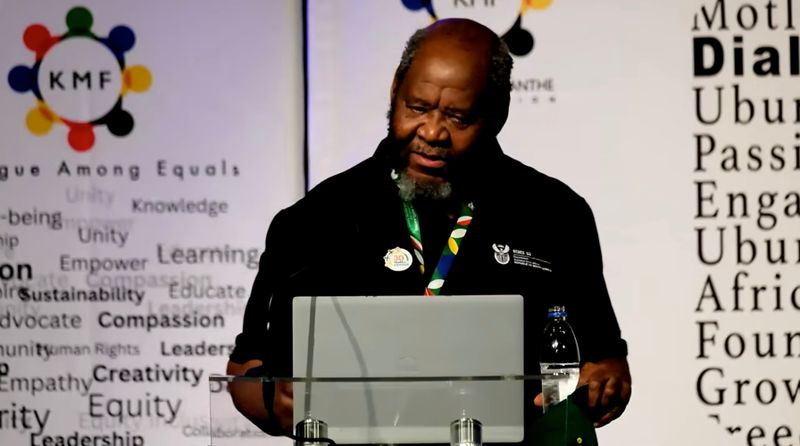
POLITICIANS PUMMELLED: SA’s path to ‘no future’ — former statistician-general Lehohla slams ‘performative’ politics
Former statistician-general Pali Lehohla didn’t mince his words at the annual Kgalema Motlanthe Foundation’s Inclusive Growth Forum, warning that South Africa’s democracy is fragmenting, and condemning ANC policies, economic inequality and mining dependence.
ANALYSIS: New mayors beware — SA’s local government revolt is waiting for a spark
Whoever takes power in Johannesburg may inherit more than a governance crisis: a deepening crisis of legitimacy.

South-East governors urge Ndigbo to shun deception and vote for Tinubu in 2027
Governors of Enugu, Anambra, Ebonyi and Imo states renew call on the people of South-East zone to vote massively for President Bola Tinubu in the 2027 presidential election The post South-East governors urge Ndigbo to shun deception and vote for Tinubu in 2027 appeared first on…

Top Stories
Okorocha chasing shadows, Uzodimma says, vows to appeal court judgement
POLITICIANS PUMMELLED: SA’s path to ‘no future’ — former statistician-general Lehohla slams ‘performative’ politics
ANALYSIS: New mayors beware — SA’s local government revolt is waiting for a spark

Mets legend Jerry Koosman dies at 83: Pitcher helped New York win 1969 World Series
South-East governors urge Ndigbo to shun deception and vote for Tinubu in 2027

Democrat endorses Republican candidate in key Michigan Senate race as party spat escalates

Lamar Jackson exits game with injury: Ravens QB ruled out vs. Bills after just one play

In Zamfara, 9 a.m is 9 a.m: How Lawal is killing ‘African time’ mentality, By Yusuf Ladan
Latest
Okorocha chasing shadows, Uzodimma says, vows to appeal court judgement
POLITICIANS PUMMELLED: SA’s path to ‘no future’ — former statistician-general Lehohla slams ‘performative’ politics
ANALYSIS: New mayors beware — SA’s local government revolt is waiting for a spark
Mets legend Jerry Koosman dies at 83: Pitcher helped New York win 1969 World Series
South-East governors urge Ndigbo to shun deception and vote for Tinubu in 2027
Democrat endorses Republican candidate in key Michigan Senate race as party spat escalates
Lamar Jackson exits game with injury: Ravens QB ruled out vs. Bills after just one play
In Zamfara, 9 a.m is 9 a.m: How Lawal is killing ‘African time’ mentality, By Yusuf Ladan