Titans trade Jeffery Simmons, join Jets and Browns in draft stockpile: History offers hope -- and a warning
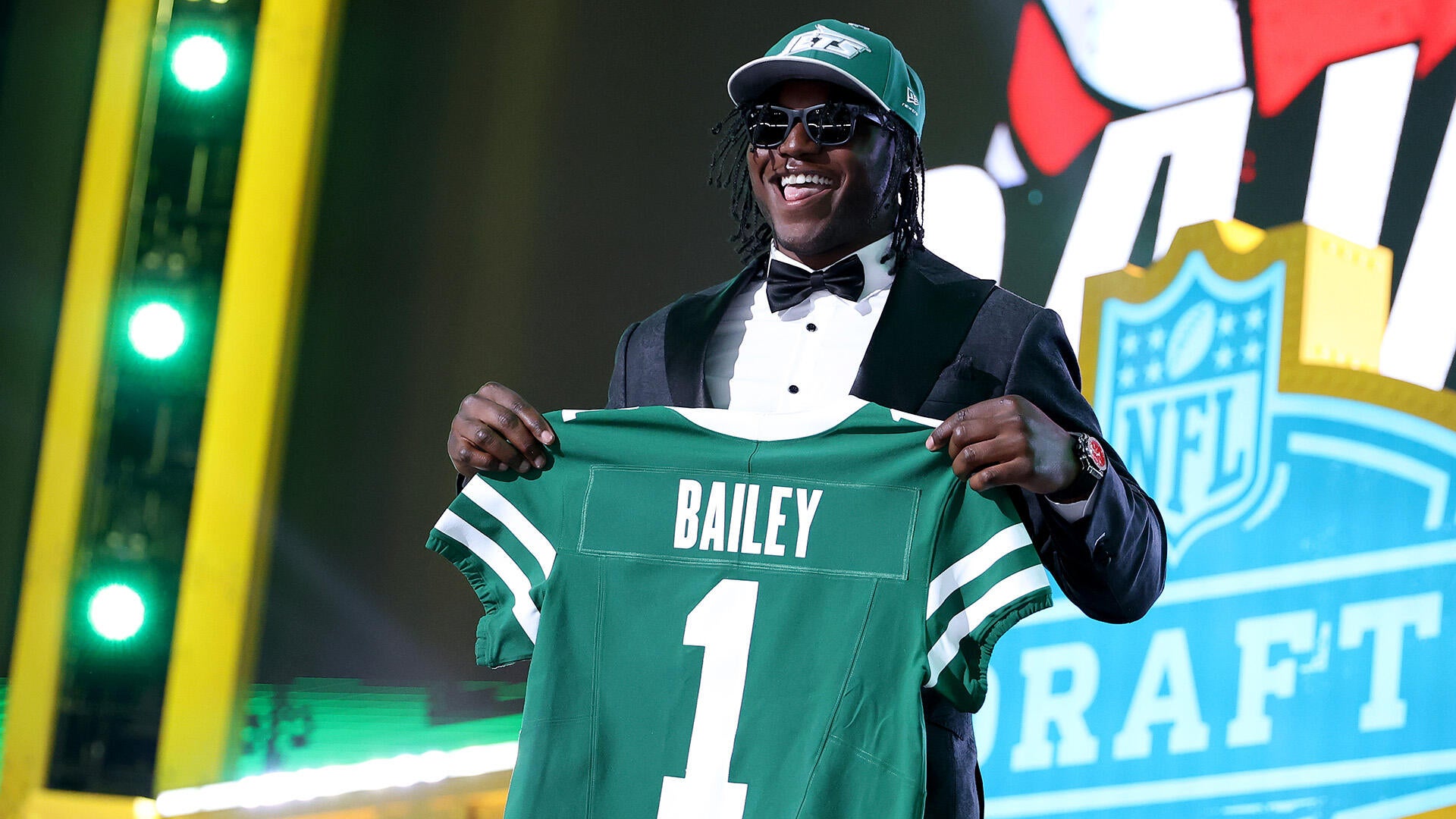
Three of the NFL's most recent Super Bowl champions have something in common. The Chiefs used two first-round picks in 2022 on Trent McDuffie and George Karlaftis, then won back-to-back championships. The Eagles took Jalen Carter and Nolan Smith in 2023 and won the Super Bowl two seasons later. And the Seahawks also drafted Devon Witherspoon and Jaxon Smith-Njigba in 2023, with both developing into stars before Seattle won it all in February.
But there's another side to this story, and the New York Jets know it all too well. They had three first-round selections in 2022, landed some pretty good players, and somehow never made the playoffs. Four seasons later, only one of those players remains on the roster.
The Cleveland Browns have been down this road, too. They made five first-round picks across the 2017 and 2018 drafts, eventually won a playoff game, but couldn't sustain that success. And now the Tennessee Titans are joining the party. With a 1-6 record, the No. 2 overall pick in 2027 as we sit here and two additional first-round selections coming from Chicago in exchange for Jeffery Simmons, Tennessee has gone all-in on accumulating draft capital. The Jets and Browns have plenty of picks of their own.
So what separates the teams that turn extra first-round picks into championships from those that find themselves starting over? Having Patrick Mahomes certainly helps, but not every Super Bowl winner needs a first-ballot Hall of Famer under center. Put differently: How much comes down to making the right picks, and how much depends on everything else?
To answer that, we went back through every NFL Draft since 2000 and found 103 instances in which a team had multiple first-round picks. In all, those teams selected 216 players, including 25 quarterbacks. And as we've seen play out in real time, there's a big difference between finding good players and building a winning football team.
2022 Jets: Three first-rounders, zero playoff appearances
It's easy to forget how promising the Jets' 2022 draft looked. They took Sauce Gardner fourth overall, Garrett Wilson at No. 10 and then traded back into Round 1 for Jermaine Johnson at No. 26. Gardner and Wilson were named Defensive and Offensive Rookie of the Year, while Johnson became a Pro Bowler in his second season.
Three first-round selections, two Rookie of the Year winners and a Pro Bowl pass rusher. You can't really draw it up any better than that.
The individual success, however, didn't translate to wins. The Jets went 7-10 in 2022 and 2023, then 5-12 and 3-14 the following two seasons. They cycled through quarterbacks, fired head coach Robert Saleh during the 2024 season and eventually moved on from general manager Joe Douglas, too. Then came the roster reset. Gardner was traded to Indianapolis in November 2025 for two first-round picks and receiver Adonai Mitchell. Johnson, who suffered a torn Achilles in 2024, was dealt to Tennessee for defensive tackle T'Vondre Sweat in March 2026. Only Wilson remains.
From a scouting standpoint, it's hard to call the 2022 draft a failure. But from a team-building standpoint? Four losing seasons, no playoffs, a fired coach and GM, and two of those three first-rounders playing elsewhere tell a different story.
The Jets, you might remember, weren't the only New York team with multiple first-rounders that year.
2022 Giants: Two top-seven selections, one massive miss
The Giants selected Kayvon Thibodeaux fifth overall and Evan Neal two picks later, hoping they had found an edge rusher and a franchise offensive tackle. Outside of quarterback, those are the two most valuable positions on the field, and to solve them early in the first round certainly made sense.
New York made the playoffs in 2022 and even won a playoff game. But after that 9-7-1 season, the Giants won just six, three and four games over the following three years. Thibodeaux, while he hasn't lived up to lofty expectations, has shown he can get after the quarterback, including an 11.5-sack season in 2023. Neal, meanwhile, struggled with injuries and inconsistent play at right tackle, prompting the Giants to move him to guard in 2025. He didn't play a snap that season because of a hamstring injury, was released before the 2026 season and is now on the Raiders' practice squad.
The Jets' problem wasn't necessarily identifying talented players. The Giants' problem was that one of their two premium selections failed to deliver. Different circumstances, same disappointing result.
And recent history offers plenty of contrasting examples.
Recent teams with multiple first-round picks: What happened next?
Draft
Team
First-round selections
Wins by season after draft
Playoff appearances
2022
Chiefs
Trent McDuffie, George Karlaftis
14, 11, 15, 6
3; 2 Super Bowl titles
2022
Lions
Aidan Hutchinson, Jameson Williams
9, 12, 15, 9
2
2022
Jets
Sauce Gardner, Garrett Wilson, Jermaine Johnson
7, 7, 5, 3
0
2022
Giants
Kayvon Thibodeaux, Evan Neal
9, 6, 3, 4
1
2022
Ravens
Kyle Hamilton, Tyler Linderbaum
10, 13, 12, 8
3
2023
Texans
C.J. Stroud, Will Anderson Jr.
10, 10, 12
3
2023
Lions
Jahmyr Gibbs, Jack Campbell
12, 15, 9
2
2023
Eagles
Jalen Carter, Nolan Smith
11, 14, 11
3; Super Bowl title
2023
Seahawks
Devon Witherspoon, Jaxon Smith-Njigba
9, 10, 14
1; Super Bowl title
2024
Bears
Caleb Williams, Rome Odunze
5, 11
1
2024
Vikings
J.J. McCarthy, Dallas Turner
14, 9
1
2024
Cardinals
Marvin Harrison Jr., Darius Robinson
8, 3
0
The Lions and Texans: How to rebuild with extra picks
Detroit and Houston were in very different situations when they entered their respective drafts, but both offer examples of how quickly things can change when a franchise gets it right.
The Lions were coming off a 3-13-1 season when they selected Aidan Hutchinson second overall in 2022, then traded up to No. 12 for Jameson Williams. Detroit improved to 9-8 that fall, and a year later, the Lions were back in the first round with two more selections, taking running back Jahmyr Gibbs at No. 12 and linebacker Jack Campbell at No. 18.
Four first-rounders in two drafts, and the results soon followed. Detroit went 12-5 in 2023 and reached the NFC Championship Game, then won 15 games the following season. Hutchinson became one of the NFL's best pass rushers, Gibbs emerged as one of the NFL's best backs, and Williams and Campbell developed into important contributors.
What made Detroit's turnaround different was that it didn't need to find a quarterback. Jared Goff arrived in the 2021 Matthew Stafford trade, seemingly a throw-in alongside the two first-rounders the Lions received from the Rams. But GM Brad Holmes knew Goff from their time together in LA, and while the Rams were ready to move on, Holmes believed he could still be a franchise quarterback. So instead of drafting his replacement, the Lions built around him.
Houston, meanwhile, needed a quarterback. Coming off a 3-13-1 season, the Texans selected CJ Stroud second overall in 2023, then traded up one spot later for Will Anderson Jr., and it wasn't cheap. Houston sent Arizona picks 12 and 33 that year, plus first- and third-rounders in 2024. But Anderson has been so good that no one even thinks to bring up what the Texans gave up to get him.
The payoff was immediate: Houston went 10-7 in each of the next two seasons, then 12-5 in 2025, making the playoffs all three years. Stroud and Anderson became foundational pieces, even if Stroud couldn't quite match his brilliant rookie season in '24 and '25. And hiring DeMeco Ryans before that draft was just as important. The Texans found their quarterback, improved their pass rush and put a coaching staff in place that could develop the rest of the roster.
The Chiefs, Eagles and Seahawks: How good teams stayed good
There's another advantage to having multiple first-round selections: Sometimes a team doesn't need to rebuild at all.
The Chiefs were coming off a 12-5 season when they traded Tyreek Hill to Miami in March 2022 for a package that included a first-round pick. They used some of that capital to move up for McDuffie at No. 21, then selected Karlaftis at No. 30. Kansas City also signed JuJu Smith-Schuster and Marquez Valdes-Scantling, who combined for 1,620 receiving yards that season, while Travis Kelce added another 1,338 yards and 12 touchdowns.
(By the way, Hill picked up where he left off; in Miami, he caught 119 passes for 1,710 yards and seven touchdowns. The Dolphins finished 9-8 and reached the playoffs but lost to Buffalo in the Wild Card round with Skylar Thompson starting in place of an injured Tua Tagovailoa. Meanwhile, the Chiefs still won the Super Bowl without one of the NFL's most dynamic players.)
Kansas City led the NFL in scoring in 2022, Mahomes won MVP, and the Chiefs repeated as Super Bowl champions the following season. McDuffie and Karlaftis became important pieces of the defense, but the bigger story was how Kansas City retooled both sides of the ball without missing a beat. Having Mahomes and Andy Reid certainly helped (a lot), but the Chiefs also found a way to replace Hill's production while adding young, inexpensive defensive talent.
Philadelphia followed a similar path. Coming off their Super Bowl appearance, the Eagles landed Carter at No. 9 and Smith at No. 30 in 2023, then won the whole thing following the 2024 season. Carter developed into a disruptive interior defender, while Smith gave Philadelphia another young pass rusher for a defense that overwhelmed Kansas City in Super Bowl LIX.
Seattle's 2023 class might be the most impressive of the group. Witherspoon, selected fifth overall, quickly became one of the league's top cornerbacks. Smith-Njigba, taken 20th, has developed into one of the NFL's most productive receivers and was named Offensive Player of the Year in 2025, the same season the Seahawks went 14-3 and won Super Bowl LX.
What's different about Seattle is that it didn't have the established quarterback-coach combo that Kansas City, or even Philadelphia, enjoyed during their title runs. The Seahawks changed coaches after 2023, eventually brought in Sam Darnold and still managed to build a championship roster around young stars on both sides of the ball.
Baltimore took a similar approach in 2022, drafting safety Kyle Hamilton at No. 14 and center Tyler Linderbaum at No. 25. Both developed into Pro Bowl players, and while the Ravens haven't reached the Super Bowl with that duo, they made the playoffs in three of their first four seasons. With Lamar Jackson already entrenched as an MVP-winning franchise quarterback, Baltimore could use both first-round picks to strengthen an already-talented roster.
What does the historical evidence tell us?
The recent success stories are equal parts impressive and fun to revisit, but they're hardly representative of what usually happens when struggling teams accumulate first-round picks.
Of the 44 struggling teams (six or fewer wins) that had multiple first-round picks since 2000, 86% improved by roughly three wins or more in at least one of the next three seasons. But only 34% had two winning seasons and made the playoffs during that stretch.
The numbers get even more telling: Over the next five seasons, struggling teams with multiple first-round picks won 44.9% of their games. Struggling teams with just one first-rounder? They won 45.6%. Basically, no difference.
For teams that were already winning, though, the results were more encouraging. Those with multiple first-round picks won 57% of their games over the next five seasons, compared with 52.1% for teams with just one.
That stability matters. Consider this: Of the 23 rebuilding teams with multiple first-round picks between 2012 and 2023, only six still had the same head coach three drafts later. Just 11 had the same GM.
That's part of what makes rebuilding so difficult. Teams spend years trying to find and develop young talent, but the coaches and executives responsible for those decisions often aren't around long enough to see it through.
What does the Simmons trade mean for Tennessee's rebuild?
If the Titans are curious about how stockpiling picks can expedite a turnaround, they don't need to look far. They've already done it once.
After going 3-13 in 2015, Tennessee traded the No. 1 overall pick to the Rams for a draft haul. The Titans used those picks to help land Jack Conklin and Derrick Henry, then went 9-7 in each of the next two seasons and won a playoff game in 2017, their first postseason victory in 14 years.
A decade later, they're running it back. Tennessee just sent Simmons to Chicago for first-round picks in 2027 and 2028, plus a fourth-rounder in 2027. Heading into Week 8, the Titans have the No. 2 pick in the '27 draft, along with the 28th selection courtesy of the Bears.
But here's where history offers a reality check. Of the 44 struggling teams with multiple first-round picks since 2000, 86% improved significantly within three years. Just 34% managed two winning seasons and a playoff appearance in that span. And over the next five seasons, those teams actually won at a slightly lower rate than similarly bad teams with only one first-round pick.
Which brings us to Cam Ward.
The Titans used the No. 1 overall pick on Ward in 2025, and while his first 24 starts have been all over the map, the team isn't ready to give up on him. Ward is 4-20 as a starter, and through those first 24 games, he ranked 51st among 56 first-round quarterbacks in EPA per dropback and 52nd in yards per attempt. The good news? Five of the six quarterbacks with similarly poor starts improved over their next 22 games. The bad news? Only two managed to get their EPA per dropback into positive territory.
But given the uneven play of the 2027 quarterback class, the Titans would be better served surrounding Ward with talent rather than starting over at the position. Imagine adding Ohio State's Jeremiah Smith, undoubtedly the best player in the '27 class, to an offense that already features his former Buckeyes teammate Carnell Tate. In this particular case, "Start there and figure the rest out later" isn't a terrible strategy.
It's an approach that worked for Detroit, which built around Jared Goff, and Houston, which drafted CJ Stroud and immediately surrounded him with young talent. Both became playoff contenders in short order.
And that's the gamble. Simmons was already an All-Pro. Tennessee is betting the picks it got in return will help build something better. But as the Jets and Browns have learned, there's a big difference between accumulating first-round picks and turning them into a winning football team.
Can the Browns, Jets and Titans turn draft capital into sustained success?
If there's a franchise that knows the difference between collecting first-round picks and building a consistent winner, it's the Browns. They made five first-round selections across the 2017 and 2018 drafts, landing Myles Garrett, David Njoku, Baker Mayfield and Denzel Ward, among others. Cleveland eventually went 11-5 in 2020 and won its first playoff game since the 1994 season. But the success didn't last, and Mayfield was gone before the 2022 season.
Now Cleveland gets another shot. The Browns have added promising young players in Mason Graham, Carson Schwesinger, Quinshon Judkins, Harold Fannin Jr., Spencer Fano and KC Concepcion over the last two drafts. And after trading Garrett to the Rams for Jared Verse and a haul of draft picks, GM Andrew Berry has two first-round selections in 2027 to continue the rebuild. The question remains the same one that's followed this franchise for years: Can they finally get the quarterback position right?
The Jets know the feeling. Their celebrated 2022 draft produced Sauce Gardner, Garrett Wilson and Jermaine Johnson, but not a single playoff appearance. Now Gardner and Johnson are gone, New York has three more first-round picks in 2027, and the organization has another chance to turn premium selections into something more than individual success.
Which brings us to Tennessee. The Titans already spent the No. 1 overall pick on Ward, and the Simmons trade gives them more opportunities to surround him with talent. Maybe that starts with Jeremiah Smith. Either way, the Titans have made their bet at QB, and the next two drafts could determine whether it pays off.
And here's what stands out about the history: Most bad teams with multiple first-round picks eventually get better. But getting better and building a consistent winner are two very different things. Some find their franchise quarterback and quickly become contenders. Others draft really good players ... and somehow find themselves right back where they started a few years later.
That's the challenge facing the Browns, Jets and Titans. Finding talented players isn't necessarily the problem. It's building something sustainable around them, ideally before the coaches and executives responsible for those decisions are shown the door.
Because accumulating first-round picks is one thing. Turning them into a winning football team has proven to be something else entirely.
NFL Draft gambles: What Jets, Browns can learn from Super Bowl winners Ryan Wilson 13 min read
Colts are tearing it all down, but there's one major problem Ryan Wilson 8 min read
Prisco's Week 8 picks: Packers over Panthers, Lions beat Vikings Pete Prisco 6 min read
Packers over Panthers, and other picks for top Week 8 games Jordan Dajani 10 min read
NFL Week 8's five best upset opportunities: Can Lamar stun Bills? Tyler Sullivan 6 min read
Titans trade All-Pro Jeffery Simmons to Bears
Bryan DeArdo 1 min readJeffery Simmons trade grades: Bears keep pace with 49ers in NFC race Bryan DeArdo 3 min read
Ranking top NFL trade chips, from Jonathan Taylor to depth rentals Jordan Dajani 1 min read
Update on Lamar Jackson's injury status vs. Bills
Bryan DeArdo 1 min readIt wouldn't shock me if ... for NFL Week 8: Colts split Taylor's reps Tyler Sullivan 8 min read
Keywords
Related Stories
Week 8 overreactions: Time for Vikings to bench Kyler Murray? Colts should fire Steichen?
Plus, does the NFC South run through the Buccaneers?
NFL Week 8 winners and losers: Cowboys suffer epic collapse, Joe Burrow delivers historic heroics
Burrow produced a historic six-touchdown performance, while the Cowboys squandered a late lead and the Ravens endured another devastating Lamar Jackson injury
How Antonelli 'blew everyone away' to make Formula 1 history
Kimi Antonelli seems destined for Formula 1 greatness after winning his first world title, writes Andrew Benson.

Why is Ashton Jeanty not getting carries? Another Raider emerges as Vegas' top RB in Week 8
Jeanty's rushing workload continues to decrease on a weekly basis
Top Stories
Week 8 overreactions: Time for Vikings to bench Kyler Murray? Colts should fire Steichen?
NFL Week 8 winners and losers: Cowboys suffer epic collapse, Joe Burrow delivers historic heroics
How Antonelli 'blew everyone away' to make Formula 1 history
Why is Ashton Jeanty not getting carries? Another Raider emerges as Vegas' top RB in Week 8

Russia and Ukraine accuse each other of hacking emergency alert apps
NFL Week 8 grades for every team: Cowboys get an 'F' for choking, Steelers surge to 'A+'

Ukraine air raid app apparently hacked as users receive false radiation threat, Air Force says

Binance users withdraw $3.6bn after record crypto hack
Latest
Week 8 overreactions: Time for Vikings to bench Kyler Murray? Colts should fire Steichen?
NFL Week 8 winners and losers: Cowboys suffer epic collapse, Joe Burrow delivers historic heroics
How Antonelli 'blew everyone away' to make Formula 1 history
Why is Ashton Jeanty not getting carries? Another Raider emerges as Vegas' top RB in Week 8
Russia and Ukraine accuse each other of hacking emergency alert apps
NFL Week 8 grades for every team: Cowboys get an 'F' for choking, Steelers surge to 'A+'
Ukraine air raid app apparently hacked as users receive false radiation threat, Air Force says
Binance users withdraw $3.6bn after record crypto hack