Tracking global energy transition readiness
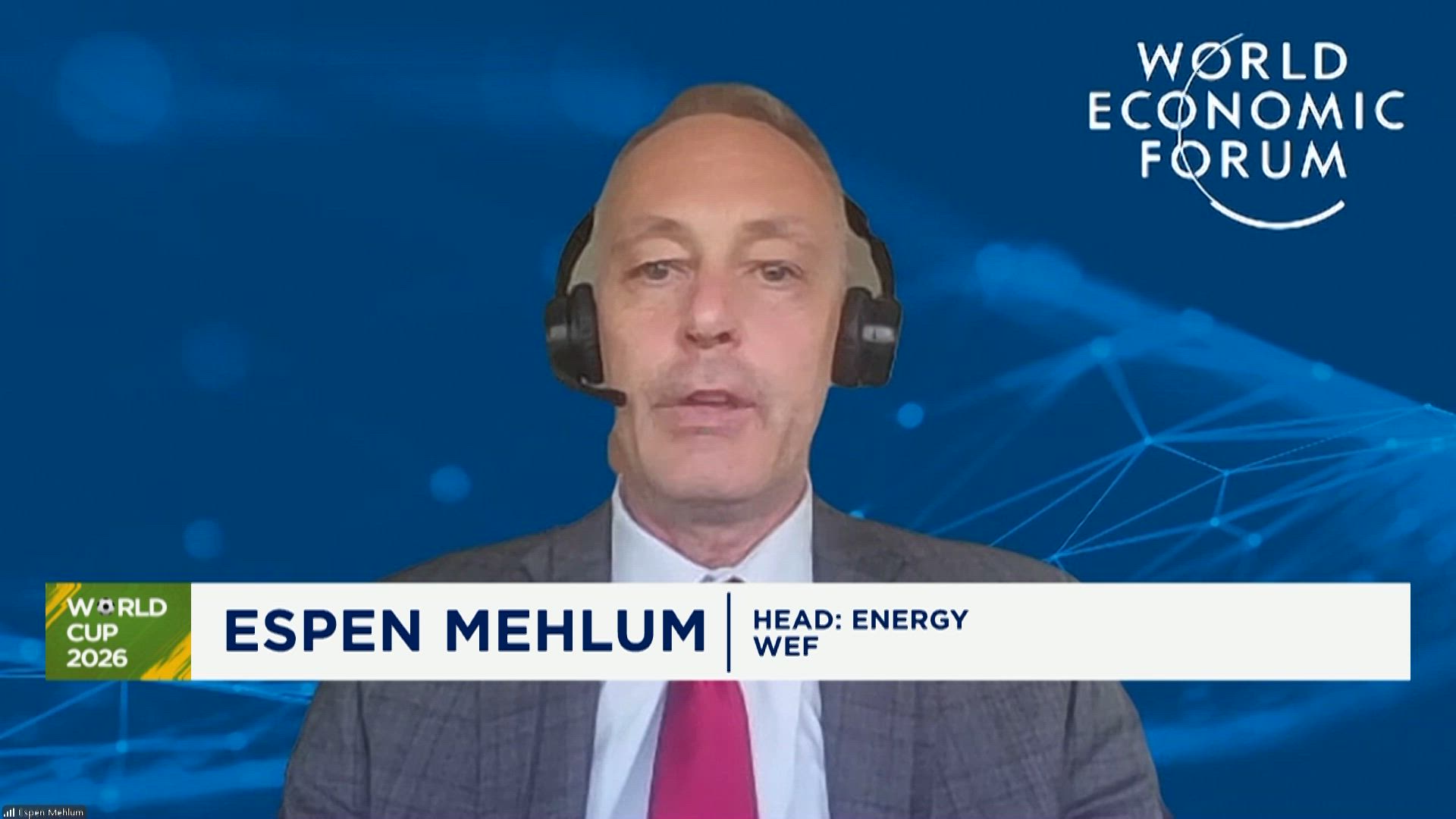
 Tracking global energy transition readiness Sub-Saharan Africa has emerged as the world's most improved region in the energy transition this year, according to the World Economic Forum's Energy Transition Index 2026. The report points to growing momentum across the continent, even as progress remains uneven globally and a widening gap emerges between leading and lagging regions. South Africa continues to rank among Africa's strongest performers despite ongoing energy challenges. To unpack the key findings and what they mean for the continent's energy future, CNBC Africa is joined by Espen Mehlum, Head of Energy at the Centre for Energy and Materials at the World Economic Forum.Thu, 18 Jun 2026 11:48:17 GMTAI SummaryDisclaimer: The following content is generated automatically by a GPT AI and may not be accurate. To verify the details, please watch the videoAI Generated SummaryKey Points:
- The World Economic Forum’s Energy Transition Index 2026 identified sub-Saharan Africa as the world’s most improved region.
- The index evaluates 120 countries on energy security, sustainability, affordability and transition readiness.
- Global energy transition progress has stalled, with enabling conditions weakening for the first time in a decade.
- Geopolitical tensions and supply disruptions are contributing to fragmentation and slowing momentum.
- Only one in four countries improved across security, sustainability and affordability simultaneously.
- Sub-Saharan Africa posted strong gains in readiness indicators including finance, education, human capital and innovation.
- Global energy investment totaled $3.3 trillion last year, with $2.3 trillion directed toward clean energy.
- The WEF said energy investment remains insufficient and overly concentrated in China, advanced economies and India.
- South Africa remains one of Africa’s strongest performers despite persistent challenges tied to coal emissions and system resilience.
- Kenya and India were highlighted as examples of how long-term policy clarity and investment can drive strong transition gains.
- Nigeria, Tanzania and Namibia were identified as African countries that appear well positioned for future progress.
- Electricity grid investment was cited as the biggest risk and priority for Africa’s energy transition through 2030.
Sub-Saharan Africa has emerged as the world’s most improved region on energy transition readiness in 2026, according to the World Economic Forum’s latest Energy Transition Index, a result that signals growing momentum across the continent even as global progress shows signs of slowing.
The annual index, which assesses the energy systems of 120 countries, measures both current system performance and future readiness. It evaluates countries across energy security, sustainability and affordability, while also examining whether enabling conditions are in place for a successful transition, including policy frameworks, infrastructure, financing, innovation and workforce skills.
Speaking in a television interview on the findings, Espen Millem, head of energy at the World Economic Forum’s Center for Energy and Materials, said the report points to a more complicated global backdrop this year: modest gains overall, but deepening fragmentation and weakening readiness conditions.
“Although we see some progress globally, the progress has stalled,” Millem said. “It’s notably on the enabling conditions to sustain future progress that we see a weakening for the first time in a decade.”
He added that geopolitical tensions and supply disruptions are adding fresh pressure to the pace of the global transition, contributing to a widening divide between leading and lagging regions. The result, he said, is that only one in four countries managed to improve simultaneously across the three core dimensions of security, sustainability and affordability.
Against that backdrop, sub-Saharan Africa’s performance stands out.
While the region is still developing from a lower base than many advanced economies, the WEF says African countries are making meaningful gains in the foundations needed for a long-term energy shift. Millem said some of the strongest improvements in the region came from transition readiness indicators such as finance and investment, education and human capital, and innovation.
That matters because for many African economies, the challenge is not just to decarbonize, but to build out energy systems capable of meeting rapidly rising demand, expanding electricity access, and supporting industrial development at the same time.
“Africa’s transition story now is increasingly one of stronger momentum and not only also in terms of execution,” Millem said, noting that the enabling conditions required to attract capital and build infrastructure are beginning to come together.
Still, he cautioned that progress remains uneven and that the region’s energy needs remain enormous. In many countries, access to reliable electricity is still incomplete, while governments are also under pressure to meet future demand using domestic energy resources where possible.
The question of capital remains central. Millem said global energy investment reached $3.3 trillion last year, with $2.3 trillion of that flowing into clean energy, largely in renewables, electric transport and related sectors. But he stressed that the total is still insufficient for the scale of the world’s energy needs — and too concentrated in a small number of markets.
Much of that spending remains clustered in China, advanced economies and India, leaving emerging markets and Africa underfunded relative to their future energy requirements.
“The problem is that this investment is on the one hand not enough for the world’s energy needs and transitioning to cleaner energy systems,” Millem said. “And on the other hand, this investment is quite concentrated.”
For Africa, that concentration presents both a challenge and an opportunity. Countries that can improve policy certainty, strengthen grid infrastructure and develop bankable project pipelines may be better positioned to compete for a larger share of global capital.
South Africa remains one of the continent’s strongest performers in the index and was highlighted as a regional leader on transition readiness, despite continuing structural constraints. The country has attracted growing investment, particularly in clean energy, and has made progress in stabilizing its electricity system after prolonged power outages.
Millem said South Africa has improved its energy system in recent years and is stepping up its transition efforts, aided by stronger investment flows and a higher-profile role in international energy discussions. But he also emphasized that the country still faces significant unresolved issues, including emissions from coal-fired generation and the need to strengthen overall system resilience.
“Energy transition takes time,” he said, pointing to the ongoing challenge of making the power system more robust while reducing dependence on coal.
Beyond South Africa, the WEF official pointed to Kenya as one of the clearest examples of how an emerging market can make significant progress from a lower starting point. According to Millem, Kenya’s gains reflect strong clean-energy fundamentals, rising investment and a deliberate focus on long-term capacity building through innovation and talent development.
India was also cited as an important case study for other developing economies. Millem said the country has made major strides in electricity access while also deploying policy tools and investment mechanisms that have unlocked substantial clean-energy growth.
The common thread across successful transition stories, he said, is a clear long-term strategy backed by stable policy signals that encourage investment over many years.
Looking ahead, Millem stopped short of forecasting which African countries will climb the rankings most sharply over the next five years, saying the index is designed to measure current conditions rather than serve as a predictive model. However, he suggested that countries with stronger foundations in finance, policy, innovation and human capital are likely to perform well.
In addition to South Africa and Kenya, he highlighted Nigeria, Tanzania and Namibia as countries that appear to be on promising trajectories.
For the continent as a whole, the biggest risk to sustained progress may lie in the power grid. Millem said expanding and upgrading electricity systems will be critical not only for improving energy access, but also for supporting future technologies and industries, including artificial intelligence and electric transport.
“Overall for Africa, it seems to be a moment of good momentum and opportunity,” he said. “The biggest hurdle going forward, I think, will be on the electricity grid side and making sure that more investments can go into those electricity systems.”
The WEF’s latest findings suggest that while the global energy transition is entering a more fragmented and geopolitically fraught phase, parts of Africa are beginning to build the institutional and financial architecture needed to move faster. Whether that momentum translates into a lasting leap forward will depend on one overriding factor: turning readiness into execution at scale.
Choose CNBC Africa as your preferred source on Google and never miss a moment from the most trusted name in business news.SIGN UP FOR OUR NEWSLETTER
DAILY UPDATE
Get the best of CNBC Africa sent straight to your inbox with breaking business news, insights and updates from experts across the continent.
Subscribe
Get this delivered to your inbox, and more info about our products and services. By signing up for newsletters, you are agreeing to our Terms of Use and Privacy Policy.
Latest Videos
Related Topics
Keywords
Related Stories
Ebola: No new cases in Nigeria as two suspected cases in North-east test negative
Details obtained exclusively by PREMIUM TIMES revealed that a 34-year-old pilot and his wife, a medical doctor, are the two people suspected of having Ebola virus disease in Adamawa State, North-east Nigeria. The post Ebola: No new cases in Nigeria as two suspected cases in…

Ebola: Saudi Arabia suspends travel to Kenya, halts visa issuance
The Saudi Press Agency (SPA) announced the measures in a statement published on its official X account on Friday, 30 October, saying they followed epidemiological assessments by the country’s health authorities The post Ebola: Saudi Arabia suspends travel to Kenya, halts visa…

Group seeks end to health workers’ absenteeism in PHCs
“Our expectation is that the government and other policymakers will take renewed action to ensure that these interventions are implemented across the state,” the group's coordinator said. The post Group seeks end to health workers’ absenteeism in PHCs appeared first on Premium…

Catholic diocese, CAN reject inclusion of clerics in APC campaign list
PREMIUM TIMES reports that the APC in the state had included Mr Obodo and many other Christian clerics in the party's governorship campaign council. The post Catholic diocese, CAN reject inclusion of clerics in APC campaign list appeared first on Premium Times Nigeria.

Top Stories

Hamilton takes first pole for Ferrari at Mexico City Grand Prix

These firms you've never heard of are feeding fears the AI bubble could burst

How the downfall of Serbia's Vučiċ mirrored that of Hungary's Orbán

College football winners, losers: Oregon's Dylan Raiola bounces back, Wisconsin falls flat

On 'tense' Antonelli's big weekend, this was Hamilton's day

Thick fog to create hazardous driving conditions into next week

Oklahoma offense stuck in neutral: Loss to South Carolina highlights key decisions ahead for Brent Venables

No more washing up: How Airbnb's new house rules have divided hosts and guests
Latest
Hamilton takes first pole for Ferrari at Mexico City Grand Prix
These firms you've never heard of are feeding fears the AI bubble could burst
How the downfall of Serbia's Vučiċ mirrored that of Hungary's Orbán
College football winners, losers: Oregon's Dylan Raiola bounces back, Wisconsin falls flat
On 'tense' Antonelli's big weekend, this was Hamilton's day
Thick fog to create hazardous driving conditions into next week
Oklahoma offense stuck in neutral: Loss to South Carolina highlights key decisions ahead for Brent Venables
No more washing up: How Airbnb's new house rules have divided hosts and guests