Treating energy crisis with fossil fuels is like giving a diabetic sugar: EU Commissioner Jorgensen

To display this content from YouTube, you must enable advertisement tracking and audience measurement.
One of your browser extensions seems to be blocking the video player from loading. To watch this content, you may need to disable it on this site.
Issued on: 19/06/2026 - 16:56Modified: 19/06/2026 - 16:59
EU leaders have cautiously welcomed Donald Trump's signing of an interim agreement with Iran, after nearly four months of war in the Middle East. But it is only a Memorandum of Understanding, and Europeans know the US president too well to celebrate prematurely. The conflict has led to the most severe disruption in energy supplies in decades, and the EU has scrambled to contain the costs.
It's therefore an opportune moment to talk to the European Commissioner in charge of energy and housing, Dan Jorgensen, alongside a report on the issue from our correspondent Alix Le Bourdon. Jorgensen is a Danish social democrat, and he was previously minister of climate, energy and public utilities in the Danish government.
We begin with the Memorandum of Understanding signed by the US and Iran, and what that means for the energy crisis in Europe.
"We very much hope that this will lead to a lasting peace," Jorgensen remarks. "And at the same time we are obviously very aware that, if that happens, that's not the same as saying that we'll be back to normal from one day to the next. It will take months to rebuild what's been destroyed in the infrastructure giving us oil. It will take even longer in the gas infrastructure, probably years."
Watch moreUS-Iran deal: Key questions remain over status of Strait of Hormuz
On how the EU has weathered this energy storm overall, Jorgensen is cautiously upbeat.
"I think there's a consensus that we are much better at dealing with a crisis like this than we were in 2022," he asserts. "Yes, we have had a price shock. Yes, it has hurt industry and citizens. But not as badly as it would have, had we not done the things that we've done since 2022, which is to deploy more renewables, become more energy efficient and diversify our supply chains. It's very clear that there's a consensus now that we really cannot risk getting into these situations again and again."
Jorgensen goes on: "I do think that most member states realise that treating a crisis like this by subsidising fossils is like trying to treat a patient that has diabetes by giving the patient sugar. It will not solve any problems. So yes, I do have understanding towards those member states who had to do something in the short term. But we also do need to all agree that, in the future, what really will help us is becoming more energy efficient and deploying more renewables as fast as possible."
But going beyond words, isn't it time for the EU to set a binding timetable for phasing out coal, oil and gas?
"Well, we do actually have a pretty rigid system of different targets and objectives in the European Union," Jorgensen replies. "Some will even argue that it's too ambitious. I'm not on that team. But remember the Green Deal. It is not only still in place; we're actually now supplementing it with new targets. So the 2040 target with 90 percent reductions will mean that we will phase out these fossils fuels very fast, especially in our energy system. Now, is it going fast enough? I don't think so. But it is going quite fast. Let me give you a few numbers. Last year we deployed almost 90GW (gigawatts) of new renewables. 90GW. That's enough to supply 90 million homes with electricity. It's almost as much as the collected production of nuclear electricity. Solar is moving fast. Electric vehicles are booming right now in the sales. And we will also present a new electrification plan very soon."
Programme prepared by Oihana Almandoz, Perrine Desplats and Isabelle Romero
Related Topics
Keywords
Related Stories
The Papers: 'PM lets down the King' and 'Kenny's secret night at Maya's'
Many of Sunday's front pages look at what Andy Burnham's comments on an apology for slavery mean for the King.

Second night of drone disruption at Jersey Airport
Jersey Airport said it was "experiencing disruption.... affecting inbound flights as a result of further drone activity".

Hamilton takes first pole for Ferrari at Mexico City Grand Prix
Lewis Hamilton takes his first pole position for Ferrari and his first for more than three years at the Mexico City Grand Prix.

Thick fog to create hazardous driving conditions into next week
England and Wales are most likely to experience the foggy conditions on Sunday, before the threat shifts northwards into next week.

Top Stories
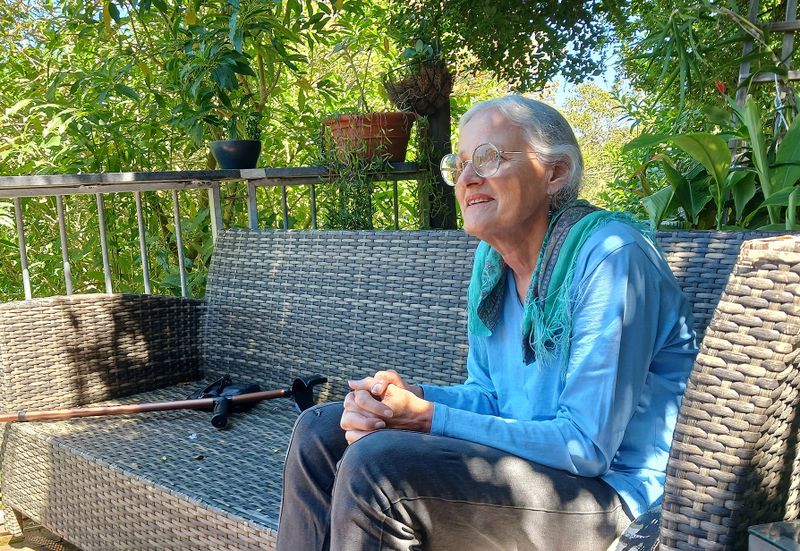
HEART FOR ART: Award-winning artist Annette Kamfer paints her way back after Parkinson’s diagnosis

LOCAL ELECTIONS 2026: Ten critical questions as South Africa heads into high-stakes poll

Sanwo-Olu makes runaway appearance at Lagos Fashion Week (PHOTOS)

Valkyries win WNBA title in their second season

EXCLUSIVE: Ebola: 34-year-old pilot, wife identified as suspected cases who tested negative in North-east Nigeria
Zuma to make first public appearance since hospital discharge

When youths move, society changes: The 2026 barricades, By Owei Lakemfa

Why war makes Ukraine media more determined than ever to hold power to account
Latest
HEART FOR ART: Award-winning artist Annette Kamfer paints her way back after Parkinson’s diagnosis
LOCAL ELECTIONS 2026: Ten critical questions as South Africa heads into high-stakes poll
Sanwo-Olu makes runaway appearance at Lagos Fashion Week (PHOTOS)
Valkyries win WNBA title in their second season
EXCLUSIVE: Ebola: 34-year-old pilot, wife identified as suspected cases who tested negative in North-east Nigeria
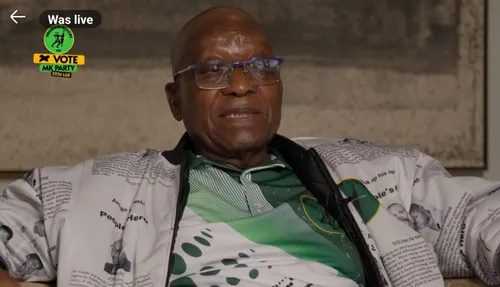
Zuma to make first public appearance since hospital discharge
When youths move, society changes: The 2026 barricades, By Owei Lakemfa
Why war makes Ukraine media more determined than ever to hold power to account