Trump’s Board of Peace would further marginalise sub-Saharan Africa

Trump’s Board of Peace would further marginalise sub-Saharan Africa
No countries from the region are represented, and the board could fragment global conflict response systems that include the AU.
Published on 06 February 2026 in ISS Today
By Peter FabriciusConsultant, ISS Pretoria

The Board of Peace launched by United States (US) President Donald Trump last month has been widely criticised as an attempt by America’s leader to usurp the United Nations (UN) Security Council. For sub-Saharan Africa there is an additional grievance: none of its states was invited to join, aggravating the region’s marginalisation.
Even by Trump’s standards, this board is an astonishing presumption. He invited about 60 countries to join, of which around 26 accepted. The board began as an initiative to implement the US Gaza peace plan – a role endorsed by the UN Security Council in November 2025. But it has quickly morphed into a body tasked with resolving worldwide conflicts, with Trump holding sole executive veto power.
Because of the initial Gaza mandate, the board comprises several Middle Eastern countries including Saudi Arabia, the United Arab Emirates, Türkiye, Egypt, Jordan, Kuwait, Bahrain and Qatar – and Israel. Others include Argentina, Belarus, Bulgaria, Indonesia, Pakistan, Vietnam and Cambodia.
Except for Hungary, European and other Western countries have either not been invited or have declined. France, the United Kingdom, Germany, Norway, Sweden, Spain and Slovenia are reportedly among the seven that declined. Canada accepted, but Trump withdrew the invitation after Prime Minister Mark Carney criticised him at Davos. China and Russia were invited but are non-committal.
The board’s rules give Trump a complete veto in his own right, and apparently independent of his US presidency
In Africa, only Egypt and Morocco have joined. These are North African countries, and Morocco participates in Trump’s Abraham Accords.
South Africa, at odds with the US, was clearly not invited. Zane Dangor, International Relations and Cooperation Department Director-General, posted on X: ‘Being supportive of a reformed and effective multilateral system with the UN at its core is incongruent [with] being part of a private Peace Board constituted of unaccountable billionaires and where the agenda is to replace and destroy the UN with a colonial style mandate system.’
Institute for Security Studies (ISS) Senior Researcher Priyal Singh sees in the membership a focus on Middle Eastern countries involved in rivalries in the Red Sea, Horn of Africa, and Gulf of Aden. ‘But I think sub-Saharan Africa is completely marginalised. I don’t think there’s been any invitation extended to any country in that region.’
He believes the board’s purpose is ‘to create some semblance of legitimacy and credibility for unilateral US action.’ Its rules give Trump a complete veto in his own right and apparently independent of his US presidency.
Singh believes Gaza will test the board. But even if it achieves some success there, it might ‘have a net hollowing-out effect on the broader global conflict response system through the UN and so on.’ That includes the African Union (AU). ‘Ultimately, it’s just creating a parallel structure to bypass the UN.’
By competing with the UN, AU and multilateralism, the board would not be good for Africa in particular
Singh thought the board would pursue peacemaking in the same way Trump has so far done on his own. But Singh cites an article by the International Crisis Group’s Richard Gowan and Daniel Forti, who say it seems unlikely the board will ‘build up the sort of institutional apparatus for supporting mediation and peacekeeping efforts … the UN has built over decades.’
They note that though claiming to have solved eight wars, from the Democratic Republic of the Congo to Southeast Asia, Trump tends to ‘push for quick bargains and not worry about their implementation. [Many of the wars he claimed to have ended] quickly reignited. The Board of Peace looks like a framework for his freewheeling diplomacy, not the painstaking business of making peace deals stick over time.’
Jakkie Cilliers, Chairperson of the ISS Board of Trustees and African Futures and Innovation Head, agrees that the board would compete with the UN and AU. It would rival multilateralism more generally, fragmenting the existing peacebuilding architecture, which would not be good for Africa in particular.
‘Trump thinks peace agreements are like selling a building. You sign an agreement and everybody sticks to it. So you sign an agreement between the DRC and Rwanda, but it means nothing because there’s no commitment, no enforcement, no accountability.’ That, Cilliers says, is because institutions are needed to police agreements.
Most commentators seem to be taking the Board of Peace seriously enough to be alarmed
However, he acknowledges that Trump has ‘shaken the tree’ and shown that ‘many of the shibboleths we’ve been holding onto have not been working.’ These include peacebuilding efforts, especially in Africa.
Cilliers sees the transactionalism inherent in Trump’s foreign policy and in the board, manifesting itself, for example, in countries contracted to do peacekeeping elsewhere – something that has already started happening. France for example is paying (via the EU) for Rwanda to defend its gas facilities in northern Mozambique, and the US, Canada and others have pledged to fund Kenya’s security mission to counter criminal gangs in Haiti.
Like many of Trump’s forays into foreign policy, it’s not clear how seriously we should take his Board for Peace. Most commentators seem to be taking it seriously enough to be alarmed. But Brookings Institution foreign expert Bruce Jones dismisses it as a ‘double nothingburger’ – suggesting it’s a Trumpian vanity project and a grandiose post-presidential occupation that few countries take seriously beyond the Gaza assignment.
Given the UN Security Council paralysis, it’s arguably useful or even necessary to occasionally assemble a coalition of the willing to tackle a particular problem like Gaza. But trying to put the whole world under the control of a group of countries and individuals chosen by one man is surely a recipe for despotism.
If it does take off, one notable peril in this displacement of the UN-led multilateral peace system is that if resolving any particular conflict is not in the interests of rich board members, and the UN and AU have been sidelined, who will come to the rescue? If Russia decides to join, for example, what hope for Ukraine?
Exclusive rights to re-publish ISS Today articles have been given to Daily Maverick in South Africa and Premium Times in Nigeria. For media based outside South Africa and Nigeria that want to re-publish articles, or for queries about our re-publishing policy, email us.
Related Topics
Keywords
Related Stories
UN peacekeeping mission in Western Sahara ends after 35 years, UN chief says
Nov 1 (Reuters) - The 35-year-old UN peacekeeping mission in the Western Sahara region will come to an end after the Security Council failed to renew its mandate, the UN chief said on Sunday.
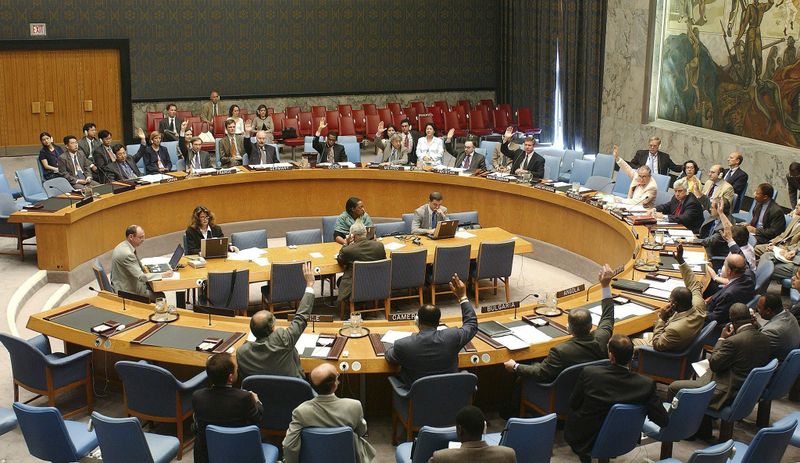
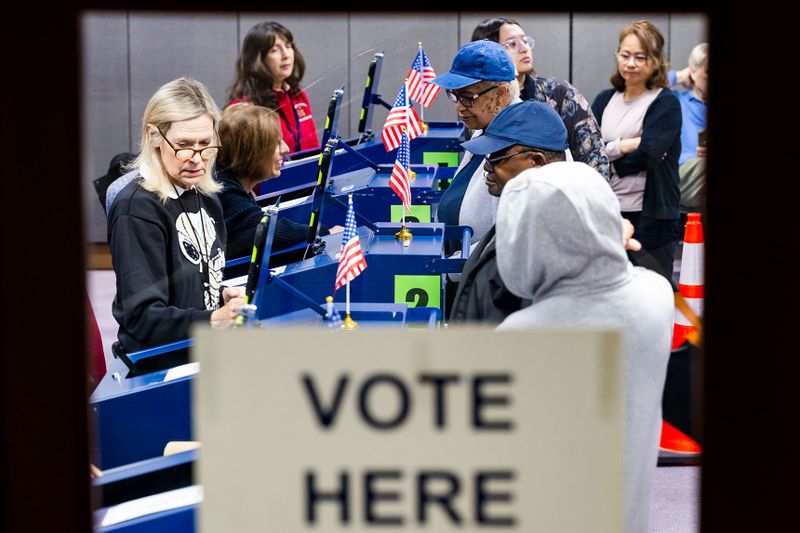
CONGRESS IN THE BALANCE: A blue tsunami, a tide, or chaos as usual — the US midterm election
With just hours to go before the American midterm election takes place, the day before South Africa’s own local election, control of both houses of the American Congress hangs in the balance.
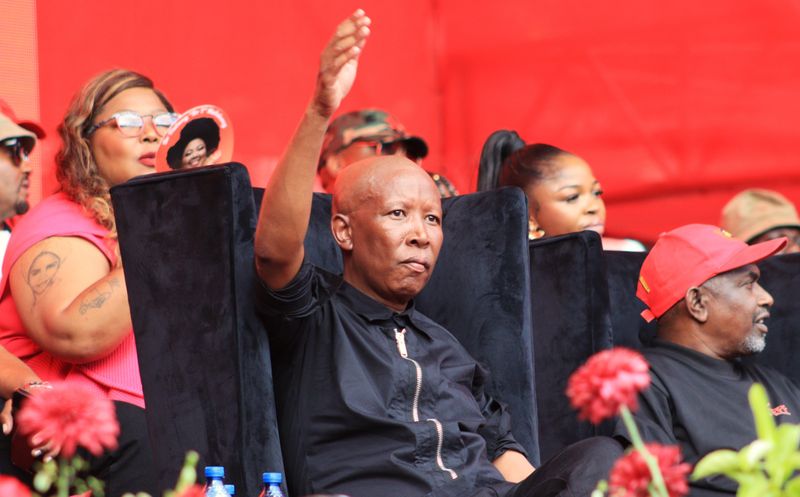
DIVISIVE WORDS: ‘We never called for literal killing’ — Malema appeals for farm killings to stop.
EFF leader Julius Malema says the chant “Kill the boer, kill the farmer” was never meant literally and has appealed for farm killings to stop.
TRC ROULETTE : Victims’ families place key hidden evidence before Khampepe inquiry
A physical inspection of old lever arch files by the legal team representing the families of apartheid victims at the Khampepe Commission strengthens Anton Ackermann’s claim that a disputed 2006 memo was forged, reshaping the Khampepe inquiry into delayed apartheid prosecutions.
Top Stories
UN peacekeeping mission in Western Sahara ends after 35 years, UN chief says
Week 8 overreactions: Time for Vikings to bench Kyler Murray? Colts should fire Steichen?
NFL Week 8 winners and losers: Cowboys suffer epic collapse, Joe Burrow delivers historic heroics

How Antonelli 'blew everyone away' to make Formula 1 history

Why is Ashton Jeanty not getting carries? Another Raider emerges as Vegas' top RB in Week 8

Russia and Ukraine accuse each other of hacking emergency alert apps
NFL Week 8 grades for every team: Cowboys get an 'F' for choking, Steelers surge to 'A+'

Ukraine air raid app apparently hacked as users receive false radiation threat, Air Force says
Latest
UN peacekeeping mission in Western Sahara ends after 35 years, UN chief says
Week 8 overreactions: Time for Vikings to bench Kyler Murray? Colts should fire Steichen?
NFL Week 8 winners and losers: Cowboys suffer epic collapse, Joe Burrow delivers historic heroics
How Antonelli 'blew everyone away' to make Formula 1 history
Why is Ashton Jeanty not getting carries? Another Raider emerges as Vegas' top RB in Week 8
Russia and Ukraine accuse each other of hacking emergency alert apps
NFL Week 8 grades for every team: Cowboys get an 'F' for choking, Steelers surge to 'A+'
Ukraine air raid app apparently hacked as users receive false radiation threat, Air Force says