UCT weighs sanctions over ‘Islamist control’ claims
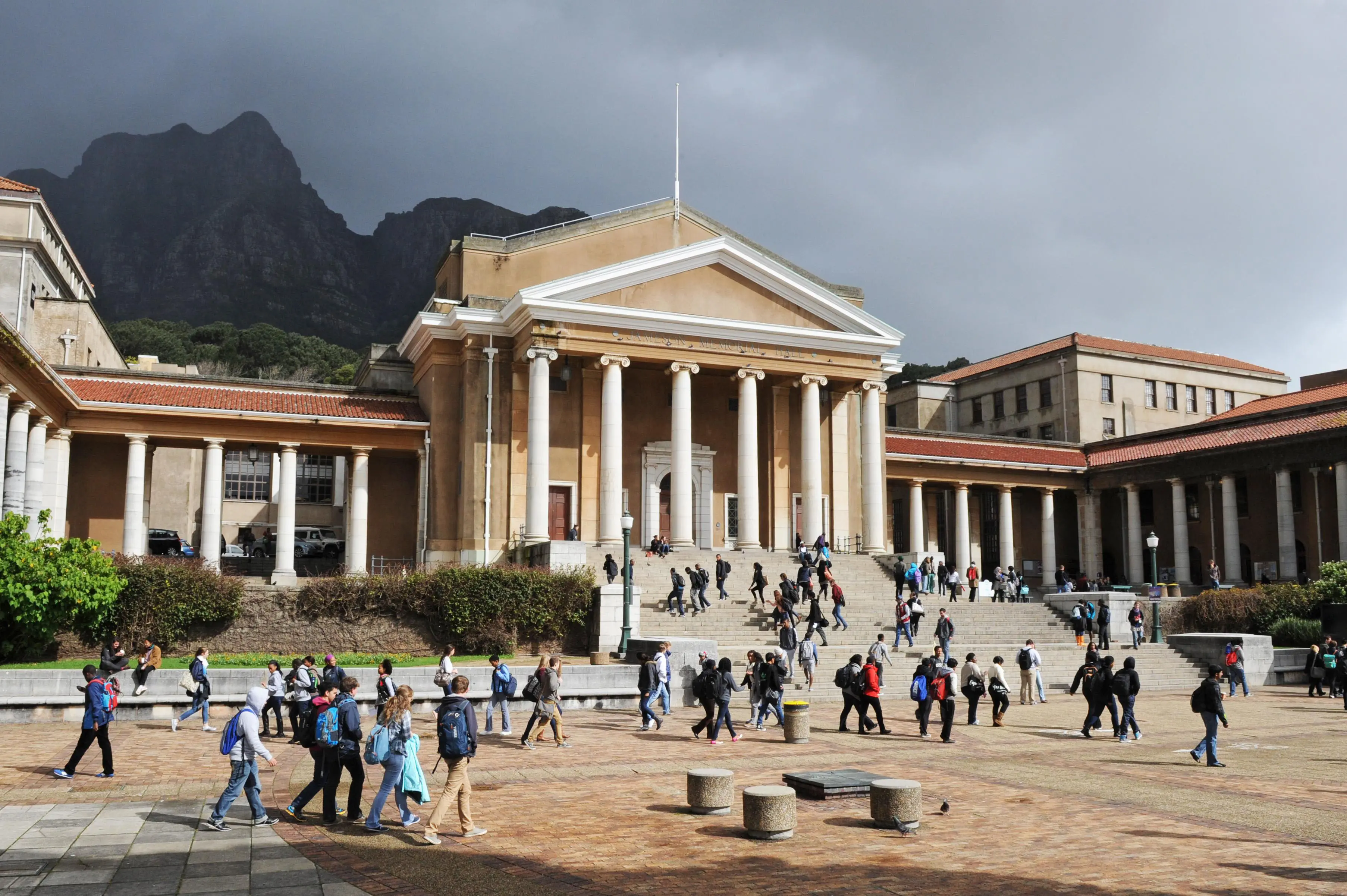
The University of Cape Town is considering sanctions against two council members after retired judge Mahomed Navsa found that claims of Islamist control at the institution, and their endorsement, breached its governing body’s code of conduct.
Navsa recommended that council initiate a process leading to advocate Mark Oppenheimer’s disqualification and that David Ansara be suspended for six months. Both dispute the findings, arguing that legitimate criticism of UCT and concerns about antisemitism are being punished.
UCT spokesperson Elijah Moholola said on Thursday that the findings and recommendations remained before council.
“UCT is therefore not in a position to comment further at this stage. The university will provide further updates when appropriate.”
The university did not provide a timetable for a decision or disclose whether representations had been heard.
Council adopted the investigation reports at a special meeting on 18 October and appointed a five-member subcommittee to hear representations before deciding on sanctions, if any. Ansara wrote on 25 October that, to his knowledge, the subcommittee had not met and neither man had made representations to it.
Navsa’s report places the complaints within an increasingly bitter struggle over UCT’s Gaza resolutions, describing efforts to reverse them, challenges to individual council members and retaliatory complaints that consumed university resources. The findings against Oppenheimer arose from his March 2025 inter-view with Ayaan Hirsi Ali. He identified himself as a council member and alleged that Islamist elements had taken control of UCT, terrorised those seeking a reasonable position and trampled on academic freedom. Navsa found no evidence that council members were Islamists or were being influenced by Islamists. Although Oppenheimer had not named individuals, the judge concluded that his statements implicated council and senate members who supported the Gaza resolutions.
He rejected Oppenheimer’s reliance on incidents involving campus protesters as evidence that Islamists controlled the university or its governing bodies.
Oppenheimer rejected the proposed removal in a statement published by the Daily Friend on 18 October, calling it “an egregious attack on freedom of expression”.
He maintained that his interview raised legitimate concerns about antisemitic intimidation and UCT’s protection of Jewish students. In submissions to the inquiry, he denied describing every supporter of the Gaza resolutions as an Islamist or identifying council or senate members as terrorists.
He argued that criticism of Islamism as a political ideology did not amount to an attack on Muslims and that his reference to people being terrorised concerned intimidation on campus.
Navsa also found that Oppenheimer overstated the academic restrictions. The resolutions concerned collaboration with research groups or networks whose author affiliations were with the Israel Defence Forces or the broader Israeli military establishment. They did not announce a blanket prohibition on collaboration with every Israeli academic. Oppenheimer maintained that his description was substantially true because the restriction targeted a class of academics linked to the Israeli military. He also challenged its implications for academic freedom.
Navsa found breaches of duties to act honestly and in good faith, pre-serve council’s dignity and protect UCT’s reputation. He also found that Oppenheimer failed to give the disclaimer required by the code when expressing personal views.
In recommending the most severe sanction available under the code, Navsa cited the seriousness of accusing colleagues, without proof, of belonging to an Islamist group controlling the institution. He expressly left the sanction decision to council, following a fair process and an opportunity for representations.
Ansara’s case concerned his reposting of another person’s praise for the interview. He said he added no comment and that his endorsement concerned Oppenheimer’s character.
Navsa concluded that Ansara had associated himself with the offending statements and continued to endorse them in his response to the inquiry. He recommended a six-month suspension, distinguishing Ansara’s endorsement from Oppenheimer’s direct statements.
In his 25 October article, Ansara defended the report and argued that the proposed sanctions were disproportionate and appeared politically motivated.
The report’s criticism extends beyond the two men. Navsa found that leading opponents of the Gaza resolutions repeatedly sought to reverse them and dislodge their supporters. Some supporters, frustrated by those attempts and the accompanying litigation, also retaliated.
“The lodging of many of the complaints are part of the retaliatory exchanges between the parties,” he wrote.
He warned that continued exchanges could paralyse governance and urged council to consider personal liability for wasted costs, particularly where members pursued frivolous or vexatious complaints.
The inquiry examined council members’ conduct. It did not determine the legality of the Gaza resolutions, which is the subject of separate litigation.
Donor funding was central to the divisions. Navsa examined the Donald Gordon Foundation’s R200 million commitment to UCT’s Neurosciences Institute, payable in tranches, under an agreement containing a commitment to a zero-tolerance approach to antisemitism as defined by the International Holocaust Remembrance Alliance.
The Gaza resolutions rejected the IHRA definition, which UCT argued conflated criticism of Zionism and Israeli policies with antisemitism, in favour of the Jerusalem Declaration on Antisemitism. The foundation alleged a contractual breach and terminated the agreement in August 2024, while indicating a willingness to continue engagement over support for the institute.
Navsa did not uphold complaints that council chairperson Norman Arendse and other members improperly withheld material donor information before the resolutions were adopted. His reasoning distinguished general awareness of financial risks from knowledge of contractual terms and a final donor decision. The reports themselves generated further controversy after the council made them public on 20 October and subsequently withdrew access.
Council apologised on 23 October to those adversely affected. Vice-chancellor Professor Mosa Moshabela later said one report disclosed confidential deliberations concerning the appointment of law dean Professor Mohamed Paleker, who was not under investigation.
Moshabela said he did not question the judges’ work or the principle of transparency, but called for stronger safeguards over redaction, confidentiality and notification of affected people.
Council must now decide whether to impose sanctions on Oppenheimer and Ansara while addressing the retaliatory use of complaints pro-cesses that Navsa identified across the divide.
Related Topics
Keywords
Related Stories
LOCAL ELECTIONS 2026: DA draws coalition red lines as Nelson Mandela Bay results take shape
With the DA leading the vote count in Nelson Mandela Bay, provincial leader Andrew Whitfield says the party is open to coalition negotiations but will not work with the EFF or MK party. He says good governance and service delivery, rather than positions and power, must guide any…
Gov Abiodun declares Ogun ready for state police
The governor described the establishment of state police as a critical step towards strengthening security, protecting investments and sustaining the state’s growing economic activities The post Gov Abiodun declares Ogun ready for state police appeared first on Premium Times…

Former Cross River PDP chair doubts party’s 2027 chances
Former Cross River PDP chairman Venatius Ikem questions the party’s ability to challenge the APC in 2027, describing its structures as fragmented and its Wike-backed presidential candidate, Sandy Onor, as politically invisible. The post Former Cross River PDP chair doubts…

Türkiye and SA look to a bigger future together
The Embassy of the Republic of Türkiye in Pretoria celebrated the 103rd anniversary of the proclamation of the Republic, spotlighting growing diplomatic and economic ties with South Africa.

Top Stories
LOCAL ELECTIONS 2026: DA draws coalition red lines as Nelson Mandela Bay results take shape

USMNT's Gold Cup path to look different as Concacaf unveils revamped group-stage format

Best horse racing betting sites: Where to bet on horse racing
Gov Abiodun declares Ogun ready for state police
Former Cross River PDP chair doubts party’s 2027 chances
Cowboys stars reject George Pickens trade talk ahead of NFL deadline
Türkiye and SA look to a bigger future together

Firms told to publish salaries in job adverts ahead of new law
Latest
LOCAL ELECTIONS 2026: DA draws coalition red lines as Nelson Mandela Bay results take shape
USMNT's Gold Cup path to look different as Concacaf unveils revamped group-stage format
Best horse racing betting sites: Where to bet on horse racing
Gov Abiodun declares Ogun ready for state police
Former Cross River PDP chair doubts party’s 2027 chances
Cowboys stars reject George Pickens trade talk ahead of NFL deadline
Türkiye and SA look to a bigger future together
Firms told to publish salaries in job adverts ahead of new law