Uganda Media Group Shutdown by Army Chief
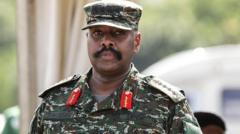
The army chief of Uganda, Muhoozi Kainerugaba, has ordered the shutdown of the country's biggest media group, resulting in the closure of several prominent media outlets. According to reports, the media group's offices in the capital are currently under a "military siege", with its newspapers, TV station, and radio outlets unable to operate.
The affected media group, known as NMG, includes popular outlets such as NTV and Daily Monitor. The shutdown was initiated on Sunday, with the army chief's order being swiftly enforced. As a result, the media group's headquarters in Kampala has been taken over by the military, preventing its staff from carrying out their duties.
Muhoozi Kainerugaba, the son of President Yoweri Museveni, is widely seen as his likely successor. The move to shut down the media group has raised concerns about press freedom in Uganda, with many viewing it as an attempt to curb free speech. The country has been experiencing a widespread crackdown on free speech, with the president's son being at the forefront of these efforts.
The shutdown of the media group has been met with widespread criticism, with many expressing concern about the implications for democracy and freedom of expression in Uganda. The move is seen as a significant blow to the country's independent media, which has been a vital source of information and scrutiny of those in power.
The army chief's decision to shut down the media group has been described as a "military siege" by the affected outlets. This phrase suggests a high level of militarization and a significant show of force, highlighting the seriousness of the situation. The fact that the media group's offices are under military control raises concerns about the safety of its staff and the potential for further repression.
In the context of Uganda's history, the shutdown of the media group is not an isolated incident. The country has a complex and often tumultuous relationship with its media, with the government frequently clashing with independent outlets. The current situation is likely to exacerbate these tensions, with many fearing for the future of press freedom in Uganda.