WHAT’S COOKING: Beef shin and bone marrow stew with chorizo, orange and gremolata
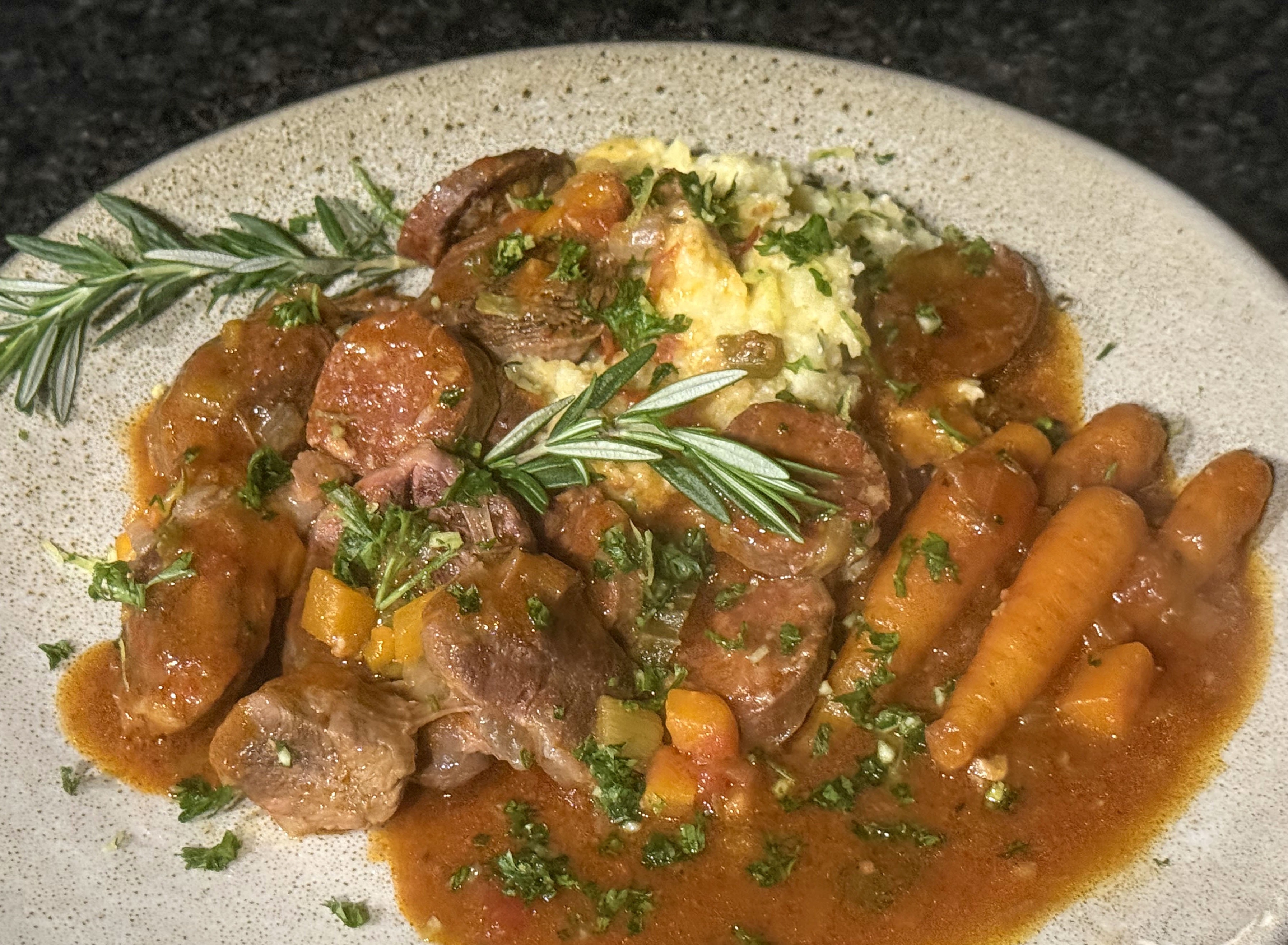
<p>This is winter on a plate. Warmth and comfort on a plate. A salve for the chill.</p>
<li> Dive Deeper</li>
<li> Speed Read</li>
<li> Summary</li>
<li> Listen</li>
<p>Oranges are synonymous with winter for me, after years of having ripe navels and sevilles in abundance on my orange trees in the Karoo. I’ve used orange, whether juice, zest or both, in beef stews since the 1980s. For me, it’s a perfect fit.</p>
<p>And it’s kind of Spanish too. Which is why my mind also turned to chorizo. And it’s sort of Portuguese, where orange is used to enhance pork dishes, so deliciously. And where chourico is pretty much the same thing.</p>
<p>But this dish is really all about that beef shin. Yes, beef, not veal, which means that it has something in common with osso buco, the Italian dish of veal shin braised with vegetables, white wine and stock, and finished with gremolata (finely chopped parsley, garlic and lemon zest).</p>
<p>Beef, being from a more mature animal, is tougher and needs more time to cook, and it has deeper flavour, but other than those elements (and the lack of white wine) this stew is much the same as osso buco.</p>
<p>I had not realised there was also some bone marrow in this pack of beef shin until I got home and read the label more closely, and then of course opened up the pack. There were three or four chunks of marrow bone, which could only enhance the flavour of the stew about to be cooked.</p>
<p>The orange gives this dish something that osso buco doesn’t have, but I also added one extra element: fresh rosemary. While being aware that this might seem to contradict the parsley in the gremolata, it didn’t bother me. In the end, both were evident in the final dish: the rosemary permeated the stew itself, while the gremolata did its work of adding a veneer of interesting flavours on the surface. Which is what it is for.</p>