Why do symbols matter so much during Russia’s “Age of the New Empires”?
One of humanity’s greatest achievements in the aftermath of the Second World War was the recognition that cultural heritage must be protected from the devastation of armed conflict. This lesson was clearly articulated in the preamble to the 1954 Hague Convention:
“Damage to cultural property belonging to any people whatsoever constitutes damage to the cultural heritage of all mankind, since each people contributes to the culture of the world.”
Cultural heritage not only enriches our world through its diversity and spiritual wealth but also serves as a repository of collective memory, bearing witness to pivotal moments in history and preserving stories that humanity must never forget.
Temples, monasteries, libraries, memorials and historic sites are more than bricks and stone. They embody humanity's understanding of who they are, where they come from and what they should remember. This is why attacks on cultural heritage resonate far beyond the immediate battlefield. They are attacks on memory itself. They are attacks on history.
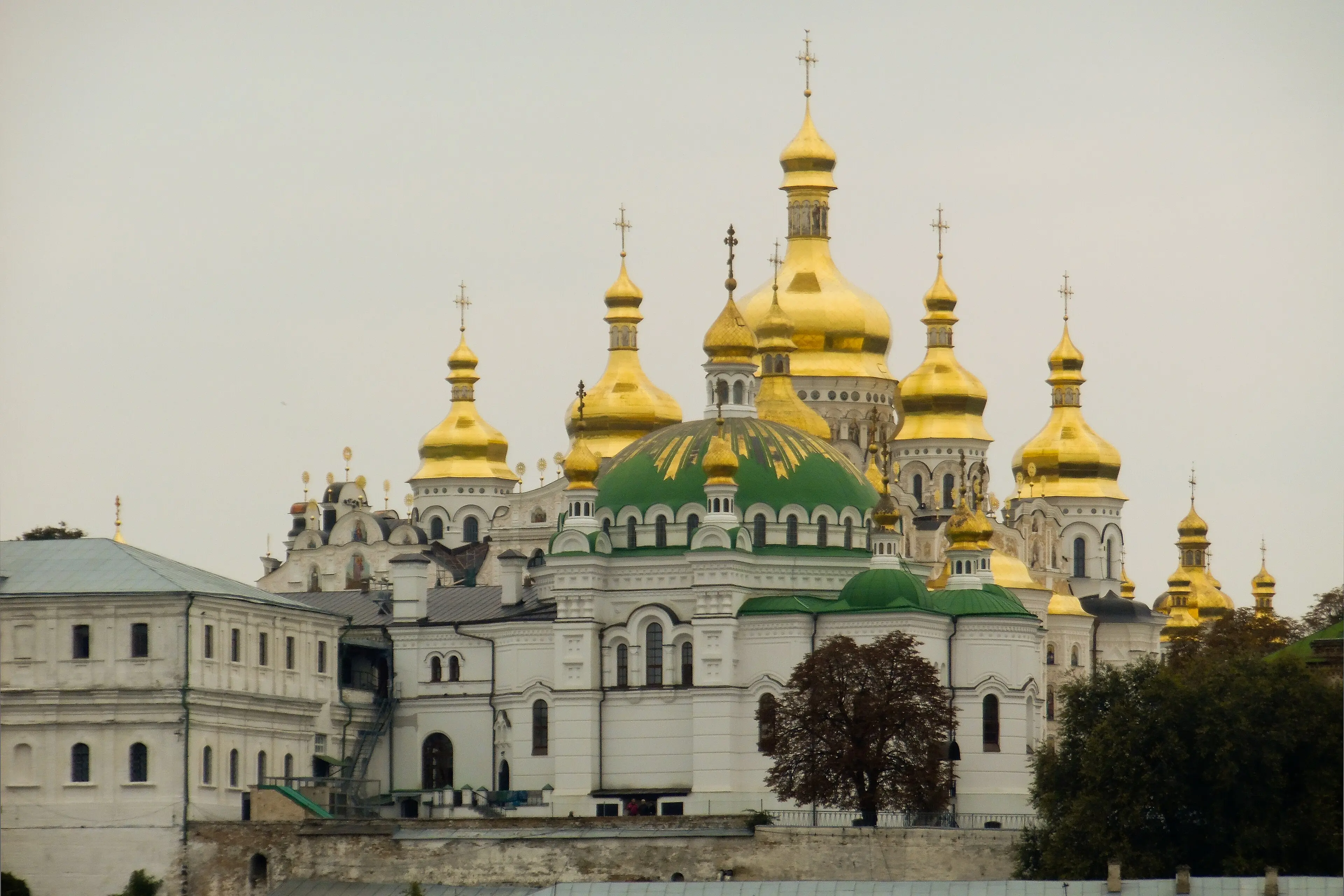
For nearly a thousand years, emperors, kings, dictators and presidents have come and gone. The Lavra has remained. Its role was far beyond the religious. For centuries, Kyiv-Pechersk Lavra served as a cradle of Eastern European culture. The birthplace of chronicles, saints and masterpieces, the Lavra has endured centuries of invasion and destruction, yet its golden domes continue to rise. It has been listed as a UNESCO World Heritage site since 1990 as a “masterpiece of Ukrainian art”.
On 15 June, a Russian attack set the centuries-old monastery ablaze. Among hundreds of attacks on museums, film production sites, theatres and other cultural institutions, this symbolic strike revealed a deeper objective: not merely to destroy buildings, but to erase memory and reshape historical narratives. It demonstrated that this war is being fought not only for territory but also for the right to define the past.
Empires cannot exist without myths. For centuries, the Russian Empire portrayed itself as the defender of Orthodoxy, not because of any particular commitment to Christian values, but because this narrative justified a unique historical mission and a claim to moral authority over other nations.
In recent decades, Russian propaganda has often portrayed the Kyiv Pechersk Lavra as a sacred site unjustly severed from the “Russian world.” Ukrainians who challenged this narrative were often cast as schismatics, nationalists, or enemies of a supposedly shared spiritual heritage.
In this context, the struggle over the Lavra is not merely a religious dispute. It is a struggle over history, identity and the ownership of a civilisational narrative. For imperial projects, sacred sites are never merely places of worship. They are symbols through which power seeks legitimacy.
Russia’s failure to break Ukrainian morale during the winter campaign of cold terror, and its inability to achieve its objectives on the battlefield, have shattered the myth of an almighty nation chosen by God and history. For an imperial project built on the image of strength and destiny, such failures are hard to accept. If it cannot possess, it will destroy. The strike on the Lavra reflected that logic.
For a state that derives legitimacy from imperial mythology, symbols are never merely symbols. They are pillars of a political faith. The Lavra is important to Russian imperial thinking not for its architecture alone, nor for its historic or religious significance. It is important because it challenges the claim that Russia is the sole heir to the legacy of Kyivan Rus and the spiritual centre of Eastern Slavic civilisation.
This is why Russia will stop at nothing to preserve the myths on which its imperial identity rests. When history refuses to conform to those myths, history itself becomes a target. When memory resists, it is attacked. When cultural heritage stands as evidence of a different narrative, it is treated as an obstacle to be removed.
The attack on the Kyiv Pechersk Lavra therefore concerns far more than Ukraine. It concerns the principles established by humanity after the devastation of the Second World War: that cultural heritage belongs not to one nation alone but to all mankind; that memory must be protected from violence; and that no state has the right to destroy another people's historical legacy in pursuit of political ambition.
While Ukraine continues to seek a diplomatic path to ending the war, Russia persists in attacking not only cities and civilians but also cultural and historical landmarks that have no military value. Such actions reveal that Russia is guided by imperial mythology that portrays Ukraine as an inferior nation with no history and that does not deserve to exist. Conducting peace negotiations with someone who, in your opinion, does not exist, is, a priori, a waste of time. It’s not Ukraine’s “stubbornness” that stands in the way of peace, but Russia’s worldview – deeply fascist in its essence.
Bohdan Diachenko is the spokesperson for the Embassy of Ukraine in the Republic of South Africa
Related Topics
Keywords
Related Stories
Ebola: No new cases in Nigeria as two suspected cases in North-east test negative
Details obtained exclusively by PREMIUM TIMES revealed that a 34-year-old pilot and his wife, a medical doctor, are the two people suspected of having Ebola virus disease in Adamawa State, North-east Nigeria. The post Ebola: No new cases in Nigeria as two suspected cases in…

Ebola: Saudi Arabia suspends travel to Kenya, halts visa issuance
The Saudi Press Agency (SPA) announced the measures in a statement published on its official X account on Friday, 30 October, saying they followed epidemiological assessments by the country’s health authorities The post Ebola: Saudi Arabia suspends travel to Kenya, halts visa…

Group seeks end to health workers’ absenteeism in PHCs
“Our expectation is that the government and other policymakers will take renewed action to ensure that these interventions are implemented across the state,” the group's coordinator said. The post Group seeks end to health workers’ absenteeism in PHCs appeared first on Premium…

Catholic diocese, CAN reject inclusion of clerics in APC campaign list
PREMIUM TIMES reports that the APC in the state had included Mr Obodo and many other Christian clerics in the party's governorship campaign council. The post Catholic diocese, CAN reject inclusion of clerics in APC campaign list appeared first on Premium Times Nigeria.

Top Stories

Hamilton takes first pole for Ferrari at Mexico City Grand Prix

These firms you've never heard of are feeding fears the AI bubble could burst

How the downfall of Serbia's Vučiċ mirrored that of Hungary's Orbán

College football winners, losers: Oregon's Dylan Raiola bounces back, Wisconsin falls flat

On 'tense' Antonelli's big weekend, this was Hamilton's day

Thick fog to create hazardous driving conditions into next week

Oklahoma offense stuck in neutral: Loss to South Carolina highlights key decisions ahead for Brent Venables

No more washing up: How Airbnb's new house rules have divided hosts and guests
Latest
Hamilton takes first pole for Ferrari at Mexico City Grand Prix
These firms you've never heard of are feeding fears the AI bubble could burst
How the downfall of Serbia's Vučiċ mirrored that of Hungary's Orbán
College football winners, losers: Oregon's Dylan Raiola bounces back, Wisconsin falls flat
On 'tense' Antonelli's big weekend, this was Hamilton's day
Thick fog to create hazardous driving conditions into next week
Oklahoma offense stuck in neutral: Loss to South Carolina highlights key decisions ahead for Brent Venables
No more washing up: How Airbnb's new house rules have divided hosts and guests