WORKING MODEL: Beyond state jobs — Thuli Madonsela on the Constitution’s true economic mandate
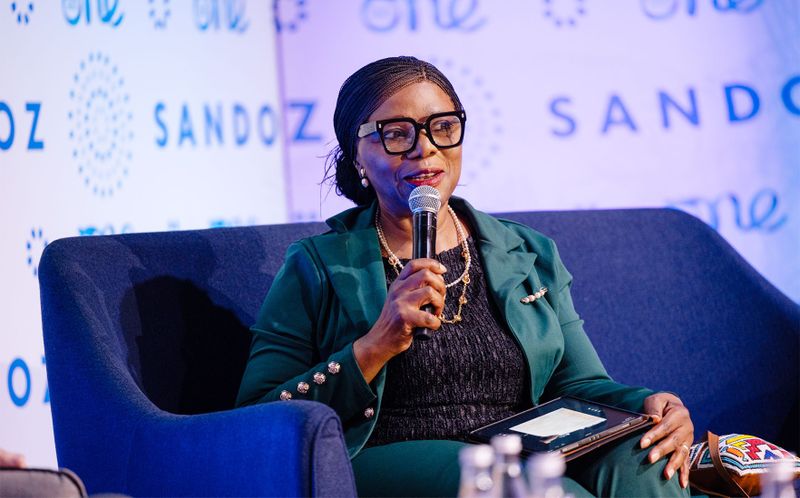
According to Prof Thuli Madonsela, one of the drafters of South Africa’s founding document, it is not the government’s responsibility to provide jobs to citizens; rather, the Constitution guarantees the right to justice within a fair economic system.
“The Constitution does not promise young people jobs,” Prof Thuli Madonsela told Daily Maverick when we asked her how South Africa’s leadership can better serve young people.
“In fact, we had proposed the right to work, and the response was, ‘Let’s not promise the right to work; let’s promise the right to justice where the ecosystem is fair to all.’ Jobs are created naturally by everyone.”
She would know, because she was one of the 11 technical advisers and experts who worked with the National Assembly to shape the post-apartheid Constitution of South Africa, choosing to forgo a Harvard scholarship to participate in the process.
Madonsela’s role was to translate political compromises into legally sound clauses that would actively fix the inequalities left by apartheid, rather than just protecting the status quo. She also focused on how the Bill of Rights would protect women in the workforce, pushing for frameworks that later birthed the Employment Equity Act and the Equality Act.
But that’s enough of a history lesson from her CV; let’s jump back into the incisive points she shared with the 2026 cohort at the One Young World Summit in Cape Town.
“A young person is not in the market as a job seeker. A young person is in the ecosystem as a multiple actor. They may be a job seeker, they may be a job creator, etc… So, I think it starts with [the notion that] we made the wrong promise to young people.”
“A young person is not in the market as a job seeker. A young person is in the ecosystem as a multiple actor. They may be a job seeker, they may be a job creator, etc… So, I think it starts with [the notion that] we made the wrong promise to young people.”
She continued: “The apartheid state was a very intentional state in terms of destroying the brilliance of certain communities to create wealth and jobs. So, the Constitution meant to create a new society where there’s equal opportunity to create wealth and jobs.”
To paraphrase: when South Africa’s Constitution was being drafted, negotiators initially considered including a guaranteed “right to work”. However, the Constitutional Assembly intentionally omitted a guaranteed right to a job, choosing instead to guarantee a “right to justice” within a fair economic system.
The idea was for the state to build a fair, fertile environment where jobs would naturally be created by everyone, rather than positioning the state as the sole employer.
The problem started when post-apartheid political leaders repeatedly promised guaranteed state jobs to voters, misleading young people into viewing themselves strictly as job seekers dependent on the government rather than active wealth creators.
Madonsela noted:
“One of the reasons there was corruption in Africa was an undemocratised economy where the liberators didn’t democratise the economy; they simply stepped into the shoes of the [former] governors and all of the opulence that went into that. Instead of a market economy where everyone competes for wealth creation, everyone then competes to be in government or to put someone in government... making the state the biggest procurement unit on earth. We can’t end corruption if everyone wants something from the state.”
“One of the reasons there was corruption in Africa was an undemocratised economy where the liberators didn’t democratise the economy; they simply stepped into the shoes of the [former] governors and all of the opulence that went into that. Instead of a market economy where everyone competes for wealth creation, everyone then competes to be in government or to put someone in government... making the state the biggest procurement unit on earth. We can’t end corruption if everyone wants something from the state.”
Madonsela argues that post-apartheid leadership failed to democratise the underlying economy. Instead of opening up broad market opportunities so every citizen could build wealth, new leaders stepped directly into the positions and opulence of the former rulers.
Wait, does she have any ideas of how to fix things?
Indeed. Madonsela shared three main structural shifts needed to fix South Africa’s economic bottleneck:
Community co-creation: Re-engineer township and rural economies so young people solve local community problems directly (eg, healthcare, infrastructure) for pay, rather than waiting for state tenders: “South Africa is going to be fixed when we re-engineer communities to be co-creators of the future they want to be part of. We’ve turned our children into consumers.”
University and higher education reform: Universities should require every student (including lawyers and doctors) to graduate with a self-employment plan, so no graduate is left stranded without an income:
“[The thinking should be] there’s malaria in my own community; how do I solve that for my community and get paid for it? I get to employ myself. I get to create wealth for myself. I get to solve a problem that annoys me and annoys my community. What shocks me is having unemployed lawyers and doctors because I just think it should be impossible. When they leave university, they should leave with their own plan of ‘I will employ myself.’”
Reforming the SRD grant: Social grants like the Social Relief of Distress (SRD) grant are essential under ubuntu principles. However, state performance should be measured by how many grant recipients are supported into self-employment, rather than celebrating how many people remain on state assistance. “What I would like to see is we get a loudest cheer when we are saying of the people on the grant, 10% have gone on to get jobs.”
The original sin
Madonsela points out that the government’s tender-focused approach borrowed heavily from how the 1932 Carnegie Commission report addressed the “poor white problem” during apartheid.
The apartheid state absorbed poor white citizens directly into state jobs and tenders. While that strategy worked for a small minority population, applying it to an entire nation of millions is mathematically impossible and stifles lateral economic growth.
“To solve the poor white problem after 1932 with the Carnegie Commission report, that was the emphasis, but what people don’t realise was white people were small … so if you’re channelling all of them to state jobs and state tenders, it would make sense … but to channel the whole country, every young person [the government] has helped starts a business as a supplier. The white community got the bulk of the rent because the methodology was feed the existing cows and then get more people to benefit from the existing cows.”
“To solve the poor white problem after 1932 with the Carnegie Commission report, that was the emphasis, but what people don’t realise was white people were small … so if you’re channelling all of them to state jobs and state tenders, it would make sense … but to channel the whole country, every young person [the government] has helped starts a business as a supplier. The white community got the bulk of the rent because the methodology was feed the existing cows and then get more people to benefit from the existing cows.”
Similarly, Madonsela critiques the structural execution of Black Economic Empowerment (BEE). While BEE was a brilliant concept in principle, its mechanism relied on this idea of feeding the existing cows (read: funding established businesses to sell a 25% stake to newcomers).
As a result, the majority of financial growth remained with the existing wealth owners, benefiting a few connected individuals while leaving broader society excluded.
“The structure of BEE was flawed from the very beginning because then you’re growing what is already there, and whoever owns the bulk of it grows more... the idea of just inclusion for us [at Stellenbosch University] is democratised but included at every level in every community.”
“The structure of BEE was flawed from the very beginning because then you’re growing what is already there, and whoever owns the bulk of it grows more... the idea of just inclusion for us [at Stellenbosch University] is democratised but included at every level in every community.”
Learning the right lessons
Madonsela also corrected some of the misconceptions that creep in when comparing South Africa’s economic trajectory with several international examples.
“Where the state failed [read: post-1994 government] was [that] they got economists mostly from [the] US who didn’t understand that South Africa is an outlier. So, unlike Singapore where Lee Kuan Yew said, ‘We’re not socialist, we’re not capitalist’, [instead the response should have been:] ‘We will take from each of the isms what works for us.’”
“Where the state failed [read: post-1994 government] was [that] they got economists mostly from [the] US who didn’t understand that South Africa is an outlier. So, unlike Singapore where Lee Kuan Yew said, ‘We’re not socialist, we’re not capitalist’, [instead the response should have been:] ‘We will take from each of the isms what works for us.’”
Under Lee, Singapore avoided rigid ideological dogmas (“socialist” or “capitalist”) and designed pragmatically with the end goal in mind. South Africa, by contrast, relied on US-trained economists who failed to realise South Africa was an outlier.
After the Second World War, Germany rebuilt its society by focusing on broad-based inclusion across all skill levels – pulling women into cottage industries, young people into bursaries and parastatals, and small businesses into broader supply chains.
“[Singapore and Estonia] started with the end in mind... This is where we failed is, what does the end look like? In Germany, when they were re-engineering after the Second World War, the idea was to look for everyone ... the entire concept note was ‘Where is everyone?’”
“[Singapore and Estonia] started with the end in mind... This is where we failed is, what does the end look like? In Germany, when they were re-engineering after the Second World War, the idea was to look for everyone ... the entire concept note was ‘Where is everyone?’”
Madonsela closed out this part of the interview by disclosing her appreciation for the three zeros of Muhammad Yunus (zero hunger, zero poverty, zero unemployment)…
For her and the experience studying the South African economic model, she has her own take on the last zero of Yunus’ list: zero structural inequality.
That, in her view, was the intended Constitutional promise that was made. DM
Originally published and reported by Daily Maverick.
Read original coverage on Daily MaverickKeywords
Related Stories
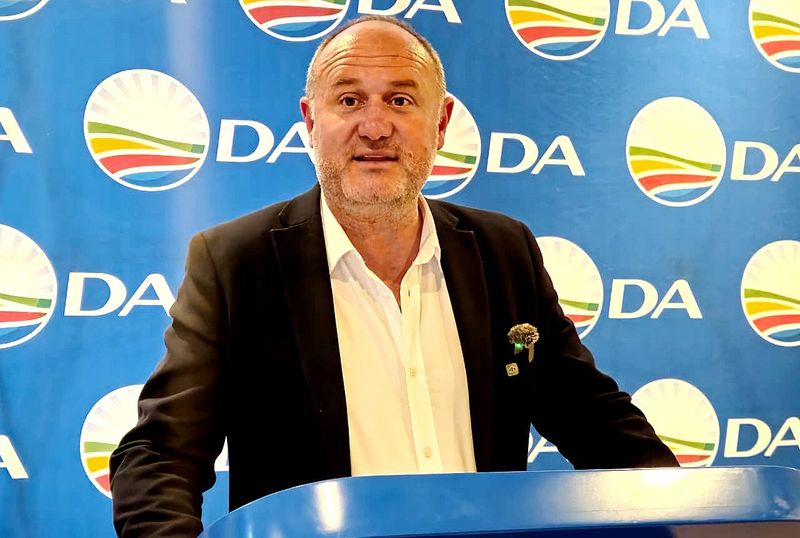
LOCAL ELECTIONS 2026: DA goes on coalition offensive as battle for Nelson Mandela Bay begins
With no outright majority in Nelson Mandela Bay, coalition choices will shape efforts to restore water, electricity, refuse removal and accountable local government. The DA has emerged as the largest party with 53 of the 120 council seats and is approaching potential coalition…
BUSINESS REFLECTION: Crossed Wires: What happens to Big Tech now after the midterms?
Democratic Party midterm victories may tighten AI oversight, but surging demand, vast investment and Big Tech’s global reach will keep the industry expanding.

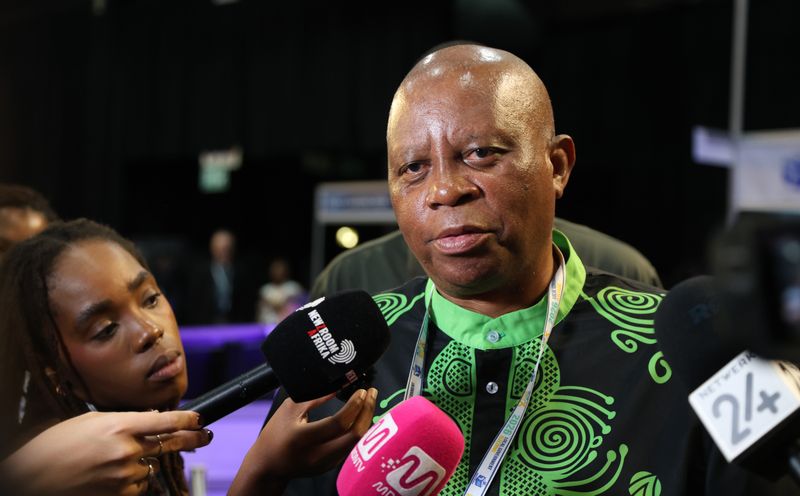
14 DAYS TO FIX LOCAL: Herman Mashaba: ‘Very, very slim’ chance of coalitions with the DA
With 14 days from Monday, 8 November, to hammer out coalition agreements in 139 councils across the country, it’s all eyes on the kingmaker party ActionSA, which has won 55 wards to hold the cards in three key Gauteng metros.
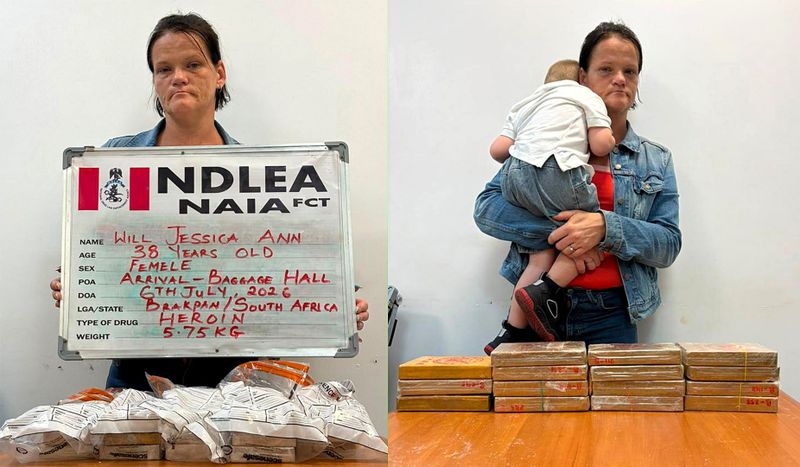
TRANSNATIONAL TRAFFICKING: South Africans entering Nigeria and fuelling global cartel drug trafficking, security briefing hears
Francis Okogun, an anti-drug agency official in Nigeria, has countered a notion he says his South African counterparts often convey – that Nigerian citizens frequently traffic drugs. Okogun has pointed out that South Africans have recently been arrested in Nigeria in illicit…
Top Stories
LOCAL ELECTIONS 2026: DA goes on coalition offensive as battle for Nelson Mandela Bay begins
BUSINESS REFLECTION: Crossed Wires: What happens to Big Tech now after the midterms?
14 DAYS TO FIX LOCAL: Herman Mashaba: ‘Very, very slim’ chance of coalitions with the DA
TRANSNATIONAL TRAFFICKING: South Africans entering Nigeria and fuelling global cartel drug trafficking, security briefing hears
LOCAL ELECTIONS 2026: KZN coalition dilemma: Will election losers find their way back to power?

ROYAL ADDRESS: Princess Anne praises SA’s agricultural industry in whistle-stop visit to Cape

LOCAL ELECTIONS 2026 OP-ED: The DA hammered the ANC in Emfuleni — the how and the why
CLICK BAIT: ‘We were fodder’ — how a Botswana architect was duped into fighting for Russia
Latest
LOCAL ELECTIONS 2026: DA goes on coalition offensive as battle for Nelson Mandela Bay begins
BUSINESS REFLECTION: Crossed Wires: What happens to Big Tech now after the midterms?
14 DAYS TO FIX LOCAL: Herman Mashaba: ‘Very, very slim’ chance of coalitions with the DA
TRANSNATIONAL TRAFFICKING: South Africans entering Nigeria and fuelling global cartel drug trafficking, security briefing hears
LOCAL ELECTIONS 2026: KZN coalition dilemma: Will election losers find their way back to power?
ROYAL ADDRESS: Princess Anne praises SA’s agricultural industry in whistle-stop visit to Cape
LOCAL ELECTIONS 2026 OP-ED: The DA hammered the ANC in Emfuleni — the how and the why
CLICK BAIT: ‘We were fodder’ — how a Botswana architect was duped into fighting for Russia