You know the launch market is tough when satellite companies start building rockets
There are optimistic plans for spaceflight, and then there are optimistic plans.
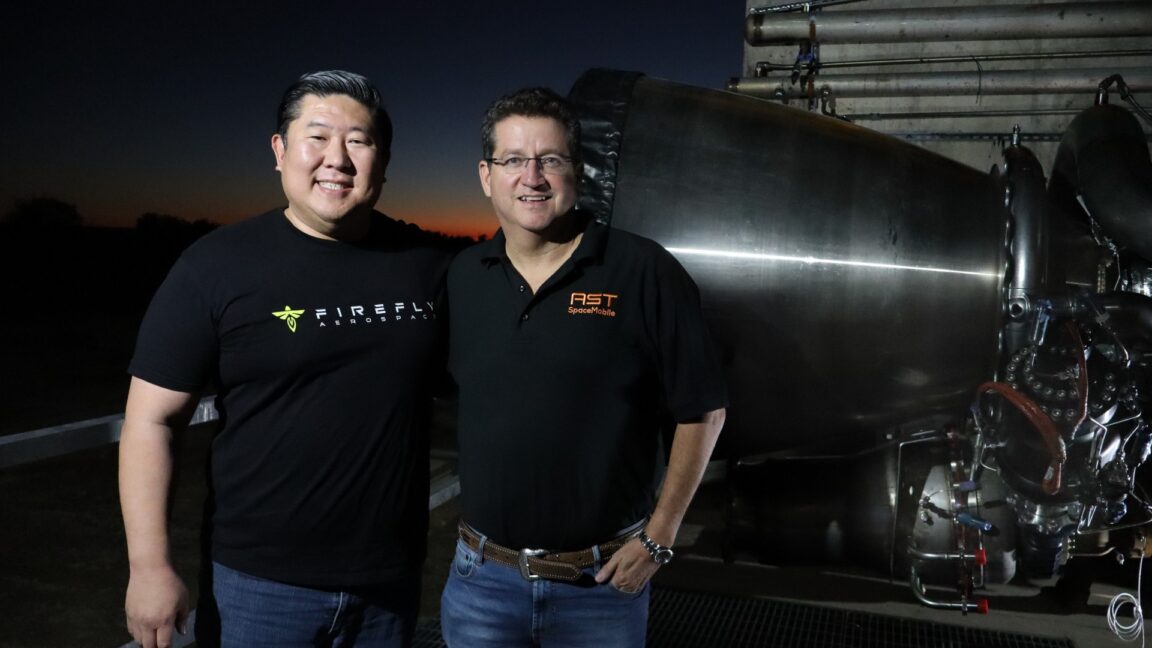
AST SpaceMobile is a Texas-based, publicly traded company building very large satellites to provide direct-to-cell communications on Earth. But it has been having trouble finding rides to space. So on Friday, AST announced that it is developing a medium-lift rocket, named Blacklift, which will have the capacity to lift 20 metric tons to low-Earth orbit. Oh, and the company said it would start launching commercially in late 2028.
“The Blacklift rocket is the springboard to significantly expand our total addressable market, providing AST SpaceMobile with regular unconstrained access to orbit and providing for most favorable owner’s economics in the industry,” said Abel Avellan, founder, chairman, and CEO of AST SpaceMobile, in a news release.
To anyone with even a basic understanding of rockets, that timeline is wildly, fantastically, and stupidly optimistic. Still, the announcement is worth examining because it underscores two important trends in today’s launch industry.
First, it’s becoming increasingly apparent that satellite operators planning to deploy large constellations need to secure launch capacity years in advance, as Amazon did nearly half a decade ago. And if they can’t secure that capacity on favorable terms, they are now considering taking the extraordinary step of developing their own rockets.
And secondly, since investors are now recognizing the worsening launch crisis that Ars has been writing about for months, there is apparently capital to be raised for new entrants into the medium-lift launch market. AST is not the only company making fantastical claims of late. A firm called Cowboy Space said in October it was building a large rocket named Big Iron (full credit—that’s an excellent name) to launch orbital data centers. It also claimed its large rocket would make its first flight in 2028.
Sure thing, y’all.
Comparable launch development timelines
Let’s start with a little history. SpaceX became the first purely commercial launch startup to announce plans to build a new medium-lift rocket about two decades ago, in 2005. The company holds the record for the fastest time to orbit with the Falcon 9 vehicle, with a development time of 4.7 years.
But SpaceX had some significant advantages. By then, the company had been operating for more than three years, had extensive experience with the Merlin engine, and was less than a year away from its first launch of the smaller Falcon 1 rocket. In retrospect, it’s also clear that the company had an insanely talented team of engineers. Finally, the Falcon 9 was quite a bit smaller than the recently announced vehicles, Blacklift and Big Iron. In its initial form, Falcon 9 had a lift capacity of about 10 tons.
What about other companies? Since 2015, a number of other US companies—United Launch Alliance (Vulcan), Rocket Lab (Neutron), Relativity Space (Terran R), Firefly/Northrop Grumman (Eclipse), and Stoke Space (Nova) have announced medium to heavy lift vehicles, ranging in payload capacity from about 7 to 27 metric tons (Blue Origin’s New Glenn is much larger than any of these).
Of these, only Vulcan has reached orbit. It took 8.7 years, with an incredibly experienced launch team behind the vehicle and about $2 billion in aggregate federal support across its suppliers.
Broadly speaking, the track records of these existing launch companies suggest that developing a new medium- or heavy-lift rocket takes five to nine years from public announcement to first orbital launch. Moreover, many of these companies either started with smaller rockets or brought other valuable experience to bear.
Yes, they’re getting some engines—at a cost
AST SpaceMobile’s counterargument is that it won’t be starting from scratch. The company said Friday that it has signed an agreement with Firefly to deliver engines for the first three Blacklift rockets, provide engineering services over a three-year period, and acquire the perpetual license to manufacture the Miranda and vacuum-variant Vira engines from Firefly. Nine Miranda engines will power Blacklift’s first stage.
Yes, engines are typically the hardest part of a rocket’s development. And procuring Miranda engines will shave some time off Blacklift’s development. But it will probably be a year or two, not five. Procuring the Miranda engine—which likely remains at least two years from being tested in flight on the Eclipse rocket—does not eliminate the enormous engineering, manufacturing, testing, and regulatory effort required to develop a medium-lift rocket.
AST SpaceMobile is also paying a pretty penny for this privilege. It has committed $1.3 billion to Firefly for the engine license ($800 million), 27 Miranda engines and nine Vira engines ($250 million), and engineering support ($250 million). If we look just at the engine costs for a single Blacklift rocket, that’s $83 million per vehicle for the first three.
The bottom line is that AST SpaceMobile has made a launch timeline claim that is profoundly disconnected from the historical record of every comparable rocket development program this century. Maybe they’re a bunch of geniuses who will vibe-code the vehicle with Claude or Grok and shock us all.
More likely, though, is that this is a company that desperately needs to launch about 90 more of its massive BlueBird direct-to-cell satellites. Yes, the company has some existing commercial launch contracts with SpaceX, Blue Origin, and other companies. And in its news release, it said, “AST SpaceMobile will continue to use external providers, with agreements now covering in total over 100 BlueBird satellites to be deployed cumulatively between 2027 and 2028.”
But that raises an obvious question: If AST already has agreements covering the deployment of more than 100 BlueBird satellites by the end of 2028, what precisely is Blacklift supposed to accomplish? Do you spend several billion dollars to develop a rocket you don’t actually need?
 1.
Meet *sshole, the vulnerability that lets hackers SSH into Linux devices
Related Topics
Keywords
Related Stories
All the latest updates on AI data centers
Massive new data centers are the physical foundation for tech companies’ hopes and dreams for AI. But the rush to expand warehouses full of energy-hungry servers has also kicked up fights across the world over their impact on power grids, utility bills, nearby communities, and…

Shure’s popular podcasting and streaming mic is almost $50 off
Shure’s MV7 Plus is a popular podcasting and streaming mic. | Image: Shure While the Shure Mv7 Plus is popular with streamers and podcasters, it’s equally good at impressing your friends and coworkers on meetings and Discord calls. It’s currently marked down to $255 at various…

Lame-duck Congress might actually do something: speed up energy projects
A massive permitting bill that could help energy projects come online much quicker and potentially lower utility bills for Americans is advancing with bipartisan support. And while it could be a catalyst for lots of clean energy, it could also speed up polluting projects and…

The folks behind John Wick are back with Karōshi trailer
Stuntman/director Chad Stahelski and 87Eleven bring us an action-packed dystopian, futuristic thriller.

Top Stories

LOCAL ELECTIONS 2026: MK party takes four KZN municipalities from ANC as governance test looms
Election fraud case lodged, party demands all Western Cape votes be recounted
All the latest updates on AI data centers
Shure’s popular podcasting and streaming mic is almost $50 off
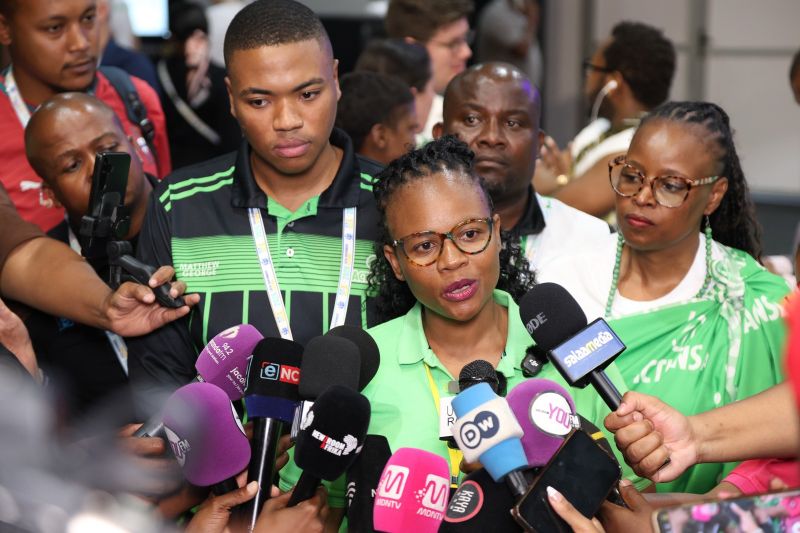
LOCAL ELECTIONS 2026: ActionSA surges in Gauteng metros, taking ANC wards — see where

Myles Garrett on track to be activated ahead of Rams Week 9 matchup vs. Commanders

AI stocks climb after trillions wiped from market values

How to watch Serie A: Inter face Como at San Siro after disappointing defeat against AC Milan
Latest
LOCAL ELECTIONS 2026: MK party takes four KZN municipalities from ANC as governance test looms
Election fraud case lodged, party demands all Western Cape votes be recounted
All the latest updates on AI data centers
Shure’s popular podcasting and streaming mic is almost $50 off
LOCAL ELECTIONS 2026: ActionSA surges in Gauteng metros, taking ANC wards — see where
Myles Garrett on track to be activated ahead of Rams Week 9 matchup vs. Commanders
AI stocks climb after trillions wiped from market values
How to watch Serie A: Inter face Como at San Siro after disappointing defeat against AC Milan