Zimbabwe: Authorities must end massive crackdown on dissent before SADC summit
9 August 2024
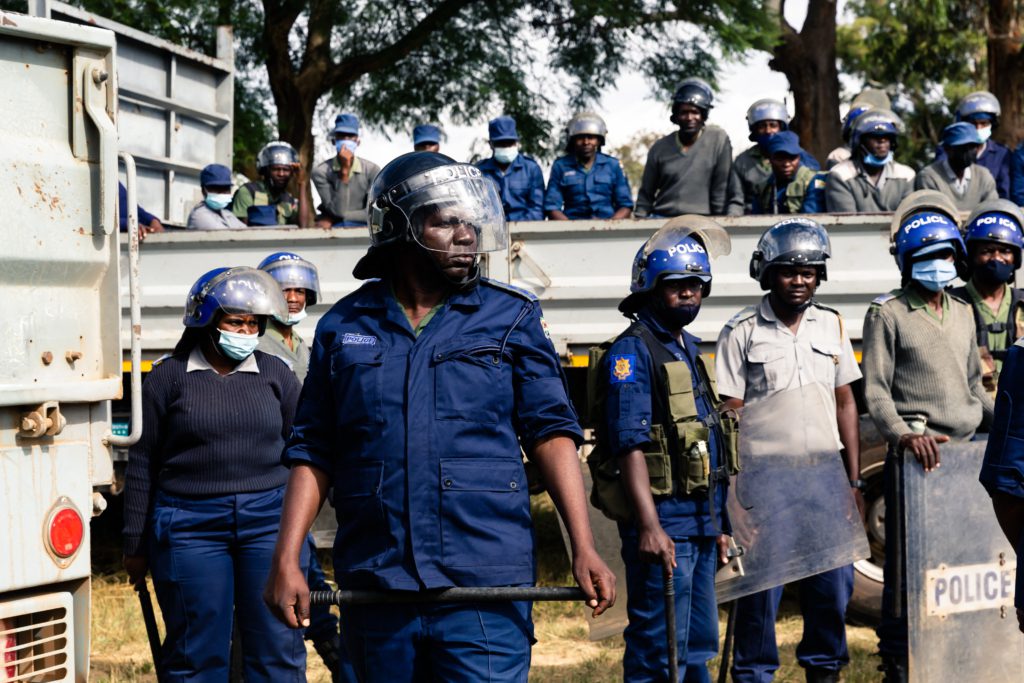
Zimbabwean authorities must end their crackdown against opposition and civil society members ahead of the Southern African Development Community (SADC) summit scheduled for 17 August 2024 in Harare, Amnesty International and Human Rights Watch said today. The authorities must immediately and unconditionally release everyone arrested for exercising their rights.
Authorities must also promptly and effectively investigate allegations of torture or other ill-treatment of detainees and hold any suspected perpetrators accountable in fair proceedings, the groups said. Further, SADC must urgently demand an end to this assault on human rights as it prepares to hand the bloc’s leadership to Zimbabwean President Emmerson Mnangagwa.
“Since mid-June, Zimbabwean authorities have conducted a massive crackdown on dissent. More than 160 people have been arrested so far including elected officials, opposition members, union leaders, students and journalists,” said Khanyo Farise, Amnesty International’s Deputy Regional Director for East and Southern Africa.
The authorities must stop committing such violations and immediately release all detainees.
Khanyo Farise, Deputy Regional Director for East and Southern Africa
The authorities must stop committing such violations and immediately release all detainees.
“Security forces have tear-gassed people in a private residence, beaten people so badly they needed hospitalization, forcibly disappeared people for hours and tortured people in custody. The authorities must stop committing such violations and immediately release all detainees.”
SADC leaders must condemn the Zimbabwe government’s human rights violations and demand that the authorities reverse course by releasing everyone unjustly arrested before the situation worsens further, the groups said. President João Lourenço of Angola, who is the SADC chairperson, and Zambian President Hakainde Hichilema, who chairs its Politics, Defense and Security Cooperation Organ, need to speak out.
A wide-ranging crackdown
The current crackdown began on 16 June, when police raided the home of the opposition Citizens Coalition for Change (CCC) party leader, Jameson Timba, during a private gathering and arrested 78 people. Police fired tear gas and beat people with batons, resulting in multiple injuries, including one requiring surgery.
The authorities charged the group with “gathering with intent to promote public violence and disorderly conduct” and held them for more than two days without bringing them before a court, in violation of Zimbabwean law. The authorities released two children and granted bail to one adult, but 75 people remain arbitrarily detained.
On 24 June, police arrested 44 members of the Zimbabwe National Students Union (ZINASU), including its president, Emmanuel Sitima, and forced them to pay fines for “disorderly conduct” before releasing them. Police then re-arrested Sitima for “criminal nuisance” before releasing him the next day on bail.
On 27 June, Zimbabwe President Mnangagwa warned against “opposition political parties bent on peddling falsehoods and instigating acts of civil disorder, especially before, during and after regional and world state events.” Hours later, police outside the Harare Magistrate’s Court beat and arrested peaceful protesters, who were demanding the release of the people arrested at Timba’s house.
The next day, Information Minister Jenfan Muswere threatened “elements within the opposition, certain politicians, and some civil society organizations,” saying that “their days are numbered.”
On 29 June, police arrested five members of the National Democratic Working Group social justice movement at a private home in Harare during a meeting to raise funds for impoverished families, then released them. On 1 July, the police broke up a memorial service for a CCC member killed in 2022. Police arrested another six people affiliated with the Community Voices Zimbabwe media organization in Gokwe on 3 July before releasing them without charge.
The Zimbabwe authorities’ intensified crackdown and the dismantling of fundamental freedoms is directly linked to the government’s hosting of the SADC summit in Harare.
Idriss Ali Nassah, senior Africa researcher at Human Rights Watch
The Zimbabwe authorities’ intensified crackdown and the dismantling of fundamental freedoms is directly linked to the government’s hosting of the SADC summit in Harare.
On 31 July, state agents pulled four activists off a plane before takeoff at Robert Gabriel Mugabe Airport and forcibly disappeared them for nearly eight hours. Lawyers later documented evidence of torture and other ill-treatment, including extensive bruising on the Amalgamated Rural Teachers Union of Zimbabwe leader, Robson Chere, reportedly requiring urgent medical attention. The authorities charged the four activists with “disorderly conduct” for participating in the 27 June protest outside the Magistrate’s Court.
The authorities have arrested more than 30 people across Zimbabwe since 1 August, including Sitima for a third time, a parliamentarian and 13 others in Kariba town, a city council member, a senator and a religious leader. Most arrests were related to protests or supporting opposition parties. On 8 August, masked people attempted to break into the offices of the Crisis in Zimbabwe Coalition civil society organization in Harare.
“The serious violations we are witnessing, including violent attacks, abductions, torture, arbitrary arrests and other abuses against the opposition, government critics and activists are just the latest example of the failure of President Mnangagwa’s government to promote, protect and respect basic human rights,” said Idriss Ali Nassah, senior Africa researcher at Human Rights Watch.
SADC has said nothing publicly about these human rights violations. The bloc needs to take a clear stand against the crackdown in Zimbabwe, especially as President Mnangagwa prepares to take over the SADC chairmanship, the groups said. The African Commission on Human and Peoples’ Rights should demand the immediate and unconditional release of everyone arbitrarily detained simply for exercising their rights.
“The Zimbabwe authorities’ intensified crackdown and the dismantling of fundamental freedoms is directly linked to the government’s hosting of the SADC summit in Harare,” Nassah said. “It sets a dangerous tone for the bloc’s commitment to human rights under the upcoming chairmanship of Zimbabwe President Mnangagwa.”
While SADC must address the clampdown in Zimbabwe now, it must also use the Harare summit and President Mnangagwa’s chairmanship to improve respect for human rights across the region, in line with the SADC treaty.
Related Topics
Keywords
Related Stories
NEW: Zimbabwe advances AIIB membership bid following Prof Ncube’s high-level meeting in Beijing
Harmony Agere A delegation from the Ministry of Finance, Economic Development and Investment Promotion, led by Professor Mthuli Ncube, today held a meeting with the Asian Infrastructure Investment Bank (AIIB)…

Rufaro Marketing shifts focus from beerhalls to real estate development
Obey Musiwa Herald Reporter Rufaro Marketing, the Harare City Council-owned company historically known for operating beerhalls, has unveiled an ambitious turnaround strategy aimed at transforming the entity into a modern…
Bosso players owed one month salary, four winning bonuses
Sikhumbuzo Moyo, smoyo@chronicle.co.zw IT has been established that Highlanders Football Club players are owed one month’s salary for May and four winning bonuses. The Bulawayo giants’ dressing room is in turmoil,…

Ebola cases surge across DRC and Uganda as death toll passes 200
Story by Abigirl Tembo, Health Editor THE Ebola outbreak in the Democratic Republic of Congo (DRC) and Uganda has claimed more than 200 lives within its first month, with health authorities warning that the situation remains far from under control. According to the Africa…

Top Stories
HEART FOR ART: Award-winning artist Annette Kamfer paints her way back after Parkinson’s diagnosis
LOCAL ELECTIONS 2026: Ten critical questions as South Africa heads into high-stakes poll

Sanwo-Olu makes runaway appearance at Lagos Fashion Week (PHOTOS)

Valkyries win WNBA title in their second season

EXCLUSIVE: Ebola: 34-year-old pilot, wife identified as suspected cases who tested negative in North-east Nigeria
Zuma to make first public appearance since hospital discharge

When youths move, society changes: The 2026 barricades, By Owei Lakemfa

Why war makes Ukraine media more determined than ever to hold power to account
Latest
HEART FOR ART: Award-winning artist Annette Kamfer paints her way back after Parkinson’s diagnosis
LOCAL ELECTIONS 2026: Ten critical questions as South Africa heads into high-stakes poll
Sanwo-Olu makes runaway appearance at Lagos Fashion Week (PHOTOS)
Valkyries win WNBA title in their second season
EXCLUSIVE: Ebola: 34-year-old pilot, wife identified as suspected cases who tested negative in North-east Nigeria
Zuma to make first public appearance since hospital discharge
When youths move, society changes: The 2026 barricades, By Owei Lakemfa
Why war makes Ukraine media more determined than ever to hold power to account