Zimbabwe's President faces tough resistance to his reforms
Zimbabwe’s President Emmerson Mnangagwa has indicated that he wants to engage with the West, encourage investment and open up the country’s politics. However, the military wing of the ZANU-PF seems intent on continuing repression.
“Operation Restore Legacy,” or the coup that was supposedly not a coup, marked the end of President Robert Mugabe’s long dictatorship in Zimbabwe. Huge protests against Mr. Mugabe had been ongoing for two years amid a deep economic crisis. What finally led to his ouster, however, was concerted action by two institutions that had sustained his rule for decades: the army, led by General Constantino Chiwenga, and the ZANU-PF party, led by Emmerson Mnangagwa.
The period between the coup, in November 2017, and elections held on July 30, 2018, was characterized by a sense of cautious optimism about Zimbabwe’s prospects. President Emmerson Mnangagwa, once Mr. Mugabe’s right-hand man, radically changed the official rhetoric. He announced that the country was open for business, called for reengagement with the outside world (especially with Western powers) and began courting potential investors. State repression decreased. For the first time since the opposition Movement for Democratic Change (MDC) was founded in 1999, it was allowed to campaign in rural areas – traditionally ZANU-PF strongholds – without major constraints.
In January, President Mnangagwa announced that the government would put an end to land invasions (in which white farmers’ land was seized without compensation by landless blacks) and would grant white farmers 99-year leases, instead of the previous five-year arrangements that could be revoked at a moment’s notice. In March 2018, indigenous ownership requirements were abolished in all sectors except for diamond and platinum mining.
Eventful elections
The campaign leading up to the July 30 elections went rather smoothly, with more than 600 foreign electoral observers present and no restrictions on international media. However, as surveys indicated, the polls would be tightly contested. President Mnangagwa benefited from the incumbent’s advantage, including access to state resources and a degree of control over the electoral process.
Interestingly, though he represented the party in power since independence, Mr. Mnangagwa positioned himself as a candidate for change, signaling a rupture with Mr. Mugabe’s politics. The MDC’s Nelson Chamisa had strong support in Zimbabwe’s main urban centers. However, his position was weakened by internal divisions within the party following the death of its leader, Morgan Tsvangirai, in early 2018.
The elections were probably the freest Zimbabwe has held since independence.
Teresa Nogueira Pinto
The elections were probably the freest Zimbabwe has held since independence.
Teresa Nogueira Pinto
The election and its aftermath undermined the newfound optimism in and about Zimbabwe. Delays in announcing the presidential results bred suspicion among the opposition, especially after initial results showed the ZANU-PF had secured a two-thirds majority in the parliament. Mr. Chamisa declared himself the winner, but official results gave him only 44.3 percent of the vote against President Mnangagwa’s 50.8 percent – just enough to avoid a runoff.
Mr. Chamisa challenged the results, but the courts upheld them. Observers from the African Union, Southern African Development Community (SADC) and Common Market for Eastern and Southern Africa (COMESA) endorsed the elections, though the European Union released an ambiguous statement. While doubts remain about whether the process was fair and transparent, they were probably the freest ballot Zimbabwe has held since independence.
Fragile political balance
Despite his victory at the polls, President Mnangagwa still must manage an extremely fragile political balance. The main challenge does not come from the opposition, but from within the ZANU-PF. Mr. Mnangagwa does not control the party, which is split between his own supporters, a military wing led by Vice President Constantino Chiwenga and a third, less powerful wing of younger activists loyal to Robert and Grace Mugabe.
In fact, a combination of events suggests that the party, and therefore Zimbabwe, now have a two-headed presidency. During unrest following the elections, the army was deployed in the streets. Clashes led to the deaths of six people. President Mnangagwa’s firm condemnation of the violence and his decision to hold an inquiry suggest that the decision to deploy the army was made not by him, but by Vice President Chiwenga. Similar suspicions have emerged regarding the arrest of opposition leader Tendai Biti, who was subsequently released on President Mnangagwa’s orders.
While President Mnangagwa seems committed to improving relations with the West and to opening the political space (albeit modestly), General Chiwenga represents continuity with Mr. Mugabe’s policies. He has worked to maintain the Zimbabwean Defense Forces’ prominence in the country’s politics, defended indigenization policies and pushed for consolidating relations with China and Russia (Mugabe’s famous “Look East” policy) to the detriment of reengaging with the West.
Challenges in sight
Even if he wants to foster political stability and revive Zimbabwe’s economy, President Mnangagwa has a daunting task ahead. He will need to balance the goals of the ZANU-PF’s military wing (and General Chiwenga’s political ambitions), while trying to maintain social stability and regaining the trust of international creditors and investors.
With a severe liquidity crisis, soaring trade and budget deficits, and a foreign debt estimated at $1.2 billion, the Zimbabwean economy remains on the brink of collapse. New investments and lines of credit, however necessary, will not be enough to revive the economy. There are other urgent needs, including filling some enormous gaps in basic infrastructure (clearly evident during the recent cholera outbreak), devising sustainable job creation policies, reining in the country’s enormous informal sector, and introducing fiscal and banking reforms. And until Zimbabwe resolves its liquidity crisis, efforts to attract foreign investment will likely come to naught.
Foreign investment flows have increased since the removal of President Mugabe.
Foreign investment flows have increased since the removal of President Mugabe.
Teresa Nogueira Pinto
There are some positive signs. President Mnangagwa is sponsoring a new investment facilitation bill and has said he wants to establish anti-corruption courts. In November 2017, he introduced a three-month amnesty period for businesses and individuals that had “illegally externalized” money from the government. In July, he announced that the government had recovered $850 million of an estimated $1.4 billion in looted funds. More foreign investment is also flowing into the country since the removal of President Mugabe, according to the Zimbabwe Investment Authority (ZIA).
Scenarios
Zimbabwe’s road to economic recovery and political stabilization will be long and rocky, and it will take decades to reverse the economic and political legacy of Robert Mugabe. There is therefore one baseline scenario – business as usual – and two slightly less likely scenarios: meaningful change and growing instability.
Business as usual
Under this most probable scenario, power struggles inside the ZANU-PF and the symbiotic relationship between the party and the state will delay any meaningful economic reforms. Faced with ongoing protests and the strength of the party’s military wing, President Mnangagwa will prioritize the consolidation of power within the party over shoring up the economy. To maintain the support of the Zimbabwe Defense Forces, he will continue to uphold old patronage networks, sacrificing competence and change for the sake of managing competing loyalties.
To avoid direct confrontation with ZANU-PF hardliners, Mr. Mnangagwa will delay opening Zimbabwe’s political space. This will compromise relationships with outside creditors and international powers, especially the United States.
Meaningful change
Under this slightly less likely scenario, President Mnangagwa will lead a cautious but determined rupture with the past, inside and outside the ZANU-PF. This scenario depends on the president’s ability to assert his control over the ruling party by progressively reducing the power of its military wing, while maintaining some social stability and delivering economic improvement. This is the only way he can undertake major reforms without compromising his political position.
Growing instability
Despite doubts about their transparency, the general elections have helped legitimize President Mnangagwa’s leadership, both internally and internationally. However, his rise to power was possible thanks to the military coup led by General Chiwenga. If the liquidity crisis persists and popular protests resume, the president’s position will grow more fragile. Vice President Chiwenga, who is said to cherish his own presidential ambitions, could become openly hostile to Mr. Mnangagwa. This could further militarize Zimbabwean politics and stoke internal tensions.
© 2026 Copyright by Geopolitical Intelligence Services AG
View this report on the web:
https://www.gisreportsonline.com/r/zimbabwes-president/
Relevance beyond the crisisJuly 27, 2020Growth after the lockdownEnrico Colombattois a professor of economics in Italy.
Leadership Challenges 2020January 16, 2020Why Nigeria’s development remains stuntedTeresa Nogueira Pintois an African affairs expert.
PoliticsFebruary 21, 2024Ethiopia-Somaliland deal risks regional tensionsTeresa Nogueira Pintois an African affairs expert.
EconomyNovember 24, 2022Labor markets, education and growthEnrico Colombattois a professor of economics in Italy.
EconomyNovember 21, 2023The Gordian Knot of China’s EV subsidiesJunhua Zhangis a senior associate at the EIAS.
Relevance beyond the crisisApril 8, 2020Strategies for the euroEnrico Colombattois a professor of economics in Italy.
Originally published and reported by GIS Reports.
Read original coverage on GIS ReportsKeywords
Related Stories
Labubu hype seemed unstoppable, now the fluffy monster mania is dying
Parent company Pop Mart's revenue has fallen as appetite for the quirky collectible monsters wanes.

Can New Zealand's new government win over disillusioned voters?
Polling shows the mood among Kiwis is low, with faith in politics even lower - with voters deserting the main parties at the polls.

'My mortgage is going up £200': How rising interest rates are hitting people's pockets
With UK interest rates set to rise, mortgages, credit cards and loans could get more expensive for millions.

Why the US midterms sparked an AI stock selloff
Fears of more AI regulation appear to have sparked fear among investors, but concerns about the industry have been growing for some time.

Top Stories

Billam-Smith stopped as Clarke repeats amateur win

Ambika Mod says the 'glass ceiling is always getting higher' for South Asian actors

The rise of microdramas: The 'snackable' shows made for the scrolling age

Can the Zelda remake capture the magic of the original?

'Dana, please take the job!' - Trump asks UFC boss to be White House press secretary
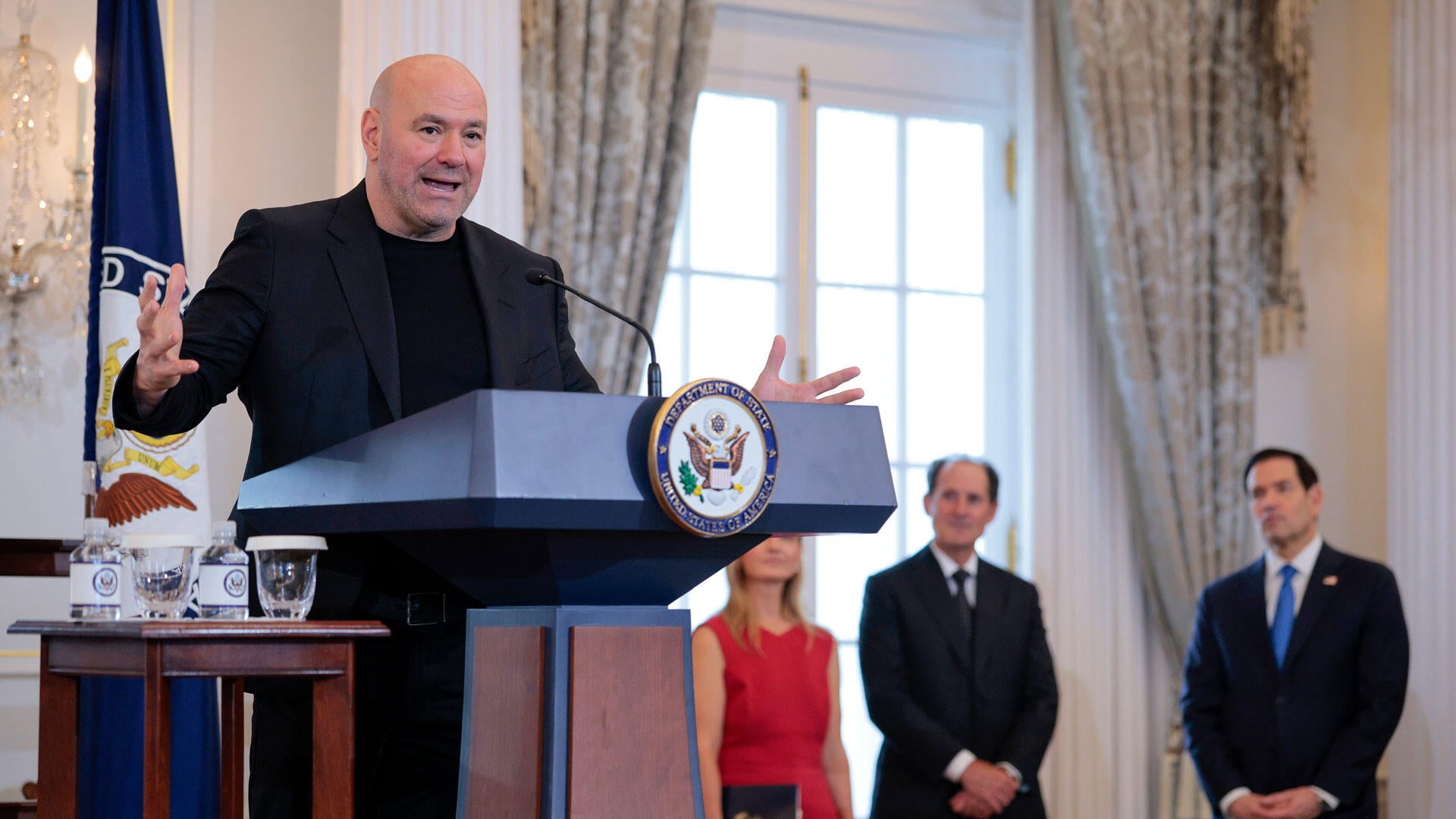
Dana White next White House press secretary? UFC boss set for meeting with President on Monday

'The worst conditions in my 35-year career' - commentating in the FA Cup fog

'Curtains for Robinson' or can floundering Aberdeen boss survive?
Latest
Billam-Smith stopped as Clarke repeats amateur win
Ambika Mod says the 'glass ceiling is always getting higher' for South Asian actors
The rise of microdramas: The 'snackable' shows made for the scrolling age
Can the Zelda remake capture the magic of the original?
'Dana, please take the job!' - Trump asks UFC boss to be White House press secretary
Dana White next White House press secretary? UFC boss set for meeting with President on Monday
'The worst conditions in my 35-year career' - commentating in the FA Cup fog
'Curtains for Robinson' or can floundering Aberdeen boss survive?