ZINWA expands solar-powered water supply as 26 stations switch from diesel

Theseus Mauruki Shambare
THE Zimbabwe National Water Authority (ZINWA) has embarked on a wide-ranging infrastructure modernisation drive that has seen 26 water supply stations across the Runde Catchment being converted from diesel-powered systems to solar energy, in a move aimed at improving efficiency, reducing operational costs and strengthening rural water security.
The development forms part of a broader transformation agenda being rolled out by the authority, which also includes improved water security for agriculture, expansion of prepaid water metering systems, digital service delivery tools and investment in dam-based economic opportunities.
According to ZINWA, the solarisation programme was implemented during the first and second quarters of 2026, targeting remote and underserved communities where diesel dependency had previously increased operational costs and service disruptions.
A pilot 264kW solar system installed at Murehwa Water Supply Station is currently being tested for potential national rollout, signalling a shift towards renewable energy-powered water infrastructure across the country.
ZINWA head of corporate communications and marketing, Mrs Marjorie Munyonga, said the solarisation initiative reflects the authority’s commitment to sustainable and transparent service delivery.
“This newsletter was born out of a simple but vital realisation: transparent, consistent communication is the bedrock of excellent service,” said Mrs Munyonga.
She said the shift from diesel to solar power was not only an operational improvement but also a long-term investment in resilience and sustainability.
“In transforming our water supply systems, we are reducing reliance on costly diesel energy while ensuring that rural and peri-urban communities receive more reliable water services,” she said.
The solarisation programme includes stations such as Bhasera, Chirowe, Rupike, Deure, Sino-Chikuku, Gezani, Malipati, New Boli, Sango Border Post, Nyahombe, Tetemi, Mushandike, Lundi-Siboza, Mataga, Chidyamakono, Masvosva and Guniku/Mukosi, among others.
Beyond energy reforms, ZINWA says water security remains a key pillar of national food production, with Government targeting 140 500 hectares under winter cropping for wheat, barley and potatoes.
As of early June 2026, national dam levels averaged 91.9 percent, with major dams such as Tugwi-Mukosi, Mtshabezi and Siya recording full capacity, providing a strong foundation for irrigation-led agriculture.
“The high dam levels we are witnessing are critical for sustaining winter cropping programmes and strengthening national food security,” said Mrs Munyonga.
She added that water availability must be matched with efficient infrastructure and management systems to maximise agricultural output.
In parallel with energy reforms, ZINWA is also expanding its prepaid water meter programme, which has already been implemented in several towns including Karoi, Gokwe, Hwange, Nyanga, Chivhu, Mutoko and Guruve, with Nyika and Chirundu next in line.
In Chirundu alone, 659 prepaid meters are set to replace postpaid systems, a move residents say will improve billing transparency and resolve long-standing disputes.
ZINWA has also introduced the “Donhodzo” WhatsApp chatbot, a digital platform that allows clients to access services such as dam level updates, billing information, incident reporting and tariff details.
The authority says the combined reforms in energy, digital systems and infrastructure form part of a broader effort to modernise Zimbabwe’s water sector and unlock economic opportunities linked to dams, irrigation and tourism development.
 Share on Facebook
 Post on X
 Follow us
 Save
Related Topics
Keywords
Related Stories
NEW: Zimbabwe advances AIIB membership bid following Prof Ncube’s high-level meeting in Beijing
Harmony Agere A delegation from the Ministry of Finance, Economic Development and Investment Promotion, led by Professor Mthuli Ncube, today held a meeting with the Asian Infrastructure Investment Bank (AIIB)…

Rufaro Marketing shifts focus from beerhalls to real estate development
Obey Musiwa Herald Reporter Rufaro Marketing, the Harare City Council-owned company historically known for operating beerhalls, has unveiled an ambitious turnaround strategy aimed at transforming the entity into a modern…

Bosso players owed one month salary, four winning bonuses
Sikhumbuzo Moyo, smoyo@chronicle.co.zw IT has been established that Highlanders Football Club players are owed one month’s salary for May and four winning bonuses. The Bulawayo giants’ dressing room is in turmoil,…

Ebola cases surge across DRC and Uganda as death toll passes 200
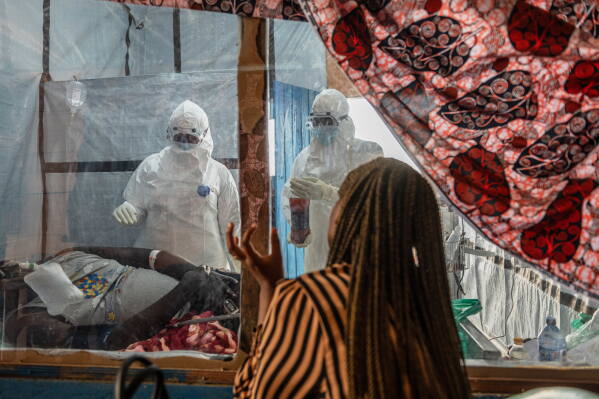
Story by Abigirl Tembo, Health Editor THE Ebola outbreak in the Democratic Republic of Congo (DRC) and Uganda has claimed more than 200 lives within its first month, with health authorities warning that the situation remains far from under control. According to the Africa…
Top Stories

Hamilton takes first pole for Ferrari at Mexico City Grand Prix

These firms you've never heard of are feeding fears the AI bubble could burst

How the downfall of Serbia's Vučiċ mirrored that of Hungary's Orbán

College football winners, losers: Oregon's Dylan Raiola bounces back, Wisconsin falls flat

On 'tense' Antonelli's big weekend, this was Hamilton's day

Thick fog to create hazardous driving conditions into next week

Oklahoma offense stuck in neutral: Loss to South Carolina highlights key decisions ahead for Brent Venables

No more washing up: How Airbnb's new house rules have divided hosts and guests
Latest
Hamilton takes first pole for Ferrari at Mexico City Grand Prix
These firms you've never heard of are feeding fears the AI bubble could burst
How the downfall of Serbia's Vučiċ mirrored that of Hungary's Orbán
College football winners, losers: Oregon's Dylan Raiola bounces back, Wisconsin falls flat
On 'tense' Antonelli's big weekend, this was Hamilton's day
Thick fog to create hazardous driving conditions into next week
Oklahoma offense stuck in neutral: Loss to South Carolina highlights key decisions ahead for Brent Venables
No more washing up: How Airbnb's new house rules have divided hosts and guests