100 reasons we love the Middle East and North Africa (#91 to 100)

At a time of unrest and uncertainty across the region, we present 100 reasons we love the Middle East – an ode, of sorts, to the incredible people, places, hotels, food, fashion, crafts and creativity that shape this mesmerising, oft-misunderstood corner of the world. And a reminder, in unsettling times, of what endures.

Bella Hadid in a vintage keffiyeh dress by Michael and Hushi
Jacopo Raule91. Homeland as muse
“I’m far away but I’m praying for you, and I’m sending peace on an olive branch,” Elyanna sings. Her words capture a very particular grief – one where distance from home only heightens the obligation to preserve it. For Palestinian creatives, the act of making has become a way to play witness, sustain identity and carry heritage forward. Rather than operating in the margins, they are using their respective mediums to narrate the stories of their homeland. Music is one of the most immediate channels for this expression, with artists such as Elyanna and Saint Levant moving the Palestinian narrative into the mainstream consciousness. Elyanna has used her global reach with clear intent, bringing Arabic-language music into spaces it has rarely occupied, most notably through her performances on Coldplay’s Music of the Spheres tour. Maqam – a musical scale or melodic framework traditionally used in Arabic music – and vocals cut through stadium-scale production, placing Palestinian identity firmly in the centre of global pop. Similarly, Saint Levant layers traditional melodic scales over the modern pulse of R&B, moving between English, Arabic and French to mirror a fractured, multilingual reality. In Daloona and Deira, he draws on the lived experience of the diaspora to craft a love letter to Gaza – celebrating the beauty of the landscape and the endurance of its people through a sound that resonates far beyond the Middle East. This resonance isn’t confined to the stage. Reema Al Banna, fashion designer and founder of Reemami, brought Palestinian design codes into global circulation through her collaborations with Bella Hadid, who has consistently used her platform to spotlight Palestinian culture. In a look shared on social media, Hadid wore Al Banna’s Maqlouba dress, composed of hand-drawn illustrations – tatreez motifs, a horse and cart, and a tin of olive oil – that draw from everyday Palestinian life. During the 2024 Cannes Film Festival, Hadid donned a vintage keffiyeh dress by design duo Michael and Hushi, making a marked political statement as she wandered the streets in search of ice cream. By donning these pieces, Hadid amplifies the design philosophy that cultural identity is not a static souvenir but a living, wearable experience. Hadid reinforced this sentiment in the caption accompanying Al Banna’s look, writing about the importance of “keeping our softness when the world tries to turn us hard”, and of holding on to lineage in the face of erasure. Hana Al-Khodairi
 Mariah Tauger
92. Eat like a local: Shawarma
Ask your average person to name the Middle East’s most famous street food and the answer will likely be shawarma, as common in Amsterdam and Berlin as it is in Amman and Beirut. A vertical rotating spit of marinated chicken, beef or lamb is slowly roasted, shaved to order and then tightly wrapped in a flatbread, with various accompaniments, from tahini, pickles and even fries, to garnishes of tomatoes, onion and parsley. As with many dishes of this vast, diverse region, its roots can be traced back to the Ottoman empire, when meat was first grilled horizontally over an open fire. By turning it upright, the Ottomans realised that the fat basted the meat as it cooked, keeping it moist. This innovative technique led to doner kebab in Turkey; shawarma in the Levant and broader Arab world (I am purposely avoiding a contentious country-of-origin debate); and gyro in Greece. Like a favourite colour, everyone has a favourite shawarma joint in Dubai. From 1970s late-night classic Al Mallah and under-the-radar Jabal Al Noor, to cult go-to Al Safadi and polished retro spots like Allo Beirut, there’s a shawarma style for every foodie. More than a sandwich, it’s a cultural phenomenon that simultaneously manages to unite and divide opinion. Samantha Wood
 Saudi singer-songwriter HajajNat Michele
93. Hajaj, singer-songwriter
Travel is at the heart of Saudi singer-songwriter Hajaj’s music. His songs are infused with the sense of discovery that constant movement generates, but are also weighted with a sense of upheaval and unpredictability. Born in Jeddah and based in London, he has lived in Switzerland, Spain, California, Oregon and Colorado, and channels a sense of uprootedness into emotionally charged lyrics that speak of internal conflict, the complexity of identity and a sense of never quite belonging. His music defies genres: a blend of soul, R&B and funk mixed with sweeping strings, singalong choruses and vocals that soar from anguished cries to lamentations of loss. Both Sides of the Border is based on a relationship destined for failure; Blood speaks of conflicts of identity. But there are also lighter moments that are both timeless and placeless. Hajaj’s voice feels fresh – unfailingly human and able to speak directly to those who, like him, find themselves constantly looking for their place in the world. Nicola Chilton
 Courtesy Louvre Abu Dhabi
94. Next-level keepsakes
Exiting through the gift shop once meant having to run the gauntlet of shelves laden with tacky souvenirs. No longer. Today, the Middle East's museum shops are filled with consciously curated collectibles – whether you're at the masterpiece-filled Louvre Abu Dhabi, where the book selection is excellent, with catalogues of exhibitions past and present, and an impressive selection of art titles for children; or at the Jardin Majorelle shop in Marrakech, which champions local, handmade design, with each purchase feeding directly back into Moroccan artisan communities. Our absolute favourite, however, is the shop at Cairo's Grand Egyptian Museum, which pulls together works by craftspeople and artisans from across Egypt, from Alexandria to Siwa and South Sinai to Nubia. The result includes replicas of Ancient Egyptian masterpieces, homeware, clothing, decorative objects and an extraordinary collection of books. GEM also collaborates with NGOs and national handicraft initiatives to create opportunities for underserved communities. Scott Campbell and Nicola Chilton
See our full list of the region's best museum shops here

95. Andalus Garden, Bahrain, photographed by Ishaq Madan
“In a region often defined by rapid vertical growth, Andalus Garden in Bahrain remains a horizontal anchor. I remember the grit of this ground from a childhood spent on a bicycle, learning to find my balance. I remember the sting of a scraped knee here, a small price to pay for the freedom of riding without safety wheels. Today, the park has transformed into a vibrant tapestry of communities, a rare patch of green where the many faces of Bahrain breathe together. Bringing my five-month-old daughter here for a stroll recently felt like a quiet revolution. I love this photograph because it isn’t just about a location; it’s about the endurance of memory and the joy of witnessing a place you love grow alongside you.”
 Ziga Mihelcic
96. Emirati flavours
In chef Sahar Parham Al Awadhi’s kitchen, the air carries the sour, citrusy tang of dried lumi, the black limes that give Emirati cooking its distinctive depth. As she tears bread into a bubbling tomato stew, preparing an experimental take on margooga for her upcoming restaurant, Abra, I’m struck by a sharp sense of recognition. It looks almost exactly like the Iraqi tashreeba my mother makes. But what emerges is a distinctly Emirati version of the dish. Middle Eastern cuisines often share ingredients, techniques and histories, yet the identity of a dish remains stubbornly local. Despite growing up in the UAE, I realised how little I understood of Emirati food, a cuisine that has traditionally lived behind closed doors, and passed through family kitchens rather than restaurant dining rooms. That curiosity led me across the country. Through conversations with Frying Pan Adventures founder Arva Ahmed and her team, I explored everything from Al Shandagha’s humble public kitchens, where neighbourhood recipes still feed local families, to Gerbou, where Emirati food is presented with the technical precision of fine dining. In Sharjah, chef Mariam Almansoori modernises inherited family recipes without losing their essence. In Abu Dhabi, chef Faisal Alharmoodi explains how geography shaped a cuisine defined by coastal salinity, desert resilience and, of course, the sharp acidity of lumi. What revealed itself was a cuisine that is deeply personal, shaped by geography, memory and inheritance, now slowly stepping into public view – without entirely surrendering the intimacy that defined it. HAK
Read our full story on discovering Emirati food here

97. Reading the rocks in AlUla
I’ve visited AlUla in Saudi Arabia many times, watching shooting stars streak above honeycombed cliffs in the Ashar Valley, and peering down over the oasis from the black volcanic mesa at the Harrat viewpoint. I’ve gazed at the pachyderm form of Elephant Rock at sunset, and stood in silent awe in front of the tomb of Lihyan, Son of Kuza, that one instantly recognisable, solitary tomb carved out of a single sandstone boulder by Nabataean masons. On each trip, I’ve heard varying stories about how these fascinating landscapes were carved by water when AlUla sat at the bottom of an ancient sea. But it always felt as if something in the explanations was missing, incomplete or incorrect. This time, I’m hoping to learn the real stories about a place that’s one of the most mesmerisingly beautiful I’ve ever been, and have made a date to go hiking with Jan Freedman, the Royal Commission for AlUla’s geologist. My first question for Freedman is whether all of AlUla was once underwater. The answer, he tells me, is “kind of yes and no”. Freedman has spent the past three years walking, hiking and exploring the dramatic landscapes here, sharing the stories written in the rocks with residents and visitors. AlUla’s big-ticket sights are the more than 100 Nabataean tombs at Hegra, carved directly into sandstone outcrops. “When people come to AlUla, they go to Hegra to see the incredible tombs, and then they start to look at the rocks and spot weird features and wonder why they’re there,” says Freedman. “They don’t come here for the geology, but when they’re here, it’s all around them and it’s different and beautiful.” Nicola Chilton
Read our full story on AlUla's fascinating landscapes here

The captain of Kazazian Cruises' Arax
Yehia El Alaily98. Nile cruising
A proliferation of new dahabiyas on the Nile is a response to post-Covid travellers seeking more intimate, personalised experiences than the hulking, 100-cabin motorboats that also ply these waters. Arax, the second offering from the homegrown Kazazian Cruises, takes the motorless (thus silent and vibration-free) design of the traditional dahabiya boat and merges it with the sleek aesthetic of a luxury yacht. At every turn, Nile views are given the reverence they deserve. In the airy living and dining areas, the brilliant blues and greens of the lush landscape are framed by the 60-metre-boat’s floor-to-ceiling glass windows and brazenly all-white interiors. There are Hermès toiletries, Technogym workout equipment and a plunge pool on the sundeck – but also the kind of consistent, unobtrusive, intuitive service that might see impromptu easels set up on deck to entertain the children, or a surprise beach dinner laid out on a private island. At the other end of the design spectrum, Al Moudira’s new 55-metre Nile Canopus is a nostalgia-infused nod to historic travel along this evocative waterway. Open-air decks with safari-tent-style coverings, a cosy library, and rooms fitted with brass beds and bespoke teak and rattan furniture are designed to evoke the age of Amelia Edwards, author of the seminal 1877 travelogue A Thousand Miles up the Nile. Meanwhile, Karine Hassoun called on Egyptian painters, professors and artisans for her eight-cabin dahabiya, Nile Divine, a celebration of contemporary Egyptian craft. And in the nine-cabin Oro, a dark wood exterior pays tribute to the dahabiyas of old, while a brass wall feature creates a dramatic welcome in the boat’s double-height reception area. A plunge pool extends out over the deck, there’s a full-fledged bar up top, and suites have private terraces with hot tubs. Oberoi will join the fray later this year with two seven-suite dahabiyas featuring interiors by Karim Mekhtigian, founder of Alchemy Design Studio; while Waldorf Astoria’s new 29-suite Nile cruiser will bring all the elements of its land-based hotels to the water, including its Peacock Alley brasserie. Change is afoot on land, too. Cranes hover over Luxor's East Bank, pinpointing where a new Four Seasons, due to open in 2027, is rapidly taking shape. And the much-loved Winter Palace – archaeologist Howard Carter’s base during his 1922 Tutankhamun tomb discovery and where Agatha Christie wrote parts of Death on the Nile – has just closed for a renovation and will reopen as a Mandarin Oriental in July 2027, exactly 120 years after its official inauguration, hopefully with original features and charm fully intact. That’s just ahead of next year’s solar eclipse: on 2 August, Luxor will witness the moon masking the sun for its maximum duration, a total of 6 minutes and 22 seconds. Selina Denman
Read our full story on why now is the time to book that bucket-list trip to Luxor here

Iliana Pool Club at Jumeirah Marsa Al Arab
Jumeirah Marsa Al Arab99. Shiny new hotels
The Hot List is Condé Nast Traveller's annual compendium of the world’s best new (and newly reborn) hotels, restaurants and cruises, meticulously crafted by our global editors and contributors. The Middle East and North Africa remains at the forefront of luxury hospitality, and hotels that opened in the past year show why. Among the most notable properties to open in the region are Jnane Rumi in Marrakech, a mini manor house set amid a glorious garden of centenarian palms and pistachio trees; Rosewood Doha, a celebration of Qatari art and culture; and Jumeirah Marsa Al Arab, which emerges from Dubai's coast like a futuristic superyacht.
Read our full list of the best new hotels in Africa and the Middle East here.

100. Al Maha, a Luxury Collection Desert Resort & Spa, Dubai, photographed by Odette Campbell
“This image was taken on my birthday during a stay at Al Maha, a Luxury Collection Desert Resort & Spa. Dubai is often misconceived as a city without depth, but there is another side that reveals itself more gently. A side defined by stillness, nature and space to pause. The gazelle appeared, calm and completely at ease. What I loved most was how naturally it moved through my frame, undisturbed and quietly present. It stepped into the scene as if it belonged there, as if it were always part of the landscape. It felt like a quiet reminder that nature exists here in its own rhythm, and that even in the desert, there is life, presence and softness.” Odette Campbell
This story was originally featured in the May/June print issue of Condé Nast Traveller Middle East
Related Topics
Keywords
Related Stories
Binance sees spike in withdrawals as exchange returns online after $6.3 billion heist
Nov 1 (Reuters) - Binance customers pulled $3.64 billion, or 2.1% of its assets, as the world's biggest cryptocurrency exchange went back online on Sunday after hackers the FBI links to North Korea stole billions from the platform last week.

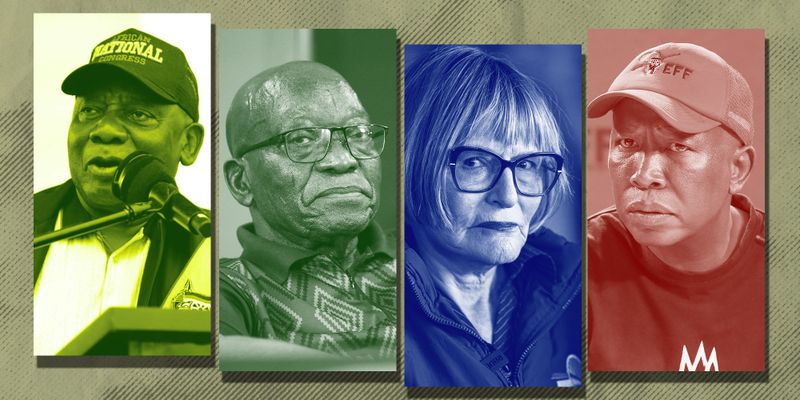
LOCAL ELECTIONS 2026: The top four parties’ final campaign pitches
The ANC, DA, MK party and EFF all held their final campaign rallies this weekend. Here are their final pitches to voters.
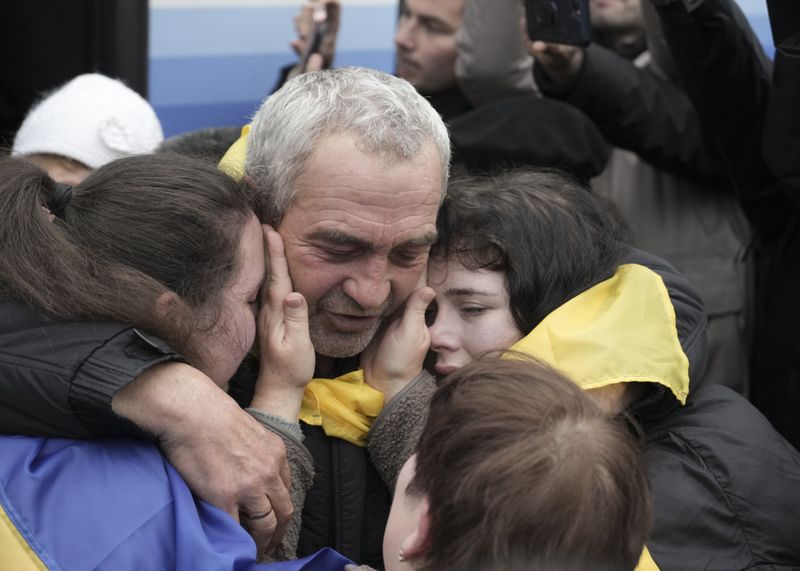
Ukraine evacuates civilians from parts of Kherson region as expiry of Oleshky ceasefire nears
Nov 1 (Reuters) - Ukraine's military said it evacuated 167 people from threatened areas of southern Kherson region on Sunday as a temporary local ceasefire neared expiry -- two days after busloads of residents were brought out of the embattled Russian-held town of Oleshky.
ARTIFICIAL INTELLIGENCE OP-ED: Forget future existential threats — AI is automating gendered violence and misogyny right now
The current alarm about the future dangers of agentic AI might distract us from the very real AI harms already happening. As we speculate about whether machines might one day become dangerous to humankind, AI is deepening misogyny, eroding safety and automating gendered abuse.

Top Stories
Binance sees spike in withdrawals as exchange returns online after $6.3 billion heist
LOCAL ELECTIONS 2026: The top four parties’ final campaign pitches
Ukraine evacuates civilians from parts of Kherson region as expiry of Oleshky ceasefire nears
ARTIFICIAL INTELLIGENCE OP-ED: Forget future existential threats — AI is automating gendered violence and misogyny right now
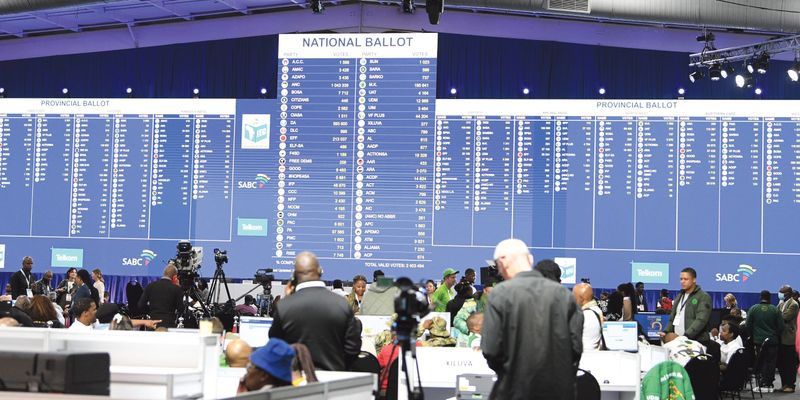
LOCAL ELECTIONS 2026: What happens after the vote? Councils, coalitions and (maybe) controversies
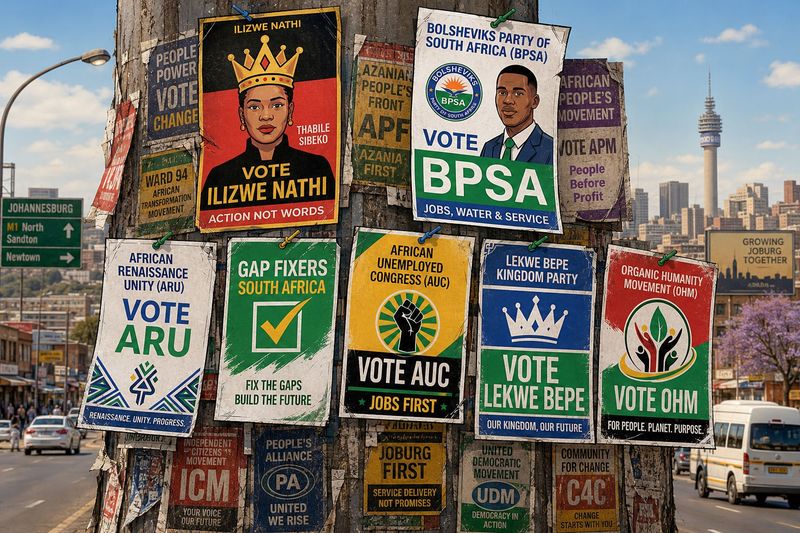
OUR CITY NEWS: Eighty-three parties contest crowded Joburg local government elections
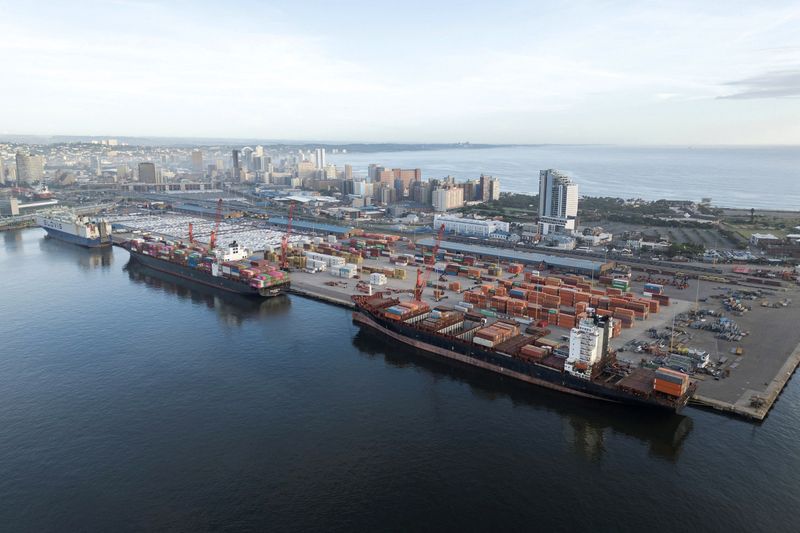
Troubled port: Transnet and foreign operator face scrutiny over backlog at Durban Gateway Terminal

BUSINESS REFLECTION: Crossed Wires: The internet’s technical debt is due, and we can’t pay
Latest
Binance sees spike in withdrawals as exchange returns online after $6.3 billion heist
LOCAL ELECTIONS 2026: The top four parties’ final campaign pitches
Ukraine evacuates civilians from parts of Kherson region as expiry of Oleshky ceasefire nears
ARTIFICIAL INTELLIGENCE OP-ED: Forget future existential threats — AI is automating gendered violence and misogyny right now
LOCAL ELECTIONS 2026: What happens after the vote? Councils, coalitions and (maybe) controversies
OUR CITY NEWS: Eighty-three parties contest crowded Joburg local government elections
Troubled port: Transnet and foreign operator face scrutiny over backlog at Durban Gateway Terminal
BUSINESS REFLECTION: Crossed Wires: The internet’s technical debt is due, and we can’t pay