14 Days to Fix Local: From service delivery to migration, local elections 2026 underscore what really matters to Mzansi
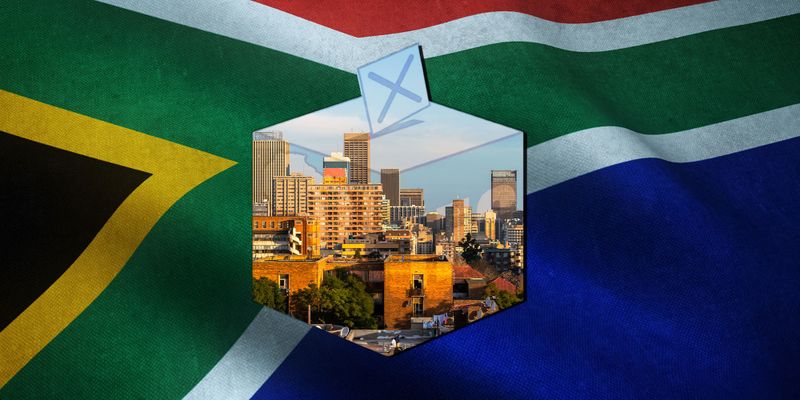
In the next few days we are likely to learn much about the personal egos of certain leaders. In the meantime it is important to reflect on what the local elections have revealed about voters and the future direction of South Africa.
If the results of our local government elections teach us anything, it is that service delivery matters. It was the primary driver for many voters in this election.
One of the great successes of the DA campaign (although it probably fell short of its hopes both nationally and for the Gauteng metros) is that the party was able to set the playing field of this poll.
For once service delivery was front and centre in most of the election debates. This was partly because of the early start to the DA’s campaigning, but mainly owing to the state of local government.
So many voters have the lived experience of sewage flowing past uncollected dustbins in the streets while suffering power cuts and water issues daily.
The results of this poll absolutely reflected that.
At the same time, the fact the DA was able to easily hold on to its majority in Cape Town, and in fact increase its share of the black vote in wards in Gugulethu and Khayelitsha, is more proof that service delivery matters.
The ANC’s descent
The result in Cape Town is also more proof, should anyone need it, that the ANC appears unable to regain ground that it has lost.
The story of the ANC in Western Cape from 2006 onwards (when Helen Zille first cobbled together a coalition that did not involve the ANC) is that it appears unable to campaign strongly in communities where it does not hold power.
This suggests that the national slide in the ANC’s support is a one-way street. As many predicted after the party fell to just 40.18% in the 2024 elections, it was incredibly unlikely that it would ever be able to regain voters who had walked away.
This has been proven in this election, and barring an incredible series of events, will be proven again in 2029.
The next important lesson from this election is that campaigning works. And when you do not mount an effective campaign, you will be punished.
As ANC chair Gwede Mantashe told this reporter in an interview with Newzroom Afrika on Thursday, 5 November, that the ANC would not do well in areas where the local candidates did not campaign.
When asked if he meant Joburg, he confirmed that yes indeed, the ANC would suffer in Joburg because the local candidates had not campaigned effectively.
This may well appear to be a coded rebuke of several people, including the current Mayor Dada Morero.
But it probably also includes the leadership of the Joburg ANC region and in particular their leader, Loyiso Masuku.
This may turn out to be important in the short term, because in a context in which the ANC’s national leadership is going to lead coalition negotiations, ANC regions such as Joburg may now be so weak they are unable to oppose instructions to form coalitions with parties they do not want to work with.
Another lesson from this is that candidates matter.
The ANC’s inability to announce candidates for metros hurt the party in this election.
While some may be very critical of Helen Zille’s campaign in Joburg, the fact is it was simple and therefore effective. It became about one person and one issue (“Save Joburg – Vote Helen”).
The ANC’s election message was not clear and did not really feature local candidates because of its internal contestation.
Another aspect that those who lead our society should be aware of is that this election shows the migration issue is important to communities.
It is a strange irony that while the March and March movement is more closely aligned with the uMkhonto Wesizwe (MK) party than any other formation, the big beneficiary of its protests in this election may be ActionSA.
For many voters in Gauteng, particularly in Tshwane (and specifically in Atteridgeville, where it won all the wards), ActionSA may have been the only option for those who felt this was a major issue.
Thus, the migration issue is going to be a big issue in our politics for some time to come.
In denial
Another obvious non-revelation from these elections is that many of our political leaders are unable to introspect about their own performance.
On Saturday, in his first public response to the election result, EFF leader Julius Malema appeared to blame everyone but himself.
First, it was the fact the ANC had gone into power with the DA in national government. Then it was because black voters had not turned out for “black parties”.
He even refused point-blank to respond to a question about whether the corruption claims against him that have emerged at the Madlanga Commission (among many, many others) may have been a factor.
He is not alone in this.
While some ANC leaders, such as Mantashe and secretary-general Fikile Mbalula, have said that the issue of poor service delivery and campaigning by the ANC is responsible for their poor showing, others have not understood that lesson at all.
Eastern Cape Premier Oscar Mabuyane blamed what he claimed was a “sponsored campaign” against the party in his province.
The real problem is obvious: his party has governed incredibly badly.
It is an obvious fact of life that you will not progress unless one is honest about where things have gone wrong. And if you are not able to blame yourself when you are to blame, the chances are you will not be able to correct yourself.
This must be true of politics. And if our politicians are not able to take personal accountability for their mistakes, accountability within themselves, they will not be able to change direction.
The results of this election have taught us much about what our people feel, about what drives them and about how they feel about their lived experience.
Parties now have 14 days to form coalitions in hung councils. Those two weeks are likely to teach us much about our political leaders and whether they can actually behave rationally, without allowing their emotions to overrule them.
And whether they can, in the immortal phrase, leave their egos at the door. DM
Originally published and reported by Daily Maverick.
Read original coverage on Daily MaverickRelated Topics
Keywords
Related Stories
LOCAL ELECTIONS 2026: DA goes on coalition offensive as battle for Nelson Mandela Bay begins
With no outright majority in Nelson Mandela Bay, coalition choices will shape efforts to restore water, electricity, refuse removal and accountable local government. The DA has emerged as the largest party with 53 of the 120 council seats and is approaching potential coalition…
BUSINESS REFLECTION: Crossed Wires: What happens to Big Tech now after the midterms?
Democratic Party midterm victories may tighten AI oversight, but surging demand, vast investment and Big Tech’s global reach will keep the industry expanding.

WORKING MODEL: Beyond state jobs — Thuli Madonsela on the Constitution’s true economic mandate
According to Prof Thuli Madonsela, one of the drafters of South Africa’s founding document, it is not the government’s responsibility to provide jobs to citizens; rather, the Constitution guarantees the right to justice within a fair economic system.
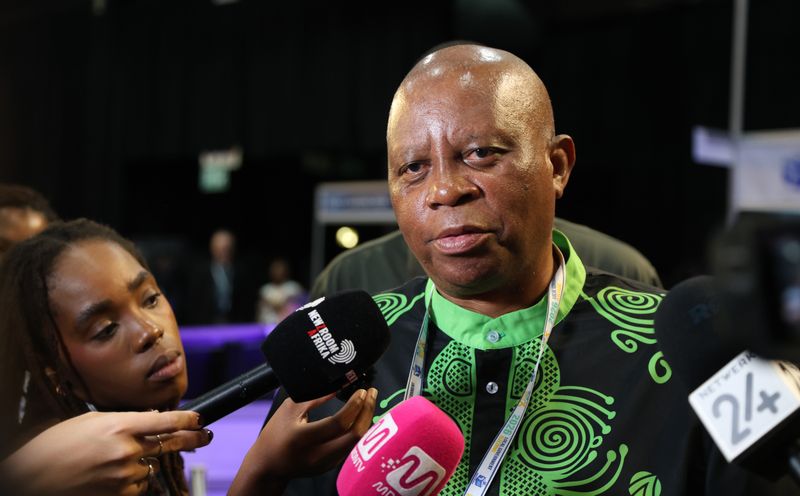
14 DAYS TO FIX LOCAL: Herman Mashaba: ‘Very, very slim’ chance of coalitions with the DA
With 14 days from Monday, 8 November, to hammer out coalition agreements in 139 councils across the country, it’s all eyes on the kingmaker party ActionSA, which has won 55 wards to hold the cards in three key Gauteng metros.
Top Stories
LOCAL ELECTIONS 2026: DA goes on coalition offensive as battle for Nelson Mandela Bay begins
BUSINESS REFLECTION: Crossed Wires: What happens to Big Tech now after the midterms?
WORKING MODEL: Beyond state jobs — Thuli Madonsela on the Constitution’s true economic mandate
14 DAYS TO FIX LOCAL: Herman Mashaba: ‘Very, very slim’ chance of coalitions with the DA
TRANSNATIONAL TRAFFICKING: South Africans entering Nigeria and fuelling global cartel drug trafficking, security briefing hears
LOCAL ELECTIONS 2026: KZN coalition dilemma: Will election losers find their way back to power?
ROYAL ADDRESS: Princess Anne praises SA’s agricultural industry in whistle-stop visit to Cape
LOCAL ELECTIONS 2026 OP-ED: The DA hammered the ANC in Emfuleni — the how and the why
Latest
LOCAL ELECTIONS 2026: DA goes on coalition offensive as battle for Nelson Mandela Bay begins
BUSINESS REFLECTION: Crossed Wires: What happens to Big Tech now after the midterms?
WORKING MODEL: Beyond state jobs — Thuli Madonsela on the Constitution’s true economic mandate
14 DAYS TO FIX LOCAL: Herman Mashaba: ‘Very, very slim’ chance of coalitions with the DA
TRANSNATIONAL TRAFFICKING: South Africans entering Nigeria and fuelling global cartel drug trafficking, security briefing hears
LOCAL ELECTIONS 2026: KZN coalition dilemma: Will election losers find their way back to power?
ROYAL ADDRESS: Princess Anne praises SA’s agricultural industry in whistle-stop visit to Cape
LOCAL ELECTIONS 2026 OP-ED: The DA hammered the ANC in Emfuleni — the how and the why