“A strong confirmation”: Catholic Bishop in Algeria Reflects on Pope Leo XIV’s Historic Visit

By ACI Africa Staff
Algiers, 18 April, 2026 / 11:35 pm (ACI Africa).
The April 13-15 Apostolic Journey of Leo XIV to Algeria has been a pastoral affirmation of a small but enduring Catholic presence in the predominantly Muslim nation, the Bishop of the country’s Laghouat Diocese has said.
In a Thursday, April 16 interview with ACI Africa, Bishop Diego Ramón Sarrió Cucarella said that the Papal visit carried significance not primarily in terms of visibility or immediate outcomes, but in the deeper message it conveyed about encounter and recognition.
“This visit is first of all a grace,” Bishop Diego reflected, and added, “It is not so much about visibility or immediate impact as about encounter, and the meaning it carries over time.”
 Caption:Bishop Diego Sarrió Cucarella.(Photo: Victor Gaetan)
Pope Leo XIV’s two-day stop in Algeria marked the first time a Roman Pontiff has visited the North African nation, a country whose Christianity roots stretch back to the early centuries of the Church, but where Catholics today represent only a small minority.
“For Algeria, it is a sign of respect and trust, recognizing a country with its own history and identity,” Bishop has said, and explained, “For our small Church, it is a strong confirmation: our discreet presence, lived through relationships and daily proximity, is fully part of the Church’s mission.”
First-ever papal visit affirms small Catholic community
Catholic communities in Algeria are diverse but small, consisting largely of migrants, students, expatriates, and religious personnel serving in pastoral and social ministries.
According to Bishop Diego, the reaction among these communities following the Apostolic Journey of Pope Leo XIV’s visit was marked by quiet but profound joy.
“The reactions have been marked by deep joy and gratitude, expressed in a quiet and heartfelt way, in keeping with our context,” he told ACI Africa.
Ethiopia’s Bishop of Bahir Dar-Dessie Appeals for Prayer, Rejection of Violence amid Renewed Fighting

Bishop Diego Sarrió Cucarella, 54, a member of the Missionaries of Africa, celebrates Mass in a chapel in Ouargla, Algeria, in the Sahara Desert. (photo: Victor Gaetan / Victor Gaetan)
The Spanish-born member of the Missionaries of Africa (MAfr/White Fathers) further said, “Our communities are small, diverse and often transient, bringing together students, migrants, religious, expatriates and local Christians.”
Despite their modest numbers, many Catholics in Algeria experienced the Papal visit as a significant spiritual encouragement, he recalled, and continued, “This visit has strengthened their sense of belonging to the universal Church and encouraged them in their daily witness.”
“Many have experienced it as a renewal of their vocation,” Bishop Diego who has been at the helm of Laghouat Diocese since his Episcopal Consecration in March 2025 following his January 2025 appointment said.
Mission defined by presence and relationship
Bishop Diego emphasized that the Papal visit reaffirmed the particular form of mission the Church lives in the country situated in the Maghreb region of North Africa along the Mediterranean Sea.
For him, “This visit does not change our mission, but it strengthens and clarifies it.”
 “In many parts of the country, especially in the vast Saharan regions, the Church lives not through structures but through presence, service and relationship,” the MAfr. Bishop told ACI Africa, adding that the Holy Father’s visit confirmed that even a humble and often hidden presence carries profound meaning within the Church’s broader mission.
(Story continues below)
Recalling the missionary spirituality of Charles de Foucauld, whose witness among Muslim communities has long inspired Christian life in North Africa, Bishop Diego said that “it encourages us to continue with patience, fidelity and trust.”
He went on to cite Foucauld’s advice to pray and dedicate oneself to the good of others through prayer, goodness, and example. “This expresses very simply what our mission is today,” he said and added, “Not first to do many things, but to be there – as a presence of prayer, of friendship and of simple fraternity.”
Interreligious gestures underscore respect
Among the most symbolic moments of the Apostolic Journey of Pope Leo XIV were his visits to the Great Mosque of Algiers that is one of the largest Islamic places of worship in the world and the Maqam Echahid Martyrs’ Monument, Algeria’s national memorial honouring those who died in the country’s struggle for independence.
For Bishop Diego, these gestures conveyed a powerful message about dialogue and respect.
“By visiting both the Great Mosque and the Maqam Echahid, the Pope showed respect both for Algeria’s religious identity and for its national history,” the Local Ordinary of Laghouat Diocese told ACI Africa on April 16, the day after the Holy Father concluded his first leg of the four African nation pastoral visit.
He described the gestures as a balanced affirmation that authentic dialogue must be rooted in recognition of the faith, memory, and dignity of a people.
 At the Martyrs’ Monument, the Pope referred to Algerians as “a noble people, rich in human values and a spirit of solidarity,” a remark that Bishop Diego said resonated strongly with local citizens.
“These gestures speak in a way that words alone cannot,” Bishop Diego said, adding that the two symbolic visits “express a fraternity that is both spiritual and deeply human.”
A desert image that captures the Church’s reality
Asked to share his reflection on the moments that may leave the most lasting impression from the Papal visit, Bishop Diego highlighted a personal exchange between the Holy Father and Catholic Bishops in Algeria at the Our Lady of Africa Basilica of Algiers Archdiocese.
“I would especially treasure the time we had as Bishops to exchange with the Holy Father in a more personal way,” he recalled, saying that what struck him most deeply were Pope Leo XIV’s reflections on the spiritual symbolism of the desert.
“A considerable part of this country’s territory is desert, and in the desert, no one can survive alone,” the Pope said during his pastoral visit in Algeria.
For Bishop Diego, the image captured the essential reality of the Church in Algeria. “This image speaks directly to the reality of our Diocese,” the Bishop of Laghouat said, explaining that “it reminds us of our fragility, but also of our need for one another and for God.”
He suggested that the Papal visit’s most enduring legacy may not be tied to a single moment but to a renewed understanding of the Church’s vocation.
“Perhaps this is what will remain most: not a single event, but a deeper awareness of what it means to live here – in relationship, in dependence on God, and in a shared hope,” he said.
Quiet fruits expected over time
Asked about the possible long-term effects of Pope Leo XIV’s visit, Bishop Diego cautioned against expecting immediate or visible outcomes.
 “I do not expect immediate or visible results,” he said, and added, “The fruits of such a visit are often quiet and gradual.”
Still, he expressed hope that the Apostolic Journey of Pope Leo XIV will deepen trust and open new spaces for encounter within Algerian society.
“I hope it will deepen trust, widen spaces of encounter and help others discover the reality of the Church in Algeria,” Bishop Diego told ACI Africa, adding, “If it also encourages even a few people — religious or lay — to join this mission of presence and fraternity, it will already bear lasting fruit.”
A distinctive expression of the Church in Africa
Bishop Diego also situated the Papal visit within the wider context of the Holy Father’s four-nation maiden Apostolic Journey in Africa.
According to him, Algeria offers a unique perspective within the continent’s diverse Catholic landscape.
Bishop Diego recalled the welcoming remarks of Jean-Paul Cardinal Vesco, the Local Ordinary of Algiers Archdiocese, who told Pope Leo XIV at the Basilica of Our Lady of Africa that the Church in Algeria remains closely linked to the continent’s missionary heritage through congregations such as the Missionaries of Africa and the Missionary Sisters of Our Lady of Africa (MSOLA/White Sisters) – both founded by Charles Cardinal Lavigerie.
Today, however, that missionary heritage is lived in a new way, Bishop Diego noted, and explained, “Within the broader Apostolic Journey, Algeria offers today a distinctive expression of the Church.”
“Here, the Church is not defined by numbers or structures, but by presence and dialogue,” he further said. For him, this quiet witness offers a message to the wider Catholic world about how the Gospel can be lived in contexts where Christians are a small minority.
“The Church in Algeria is small, but it carries a simple and important witness,” Bishop Diego told ACI Africa, adding, “It shows that it is possible to live the Gospel in a spirit of friendship, service and respect within a predominantly Muslim society.”
ACI Africa was founded in 2019. We provide free, up-to-the-minute news affecting the Catholic Church in Africa, giving particular emphasis to the words of the Holy Father and happenings of the Holy See, to any person with access to the internet. ACI Africa is proud to offer free access to its news items to Catholic dioceses, parishes, and websites, in order to increase awareness of the activities of the universal Church and to foster a sense of Catholic thought and culture in the life of every Catholic.
Related Topics
Keywords
Related Stories
CSOs urge judiciary to avoid another Imo-style embarrassment in Uzodimma’s Senate case
Coalition of civil society organisations (CSOs) advises the judiciary to use the ongoing court case involving Governor Hope Uzodimma and former governor, Rochas Okorocha to restore public confidence in the courts. The post CSOs urge judiciary to avoid another Imo-style…

Freedom advocates urge Nigeria to grant Africans visa-free entry
They advocated reciprocal arrangements among African countries, citing Kenya and Rwanda as examples of countries that had taken steps to ease entry for other Africans. The post Freedom advocates urge Nigeria to grant Africans visa-free entry appeared first on Premium Times…

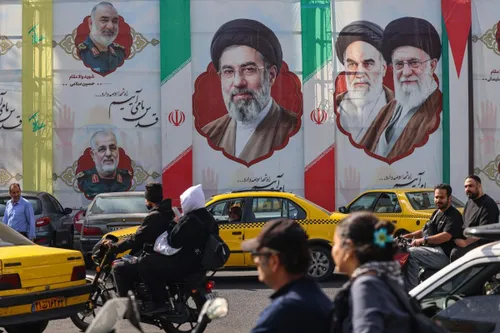
Iran warns next war with US could be longer as Trump threatens further strikes
Iran warns a renewed war with the US could last longer as Donald Trump threatens further strikes, while diplomatic efforts to prevent another escalation remain uncertain.
Two women killed in N1 crash near Kranskop as highway closed
Two women have died and five people have been injured in a head-on collision involving four vehicles on the N1 near Kranskop, forcing the closure of the northbound carriageway.

Top Stories
CSOs urge judiciary to avoid another Imo-style embarrassment in Uzodimma’s Senate case

Spence 'very proud' to break WSL appearance record

Referee accidentally fractures college football player's leg
Freedom advocates urge Nigeria to grant Africans visa-free entry
Iran warns next war with US could be longer as Trump threatens further strikes
Two women killed in N1 crash near Kranskop as highway closed
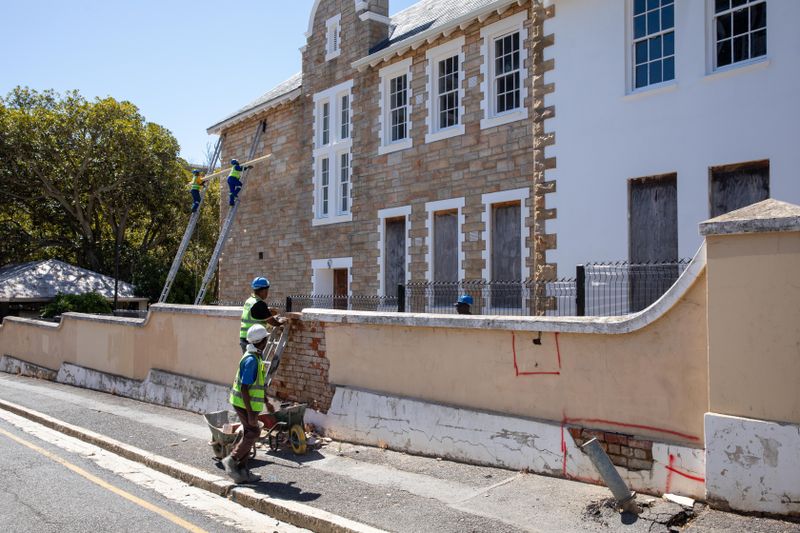
AFFORDABLE HOUSING OP-ED: CT’s Tafelberg social housing units cut by Heritage assessment

Five teenagers stabbed at Halloween party
Latest
CSOs urge judiciary to avoid another Imo-style embarrassment in Uzodimma’s Senate case
Spence 'very proud' to break WSL appearance record
Referee accidentally fractures college football player's leg
Freedom advocates urge Nigeria to grant Africans visa-free entry
Iran warns next war with US could be longer as Trump threatens further strikes
Two women killed in N1 crash near Kranskop as highway closed
AFFORDABLE HOUSING OP-ED: CT’s Tafelberg social housing units cut by Heritage assessment
Five teenagers stabbed at Halloween party