A village biogas project tests Zambia’s push to improve rural energy access - news

If you liked this story, share it with other people.
LUSAKA, Zambia — In Nkhundye, a farming community in Zambia’s Eastern province, cattle dung from a communal kraal, a traditional livestock enclosure, is being used to produce energy for cooking, to run irrigation pumps, and to meet some electricity needs.
The biogas plant is managed by the Nkhundye Community Cooperative, whose members collectively keep some 300 head of cattle. The dung from the animals is fed into a biodigester that produces methane gas, which is used as a cooking fuel.
As of March 2026, the project was providing biogas to 100 households. The cooperative comprises roughly 600 households and the operation is gradually being expanded to cover all members and nearby communities, according to the company Biogas Technology in Zambia, which is a partner in the project.
Homes within 100 meters (330 feet) of the biogas plant receive gas through underground pipes, while those further away receive storage bags with enough methane to last three to five days, depending on use.
Community members use the biogas for cooking through adapted biogas stoves. All the project equipment was supplied free of cost to the consumers, including fittings to install the connections. Household stoves are connected directly to gas storage bags using a valve and pipes.
The process starts with mixing cow dung with water and feeding it into the sealed biodigester. Inside the biodigester, anaerobic bacteria break down the waste, producing methane gas, which is then captured for use.
Prior to the project, all the households here relied heavily on charcoal or firewood for cooking, according to religious charity NACRO. For cooperative members like Finess Phiri, the system has significantly improved daily life. Cooking with biogas has reduced the time families spend collecting firewood in the bush and eliminated the smoke that often fills traditional kitchens. “Most of the time we used to go in the bush to get firewood,” Phiri told Mongabay. “I no longer use firewood; this system is helping us.”
A portion of the methane gas from the biodigester is channeled into a small gas-powered generator, which produces electricity to light homes, charge devices, and running water pumps to irrigate vegetable gardens.
The water pumps make year-round irrigation possible, allowing families to generate extra income when they sell their vegetables at nearby markets. The slurry left from the methane-producing process is used as an organic fertilizer, amounting to about 2.5 metric ton every week from the plant.
The initiative was implemented by NACRO, the New Apostolic Church Relief Organization, between May 2023 and April 2025, with a total budget of nearly $482,000. The German Federal Ministry for Economic Cooperation and Development (BMZ) and NAK-Karitativ e.V. a German NGO, funded the initiative under the Expanded Energy Cooperatives for Smallholder Farmers Project.
Initial funding for the project ended last year, after which the cooperative is expected to maintain the system with ongoing technical support from project partners. These include the International Labour Organization (ILO), the United Nations Development Programme (UNDP) and United Nations Children’s Fund (UNICEF) under a Joint Sustainable Development Goals (JSDG) project, focused on providing training, technical support and capacity building.
It isn’t clear exactly how future funding needs will be met.
Currently, out of Zambia’s population of around 22 million, just 54% have access to electricity; rural electrification rates are significantly lower, at around 18%, highlighting the need for off-grid and decentralized solutions that can serve these remote areas.
Zambia’s national grid relies heavily on hydropower, which accounts for about 80% of the country’s electricity generation. This system has come under pressure due to persistent drought conditions in recent years, especially during the 2023-2024 farming season, when reduced water levels in the Kariba Dam and other major reservoirs led to power shortages and power cuts across the country.
Zambia’s energy minister, Makozo Chikote, told Mongabay the government recognizes biogas technology as an important solution for decentralizing electricity generation. According to Alex Mbumba, director-general of Zambia’s Rural Electrification Authority (REA), the country is pursuing a large-scale strategy that includes biogas, mini-grids, solar arrays and other decentralized energy technologies. He emphasized that biogas systems would help to expand electricity access in rural areas where extending the national grid would be too expensive. The REA is rolling out similar biodigester-based systems in boarding schools, prisons and health centers, according to the government.
Chikote said projects like that in Nkhundye are very important as they demonstrate how community-based renewable energy systems change lives while also keeping production costs low as the feedstock is sourced from within the community.
George Sakala, chair of the Nkhundye Community Cooperative, said the communal kraal is being expanded to house 1,000 head of cattle, more than triple the current herd. The system relies on shared responsibility, where community members contribute dung and participate in maintaining the pipes and equipment, he said.
Johnstone Chikwanda, an independent renewable energy consultant based in Zambia, said community-led systems are often easier to maintain as residents themselves have a direct stake in their success. He added that biogas mini-grids can be effective when communities have enough livestock and proper technical training is provided. “Biogas technology is viable, but systems must be well designed and properly operated in order to be successful,” he told Mongabay.
Research into the performance of biogas systems in Malawi shows that they can fail if issues around training, maintenance and operation are not adequately addressed.
Chikwanda cautioned that if not properly managed, the technology comes with several risks. “There are technical and operational risks, as well as health and safety risks. We’re talking about gas here, and if systems are not well handled, it can lead to fire hazards, explosions, and even toxic gas exposure,” he said.
He added that biogas systems depend on a steady supply of raw materials, noting that production may collapse without a consistent supply of dung. Chikwanda also said that social acceptance may pose a challenge as “some people may not be comfortable handling animal waste, so awareness and trainings are very important.”
Banner image: The Nkhundye biogas plant under construction. Image courtesy of NACRO.
Citation:
Ogwang, J. O., Six, J., Kwangulero, J., Tilley, E., & Kalina, M. (2026). Many biogas systems in Africa fail due to poor project and engineering design: Insights from Southern Malawi. Environmental Development, 59, 101462. doi:10.1016/j.envdev.2026.101462
FEEDBACK: Use this form to send a message to the author of this post. If you want to post a public comment, you can do that at the bottom of the page.
Cite this article
As the Belo Monte hydroelectric plant in the Brazilian Amazon marks 10 years of operation, it faces a contentious environmental license renewal. At the heart of the debate are urgent calls to revise the dam’s discharge into the Xingu River. But by holding back up to 70% of the river flow, water scarcity is pushing […]
Sri Lanka mourns iconic tusker amid renewed calls to address human-elephant conflict
World Kangaroo Day: How climate change impacts Australia’s macropods
Bangladesh’s climate migrants are arriving in cities unprepared to protect them
Environmental officials fear new wave of harassment if Flavio Bolsonaro wins in Brazil
Critics call for halt to road construction in Mexico’s Sian Ka’an Biosphere Reserve
Amazon communities lose water as mining and deforestation reshape rivers
What if Flávio Bolsonaro wins? High stakes for the environment in Brazil’s 2026 elections (commentary)
Death of iconic elephant in Sri Lanka pushes authorities to fast-track protection efforts
Related Topics
Keywords
Related Stories
CSOs urge judiciary to avoid another Imo-style embarrassment in Uzodimma’s Senate case
Coalition of civil society organisations (CSOs) advises the judiciary to use the ongoing court case involving Governor Hope Uzodimma and former governor, Rochas Okorocha to restore public confidence in the courts. The post CSOs urge judiciary to avoid another Imo-style…

Freedom advocates urge Nigeria to grant Africans visa-free entry
They advocated reciprocal arrangements among African countries, citing Kenya and Rwanda as examples of countries that had taken steps to ease entry for other Africans. The post Freedom advocates urge Nigeria to grant Africans visa-free entry appeared first on Premium Times…

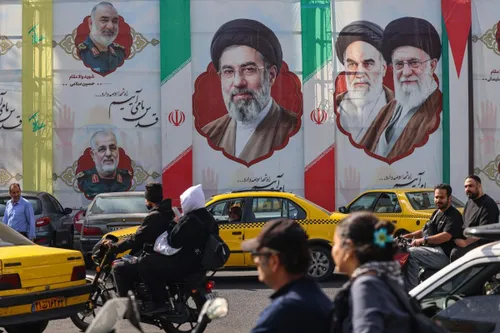
Iran warns next war with US could be longer as Trump threatens further strikes
Iran warns a renewed war with the US could last longer as Donald Trump threatens further strikes, while diplomatic efforts to prevent another escalation remain uncertain.
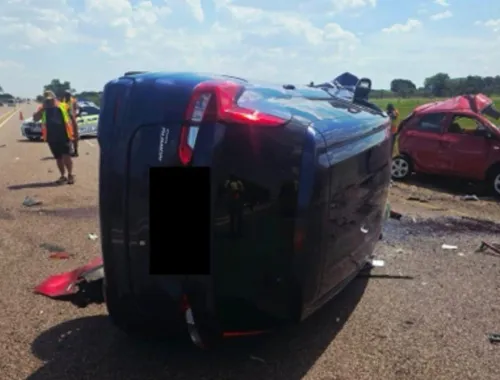
Two women killed in N1 crash near Kranskop as highway closed
Two women have died and five people have been injured in a head-on collision involving four vehicles on the N1 near Kranskop, forcing the closure of the northbound carriageway.
Top Stories
CSOs urge judiciary to avoid another Imo-style embarrassment in Uzodimma’s Senate case

Spence 'very proud' to break WSL appearance record

Referee accidentally fractures college football player's leg
Freedom advocates urge Nigeria to grant Africans visa-free entry
Iran warns next war with US could be longer as Trump threatens further strikes
Two women killed in N1 crash near Kranskop as highway closed
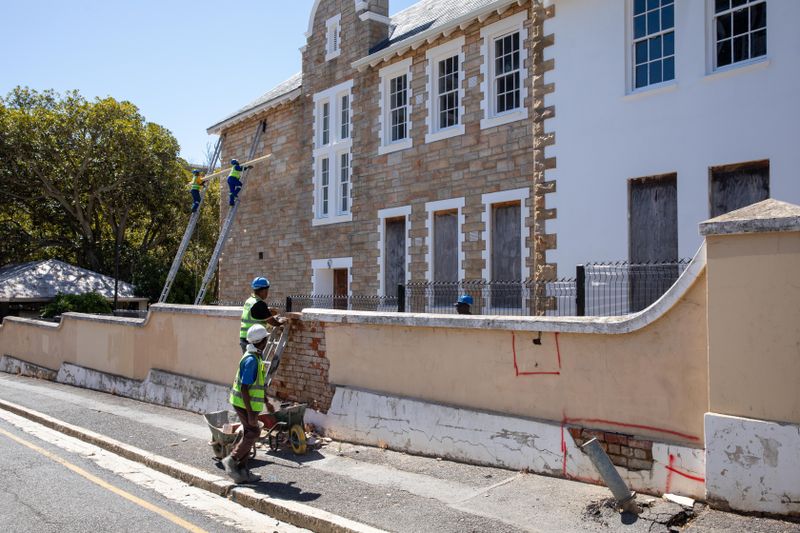
AFFORDABLE HOUSING OP-ED: CT’s Tafelberg social housing units cut by Heritage assessment

Five teenagers stabbed at Halloween party
Latest
CSOs urge judiciary to avoid another Imo-style embarrassment in Uzodimma’s Senate case
Spence 'very proud' to break WSL appearance record
Referee accidentally fractures college football player's leg
Freedom advocates urge Nigeria to grant Africans visa-free entry
Iran warns next war with US could be longer as Trump threatens further strikes
Two women killed in N1 crash near Kranskop as highway closed
AFFORDABLE HOUSING OP-ED: CT’s Tafelberg social housing units cut by Heritage assessment
Five teenagers stabbed at Halloween party