Africa needs fuller global representation, IOL CEO tells China forum
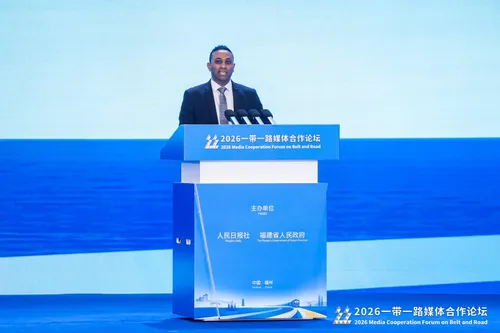
IOL CEO Viasen Soobramoney addressing delegates at the 2026 Media Cooperation Forum on Belt and Road hosted in Fuzhou, China this week.
Fuzhou, China — Africa’s representation in the world should be told through its innovation, achievements, ambitions and contributions to humanity, not only through stories of conflict and hardship, IOL CEO Viasen Soobramoney said.
“We live in an age in which information travels across the world in seconds. Digital platforms have created extraordinary opportunities to connect societies, but they have also intensified the spread of misinformation, deepened divisions and, at times, reinforced stereotypes between nations and peoples,” he said at a China-hosted media forum in Fuzhou.
“The media therefore carries a profound responsibility. We must do more than report events. We must help our audiences understand the forces shaping their world. We must provide context, encourage informed debate and create opportunities for people to encounter perspectives beyond their own borders.”
He said the media's role has become indispensable.
Soobramoney made these comments at the 2026 Media Cooperation Forum on Belt and Road this week. Hosted by the official newspaper of the Chinese Communist Party’s Central Committee, People’s Daily, and the Fujian provincial government, the forum drew over 200 delegates from 182 media outlets and institutions in 100 countries to Fuzhou.
Sunday marks Chinese Journalists’ Day, commemorating the founding of the All-China Journalists Association in 1937.
Soobramoney said media cooperation along the Belt and Road could help build bridges where distance, misunderstanding or prejudice have created barriers.
“We can achieve this through journalist exchanges, joint reporting projects, training, content-sharing partnerships, cultural programming and collaboration in emerging technologies, including artificial intelligence,” he said.
“We should tell more stories about the people behind our international partnerships: the entrepreneurs creating jobs, the students exchanging knowledge, the scientists pursuing solutions, the farmers improving livelihoods and the communities building a better future.”
Greater collaboration between global media houses was a sentiment shared at the fourth council meeting of the Belt and Road News Network (BRNN). The council comprises 42 mainstream media organisations from 27 countries.
At Tuesday's meeting, the council said it reached consensus on advancing high-quality development across all BRNN endeavours, including expanding inclusive wellbeing by supporting media in responding to countries' development aspirations and reporting on poverty reduction, food security, the digital economy, and the green transition.
President of People’s Daily and BRNN chair Yu Shaoliang said the BRNN is a platform that lets the media collaborate and build content-sharing partnerships by providing a space for different countries to work together.
“Open dialogue fosters knowledge sharing,” he said.
He said BRNN remained committed to maintaining consensus and telling stories about bringing Chinese solutions to global challenges.
He said they would continue to foster dialogue and technology sharing and called on all members to leverage media training.
The 2026 Media Cooperation Forum on Belt and Road was hosted in Fuzhou, China this week.
Editor and CEO of the Financial Express in Bangladesh, Shamsul Huq Zahid, said every council meeting created an opportunity and allowed media outlets to bridge existing gaps.
He said it was important to identify common ground.
“Our core objectives should be to tell the stories of the people,” he said.
“We should shift the attention to greater digital integration and fostering institutional collaboration. We need to keep a clear line of communication open and generate greater ideas.”
He said people should remain at the centre and journalists should continue to inform people.
Various media leaders spoke of the importance of deepening exchanges between the media and connecting people.
Soobramoney said the forum, under the theme “Pursuing common understandings and shared aspirations along the Belt and Road,” spoke to a fundamental truth: while many nations differ in history, culture, language and circumstances, their aspirations are similar.
“We want peace. We want development. We want dignity, opportunity and prosperity for our people. We want our children to inherit a world that is more just, more peaceful and more hopeful than the one we inhabit today,” Soobramoney said.
“Our challenge is to turn these common aspirations into common action.”
Soobramoney said African audiences should have access to a deeper and more nuanced understanding of China — its people, its culture, its development experience and its aspirations,
He said People’s Daily deserved particular recognition for the role it played in creating opportunities for media leaders to gather and exchange ideas to strengthen journalism.
“As a leading Chinese media institution, People’s Daily has played an important role in
communicating China’s perspectives to the world and creating opportunities for international media engagement,” he said.
“We commend People’s Daily for its commitment to this work and for recognising that media cooperation is an essential dimension of people-to-people connectivity,” Soobramoney said.
“We should build on this foundation to create partnerships that are enduring, practical and mutually beneficial — partnerships in which our media organisations learn from one another, share expertise and expand the diversity of voices in global public discourse.”
He said the cooperation should uphold accuracy, professionalism, responsible reporting, and respect for the dignity of the people whose stories we tell, to continue upholding journalistic standards and principles.
Speaking on the importance of cooperation among countries of the Global South, he said that at a time of global change, and as the world faced geopolitical tensions, economic uncertainty, technological disruption and persistent inequalities, millions of people were looking for solutions.
People across the developing world wanted better access to education, healthcare, infrastructure, technology and economic opportunity, he said, adding that these challenges reminded us that no nation could solve the defining problems of our time alone.
“The Global South is not merely a geographical description. It represents the aspirations of nations determined to shape their own destinies, to participate meaningfully in the global economy, and to ensure that international institutions and global decision-making reflect the realities and interests of all humanity,” he said.
“For too long, the voices of developing countries have not always received the recognition they deserve. Our experiences, our knowledge and our perspectives are essential to understanding the world in its full complexity.”
Soobramoney highlighted the need to work towards a fairer and more just international order founded on mutual respect, sovereign equality, and continuous dialogue for the peaceful resolution of differences.
“A just world is not one in which every country must follow the same path. It is one in which every country has the freedom and the opportunity to pursue development according to its own circumstances, priorities and aspirations,” he said.
“Partnership must mean mutual benefit. Cooperation must mean shared progress. And development must leave no nation behind.”
Soobramoney said China’s engagement with countries across Africa and the wider Global South offered an important platform for advancing these aspirations.
“Through the Belt and Road Initiative, China has placed connectivity, infrastructure development and economic cooperation at the centre of an ambitious vision for international partnership,” he said.
“Its emphasis on dialogue, practical cooperation and shared development has created opportunities for countries to deepen relationships and explore new avenues of progress.”
Director of Monitor Mercantil in Brazil, Marcos de Oliveira, said it was important to keep working to facilitate media exchanges in the ever-changing media landscape to strengthen friendships between nations.
“Technologies are reshaping how we see the world and how journalists work. We should use [artificial intelligence] AI to access information.”
De Oliveira emphasised continued training and skills sharing.
Meanwhile, Wu Qiang, deputy editor-in-chief of Economic Daily in China, said telling economic development stories is important for advancing nations and leveraging their strengths.
The media should foster communication to broaden the landscape and harness influence.
Deputy CEO of Ethiopian News Agency, Tefera Bekele, said that when journalists tell human-centred stories, people are inspired, underscoring the importance of cultural exchange.
“Media is the ultimate bridge to connect societies,” said Bekele, adding that this would foster deeper cultural exchanges.
Deputy editor-in-chief of China Daily, Liu Weiling, said that China Daily is committed to building communities and enabling young people to learn from one another.
For African nations, Soobramoney said that partnerships that supported infrastructure, industrialisation, skills development, digital connectivity and trade could contribute meaningfully to our development objectives.
“Our continent has enormous potential. We have a young and dynamic population, abundant natural resources, growing innovation ecosystems and an entrepreneurial spirit that is transforming communities across Africa,” he said.
“What we need are partnerships that unlock this potential — partnerships that strengthen local capacity, encourage investment, facilitate technology transfer and create sustainable opportunities for our people,” said Soobramoney.
“China and Africa have much to offer one another. Our relationship can be strengthened further through greater trade, educational exchanges, cultural understanding and cooperation in science, technology and innovation.”
Soobramoney said that as the countries deepen their relationship, it was imperative to keep building on the principles of mutual respect, equality, practical collaboration, and shared benefit.
“The measure of our success must ultimately be the difference our cooperation makes in the lives of ordinary people.”
Originally published and reported by IOL South Africa.
Read original coverage on IOL South AfricaRelated Topics
Keywords
Related Stories
LOCAL ELECTIONS 2026: DA goes on coalition offensive as battle for Nelson Mandela Bay begins
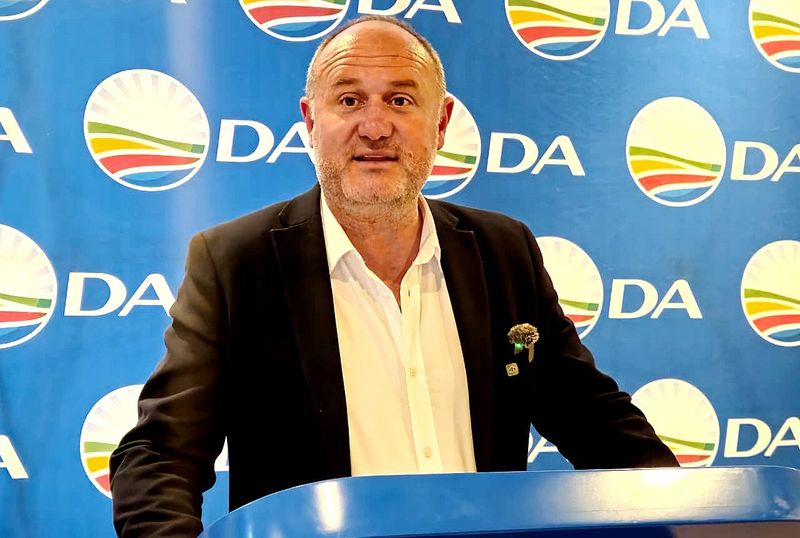
With no outright majority in Nelson Mandela Bay, coalition choices will shape efforts to restore water, electricity, refuse removal and accountable local government. The DA has emerged as the largest party with 53 of the 120 council seats and is approaching potential coalition…
BUSINESS REFLECTION: Crossed Wires: What happens to Big Tech now after the midterms?
Democratic Party midterm victories may tighten AI oversight, but surging demand, vast investment and Big Tech’s global reach will keep the industry expanding.

WORKING MODEL: Beyond state jobs — Thuli Madonsela on the Constitution’s true economic mandate
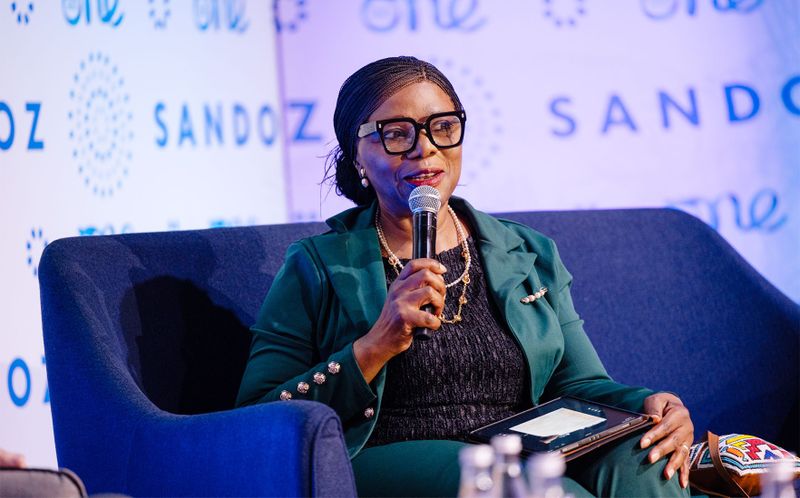
According to Prof Thuli Madonsela, one of the drafters of South Africa’s founding document, it is not the government’s responsibility to provide jobs to citizens; rather, the Constitution guarantees the right to justice within a fair economic system.
14 DAYS TO FIX LOCAL: Herman Mashaba: ‘Very, very slim’ chance of coalitions with the DA
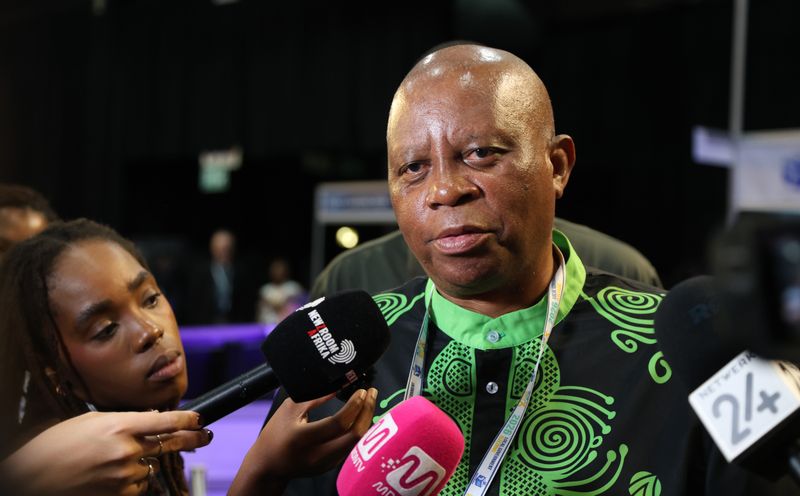
With 14 days from Monday, 8 November, to hammer out coalition agreements in 139 councils across the country, it’s all eyes on the kingmaker party ActionSA, which has won 55 wards to hold the cards in three key Gauteng metros.
Top Stories
LOCAL ELECTIONS 2026: DA goes on coalition offensive as battle for Nelson Mandela Bay begins
BUSINESS REFLECTION: Crossed Wires: What happens to Big Tech now after the midterms?
WORKING MODEL: Beyond state jobs — Thuli Madonsela on the Constitution’s true economic mandate
14 DAYS TO FIX LOCAL: Herman Mashaba: ‘Very, very slim’ chance of coalitions with the DA
TRANSNATIONAL TRAFFICKING: South Africans entering Nigeria and fuelling global cartel drug trafficking, security briefing hears
LOCAL ELECTIONS 2026: KZN coalition dilemma: Will election losers find their way back to power?
ROYAL ADDRESS: Princess Anne praises SA’s agricultural industry in whistle-stop visit to Cape
LOCAL ELECTIONS 2026 OP-ED: The DA hammered the ANC in Emfuleni — the how and the why
Latest
LOCAL ELECTIONS 2026: DA goes on coalition offensive as battle for Nelson Mandela Bay begins
BUSINESS REFLECTION: Crossed Wires: What happens to Big Tech now after the midterms?
WORKING MODEL: Beyond state jobs — Thuli Madonsela on the Constitution’s true economic mandate
14 DAYS TO FIX LOCAL: Herman Mashaba: ‘Very, very slim’ chance of coalitions with the DA
TRANSNATIONAL TRAFFICKING: South Africans entering Nigeria and fuelling global cartel drug trafficking, security briefing hears
LOCAL ELECTIONS 2026: KZN coalition dilemma: Will election losers find their way back to power?
ROYAL ADDRESS: Princess Anne praises SA’s agricultural industry in whistle-stop visit to Cape
LOCAL ELECTIONS 2026 OP-ED: The DA hammered the ANC in Emfuleni — the how and the why