Before & After: Children Draw Gaza
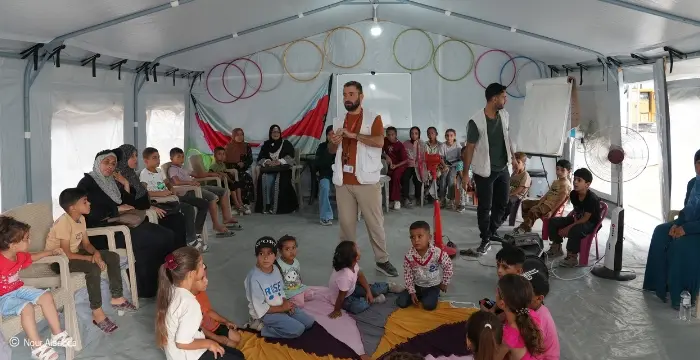
The queue to collect food, the rain pouring through the tent, the tank bulldozing buildings, the omnipresent quadcopter or the friends they used to play with. Dina, Rahaf, Motassem, and several other children from Gaza quietly explain the meaning of their drawings, some of which are featured below. But the stories they tell are anything but quiet. Done during group psychosocial sessions organised by Doctors Without Borders/Médecins Sans Frontières (MSF), the drawings recount what these children see and feel — their memories of a childhood defined by fear and violence.
Dina,11, drew her neighbourhood (below) before and after the genocide. She recalls the mosque and buildings and trees. She said she thought she would return from the south to find Gaza again, but she didn’t.
Three years of brutal Israeli military offensive have had a devastating toll on the mental health of the younger generation of Gazans. Many have lost family members, homes, schools and friends, while repeated displacement and catastrophic living conditions have taken away the spaces where children should be able to feel like children and play without fear.
According to the World Health Organization, the number of people in Gaza requiring urgent mental health and psychosocial support has more than doubled since before the conflict, from around 485,000 to more than one million people. Mental health care has become a crucial part of MSF’s work: teams provide individual consultations, psychosocial and psychoeducational group activities for adults, as well as recreational activities for children and adolescents, who are particularly vulnerable.
Childhood stolen by genocide
For those children who were old enough to remember life before Israel’s genocide almost nothing remains of the world they knew. The places where they grew up have been destroyed. The basic things that should define childhood — feeling safe, playing with friends, going to school and spending time with family — have been stolen from them, replaced by memories of violence, the constant threat of further attacks and the sight of destruction. Fetching water, queuing for food or helping their families survive are now part of their daily responsibilities.
For younger children, the consequences are different: some have never known anything other than displacement and the sound of airstrikes.
In her “before” drawing (below, left), Rahaf, 11, drew her neighborhood with clean streets, children playing, and a school full of students. In the "after," (below, right) she shows tents and homes being targeted by drones, bleeding people with severed limbs, an ambulance, a water truck, children filling jerrycans and others waiting for food.
Rahaf says, “Sometimes I stand at the window and see the tanks firing. I tell my mum, ‘Come inside, because the tanks are firing and shooting shells.’ I’m scared for my family. My girl cousin was killed. I can’t forget her. I used to play with her all the time”.
Children have also begun to recreate what they see around them through play and drawings. Instead of games reflecting an ordinary childhood, counsellors see children imitating aid distributions, describing attacks or playing among the rubble of destroyed buildings.
Effects of prolonged violence
The effects of prolonged violence are visible in the everyday behaviour of Gazan children. Our counsellors report increasing anxiety, fear, screaming, aggressive behaviour, nail-biting and involuntary urination among children.
Bisan, 14, drew (below, left) what she misses most: her home, the sea, a tree, and a clear sky. Lama, 12, drew (below, right) the moment her brothers and cousins were playing football outside their house when an Israeli quadcopter opened fire on them, killing her cousins and injuring her brother. A bomb also struck and destroyed their home. She says she cannot forget that moment.
At MSF’s Zaytoun clinic in Gaza City, counsellors provide psychosocial support to children through music, games, stories and drawing, giving them a space to express themselves. In follow-up sessions, counsellors help children reconnect with who they were before the war and understand their emotions. “We try to remind the children of their humanity and that they are children,” says Al-Balbisi.
Between late 2023 and September 2026, MSF teams provided more than 132,000 individual mental health consultations and supported more than 246,000 people through group activities.
Related Topics
Keywords
Related Stories
Binance sees spike in withdrawals as exchange returns online after $6.3 billion heist
Nov 1 (Reuters) - Binance customers pulled $3.64 billion, or 2.1% of its assets, as the world's biggest cryptocurrency exchange went back online on Sunday after hackers the FBI links to North Korea stole billions from the platform last week.

LOCAL ELECTIONS 2026: The top four parties’ final campaign pitches
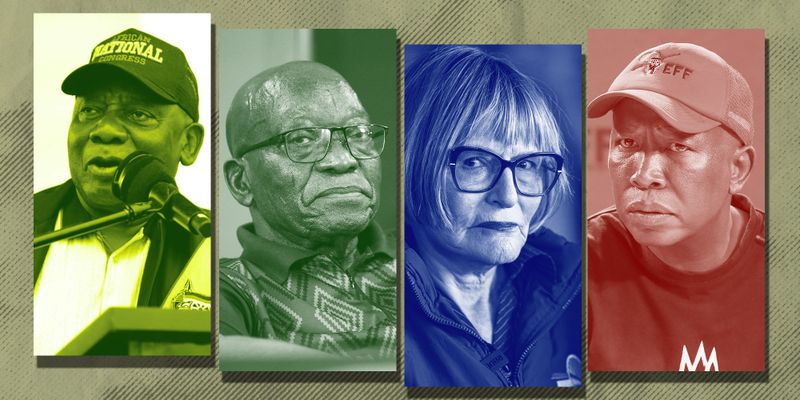
The ANC, DA, MK party and EFF all held their final campaign rallies this weekend. Here are their final pitches to voters.
Ukraine evacuates civilians from parts of Kherson region as expiry of Oleshky ceasefire nears
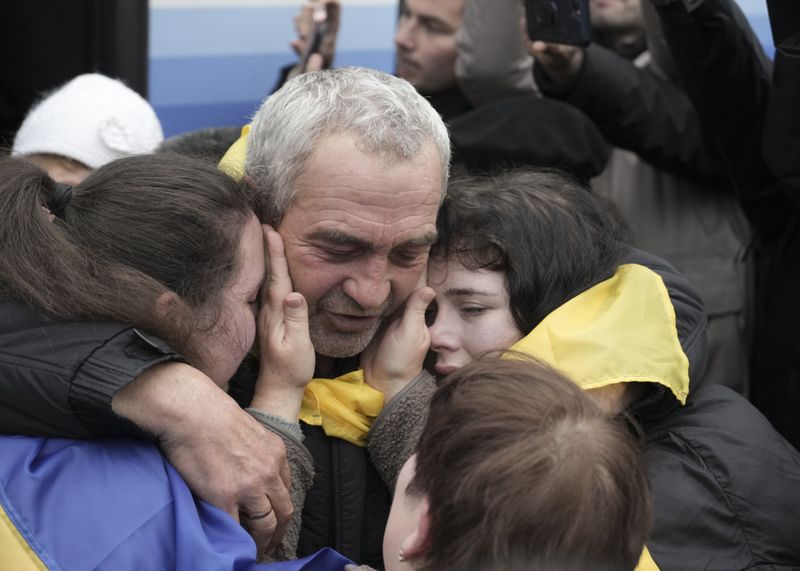
Nov 1 (Reuters) - Ukraine's military said it evacuated 167 people from threatened areas of southern Kherson region on Sunday as a temporary local ceasefire neared expiry -- two days after busloads of residents were brought out of the embattled Russian-held town of Oleshky.
ARTIFICIAL INTELLIGENCE OP-ED: Forget future existential threats — AI is automating gendered violence and misogyny right now
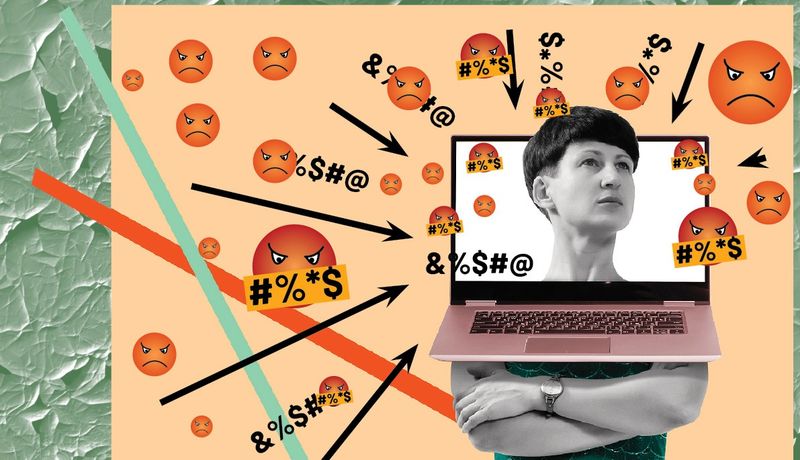
The current alarm about the future dangers of agentic AI might distract us from the very real AI harms already happening. As we speculate about whether machines might one day become dangerous to humankind, AI is deepening misogyny, eroding safety and automating gendered abuse.
Top Stories
Binance sees spike in withdrawals as exchange returns online after $6.3 billion heist
LOCAL ELECTIONS 2026: The top four parties’ final campaign pitches
Ukraine evacuates civilians from parts of Kherson region as expiry of Oleshky ceasefire nears
ARTIFICIAL INTELLIGENCE OP-ED: Forget future existential threats — AI is automating gendered violence and misogyny right now
LOCAL ELECTIONS 2026: What happens after the vote? Councils, coalitions and (maybe) controversies
OUR CITY NEWS: Eighty-three parties contest crowded Joburg local government elections
Troubled port: Transnet and foreign operator face scrutiny over backlog at Durban Gateway Terminal

BUSINESS REFLECTION: Crossed Wires: The internet’s technical debt is due, and we can’t pay
Latest
Binance sees spike in withdrawals as exchange returns online after $6.3 billion heist
LOCAL ELECTIONS 2026: The top four parties’ final campaign pitches
Ukraine evacuates civilians from parts of Kherson region as expiry of Oleshky ceasefire nears
ARTIFICIAL INTELLIGENCE OP-ED: Forget future existential threats — AI is automating gendered violence and misogyny right now
LOCAL ELECTIONS 2026: What happens after the vote? Councils, coalitions and (maybe) controversies
OUR CITY NEWS: Eighty-three parties contest crowded Joburg local government elections
Troubled port: Transnet and foreign operator face scrutiny over backlog at Durban Gateway Terminal
BUSINESS REFLECTION: Crossed Wires: The internet’s technical debt is due, and we can’t pay