Blaming the phone won’t save our kids
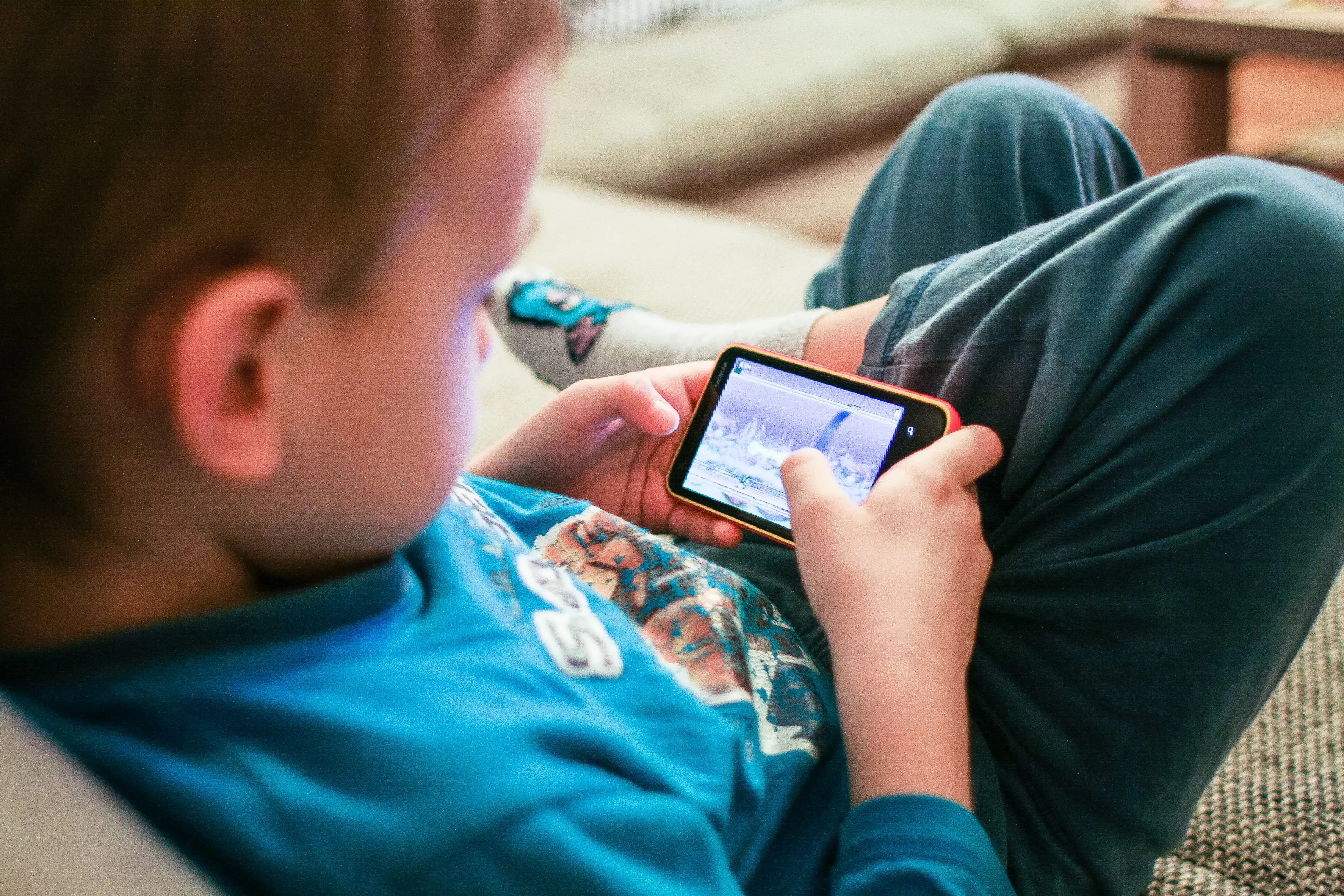
I am old enough to remember the paranoia of the apartheid state in the 1970s about how the introduction of television would lead to a moral collapse in young people and society. Back then, these fears could perhaps have been dismissed as the rantings of a fascist state that was not sufficiently smart to realise the propaganda power of television.
But a decade or two later, the new moral panic was computer games and the fear that the violent nature of many video games would turn a generation of young people violent. A great deal of money was spent researching the links between video games and violence in society. The results were mixed at best, and no robust causal role between video games and violence has ever been shown.
In 2024, the American academic, Jonathan Haidt published The Anxious Generation; How the Great Rewiring of Childhood Is Causing an Epidemic of Mental Illness, a book that found a fertile cultural moment, namely that of parental concern about cellphones and social media. Haidt argued that smartphones and social media had replaced a play-based childhood with a phone-based one, what he called a “great rewiring” of childhood. Haidt contended, purportedly with the scientific evidence to back up his claims, that this ‘rewiring’ was causing an epidemic of anxiety and depression among adolescents.
National Children’s Day is celebrated in South Africa on the first Saturday in November (7 November in 2026). It is linked to the formal adoption of the Declaration of the Rights of the Child in November 1959 and the Convention on the Rights of the Child in November 1989.
Turbocharged by Haidt’s book, countless governments around the world have enacted a range of bans on social media for children. Australia was the first country to ban social media for adolescents under the age of 16 years. Other countries include France (under-15), Indonesia (under-16), Malaysia (under-16) and Austria (under-14).
I have a finely tuned radar for a few things that set off my alarm bells. Two of them are: 1) when social scientists or behavioural change scientists (I am one of these) tell me that they have found ‘the truth’, the single answer for something (it is always more complicated than that. Always); and 2) when I watch governments become sudden moral crusaders for the rights of children. There is invariably another agenda, and it is as rare as hen’s teeth for anybody in government to have actually asked a young person what they think, and even if they did, it is even rarer that governments change anything substantively based on what young people want or think.
Shortly after Haidt published his book, the developmental psychologist Candice Odgers published what has become an incendiary review in the top academic journal Nature. Not only did she dismantle Haidt’s claims of evidence to support his argument, but she also argued that he might actually be doing harm by distracting us from what the real causes of child and adolescent distress might be. In a wonderful quote she summed up her position “[Haidt] is a gifted storyteller, but his tale is currently one searching for evidence.”
Two years later, what does the evidence tell us. Fortunately, the field now has the most comprehensive study ever published on the matter. The paper reviewed the evidence on the impact of screens on children; the study was scientifically rigorous; the team was led by a highly respected Canadian researcher Dr Sheri Madigan; the paper was rigorously reviewed by global experts; and published in a boring academic journal; and most importantly tells a scientific story and one that has not been sensationalised to sell books.
Published in JAMA Pediatrics, the paper pooled all relevant studies covering research in 64 countries and almost three million children. What did Madigan and her colleagues find? They found a small association between more screen use and lower academic achievement as well as weaker language skills. They also found associations between anxiety, low mood, aggression and hyperactivity and screen use. Crucially, these associations were stronger for mobile phone use, than for television or gaming, and more powerful in adolescents than younger children.
Given these findings, was Haidt correct? I am afraid not. The impact of screen use on anxiety and low mood is so tiny that screen use only accounts for about 1% of the differences between children with anxiety and low mood and those without. The other 99%? All explained by other factors.
And it gets worse for Haidt, as his evidence on screen use was measured at the same time as mood and wellbeing was being measured. Why might this matter? It matters because it is impossible to say with any certainty what comes first. Do screens contribute to making children anxious, or do children who are anxious use more screens as a way of calming themselves? That said, even a tiny effect when spread across a society cannot be ignored. Screen use should be treated seriously and we need action. But what the evidence tells us is that we are far from an epidemic necessitating social media bans.
But where does this leave parents? The strictest guidance on digital use is understandably focused on young children. The World Health Organization states that there should not be any screen time at all under the age of 1 year including background TV; no sedentary screen time for children from 1-2 years of age (although live video calls with family are seen as social interaction and are acceptable; while for children aged 2-4 years no more than one hour a day (ideally less) and content between 18-24 months should be high quality and co-viewed with a caregiver.
The American Academy of Pediatrics (AAP) has been providing guidance on screen time for longer than most organisations and recommends no screens before 18 months (social video calls exempted), and one hour a day of high-quality, co-viewed content for ages 2–5 years.
For older children and adolescents, there has been a move away from the ‘no more than 2 hours per day’ type of advice. The valid concern is that the same ‘2 hours of screens’ may be suitable for one child while being genuinely harmful for another. In 2026, the AAP proposed a framework that focuses on the impact of screen time on ‘the individual child’ rather than counting minutes. It is called the 5 C's framework: Child, Content, Calm, Crowding Out, and Communication. This is not a checklist but a reflection tool for parents and their children to work through together.
Asking about and limiting hours on a cellphone is our go-to solution. We need to stop asking how many hours our children spend on their phones, and start asking what those hours are replacing, who they are spending those hours with, whether there is an adult in their lives who notices when something is wrong, and whether the relationship between the parent and the child is a trusting and open one where difficult issues can be spoken about and resolved.
Professor Mark Tomlinson is a clinical psychologist and co-director of the Institute for Life Course Health Research in the Department of Global Health at the Faculty of Medicine and Health Sciences at Stellenbosch University. These are his personal views.
Related Topics
Keywords
Related Stories
ORIGIN STORY: Georgia’s wines take you on a wild but enjoyable ride
As with anything you should start at the beginning. And Georgia’s long history of wine – it was invented here, 8,000 years ago – is as rich and complex as they come, a whole universe to unpack.

WHAT’S COOKING: Roast chicken with a walnut and date stuffing
Here’s a recipe first published in 2022, delivered to you again while your Food Editor is on leave. A stuffing of walnuts and dates with fynbos herbs makes this fresh way with a roast chicken a class act worth sharing with friends at the dinner table.

Osun govt warns Oluwo over alleged ‘inflammatory’ remarks, fears religious, communal conflicts
The Osun State Government directed the Oluwo to refrain from public statements capable of triggering religious and inter-town conflicts. The post Osun govt warns Oluwo over alleged ‘inflammatory’ remarks, fears religious, communal conflicts appeared first on Premium Times…

Man shot dead outside Bushbuckridge voting station
Police are investigating a case of murder after a fatal shooting outside a voting station in MP

Top Stories
ORIGIN STORY: Georgia’s wines take you on a wild but enjoyable ride
WHAT’S COOKING: Roast chicken with a walnut and date stuffing
Osun govt warns Oluwo over alleged ‘inflammatory’ remarks, fears religious, communal conflicts

Career-best Wembanyama display seals Spurs win
Man shot dead outside Bushbuckridge voting station

England captain Kane signs new Bayern contract

Tomi Falade leads Nigerian writers to 2026 Helsinki Book Fair
Water, electricity failures dominate voters’ concerns across South Africa

Latest
ORIGIN STORY: Georgia’s wines take you on a wild but enjoyable ride
WHAT’S COOKING: Roast chicken with a walnut and date stuffing
Osun govt warns Oluwo over alleged ‘inflammatory’ remarks, fears religious, communal conflicts
Career-best Wembanyama display seals Spurs win
Man shot dead outside Bushbuckridge voting station
England captain Kane signs new Bayern contract
Tomi Falade leads Nigerian writers to 2026 Helsinki Book Fair
Water, electricity failures dominate voters’ concerns across South Africa