Connecting West Africa through Regional Power Integration and Expanded Electricity Access

Home
https://www.worldbank.org/ext/en/home
What We Do
https://www.worldbank.org/ext/en/what-we-do
Outcomes
https://www.worldbank.org/ext/en/what-we-do/outcomes
Connecting West Africa through Regional Power Integration and Expanded Electricity Access
jcrtitle Connecting West Africa through Regional Power Integration and Expanded Electricity Access jcrpagetitle Connecting West Africa through Regional Power Integration and Expanded Electricity Access jcrdescription The West Africa Regional Power Integration and Electricity Access Program is delivering more affordable, reliable, and sustainable electricity, helping create jobs, empowering women, and reducing climate impacts. jcrimage content-type
results-brief
funding-mechanism
ida, IDA
sec-spacing
section-none
sec-spacing-bottom
section-none
sec-swoosh
sec-swoosh-type6
style
bg-neutrals-20, two-col-variation-50-50
sec-inside-container
true
Results Highlights
- Unlocked regional power trade: More than 4,000 kilometers of high-voltage transmission lines have been built to connect the electricity grids of 15 West African countries through the WAPP, enabling utilities to trade electricity across borders. As a result, about 8 percent of regional electricity is now traded (approaching the European Commission’s 10–12 percent cross-border electricity trade benchmark), lowering costs and improving supply reliability.
- Increased access to electricity (2019–2025): More than 3 million people across Burkina Faso, Guinea, Liberia, Senegal, Sierra Leone, and The Gambia have benefitted from electricity service owing to transmission and distribution upgrades.
- Stronger utility finances: Guinea-Bissau‘s utility (EAGB) moved from a monthly deficit of about $1 million to a positive balance. The Gambia‘s utility (NAWEC) returned to profitability with about 42 percent cost savings, thanks to Guinea’s large hydropower resources and the regional transmission loop.
- Launching regional electricity market (2026): The WAPP and the ECOWAS Regional Electricity Regulatory Authority (ERERA) run all interconnected grids in sync and have expanded trade. A new short-term “Day-Ahead Market” is being launched, enabling utilities to buy electricity for the next day’s needs at lower cost and avoid costly power outages that put people in the dark and hamper business operations.
The West Africa Regional Power Integration and Electricity Access Program is delivering more affordable, reliable, and sustainable electricity, helping create jobs, empowering women, and reducing climate impacts.
Development Challenge
Before the program, West Africa’s development was held back by limited access to reliable, affordable electricity. Over half the population had no power at all, and many connected customers faced frequent outages. Most utilities relied on old fuel-based generation plants that could not meet peak demand or keep up with growing needs. Electricity was expensive to produce because it depended on imported liquid fuels, while retail tariffs remained below the real cost of service, weakening financial sustainability. With scarce public funding, countries struggled to invest in cleaner generation and the transmission and distribution networks needed to deliver power. A few countries, such as Guinea and Cote d’ Ivoire, had surplus generation but could not export it due to a lack of cross-border transmission lines and trading rules. In this context, a coordinated regional solution became critical to overcome national power shortages and speed up progress toward universal electricity access.
World Bank Group Approach
The World Bank adopted a holistic, multi-pronged approach combining partnerships, new transmission lines, distribution expansion, market development, and institutional strengthening. With co-financing from partners such as the African Development Bank, the European Investment Bank, the West Africa Development Bank, the Islamic Development Bank, and Agence Française de Développement, the program built major cross-border interconnectors, including the Cote d’Ivoire–Liberia–Sierra Leone–Guinea (CLSG) line, the Guinea–Guinea Bissau–The Gambia–Senegal (OMVG) transmission loop ,and the Senegal-Mali Interconnector (OMVS), helping unify national grids. Innovative shield-wire technology on these lines enabled electrification of nearby communities. As substations came online, the Bank supported the expansion of last-mile connections through the Economic Community of West African States (ECOWAS) Regional Electricity Access (REAP) and the Regional Electricity Access and Battery Energy Storage Technologies (BEST) projects.
In parallel, the Bank helped build a functioning regional market, supporting standard power contracts, a regional grid code and operator agreements, and transmission pricing, while operationalizing the West African Power Pool’s (WAPP’s) Information and Communication Center. The program is also developing a Day-Ahead Market (DAM) and full grid synchronization. In late 2025, regulators validated DAM tariffs and WAPP completed the first synchronization trial with uninterrupted power flows across twelve countries in West Africa.
true expert-quote, expert-quote-slider A true pillar of sub-regional and regional integration and cooperation, the OMVG interconnection pools the resources of four countries and three river basins to provide continuous, secure, and affordable electricity supply for all. It strengthens the financial viability of national electricity companies and supports the socio-economic development of communities, thus ensuring a sustainable, shared energy future. Demba Jallow, High Commissioner of the OMVG falseContribution to WBG Targets and Jobs
The program improved living conditions for women, narrowing gender gaps, and enabling women-led businesses to grow, raising incomes and access to education and health services. It also created more than 52,000 direct and indirect jobs through the construction and operation of the CLSG and OMVG transmission networks across engineering, construction, logistics, project management, and operations and maintenance.
Lessons Learned
The experience from cross-border transmission projects shows that regional power integration is a cost-effective way to close supply gaps and improve utility finances. Through the OMVG loop, Guinea-Bissau and The Gambia imported Guinea’s hydropower, cutting EAGB’s generation costs by more than half (from 25 to 11 US cents/kWh) and reducing NAWEC’s costs by 42 percent, bringing both utilities back to profitability. The CLSG network enabled Liberia and Sierra Leone to import lower-cost electricity from Côte d’Ivoire, reducing generation costs by 10–20 percent. Likewise, the Tambacounda–Kayes (OMVS) line lowered costs in Tambacounda, Senegal by facilitating imports from the Manantali Hydropower Complex.
Next Steps
Looking ahead, the regional power integration and electricity access program will expand cross-border power trade, improve utility finances, and accelerate progress toward universal electricity access, supporting West Africa’s socioeconomic development. The first phase of the West Africa Regional Electricity Market Program (WA-REMP) is assisting WAPP and ERERA to fully synchronize interconnected grids and launch the Day-Ahead Market to boost regional electricity exchanges. To enhance trust in power trade, the program will also establish a liquidity enhancement revolving fund to ensure timely payments, complemented by country-level reforms that strengthen utilities’ financial sustainability. As regional trade grows and access accelerates under Mission 300, new regional energy projects are being prepared to help countries advance toward universal access, spur economic activity, and create jobs. Over time, additional cross-border interconnector projects are planned to deepen regional connectivity.
sec-spacing section-padding-between sec-spacing-bottom section-padding-between style default, data-list-container, lp--body-content, add-style sec-inside-container false sec-width trueRelated
lp-heading-bottom-large MISSION 300 - Energizing Africa https://www.worldbank.org/ext/en/energizingafrica lp lp-external-link RESULTS BRIEFS - Powering Africa: The Transformational Impact of Regional Energy Projects in West Africa https://www.worldbank.org/en/results/2025/02/06/powering-africa-the-transformational-impact-of-regional-energy-projects-in-west-africa lp lp-external-link PRESS RELEASE - Enhancing Regional Power Trade and Energy Access in West Africa https://www.worldbank.org/en/news/press-release/2025/01/24/enhancing-regional-power-trade-and-energy-access-in-west-africa lp lp-external-link sec-spacing section-none sec-spacing-bottom section-padding-between style default, related-2-cols sec-inside-container false sec-width falseRelated Topics
Keywords
Related Stories
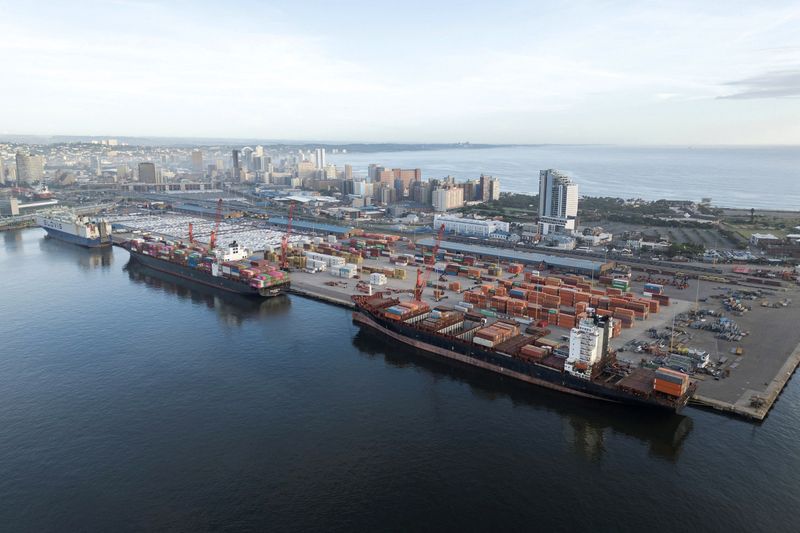
Troubled port: Transnet and foreign operator face scrutiny over backlog at Durban Gateway Terminal
The freight sector and the President are concerned about the serious slowdown of cargo at Durban harbour, but the status of Durban Gateway Terminal as a public-private partnership muddies the waters of accountability.
BUSINESS REFLECTION: Crossed Wires: The internet’s technical debt is due, and we can’t pay
From hospital equipment to bank mainframes, outdated technology is leaving critical infrastructure exposed as AI lowers the barriers to cybercrime.
Investment Outlook: Did Datatec catch an AI tailwind or is it a breeze?
Despite an 18% increase in gross invoiced income, Datatec delivered only 1.4% Heps growth, raising questions about margins, costs and the durability of AI-driven demand.
Okorocha chasing shadows, Uzodimma says, vows to appeal court judgement
Uzodimma dismisses Okorocha’s court victory as temporary, describes the former governor as “chasing shadows” and vows to overturn the judgement on appeal. The post Okorocha chasing shadows, Uzodimma says, vows to appeal court judgement appeared first on Premium Times Nigeria.

Top Stories
Troubled port: Transnet and foreign operator face scrutiny over backlog at Durban Gateway Terminal
BUSINESS REFLECTION: Crossed Wires: The internet’s technical debt is due, and we can’t pay
Investment Outlook: Did Datatec catch an AI tailwind or is it a breeze?
Okorocha chasing shadows, Uzodimma says, vows to appeal court judgement
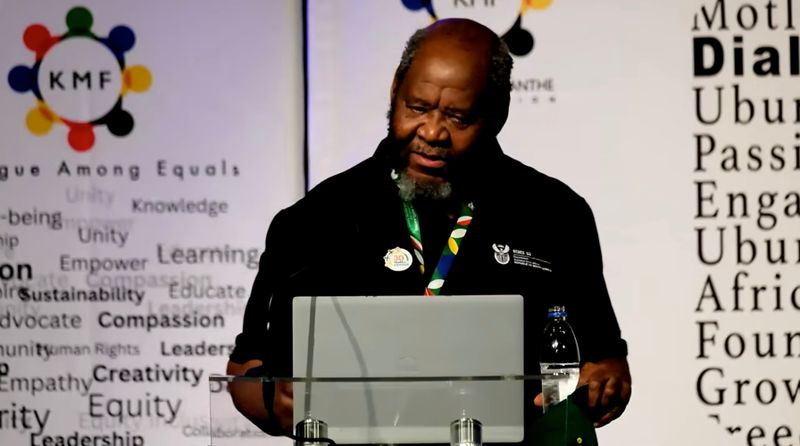
POLITICIANS PUMMELLED: SA’s path to ‘no future’ — former statistician-general Lehohla slams ‘performative’ politics

ANALYSIS: New mayors beware — SA’s local government revolt is waiting for a spark
Mets legend Jerry Koosman dies at 83: Pitcher helped New York win 1969 World Series

South-East governors urge Ndigbo to shun deception and vote for Tinubu in 2027
Latest
Troubled port: Transnet and foreign operator face scrutiny over backlog at Durban Gateway Terminal
BUSINESS REFLECTION: Crossed Wires: The internet’s technical debt is due, and we can’t pay
Investment Outlook: Did Datatec catch an AI tailwind or is it a breeze?
Okorocha chasing shadows, Uzodimma says, vows to appeal court judgement
POLITICIANS PUMMELLED: SA’s path to ‘no future’ — former statistician-general Lehohla slams ‘performative’ politics
ANALYSIS: New mayors beware — SA’s local government revolt is waiting for a spark
Mets legend Jerry Koosman dies at 83: Pitcher helped New York win 1969 World Series
South-East governors urge Ndigbo to shun deception and vote for Tinubu in 2027