DA's billboard campaign in eThekwini raises questions about racial politics
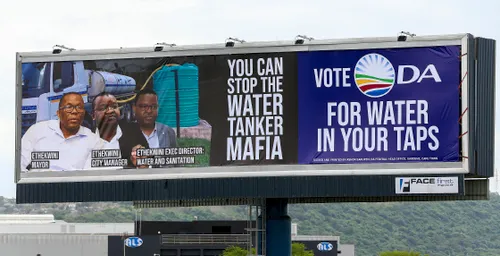
A DA election billboard featuring Mayor Cyril Xaba, eThekwini City Manager Musa Mbhele, and eThekwini Executive Director: Water and Sanitation Ednick Msweli
It is tempting to regard the Democratic Alliance's billboard campaign in eThekwini as a misguided publicity stunt, the kind of noise that fills the air every election season. Yet what the DA has done runs deeper than that.
The billboards, now interdicted by the Durban High Court on application by the mayor of eThekwini, Cyril Xaba, the City Manager, Musa Mbhele, and the Executive Director for Trading Services, Ednick Msweli, rest on an old and familiar assumption — the assumption that Black authority is, by its nature, inept and suspect.
The DA has never fully reckoned with the democratic dispensation and what it means. In its current iteration, the DA was formed in 2000 when the Democratic Party, heir to the Progressive Federal Party, joined forces with the New National Party, successor to the party that designed and administered apartheid. The NNP left within two years, but much of its support and philosophy remained. On the surface, the DA carries two political inheritances, both shaped by the same historical problem that white politics in this country called the native question.
From the nineteenth century onward, colonial administrators, mining houses, farmers and politicians spoke openly of the native question, or the native problem. To them, the problem was this. A white minority had, through force and coercion, taken control of the land, the mines and the state. Yet the African majority was needed as labour, but could not be allowed to share in power or property. The native question asked how both could be achieved at once. How could African labour be secured while African land, African votes and African claims on the wealth that labour produced were denied?
Every major instrument of segregation was an attempt to answer it. In Natal, Theophilus Shepstone governed Africans through reserves and appointed chiefs, a system of indirect control that later became a model for the whole country. The South African Native Affairs Commission of 1903 to 1905 recommended territorial separation. The Natives Land Act of 1913 confined the African majority to roughly 13% of the land. The Stallard Commission of 1922 held that towns were the creation of white people, and that Africans should be present in them only to serve white needs and should leave once they ceased to do so. In 1936, the Cape removed Africans from the common voters' roll. After 1948, apartheid carried the logic to its conclusion through pass laws, group areas and the Bantustans, which sought to make Africans foreigners in their own country.
Durban was not a bystander in this history. It was one of its laboratories. Under what became known as the Durban System, the municipality held a monopoly on brewing and selling sorghum beer to Africans and used the profits to pay for their segregated housing, administration and policing. Africans were made to finance their own control. The city that grew out of these arrangements was planned around the native question.
Pipes, reservoirs and sewers were laid to serve white suburbs. Townships were placed at a distance and served poorly or not at all, and communities such as Cato Manor were removed when their presence became inconvenient. Much of the water network now under strain was designed for a city in which most of its residents were never meant to be full citizens.
To deal with the native question, then, has always meant managing the African majority so that its numbers never become power over land, wealth and the state. The methods varied. The National Party answered with separation. The liberal tradition, to which the Progressives belonged, offered a gentler answer. In its early years, the Progressive Party proposed a qualified franchise that would admit Africans to the vote once they met education and property standards set by those who already held power. That was inclusion, but on conditional terms, with the gatekeepers unchanged.
With the democratic breakthrough in 1994, every South African became a citizen with an equal vote. But for some, the native question remains unanswered, though it has changed form. It is no longer whether Africans may vote. It is whether the people they elect can be trusted to govern. Where the majority holds political power, the most effective way to contain it is to cast doubt on its competence and honesty, so real authority over budgets, contracts and institutions drifts back to those presented as capable custodians.
It is in this light that the DA's politics should be read. The DA has built much of its identity on the proposition that it governs well and others do not, and the others in that comparison are almost always Black-led administrations. It has also repeatedly brought Black leaders to its front ranks as proof of renewal. Joe Seremane, Lindiwe Mazibuko, Mmusi Maimane, Herman Mashaba, Mbali Ntuli, Zwakele Mngcwango, Patricia de Lille and Mamphela Ramphele each left or were pushed out under different circumstances. Taken together, their departures point to a party that welcomes Black leaders as its public face but punishes them when they forget their place and start acting like leaders. It is the qualified franchise in party form.
Water is a legitimate election issue, and the DA is entitled to campaign on it. Residents who have experienced water challenges have a right to voice their dissatisfaction. The City of eThekwini has been forthcoming in admitting its shortcomings. Indeed, scrutiny of the municipality and its officials is part of democracy. What the DA did is something else. It placed the faces of three named public servants alongside the language of the water mafia.
This was not a mistake. It was a well-calculated ploy to impugn and to project a bravado that the DA certainly does not possess.
We describe a water mafia as a network of private operators, contractors and politically connected officials that captures public water resources or water spending for private gain, whether by illegally tapping supply and reselling it or by steering contracts for the benefit of insiders. The water tanker mafia, one of its pillars, makes money from trucking water to communities whose taps have run dry. Because its income depends on the shortage, it has every reason to keep the shortage going.
These are descriptions of crime. Attaching them to named individuals, without a charge, a finding, or any evidence presented to the public, is not accountability. It is an accusation made in a forum where the accused cannot answer. Fortunately, the court recognised the ruse.
The more revealing question is who was left off the billboard.
Infrastructure does not fail overnight. The pipes bursting today were laid, and in many cases left unreplaced, over decades. For some of that time the head of eThekwini Water and Sanitation was Neil Macleod, an engineer with an international reputation. No one need suggest that he be vilified in turn. But if the DA were applying its method consistently, his long tenure would at least feature in its account of how the network aged. It does not. Nor does it mention Mduduzi Nkosi of the Inkatha Freedom Party (IFP), an ally of the DA, who chairs the Trading Services Committee of the Executive Committee, under which the water portfolio falls. The billboards leave out the white former head of water and the DA's political ally. They single out three Black officials of an ANC-led administration.
The late Dumisani Makhaye, in his Theses on Racism, offers a better way of judging what this campaign has done. "Racism is not just an attitude," Makhaye wrote. "It is about power relations … You need to have power, political and economic, to exercise racism." Elsewhere he observed that "racism always has an economic interest." The point is that racism is not measured only by what is in a person's heart. It is measured by what a message does and whose interests it serves.
A campaign that reaches for the vocabulary of organised crime and attaches it only to Black office-bearers draws on the oldest answer to the native question. Africans may live in the city, but they cannot be trusted to run it. The economic interest is not hard to locate either. eThekwini controls one of the largest municipal budgets in the country and will spend billions of rand on water infrastructure in the years ahead. Who is judged fit to manage that money is precisely what this contest is about.
Yet the ANC has acted, and continues to act, to address the water challenge. It is tackling the main cause of the crisis: close to half of the water entering the system is lost through ageing pipes, leaks and illegal connections, costing about R4.9 billion over three years. It is replacing 890 kilometres of old asbestos cement pipes at a cost of R2.6 billion, installing 160,000 new water meters at a cost of R1.1 billion, and planning two regional wastewater treatment works worth R2.1 billion. On the advice of the water board, it is repairing and managing the existing network before spending billions on new package plants. The Lower uMkhomazi Dam is expected to supply the south of the city from 2029, and the uMkhomazi Upper Dam the whole metro from 2034.
Nationally, the National Water Action Plan unveiled by President Cyril Ramaphosa in July 2026 marks a shift from crisis management to structural reform. Government is investing about R24 billion a year in municipal water and sanitation across roughly 800 projects. The Water Services Amendment Bill will license water providers on proven capability, ring-fence metro water revenue for water and sanitation alone, and allow a capable utility to step in where a municipality fails. These measures target the real causes of failure: poor maintenance, money diverted to other purposes, and corruption in contracts.
This is what Hanif Hoosen is not saying, because these facts complicate the story his billboards tell. It is why the billboards cast Ednick Msweli as Head of Water when he no longer holds that post. It is why, in court, he asked the public to accept that placing municipal leaders' faces on billboards and casting them as enemies of the people was never meant to denigrate them or endanger their lives. And it is why he does not mention that the water portfolio falls under a committee chaired by his party's own ally.
The billboards have come down, but the question they raised remains. Had the DA wanted accountability for eThekwini's water, it would have told the whole story. It would have spoken of a network designed for a minority, of ageing infrastructure under successive managers, of maintenance failures that the present administration acknowledges, and of responsibility shared across parties in the council. Instead, it told a story with three Black faces.
That is how the native question survives in a democracy. It no longer appears in the statute book. It appears in the unspoken assumption that Black government is a problem to be managed, and that the remedy is to return control to safer, white hands. Dealing with the native question today requires no pass laws and no separate voters' roll. It requires only that the majority be persuaded to doubt the people it elects.
The court has given its verdict on the billboards. In November, the voters of eThekwini must reject the arrogant racism of the DA. Thirty-two years into democracy, they are entitled to an election about how water reaches their homes, not lies about those deemed the wrong colour to lead this City.
Fanle Sibisi is a member of the ANC Task Team and chairperson of its Governance Sub-Committee. He is a former SRC President and former President and Chair of the University of KwaZulu-Natal (UKZN) Convocation.
The views expressed do not necessarily reflect those of IOL
Related Topics
Keywords
Related Stories
Binance sees spike in withdrawals as exchange returns online after $6.3 billion heist
Nov 1 (Reuters) - Binance customers pulled $3.64 billion, or 2.1% of its assets, as the world's biggest cryptocurrency exchange went back online on Sunday after hackers the FBI links to North Korea stole billions from the platform last week.

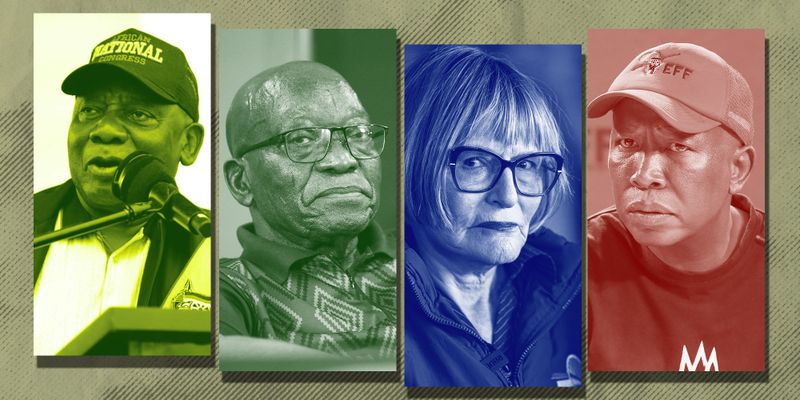
LOCAL ELECTIONS 2026: The top four parties’ final campaign pitches
The ANC, DA, MK party and EFF all held their final campaign rallies this weekend. Here are their final pitches to voters.
Ukraine evacuates civilians from parts of Kherson region as expiry of Oleshky ceasefire nears
Nov 1 (Reuters) - Ukraine's military said it evacuated 167 people from threatened areas of southern Kherson region on Sunday as a temporary local ceasefire neared expiry -- two days after busloads of residents were brought out of the embattled Russian-held town of Oleshky.

ARTIFICIAL INTELLIGENCE OP-ED: Forget future existential threats — AI is automating gendered violence and misogyny right now
The current alarm about the future dangers of agentic AI might distract us from the very real AI harms already happening. As we speculate about whether machines might one day become dangerous to humankind, AI is deepening misogyny, eroding safety and automating gendered abuse.

Top Stories
Binance sees spike in withdrawals as exchange returns online after $6.3 billion heist
LOCAL ELECTIONS 2026: The top four parties’ final campaign pitches
Ukraine evacuates civilians from parts of Kherson region as expiry of Oleshky ceasefire nears
ARTIFICIAL INTELLIGENCE OP-ED: Forget future existential threats — AI is automating gendered violence and misogyny right now
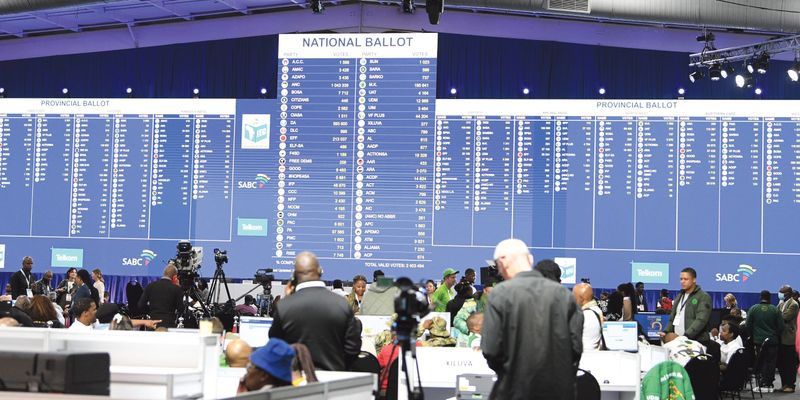
LOCAL ELECTIONS 2026: What happens after the vote? Councils, coalitions and (maybe) controversies
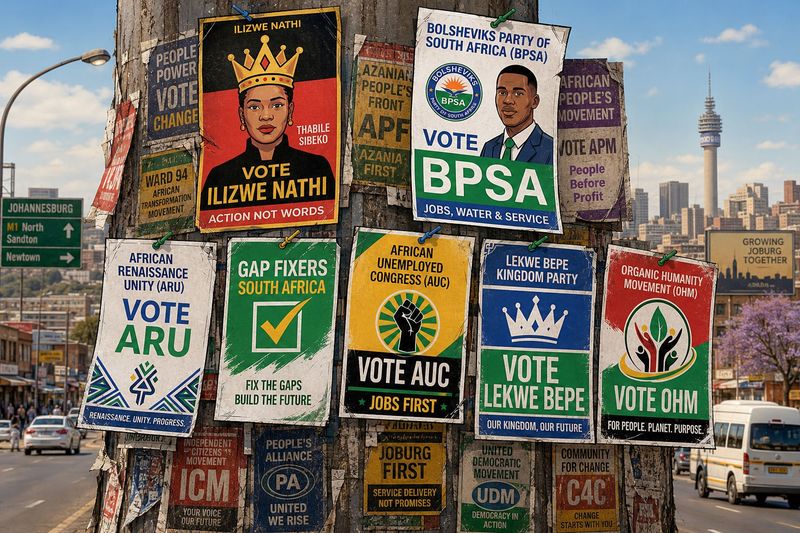
OUR CITY NEWS: Eighty-three parties contest crowded Joburg local government elections
Troubled port: Transnet and foreign operator face scrutiny over backlog at Durban Gateway Terminal

BUSINESS REFLECTION: Crossed Wires: The internet’s technical debt is due, and we can’t pay
Latest
Binance sees spike in withdrawals as exchange returns online after $6.3 billion heist
LOCAL ELECTIONS 2026: The top four parties’ final campaign pitches
Ukraine evacuates civilians from parts of Kherson region as expiry of Oleshky ceasefire nears
ARTIFICIAL INTELLIGENCE OP-ED: Forget future existential threats — AI is automating gendered violence and misogyny right now
LOCAL ELECTIONS 2026: What happens after the vote? Councils, coalitions and (maybe) controversies
OUR CITY NEWS: Eighty-three parties contest crowded Joburg local government elections
Troubled port: Transnet and foreign operator face scrutiny over backlog at Durban Gateway Terminal
BUSINESS REFLECTION: Crossed Wires: The internet’s technical debt is due, and we can’t pay