Death of the ANC: Party suffers worst municipal result since 1994 as support falls to 30.81 percent
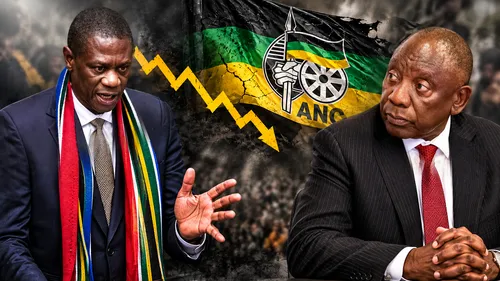
With 99% of results captured, the ANC is polling at 30.81% in South Africa’s 2026 local government elections, leaving it without an outright majority in any metro and under pressure to account for its worst municipal performance since 1994.
Twenty years after it won almost two out of every three municipal votes, the ANC goes into Sunday’s final results declaration with fewer than one in three, and without an outright majority in a single metro.
ANC insiders said the party’s top seven, its most senior office-bearers, are licking their wounds and talking about what comes next, with President Cyril Ramaphosa thinking over his own future in the party.
And with 99% of results now captured, figures flighted on the Electoral Commission of SA’s (IEC) results dashboard put the ANC on 30.81% nationally, its worst showing in any election since 1994.
That is almost 15 percentage points down on the 45.6% it won in the 2021 municipal elections, and less than half of the 64.9% it took in 2006.
As recently as 2021, the ANC won outright majorities in two metros, and in 2011 it won seven of the eight.
Former minister Nkosazana Dlamini-Zuma, who sits on the ANC’s national executive committee and lost the race for the party presidency to Ramaphosa in 2017, said the party's leadership had to own up to the result.
“First, we need to look at ourselves, and see where we went wrong, and correct, and self-correct, that’s all I can say,” Dlamini-Zuma told IOL late on Saturday night.
“I think all of us as a leadership should take responsibility.”
She said the ANC had to “work hard to come to the people, understand the people’s needs and address them”.
“Do it with humility, integrity and compassion,” Dlamini-Zuma said.
An ANC insider, who asked not to be named, was far less diplomatic.
“The reality is that the current leadership, myself included, is the worst that the ANC has had,” the insider said.
An ANC veteran called for an urgent assessment of the party’s leadership, saying the ANC could not keep treating election defeats as isolated setbacks.
“Whilst there are several factors that have conspired to bring the ANC close to its knees, the organisation is paying a high price for arrogance, incompetence, dishonesty, aloofness and corruption,” the veteran said.
Louw Nel, a senior political analyst at Oxford Economics Africa, said in an analysis he shared with IOL that the result could make the positions of the top seven “untenable” and, if coalition talks fail, “lead to calls for Ramaphosa to go a year ahead of schedule”.
He also said angry voters had left the ANC “harvesting the fruits of years of maladministration, corruption, and gross indifference to the plight of long-suffering South Africans”.
He said the party was losing voters to several parties at once, from the MK Party and the EFF to ActionSA, the IFP and smaller regional parties.
The ANC’s next elective conference is scheduled for December 2027.
MK Party high command member Advocate Dali Mpofu, who read out a statement from party president Jacob Zuma at a briefing in Durban on Saturday, said the MK Party had driven the ANC’s losses.
ANC secretary-general Fikile Mbalula addresses the media at the National Results Operations Centre at the Gallagher Convention Centre in Midrand.
In a post on Saturday, ANC secretary-general Fikile Mbalula said the party would “be humble” in defeat.
“We will listen to the voices of our people loudly and we will respect them,” Mbalula said.
He said the ANC would “go back and fix our house”, including its branches, its conduct in government and its closeness to the people it serves.
Mbalula said the party would work harder “not for the next election, but for the grandmother waiting for water, the young person waiting for work, and the household waiting for a street light that works”.
Mbalula has also admitted that service delivery failures made campaigning hard, with ANC volunteers facing angry residents over water, electricity and other basic services.
“Our history gave us a responsibility to serve. It does not give us an entitlement to govern,” he said.
Support for the ANC has plummeted over the last 20 years, resulting in the party's worst local government elections showing since the dawn of democracy in 1994.
The ANC’s support has fallen in every metro since 2011.
In Johannesburg the party has 20.27% of the vote, down from 58.56% in 2011, while in Tshwane it has 20.22%, down from 55.32%.
In Ekurhuleni the ANC has 22.11%, compared with 61.63% in 2011.
The sharpest fall came in eThekwini, where the ANC won 61.07% in 2011 and now has 16.46%, after a 25.6-point drop since 2021 alone.
Buffalo City, a metro in the birthplace province of party icons and Struggle heroes Nelson Mandela and Oliver Tambo, is the only metro where the ANC still has more than 40% of the vote, at 41.93%, down from 59.4% in 2021.
In Mangaung the ANC has 33.91%, down from 50.6%, and in Nelson Mandela Bay it has 25.48%, down from 39.43%.
Professor Ntsikelelo Breakfast, a political analyst at Nelson Mandela University, said there was evidence of the ANC’s loss of support in urban centres, which had hung councils, except for the City of Cape Town.
“The facts speak for themselves, but in the rural section of the population, that is where the ANC’s majority votes come from, because traditional leaders are more popular than politicians,” Breakfast said.
“Also, traditional leaders have a transactional relationship with the government because they belong to the Congress of Traditional Leaders of SA.”
He said political power came from two spaces: rural areas, where the ANC retained majority support, and urban centres, where it had been dealt a blow.
Breakfast said traditional leaders tended to instruct the electorate on how to vote.
“That is why so many other political leaders visited traditional leaders ahead of the elections,” he said.
“Getting the buy-in of traditional leaders is how the ANC has been handling votes. So, it has nothing to do with the track record or the good work it does.
"It is about that divide between the rural and urban centres."
In a message circulated in ANC WhatsApp groups, one disillusioned supporter called the party “my once political home” and blamed the results on its failure to deliver on the Freedom Charter, the 1955 document of principles on which the ANC built its policies.
“Today the election results we see is proof of your failure to endorse the freedom charter,” the supporter said.
“The people have spoken through the ballot and have decided to go back to those who during apartheid oppressed us.”
An insider, however, rejected that reading and said voters were punishing the ANC over services.
“I think it’s just the basic service delivery,” the insider said.
“Not the Freedom Charter per se, but I think they’ve failed to focus on the basics of local government.”
“So people are obviously going to turn towards the DA, who at least at the level of the facade have shown that they can deliver.”
The ANC has won 3,236 council seats across the country, down from 4,545 in 2021 and 5,633 in 2011.
In the seven metros where seats have been allocated so far, its councillors drop from 455 to 308.
Council seats are made up of ward councillors and proportional representation (PR) councillors, who are drawn from party lists according to each party’s share of the vote.
Even in traditional ANC strongholds, support has fallen below 50%, with the ANC failing to secure outright control in any of the country's eight metros.
The ANC controls only 53 of the country’s 213 councils outright.
It has the most votes in 128 councils, which means 75 of them are hung, with no party holding more than half the seats.
Nationally, 135 councils are hung, compared with 66 in 2021 and 27 in 2016.
Limpopo is the only province where the ANC still has more than half the vote, at 54.44%.
In the Eastern Cape the ANC has 46.06%, in Gauteng 21.57%, in KwaZulu-Natal 20.34% and in the Western Cape 14.69%.
The DA has 24.6% nationally and the MK Party 9.72%.
Representation in councils has also fallen sharply over the last two decades, as the ANC secures fewer seats than ever before.
An ANC member from Mpumalanga said the party’s leaders had "stopped listening".
“Political arrogance is a manifestation of the inability to listen, dismissing the views of the people,” he said.
Political analyst Dale McKinley said talk of the ANC’s death was premature.
“There’s a very big difference between a party gradually losing support and being on its deathbed,” McKinley said.
“The fact of the matter is, if you look at the numbers, the ANC remains the largest party in our country.
“So to be on its deathbed, it would have to be basically coming fourth, fifth, or something like that, and have been surpassed by the other parties, which it hasn’t been, even if it has lost support.”
McKinley said that outside KwaZulu-Natal, in rural areas and small towns, the ANC was still “certainly by far the largest party”.
But he said the party was “bleeding support”.
“It’s haemorrhaging, and it has been for quite some time,” McKinley said.
“Where it has lost the most support is in the metros, and that’s where, obviously, increasing numbers of the population live.”
Another ANC source warned that the party’s survival depended on what its leaders did next.
“Should they also fail to decisively act on this occasion, there might not be an ANC to speak of in the next elections,” the source said.
Political analyst Dr Oscar van Heerden has said the ANC could still recover by 2029, but only if it changes its leadership, holds an early elective conference, brings in younger leaders and invites those who left for breakaway parties to return.
Limpopo is the only province where the ANC has secured more than 50% of the vote, while suffering bruising losses in key provinces like Western Cape, KwaZulu-Natal, and Gauteng.
Coalitions now offer the ANC its clearest route to staying in local government.
Political analyst Dr Oscar van Heerden said the ANC would not go into coalition talks cap in hand.
“I don’t think there will be any begging bowl,” Van Heerden told IOL.
“I think the ANC will stand firm. They can enter into coalitions, and they will. They will project some strength, and I don’t think it is always a given that parties would want to exclude the ANC.
“Johannesburg is a good example. Helen [Zille] will have to decide whether she wants to enter into a coalition with smaller parties, including Herman Mashaba, or whether she will just make things simple and enter into a coalition with the ANC, with her as the mayoral candidate.
“I don’t think political parties are that black and white when it comes to coalition politics.
“The ANC is open to anyone and everyone who wants to be in bed with it.”
Van Heerden was referring to DA federal council chairperson Helen Zille, the party’s Johannesburg mayoral candidate, and ActionSA leader Herman Mashaba.
Some ANC members are already drawing up their own coalition maps.
In one party WhatsApp group, a member proposed that the ANC form a coalition with ActionSA and the IFP in Johannesburg and take the mayorship, and partner with ActionSA again in Tshwane while letting Mashaba's party keep the mayoral chains.
“We must make ActionSA our partner in Gauteng,” the member said.
McKinley said that with no party near 50%, deals were unavoidable.
“You’re going to have to make compromise, you’re going to have to make deals, the question is with whom,” he said.
McKinley said the ANC would not go begging, but would look for coalitions that keep it in office.
“It’s going to be looking for coalition setups that are going to ensure that it can still play the kind of role that it is used to, which is essentially being in power, or at least being in partial power,” he said.
He said this would allow the ANC to keep “being able to dish out patronage, and to be able to do what they’ve always done, even if on a smaller scale”.
McKinley said politicians would always find ways to keep themselves in power and that “principles generally usually get thrown out the window”.
Another insider said party members in WhatsApp groups see the coming coalition talks as “the make or break”.
“If the ANC is going to go with the DA in municipalities in the name of stability and all of this and that, it’s going to further spell the death now,” the insider said.
“The opportunity you have to revive the ANC is to kick the DA out completely, including from the GNU.”
The insider said “everyone is quiet at the high level” on coalition talks, which have been centralised, with the national leadership handling negotiations and provinces only consulted.
In the Karoo, another party member said, ANC members would rather work with the DA than the PA.
“They don’t want the PA,” the insider said.
The ANC won 57.5% of the national vote in 2019, fell to 40.2% in the 2024 general elections and has now dropped to 30.81% in Wednesday’s municipal vote.
The insider said the Government of National Unity had done the ANC more harm than good.
“You have normalised the DA now amongst African communities,” the insider said.
“You put them into the mainstream in government.”
The insider said the arrangement “also isolated us further from our base because many in the base are not happy with the DA relationship”.
“The DA is coming out to be the victor in the GNU,” the insider said.
ANC member Hanif Loonat, who signed his letter to the leadership “a despondent comrade”, said the party had been hollowed out by those in charge of it.
“Today, that proud organisation has been reduced to a shadow of its former self, and, sadly, a laughing stock in the eyes of many who once admired it,” Loonat said in the letter seen by IOL.
“The leadership must shoulder the blame for allowing cabalism, racism, tribalism, factionalism and the marginalisation of capable comrades to become entrenched under its watch.”
He said the ANC “belongs to its people, not to a cabal, a faction or a privileged political elite”.
“It is heartbreaking to say this, but you are on the wrong side of history. And history can be a very unforgiving judge,” Loonat wrote.
The insider said the party’s leaders stayed quiet because they were afraid and wanted “to keep their jobs in cabinet”.
“Lack of decisiveness on wrongdoing. Lack of imagination. It’s just a complete mess,” the insider said.
The insider said the DA had “young and dynamic leaders and strategists behind them”.
“We’ve got people who should be in an old age home,” the insider said.
“This election results [sic] is not what we want to see but I hope it is a wake up call,” one member said in a WhatsApp group.
“Now every councillor of the ANC should stop being self serving and deliver to the masses.
“This can still be turned around but only by hard work.”
The IEC is expected to declare the final results on Sunday night, after which newly elected councils have 14 days to hold their first sittings and elect mayors.
Originally published and reported by IOL South Africa.
Read original coverage on IOL South AfricaRelated Topics
Keywords
Related Stories
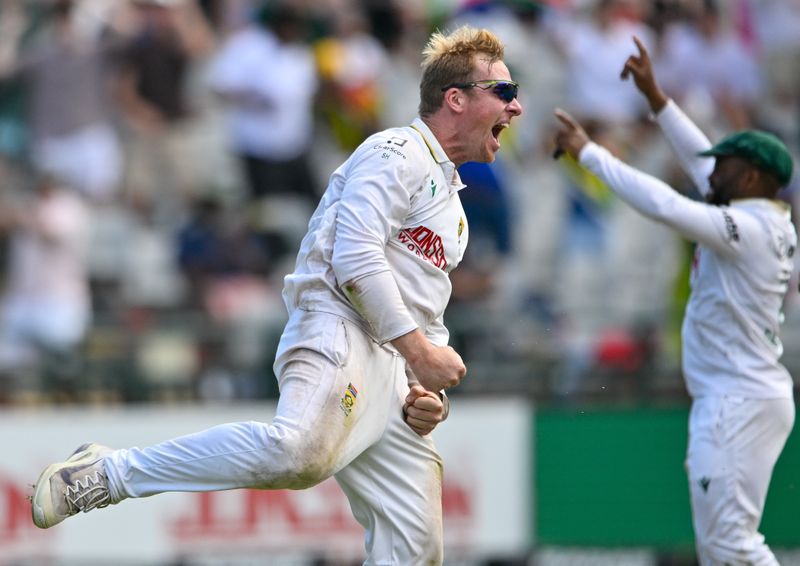
STEPPING UP: Simon Harmer’s transition from exile to Proteas’ top Test spinner
The spin bowler will surely be in the running for future Proteas inclusion after a magnificent performance against Australia in Cape Town.
CULTURAL TENSIONS: Is halaal food becoming more common in SA? Debunking viral myths
South Africa’s halaal food debate exposes misunderstandings about Islamic slaughter, religious freedom, voluntary certification and the commercial forces behind the growing number of halaal products.
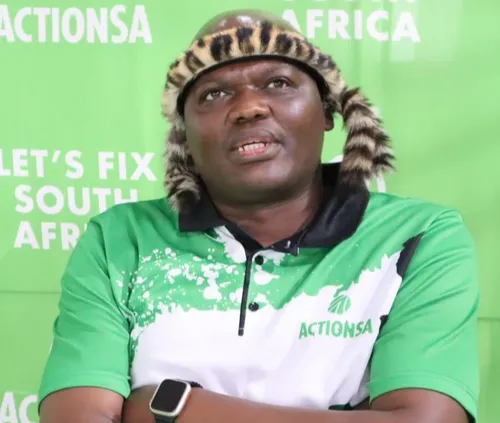
ActionSA says stronger election result could give it coalition influence
ActionSA says stronger election result could give it coalition influence
Baze University acquires two aircraft as founder expands aviation education
According to Baze University Vice-Chancellor Abiodun Adeniyi, the acquisition reflects an investment philosophy that links entrepreneurship with national development. The post Baze University acquires two aircraft as founder expands aviation education appeared first on Premium…

Top Stories
STEPPING UP: Simon Harmer’s transition from exile to Proteas’ top Test spinner
CULTURAL TENSIONS: Is halaal food becoming more common in SA? Debunking viral myths
ActionSA says stronger election result could give it coalition influence

Australia reach World Cup final after Fiji scare
Baze University acquires two aircraft as founder expands aviation education
Cape Town property prices surge 12%, more than twice Johannesburg's increase
Two children killed in Kariega shack fire as father injured trying to rescue them
Resumption of War in Iran after US Mid-Terms
Latest
STEPPING UP: Simon Harmer’s transition from exile to Proteas’ top Test spinner
CULTURAL TENSIONS: Is halaal food becoming more common in SA? Debunking viral myths
ActionSA says stronger election result could give it coalition influence
Australia reach World Cup final after Fiji scare
Baze University acquires two aircraft as founder expands aviation education
Cape Town property prices surge 12%, more than twice Johannesburg's increase
Two children killed in Kariega shack fire as father injured trying to rescue them
Resumption of War in Iran after US Mid-Terms