East Africa redefines marathon limits as Sabastian Sawe leads historic charge

Sports
East Africa redefines marathon limits as Sabastian Sawe leads historic charge April 27, 20266:55 AM ET Heard on Morning EditionBy
Kenya’s Sabastian Sawe wins London Marathon, shattering 2-hour barrier
Listen · 2:15 2:15 Transcript Toggle more options- Download
- Embed Embed <iframe src="https://www.npr.org/player/embed/nx-s1-5800113/nx-s1-9746003" width="100%" height="290" frameborder="0" scrolling="no" title="NPR embedded audio player">
- Transcript

Sabastian Sawe of Kenya crosses the line to win the men's race at the London Marathon, April 27, 2025 Alberto Pezzali/AP hide caption
toggle caption Alberto Pezzali/APNAIROBI, Kenya—East Africa woke up Monday to a new marathon era after Kenya's Sabastian Sawe made history by becoming the first man to run an official marathon in under two hours at the London Marathon. He clocked 1:59:30, shattering the previous world record.
Ethiopia's Yomif Kejelcha, running his first marathon, finished second in 1:59:41. Uganda's Jacob Kiplimo was third in 2:00:28, seven seconds faster than the previous world record set by the late Kenyan Kelvin Kiptum in Chicago in 2023.
The barrier did not just fall: East Africa tore it down, and then kept running.
In Kenya, the reaction quickly moved from celebration to national pride. President William Ruto said Sawe had " redrawn the limits of human endurance."
"Your triumph firmly places you among the greats of global athletics and reaffirms Kenya as an enduring force at the pinnacle of distance running," the President wrote on his X account.
For Sawe, London completed one of the fastest and quietest rises in marathon history.
Sawe, 31, comes from Kapsabet in Kenya's Rift Valley running belt, the same high-altitude region that has produced generations of distance-running champions. But unlike Eliud Kipchoge, he did not arrive in London as a global face of the sport. His rise has been quieter — built almost entirely on results.
He won Valencia in 2024 in 2:02:05, then London, then Berlin, and then came back to London to defend his title by doing what no man had done in a record-eligible marathon.
The record was even more striking because Sawe's build-up was far from perfect. He had been injured through the autumn and only started training properly again in January — and even then, by February, the goal was simply to defend his London title, not rewrite history. Four months later, he has shattered the most famous barrier in marathon running.
Sawe trains at high altitude in western Kenya. He has spoken before of being inspired by his uncle, former Ugandan Olympian Abraham Chepkirwod, and by a teacher who told him running was not just a talent, but his fortune and his future.
In London, Sawe turned what Kipchoge had shown was possible into an official world record. Kipchoge broke two hours in 2019 in a controlled challenge, with rotating pacemakers, but the time was not record-eligible. Sawe did it in open competition, on one of marathon running's biggest stages.
"I am feeling good. I am so happy. It is a day to remember for me," Sawe told the BBC shortly after crossing the line. "We started the race well. Approaching finishing the race, I was feeling strong. Finally reaching the finish line, I saw the time, and I was so excited."
Kenyan sports journalist Lynn Wachira, who has followed Sawe's rise, said part of the shock was that a world record had not been the dominant pre-race conversation.
"It was not a conversation pre-London Marathon," she said. "It does feel like, oh my gosh. Like, what? Who saw that coming?"
But Sawe was only the first part of the story.
Kejelcha's second-place finish was also extraordinary by any normal standard. The Ethiopian was making his marathon debut. In almost any other race in history, running 1:59:41 would have made him the headline. In London, somehow, it only made him second.
Kejelcha is not new to elite distance running. He is one of Ethiopia's most versatile runners, a track and road specialist who set the world indoor mile record in 2019 and later broke the half-marathon world record in Valencia in 2024.
Then came Kiplimo. At 25, the Ugandan is already one of the most decorated distance runners of his generation, with Olympic and world championship bronze medals and Commonwealth Games titles. He has built his name across cross country, the track and the roads. In London, he ran 2:00:28, inside Kiptum's old world record, and yet still finished third.
Wachira called it mind-boggling.
"Jacob Kiplimo of Uganda was literally inside the previous world record. How crazy is that?" she said. "Yomif Kejelcha, who is a debutant in the marathon, running a sub-two-hour marathon, but just only ending on the podium and not really winning the race. That is why this is mind-boggling. It's crazy."
There were record-breaking moments in the women's race too, as Ethiopia's Tigst Assefa improved her own women-only world record, pulling clear of Kenyan rivals Hellen Obiri and Joyciline Jepkosgei in a thrilling finish to retain her title in 2:15:41.
For Kenya, Sawe's victory feels like succession. Paul Tergat helped define the country's marathon identity. Kipchoge turned the event into a philosophy of human possibility. Kiptum pushed the official record to the edge of two hours before his death in 2024.
Now Sawe has crossed the line Kiptum seemed destined to break.
But the London podium widened the meaning of the moment. It was Ethiopia showing that Kejelcha can move from track and road racing into marathon running with immediate force. It was Uganda, through Kiplimo, showing that it is no longer only a cross-country and track power, but a serious marathon nation too.
For East Africa, this was more than another dominant day in distance running. It was a regional claim on the future of the marathon.
The limits of human endurance are still being rewritten. East Africa, for now, is holding the pen and showing no signs of putting it down.
Kenya’s Sabastian Sawe wins London Marathon, shattering 2-hour barrier
Listen · 2:15 2:15 Transcript Toggle more options- Download
- Embed Embed <iframe src="https://www.npr.org/player/embed/nx-s1-5800113/nx-s1-9746003" width="100%" height="290" frameborder="0" scrolling="no" title="NPR embedded audio player">
- Transcript
Related Topics
Keywords
Related Stories
Binance sees spike in withdrawals as exchange returns online after $6.3 billion heist
Nov 1 (Reuters) - Binance customers pulled $3.64 billion, or 2.1% of its assets, as the world's biggest cryptocurrency exchange went back online on Sunday after hackers the FBI links to North Korea stole billions from the platform last week.

LOCAL ELECTIONS 2026: The top four parties’ final campaign pitches
The ANC, DA, MK party and EFF all held their final campaign rallies this weekend. Here are their final pitches to voters.

Ukraine evacuates civilians from parts of Kherson region as expiry of Oleshky ceasefire nears
Nov 1 (Reuters) - Ukraine's military said it evacuated 167 people from threatened areas of southern Kherson region on Sunday as a temporary local ceasefire neared expiry -- two days after busloads of residents were brought out of the embattled Russian-held town of Oleshky.

ARTIFICIAL INTELLIGENCE OP-ED: Forget future existential threats — AI is automating gendered violence and misogyny right now
The current alarm about the future dangers of agentic AI might distract us from the very real AI harms already happening. As we speculate about whether machines might one day become dangerous to humankind, AI is deepening misogyny, eroding safety and automating gendered abuse.

Top Stories
Binance sees spike in withdrawals as exchange returns online after $6.3 billion heist
LOCAL ELECTIONS 2026: The top four parties’ final campaign pitches
Ukraine evacuates civilians from parts of Kherson region as expiry of Oleshky ceasefire nears
ARTIFICIAL INTELLIGENCE OP-ED: Forget future existential threats — AI is automating gendered violence and misogyny right now
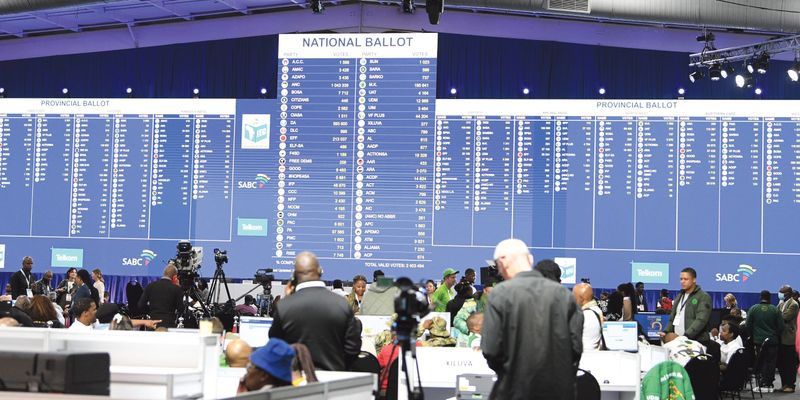
LOCAL ELECTIONS 2026: What happens after the vote? Councils, coalitions and (maybe) controversies

OUR CITY NEWS: Eighty-three parties contest crowded Joburg local government elections

Troubled port: Transnet and foreign operator face scrutiny over backlog at Durban Gateway Terminal

BUSINESS REFLECTION: Crossed Wires: The internet’s technical debt is due, and we can’t pay
Latest
Binance sees spike in withdrawals as exchange returns online after $6.3 billion heist
LOCAL ELECTIONS 2026: The top four parties’ final campaign pitches
Ukraine evacuates civilians from parts of Kherson region as expiry of Oleshky ceasefire nears
ARTIFICIAL INTELLIGENCE OP-ED: Forget future existential threats — AI is automating gendered violence and misogyny right now
LOCAL ELECTIONS 2026: What happens after the vote? Councils, coalitions and (maybe) controversies
OUR CITY NEWS: Eighty-three parties contest crowded Joburg local government elections
Troubled port: Transnet and foreign operator face scrutiny over backlog at Durban Gateway Terminal
BUSINESS REFLECTION: Crossed Wires: The internet’s technical debt is due, and we can’t pay