eThekwini plans citywide smart-meter rollout as residents challenge high water bills
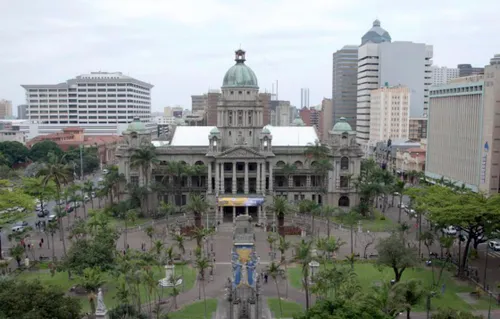
Estimated readings and household leaks have been blamed for high water bills in eThekwini.
Durban residents facing shock water bills and disputed municipal accounts have been promised a citywide smart meter rollout, with eThekwini Municipality acknowledging that estimated readings and unreported household leaks are contributing to the problem.
Municipal Speaker Thabani Nyawose says the installation project is at an advanced stage, but warned that equipping all properties across the city will take several years.
In the meantime, residents can submit photographs of their meter readings through an eThekwini mobile app to help ensure more accurate billing.
The assurances come amid reports from residents and civic associations of accounts running into tens of thousands of rands, as well as disconnection threats linked to poor coordination between municipal departments while accounts are formally disputed.
Nyawose acknowledged that high water bills were a challenge for the municipality, attributing some of the problems to estimated meter readings and household leaks that had not been reported.
He said residents had a role to play in helping the municipality address the issue by providing accurate readings.
“We are addressing the issue of bills that are high. But for us to win the battle, we have to work with communities; we have to work with citizens and individual households,” Nyawose said.
He said the smart meter project was at an advanced stage, but acknowledged the scale of the task given the size of the city and the number of properties requiring installation.
“In the next few years, we are going to install new smart meters in all our properties and households. There will be improvement. It’s good that members of the public are aware that the matter is being addressed as an acknowledged area that, yes, doing estimates is unacceptable,” he said.
“But in our city, we’ve now realised that the burden is heavy on our customers. As of now, we want to have a smart meter in all our properties in the municipality.”
Until the rollout is completed, Nyawose said residents could submit photographs of their meter readings through the municipality’s app to help improve billing accuracy.
He also encouraged residents who receive excessively high bills to use the council’s dispute resolution committee, saying most complaints were successfully addressed through the process.
Nyawose said several organisations, institutions and individuals had approached the municipality with proposals to address the billing challenges, and encouraged members of the public to submit their own suggestions.
The billing problems have also raised concerns about the impact of unreliable municipal services on businesses and investment in Durban.
Professor Purshottama Sivanarain Reddy, a public sector governance specialist at the University of KwaZulu-Natal’s Graduate School of Business and Leadership, said the inflated billing issue was serious and that residents and other stakeholders should be given an opportunity to contribute solutions.
“There are a lot of us who want to contribute to the debate and can also provide solutions because we have first-hand experience; we’ve been dealing with all these billing issues. But I’m not sure whether the municipality is prepared for that,” Reddy said.
He said councillors needed to give residents an opportunity to raise their concerns and ensure their experiences were heard.
Jennifer Reddy, CEO of Morar Incorporated, said service delivery, safety and health concerns directly affected business investment.
She said ongoing water and electricity disruptions made it difficult for businesses to operate and retain employees.
“Within the chambers we sit in, a big mandate of what we’re trying to do is bridge the gap between councillors, the municipalities and businesses to make it a business-friendly environment for us to be economically productive,” she said.
Reddy said businesses could not all be expected to have alternative sources of energy, boreholes or water tankers to compensate for unreliable basic services.
“It’s basic necessities that we need to make sure are in place to continue business and enhance the services we, as businesses, can provide to the communities we operate within,” she said.
She warned that businesses would struggle to plan for growth in areas where basic service delivery remained unreliable.
“I think that’s what the municipality should be cognizant of: we are trying to attract businesses into the country, into these regions. And you can only do it where we’re saying we are self-sufficient, we’re sustainable, and we are equipped to handle what our citizens require,” Reddy said.
Keywords
Related Stories
CSOs urge judiciary to avoid another Imo-style embarrassment in Uzodimma’s Senate case
Coalition of civil society organisations (CSOs) advises the judiciary to use the ongoing court case involving Governor Hope Uzodimma and former governor, Rochas Okorocha to restore public confidence in the courts. The post CSOs urge judiciary to avoid another Imo-style…

Freedom advocates urge Nigeria to grant Africans visa-free entry
They advocated reciprocal arrangements among African countries, citing Kenya and Rwanda as examples of countries that had taken steps to ease entry for other Africans. The post Freedom advocates urge Nigeria to grant Africans visa-free entry appeared first on Premium Times…

Iran warns next war with US could be longer as Trump threatens further strikes
Iran warns a renewed war with the US could last longer as Donald Trump threatens further strikes, while diplomatic efforts to prevent another escalation remain uncertain.

Two women killed in N1 crash near Kranskop as highway closed
Two women have died and five people have been injured in a head-on collision involving four vehicles on the N1 near Kranskop, forcing the closure of the northbound carriageway.
Top Stories
CSOs urge judiciary to avoid another Imo-style embarrassment in Uzodimma’s Senate case

Spence 'very proud' to break WSL appearance record

Referee accidentally fractures college football player's leg
Freedom advocates urge Nigeria to grant Africans visa-free entry
Iran warns next war with US could be longer as Trump threatens further strikes
Two women killed in N1 crash near Kranskop as highway closed
AFFORDABLE HOUSING OP-ED: CT’s Tafelberg social housing units cut by Heritage assessment

Five teenagers stabbed at Halloween party
Latest
CSOs urge judiciary to avoid another Imo-style embarrassment in Uzodimma’s Senate case
Spence 'very proud' to break WSL appearance record
Referee accidentally fractures college football player's leg
Freedom advocates urge Nigeria to grant Africans visa-free entry
Iran warns next war with US could be longer as Trump threatens further strikes
Two women killed in N1 crash near Kranskop as highway closed
AFFORDABLE HOUSING OP-ED: CT’s Tafelberg social housing units cut by Heritage assessment
Five teenagers stabbed at Halloween party