Government wants to get rid of fuel taxes, but a big hurdle remains
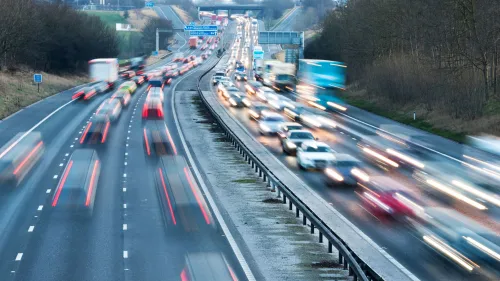
Could South Africa ever do away with fuel taxes?
After initially indicating that there would be no immediate fuel price relief for motorists, the government has now announced a temporary reprieve for November and December. There is also talk of fuel taxes being scrapped altogether, but don’t expect it to happen anytime soon.
Responding to questions in a recent radio interview on 702, Finance Minister Enoch Godongwana indicated that the government wanted to eventually phase out the General Fuel Levy (GFL), but cautioned that the massive revenue shortfall would need to be recovered through other revenue sources.
“We've got to find a way of phasing it out. But in doing so, we will be losing about R80 billion,” Godongwana said.
“How are we going to close that gap? That's a discussion we probably will have.”
The minister also said that the government would need to reconsider how the Road Accident Fund (RAF) is financed.
“It's R2 per litre. Just removing the Road Accident Fund, you'll realise a major decrease in the price of fuel,” he added.
Godongwana did not suggest any timeline for the potential phasing out of fuel levies. In the longer term, the government could face a challenge if electric vehicle sales take off in a meaningful way, as these vehicles are not subject to fuel taxes.
However, Mineral and Petroleum Resources Minister Gwede Mantashe stated last month that his department was reviewing the Regulatory Accounting System, which is used to determine margins that form part of the fuel price structure. This process is expected to be concluded by March 2027.
Together, the two main levies add more than R6 to the cost of every litre of petrol, with the GFL currently standing at R4.10 per litre for petrol and R3.93 for diesel, and the RAF levy at R2.25 per litre for both fuel types.
During last week’s Medium-Term Budget Policy Statement, Godongwana announced temporary fuel relief measures for the next two months. From November 4 until December 1, the GFL will be reduced by R1.50 per litre for petrol and R3.00 per litre for diesel, with the relief decreasing to R1.00 and R1.50 per litre, respectively, from December 2 until January 5, 2027.
However, this relief will be eroded by upcoming fuel price increases, with the latest Central Energy Fund (CEF) data pointing to price hikes of R1.16 per litre for petrol and R1.40 per litre for diesel.
Economists have previously warned that cutting fuel taxes could have other negative consequences.
Hannah Marais, Southern Africa chief economist at Deloitte Africa, recently told IOL that fuel tax cuts came with a huge fiscal cost.
“Such relief would likely require additional borrowing or spending cuts somewhere, at a time when preserving fiscal credibility and maintaining sustainable public finances remains particularly important for South Africa,” Marais said.
Sanisha Packirisamy, group economist at Momentum, added that absorbing high fuel prices through additional government borrowing risked driving up government bond yields and weakening the rand, while cutting public spending elsewhere carried its own growth and socio-economic penalties.
“Politically, withholding relief is difficult to defend to strapped consumers, yet repeated extensions create an unrealistic expectation that government will absorb every external energy shock,” Packirisamy said.
Related Topics
Keywords
Related Stories
CSOs urge judiciary to avoid another Imo-style embarrassment in Uzodimma’s Senate case
Coalition of civil society organisations (CSOs) advises the judiciary to use the ongoing court case involving Governor Hope Uzodimma and former governor, Rochas Okorocha to restore public confidence in the courts. The post CSOs urge judiciary to avoid another Imo-style…

Freedom advocates urge Nigeria to grant Africans visa-free entry
They advocated reciprocal arrangements among African countries, citing Kenya and Rwanda as examples of countries that had taken steps to ease entry for other Africans. The post Freedom advocates urge Nigeria to grant Africans visa-free entry appeared first on Premium Times…

Iran warns next war with US could be longer as Trump threatens further strikes
Iran warns a renewed war with the US could last longer as Donald Trump threatens further strikes, while diplomatic efforts to prevent another escalation remain uncertain.
Two women killed in N1 crash near Kranskop as highway closed
Two women have died and five people have been injured in a head-on collision involving four vehicles on the N1 near Kranskop, forcing the closure of the northbound carriageway.
Top Stories
CSOs urge judiciary to avoid another Imo-style embarrassment in Uzodimma’s Senate case

Spence 'very proud' to break WSL appearance record

Referee accidentally fractures college football player's leg
Freedom advocates urge Nigeria to grant Africans visa-free entry
Iran warns next war with US could be longer as Trump threatens further strikes
Two women killed in N1 crash near Kranskop as highway closed
AFFORDABLE HOUSING OP-ED: CT’s Tafelberg social housing units cut by Heritage assessment

Five teenagers stabbed at Halloween party
Latest
CSOs urge judiciary to avoid another Imo-style embarrassment in Uzodimma’s Senate case
Spence 'very proud' to break WSL appearance record
Referee accidentally fractures college football player's leg
Freedom advocates urge Nigeria to grant Africans visa-free entry
Iran warns next war with US could be longer as Trump threatens further strikes
Two women killed in N1 crash near Kranskop as highway closed
AFFORDABLE HOUSING OP-ED: CT’s Tafelberg social housing units cut by Heritage assessment
Five teenagers stabbed at Halloween party