HUNGER FOR ACTION: No more ‘business as usual’ — experts sound warning on SA’s lapsed food plan
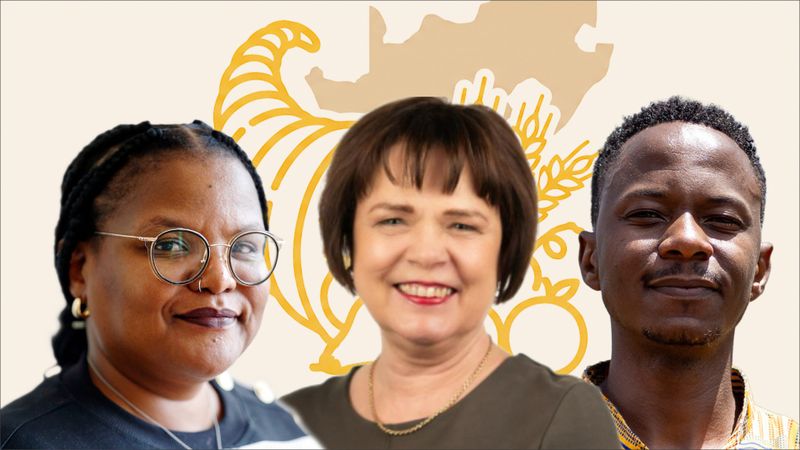
Speakers at a Daily Maverick webinar hunkered down to examine South Africa’s dormant National Food and Nutrition Security Plan, outlining key priorities its next iteration should include to realise the right to sufficient and nutritious food for all.
“Statistics South Africa’s General Household Survey has recorded that 9.4 million South Africans went hungry in 2025 and that 22% of households did not have adequate access to food,” said Maverick Citizen managing editor Zukiswa Pikoli in her opening remarks at Daily Maverick’s webinar, Hungry in a Land Of Plenty: What SA’s Food Plan got Wrong, on 29 October.
Pikoli added that stunting affects 27% of children and that in the first nine months of 2020 more than 450 children under the age of five were reported to have died in public hospitals with malnutrition as an underlying condition.
The webinar sought to discuss South Africa’s National Food and Nutrition Security Plan (NFNSP), which aims to address issues such as food security, child stunting and malnutrition.
The plan had lapsed in 2023 and was largely unfounded, unfunded, and its coordinating council never met, while its replacement plan is still in draft, uncosted and without a budget, Pikoli said.
The need for a new plan is urgent
The NFNSP’s creation began in 2012, said the co-director of the ARUA Centre of Excellence in Sustainable Food Systems at the University of Pretoria, Hettie Schönfeldt, speaking at the webinar.
It was created by the former Department of Agriculture, Land Reform and Rural Development, the Department of Social Development, Department of Health, Department of Basic Education, the Presidency, as well as research organisations and universities, said Schönfeldt, who was a contributor to the plan under the University of Pretoria.
Although the plan was very ambitious, the departments responsible for the implementation continued with “business as usual”, since there was no clear budget or implementation plan, she added.
But as South Africa approaches its fourth year without leadership from the state linked to the lapsed plan, things cannot carry on as business as usual, said Union Against Hunger (UAH) co-founder Busiso Moyo.
Moyo noted that although civil society was not involved in the creation of the first iteration of the NFNSP, it had been calling for food democracy and the realisation of the right to sufficient and nutritious food under section 27 of the Constitution.
“The government forged ahead with the development of the previous policy under some kind of veil of secrecy,” he said.
As a result of the previous exclusion of civil society, organisations like UAH were actively seeking to engage with the drafted NFNSP and make their grievances over the previous plan heard, he said.
Towards a new NFNSP
According to Moyo, although there is dialogue surrounding the new NFNSP, and policy paralysis remains a barrier to creating a roadmap for the country. He cited the Food Security Bill as an example. It was tabled as far back as 2001, yet remained unapproved and a point of discussion in 2026.
Schönfeldt noted that the draft of the Food Security Bill is open for public comment at the NFNSP public consultations, which have been held in various districts in each province since September.
She explained that the draft plan has several differences from the previous plan.
The plan has a clear mandate for municipalities, which will be built into their integrated development plans, she said.
The draft would also implement a monitoring evaluation learning and impact assessment framework, which would continuously track targets for 2029, 2033 and 2037 and assess whether people were benefiting from the systems in the plan.
The plan would build on existing programmes and systems, such as South Africa’s social grants. For example, implementing the Maternal Support Grant to address child stunting and nutrition during the first 1,000 days of life, to complement the Child Support Grant, which is only accessed later in a child’s life.
According to Moyo, UAH held workshops with civil society before the nationwide consultations began to develop key priority areas they believe the new NFNSP should address.
Based on these workshops UAH had concluded that the plan should prioritise childhood and maternal nutrition, land and agrarian reform and, most importantly, food affordability.
Private sector not in the room
Although the government is trying to engage with civil society’s concerns and demands around the new plan, part of the challenge is private sector engagement, Moyo said.
The private sector, which should also be held accountable for creating a nourishing food system and which the plan will also address, has not been present during the consultations, he added.
Asked how the government could ensure the private sector acts in a way that protects children’s nutrition, Schönfeldt said it could expand the list of zero-rated foods to include proteins. Proteins such as chicken and meat could be added to the list to broaden its nutritional value.
Schönfeldt added that the private sector should use nutrition as innovation, questioning why no retailer had, for example, sold affordable food baskets based on the food-based dietary guidelines for children.
“Innovation should take place. To say, ‘how can we constantly have a biodiverse diet available where people are?’ And that is a call to everyone, to all of society, not only to the corporate, but also to local groups to support them,” she said. DM
Keywords
Related Stories
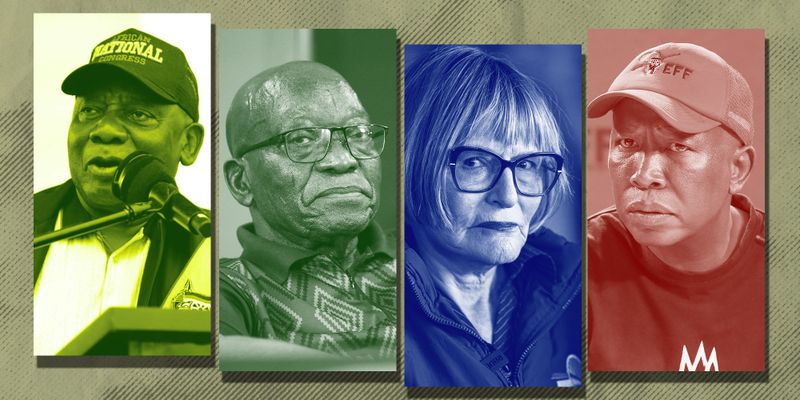
LOCAL ELECTIONS 2026: The top four parties’ final campaign pitches
The ANC, DA, MK party and EFF all held their final campaign rallies this weekend. Here are their final pitches to voters.
Ukraine evacuates civilians from parts of Kherson region as expiry of Oleshky ceasefire nears
Nov 1 (Reuters) - Ukraine's military said it evacuated 167 people from threatened areas of southern Kherson region on Sunday as a temporary local ceasefire neared expiry -- two days after busloads of residents were brought out of the embattled Russian-held town of Oleshky.

ARTIFICIAL INTELLIGENCE OP-ED: Forget future existential threats — AI is automating gendered violence and misogyny right now
The current alarm about the future dangers of agentic AI might distract us from the very real AI harms already happening. As we speculate about whether machines might one day become dangerous to humankind, AI is deepening misogyny, eroding safety and automating gendered abuse.
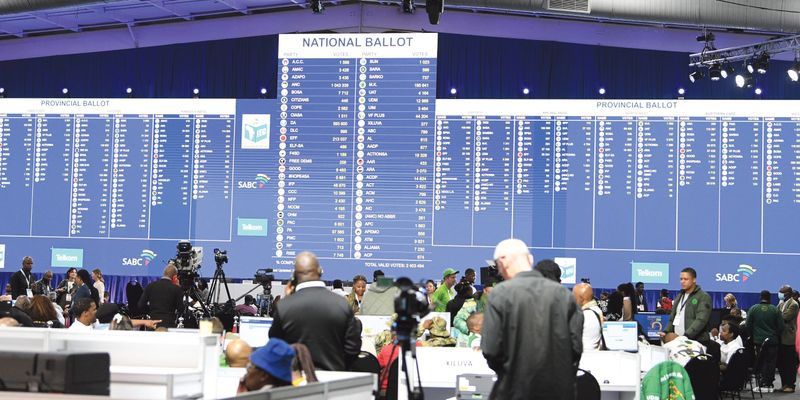
LOCAL ELECTIONS 2026: What happens after the vote? Councils, coalitions and (maybe) controversies
When voting in the 4 November local government election is completed, if the pollsters have been proven correct, coalitions will dominate across South Africa’s 257 councils, including most of the eight metros. Here’s what happens once the voting ends and the stations close.
Top Stories
LOCAL ELECTIONS 2026: The top four parties’ final campaign pitches
Ukraine evacuates civilians from parts of Kherson region as expiry of Oleshky ceasefire nears
ARTIFICIAL INTELLIGENCE OP-ED: Forget future existential threats — AI is automating gendered violence and misogyny right now
LOCAL ELECTIONS 2026: What happens after the vote? Councils, coalitions and (maybe) controversies
OUR CITY NEWS: Eighty-three parties contest crowded Joburg local government elections
Troubled port: Transnet and foreign operator face scrutiny over backlog at Durban Gateway Terminal

BUSINESS REFLECTION: Crossed Wires: The internet’s technical debt is due, and we can’t pay

Investment Outlook: Did Datatec catch an AI tailwind or is it a breeze?
Latest
LOCAL ELECTIONS 2026: The top four parties’ final campaign pitches
Ukraine evacuates civilians from parts of Kherson region as expiry of Oleshky ceasefire nears
ARTIFICIAL INTELLIGENCE OP-ED: Forget future existential threats — AI is automating gendered violence and misogyny right now
LOCAL ELECTIONS 2026: What happens after the vote? Councils, coalitions and (maybe) controversies
OUR CITY NEWS: Eighty-three parties contest crowded Joburg local government elections
Troubled port: Transnet and foreign operator face scrutiny over backlog at Durban Gateway Terminal
BUSINESS REFLECTION: Crossed Wires: The internet’s technical debt is due, and we can’t pay
Investment Outlook: Did Datatec catch an AI tailwind or is it a breeze?