IEC Declares 2026 local elections ‘free and fair’ as SA enters coalition era
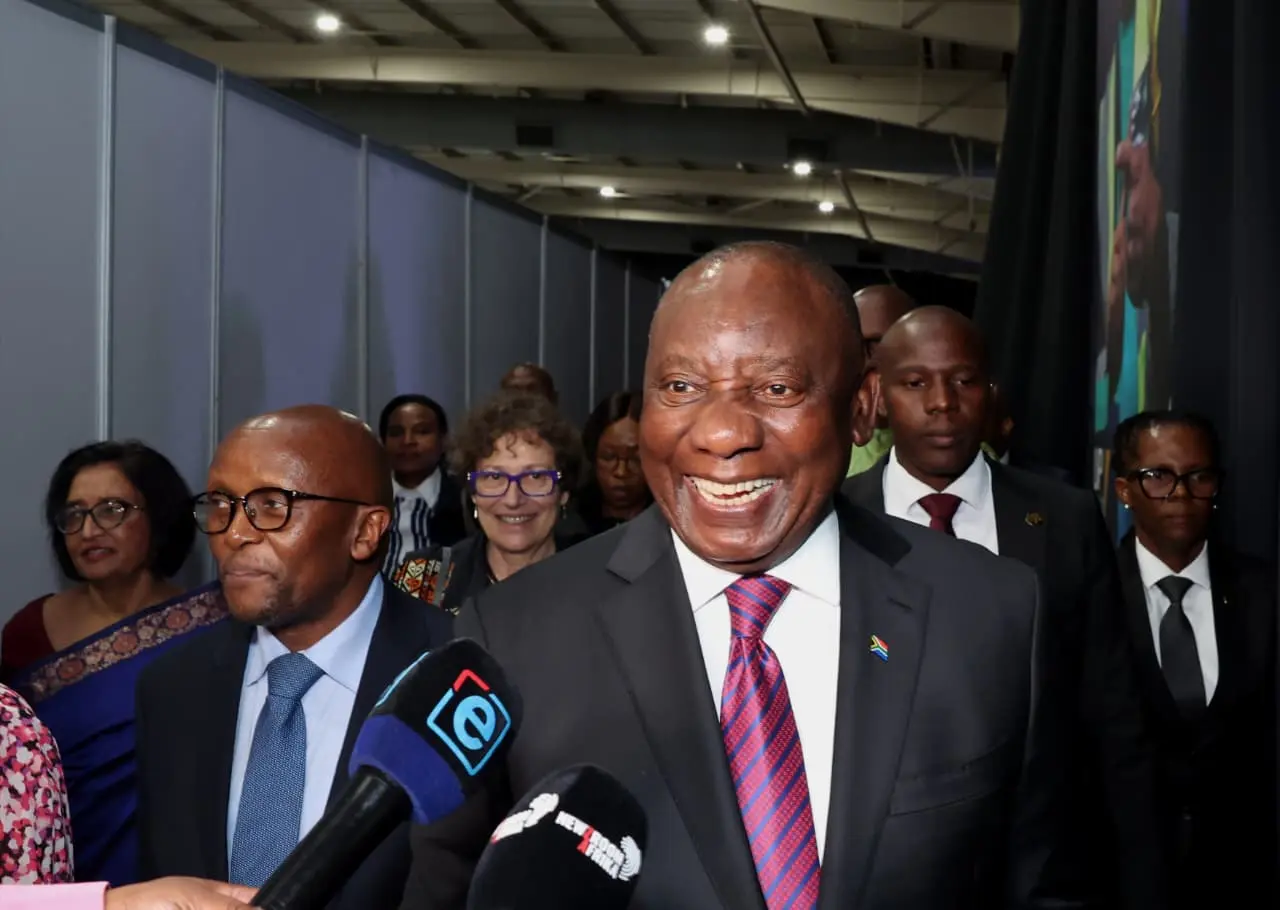
With the all-important 2026 local government elections concluded and results announced by the Electoral Commission of South Africa (IEC) on Sunday, leading economists said the polls sent a positive image to local and international investors on the importance of holding free and fair polls.
In what IEC chairperson Mosotho Moepya declared as “free and fair” elections, he said the commission was satisfied that the 2026 local government elections.
“It is our assessment that the elections were largely conducted in a peaceful environment.
“We say this based on the findings of the Elections Satisfaction Survey 2026, which was tasked with assessing the voters’ view on the election process, including its integrity and operational efficiency,” said Moepya.
In terms of the top five political parties, the ANC recorded a national vote of 30.89%, securing 3 164 council seats, DA (24.60%, securing 1 527 seats), uMkhonto weSizwe Party (9.61%, securing 701 seats), EFF (6.25%, securing 505 seats) and ActionSA (5.68%, securing 219 seats).
Other political parties and independent candidates collectively received 22.97% of the vote - securing representation across municipal councils.
Maintaining that the elections were “good for the economy”, Professor Raymond Parsons of the North West University Business School, a predictable political process at various levels of government was “a major pillar of business confidence”.
Parsons said municipalities have become “engine rooms of the economy that drive outcomes at the local coalface”.
“The latest election results also strongly affirm a definitive further shift and realignment towards multiparty coalitions at municipal level - less partisanship and more progress will be needed,” he said.
Parsons, however cautioned that the horse-trading among parties in coalition negotiations over the next two weeks should ensure political stability, “if local economic development is to be maximised”.
South Africa’s breaking out of its current narrow 1% to 2% gross domestic product growth, depended on functional local governments and their ability to maintain a positive environment for business activity.
“Business cannot operate without dependable water, electricity, roads and logistics.
“All parties have previously committed to urgently fixing municipal governance and service delivery, as their overriding priority.
“They must now be held accountable.
“As the incoming political leadership now seeks to form new administrations, effective and stable governance at local level is tangibly needed to help improve the investment climate for job-rich growth.
“It is also clear that the sheer scale of service delivery and infrastructural challenges facing villages, town and cities in South Africa, require a collective effort,” said Parsons.
He said collaboration at local government level was “vital to ensure positive and sustainable outcomes”.
“In the evolving political landscape, business must therefore remain willing to act as a constructive partner - through effective public-private sector partnerships, to expedite delivery and job creation at local level.
“Through strengthened engagements with the new political leadership, the new municipal governments and business must mimic the advantages that have already become apparent from the existing cooperation between the GNU and the private sector,” he added.
University of Johannesburg’s political economist and Distinguished Professor of Sociology, Patrick Bond, said potential coalition partners – the DA and the ANC – enjoyed recognition of Bretton Woods institutions, the International Monetary Fund (IMF) and the World Bank.
“Both the ANC and DA comply with IMF fiscal consolidation commands - since a $4.3 billion Covid-19 loan was granted in 2020.
“National Treasury has since chopped both the annual per-resident national-to-local operating subsidies by 11% and municipal capital grants by 1.5%.
“In 2023, marching orders from Washington confirmed that National Treasury officials that year agreed that grants to local governments were contained,” maintained Bond.
He said Finance Minister Enoch Godongwana “regularly fibs about this austerity regime, for example last month claiming that subsidies for free basic services - electricity and water - reach 11 million households”.
“But in reality, fewer than three million actually qualify, given the state’s obnoxious means-testing barriers,” he added.
Commenting on coalition partnerships, local government expert with the Public Affairs Research Institute, Dr Thina Nzo, said the first ideal option would have been for parties to consult with their constituencies “on which parties they should form a coalition partnership”.
“But under these circumstances of short two weeks’ deadlines, parties might not be able to do this with so many hung councils dispersed in provinces. “The second option is more workable, due to constraints, which is parties will have to be more transparent about the process of negotiations.
“This implies that parties should inform the voters which party or parties they will be negotiating with as a first option - outlining one to five key principles of negotiation for alignment and agreement.
“Parties should say what the outcomes are after those discussions,” said Nzo.
She said feedback from party leaders to the electorate should be “informative in order to provide the electorate with insightful transparency into the decision-making processes of coalition partnerships between parties”.
While the Municipal Systems Amendment Bill, which introduced the coalition framework has not been passed in Parliament, the process would depend on the maturity of parties and past lessons learned in avoiding sporadic motions of no-confidence against mayors and speaker of council.
Warned Nzo: “Parties with a larger proportion should avoid being held ransom by smaller parties that use mayoral seats as a bargaining chip for cooperation in a coalition partnership formation.
“This distorts representation and produces desperation and not well thought through principles.
“Through their coalition negotiations and agreements, parties must outline the criteria for voting for speakers and mayors - in line with their competence to execute their legislative functions and duties.
“This process will be better for metros, because parties have publicly announced their mayoral candidates before the elections.
“However, for newly-joined hung local councils in secondary cities, peri-urban and rural municipalities, a closer examination of the candidates proposed for mayoral and speaker office-bearers, needs a stringent leadership and competence criteria that can be acceptable to all political parties.”
Originally published and reported by Mail & Guardian.
Read original coverage on Mail & GuardianRelated Topics
Keywords
Related Stories
LOCAL ELECTIONS 2026: DA goes on coalition offensive as battle for Nelson Mandela Bay begins
With no outright majority in Nelson Mandela Bay, coalition choices will shape efforts to restore water, electricity, refuse removal and accountable local government. The DA has emerged as the largest party with 53 of the 120 council seats and is approaching potential coalition…
BUSINESS REFLECTION: Crossed Wires: What happens to Big Tech now after the midterms?
Democratic Party midterm victories may tighten AI oversight, but surging demand, vast investment and Big Tech’s global reach will keep the industry expanding.

WORKING MODEL: Beyond state jobs — Thuli Madonsela on the Constitution’s true economic mandate
According to Prof Thuli Madonsela, one of the drafters of South Africa’s founding document, it is not the government’s responsibility to provide jobs to citizens; rather, the Constitution guarantees the right to justice within a fair economic system.

14 DAYS TO FIX LOCAL: Herman Mashaba: ‘Very, very slim’ chance of coalitions with the DA
With 14 days from Monday, 8 November, to hammer out coalition agreements in 139 councils across the country, it’s all eyes on the kingmaker party ActionSA, which has won 55 wards to hold the cards in three key Gauteng metros.
Top Stories
LOCAL ELECTIONS 2026: DA goes on coalition offensive as battle for Nelson Mandela Bay begins
BUSINESS REFLECTION: Crossed Wires: What happens to Big Tech now after the midterms?
WORKING MODEL: Beyond state jobs — Thuli Madonsela on the Constitution’s true economic mandate
14 DAYS TO FIX LOCAL: Herman Mashaba: ‘Very, very slim’ chance of coalitions with the DA
TRANSNATIONAL TRAFFICKING: South Africans entering Nigeria and fuelling global cartel drug trafficking, security briefing hears
LOCAL ELECTIONS 2026: KZN coalition dilemma: Will election losers find their way back to power?

ROYAL ADDRESS: Princess Anne praises SA’s agricultural industry in whistle-stop visit to Cape
LOCAL ELECTIONS 2026 OP-ED: The DA hammered the ANC in Emfuleni — the how and the why
Latest
LOCAL ELECTIONS 2026: DA goes on coalition offensive as battle for Nelson Mandela Bay begins
BUSINESS REFLECTION: Crossed Wires: What happens to Big Tech now after the midterms?
WORKING MODEL: Beyond state jobs — Thuli Madonsela on the Constitution’s true economic mandate
14 DAYS TO FIX LOCAL: Herman Mashaba: ‘Very, very slim’ chance of coalitions with the DA
TRANSNATIONAL TRAFFICKING: South Africans entering Nigeria and fuelling global cartel drug trafficking, security briefing hears
LOCAL ELECTIONS 2026: KZN coalition dilemma: Will election losers find their way back to power?
ROYAL ADDRESS: Princess Anne praises SA’s agricultural industry in whistle-stop visit to Cape
LOCAL ELECTIONS 2026 OP-ED: The DA hammered the ANC in Emfuleni — the how and the why