Iran strikes Kuwait and Bahrain as escalating attacks threaten to unravel peace efforts
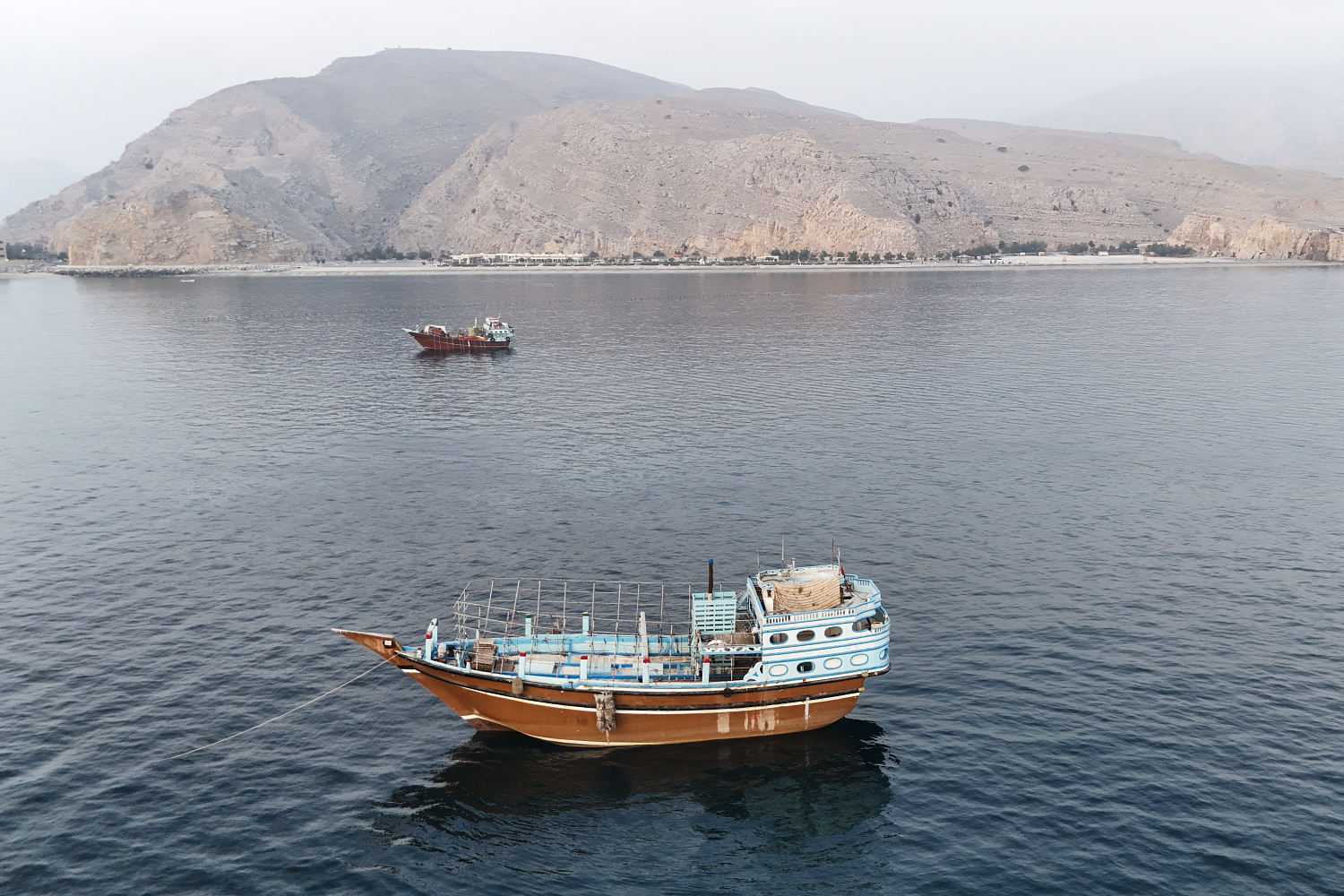
President Donald Trump has warned that the United States could be forced to return to war as a series of escalating reciprocal strikes with Iran continued into Sunday, threatening to unravel peace efforts between the two countries. Bahrain and Kuwait faced fresh Iranian attacks early Sunday, hours after U.S. Central Command said it had hit multiple targets across Iran in response to “continued aggression” against commercial shipping in the Strait of Hormuz. “United States aircraft just struck Iranian missile and drone storage locations, and coastal radar sites, for violating the Cease Fire Agreement, AGAIN!” President Donald Trump said Saturday on Truth Social. “It is very possible that they will never learn! There may come a point when we are no longer able to be reasonable, and will be forced to militarily complete the job that we very successfully started. If that happens, the Islamic Republic of Iran will no longer exist!” CENTCOM said in a statement Saturday that U.S. fighter jets conducted strikes on 10 Iranian military targets at multiple locations. Iran was “given a chance to honor the ceasefire agreement but elected not to when its forces launched a one-way attack drone,” it said, referring to an attack on a Panama-flagged vessel Saturday. Meanwhile, Iran’s Islamic Revolutionary Guard Corps said it had launched more missiles and drones at U.S. military infrastructure in Kuwait and Bahrain. American bases “will experience hell in these coming days,” the IRGC navy command said, as reported by Iran’s semiofficial Fars news agency. Bahrain, which hosts the U.S. Navy’s 5th Fleet, said Sunday that a residential building was damaged by the overnight attacks, with “no loss of life.” The country’s Foreign Affairs Ministry expressed its “strongest condemnation” of Iranian attacks on the territory, asserting its right to defend itself. “This dangerous escalation reveals that Tehran’s actions are not isolated incidents or random acts, but rather a deliberate and systematic pattern of repeated aggression against the Kingdom’s sovereignty and the security of its citizens and resident,” it said in a statement on X. Kuwait’s army said Sunday that its air defenses were also countering Iranian missile and drone attacks. Two ballistic missiles were intercepted, it said, with no damage reported. The series of reciprocal attacks began last week with a disagreement over shipping in the Strait of Hormuz. Tehran, which had committed to reopen the critical waterway, has insisted that vessels follow a specified route close to its coastline, but many vessels are choosing instead to transit through the waters of the United Arab Emirates and Oman. After a series of Iranian threats to vessels that had used the alternative route, a Singapore-flagged ship was attacked Thursday, to which the U.S. reciprocated by hitting Iranian military targets. Those strikes triggered an Iranian response, continuing the cycle of attacks that has since escalated. Revolutionary Guard spokesman Hossein Mohebi said Sunday that “every time the enemy violates the ceasefire, it will receive a harsher response than before,” according to Iran’s hard-line Student News Network. The Revolutionary Guard also said it would deal with vessels it claims violated its approved route “stronger than before.” Iranian Foreign Minister Abbas Araghchi said later Sunday that the Strait of Hormuz will be managed under Iranian administration and “will return to pre-war capacity within 30 days.” “No other country or entity has responsibility in this regard and any interference or attempt otherwise will complicate the situation,” he said during a trip to Baghdad, the capital of Iraq. Vice President JD Vance, who had been tapped to play a lead role in ongoing U.S.-Iran negotiations, said Friday on X: “If they have disagreements about how the MOU is being applied, they can pick up the phone. But violence will be met with violence.” The memorandum of understanding the U.S. and Iran signed less than two weeks ago stipulates that the Strait of Hormuz — a vital waterway through which 20% of the world’s oil passed before the war — will reopen. It said Iran would “make arrangements” to allow the safe passage of commercial vessels with no charge for 60 days. But both sides have repeatedly accused the other of breaching the terms of the deal. The memorandum of understanding is “vague and ambiguous,” said Fawaz Gerges, a professor of international relations at the London School of Economics. The deal stipulates that Iran “must make arrangements and best efforts to allow vessels to sail in the Strait of Hormuz,” he said, but the U.S. “does not really accept Iran’s designated route.” That illuminates “a great deal about the vast gulf that exists between the United States and Iran,” he said. “If they cannot peacefully manage a 60-day ceasefire, how can they resolve the huge differences regarding Iran’s nuclear program and a lasting settlement?” U.S. allies in the Persian Gulf, including Egypt, Saudi Arabia, Qatar and Jordan, condemned Iran’s latest attacks on Bahrain and Kuwait and called for restraint. Qatar “emphasizes the necessity of sparing the region the consequences of these unjustified attacks, continuing on the path of dialogue and diplomacy,” its Foreign Affairs Ministry said Sunday on X. “I think we don’t have a full ceasefire, a complete ceasefire. We have a lesser ceasefire,” Gerges said. “I wonder whether the new normal is a limbo state of no war and no peace.”
Keywords
Related Stories
Minor detained after U.S. warned Russia of possible Moscow terror attack, FSB says
Russia’s Federal Security Service (FSB) said it had received information from the United States through established partner channels about preparations for a terrorist attack in Moscow.

Stores looted in German riots as Gen Z activists protest living costs, military service
Rioters looted stores and set fires to barricades in Frankfurt on Saturday as protests across Germany demanded lower living costs and better education.

Shops looted as German cost of living protests turn violent
The protests in cities across Germany - including Berlin, Hamburg and Frankfurt - came on the same day hundreds of thousands also protested in France.

Democrats are used to heartbreak in Texas - could Talarico turn the tide?
The state's $500m Senate race may be the most closely watched in the US midterms, and is about far more than control of Congress.

Top Stories

CSOs urge judiciary to avoid another Imo-style embarrassment in Uzodimma’s Senate case

Spence 'very proud' to break WSL appearance record

Referee accidentally fractures college football player's leg

Freedom advocates urge Nigeria to grant Africans visa-free entry
Iran warns next war with US could be longer as Trump threatens further strikes
Two women killed in N1 crash near Kranskop as highway closed

AFFORDABLE HOUSING OP-ED: CT’s Tafelberg social housing units cut by Heritage assessment

Five teenagers stabbed at Halloween party

Latest
CSOs urge judiciary to avoid another Imo-style embarrassment in Uzodimma’s Senate case
Spence 'very proud' to break WSL appearance record
Referee accidentally fractures college football player's leg
Freedom advocates urge Nigeria to grant Africans visa-free entry
Iran warns next war with US could be longer as Trump threatens further strikes
Two women killed in N1 crash near Kranskop as highway closed
AFFORDABLE HOUSING OP-ED: CT’s Tafelberg social housing units cut by Heritage assessment
Five teenagers stabbed at Halloween party