Labour Court overturns reinstatement of worker fired for shouting at team leader
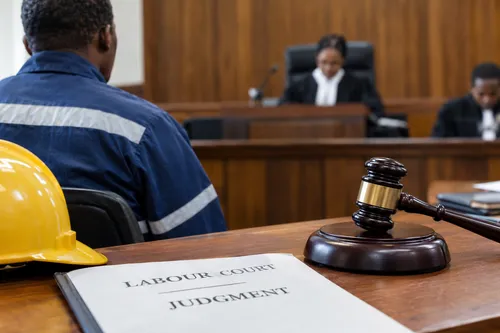
Labour Court rules shouting and defiance justified worker’s dismissal.
The Labour Court has ruled that South Ocean Electric Wire was justified in dismissing an employee who allegedly shouted at his team leader, challenged management’s authority and insisted he would leave work without permission.
The Labour Court in Johannesburg reviewed and set aside an arbitration award that had found the dismissal of Manase Ntsoana substantively unfair and ordered his reinstatement with five months’ back pay.
Acting Judge Motshekga found that the commissioner had incorrectly assessed the evidence and misunderstood the legal principles governing gross insubordination.
The court substituted the arbitration award with a finding that Ntsoana’s dismissal by South Ocean Electric Wire was substantively fair.
Ntsoana was employed as an operator on the company’s E28 extrusion machine.
According to the judgment, he had signed an overtime requisition committing to work from 6am to 6pm on June 3 and 4, 2023. A trial run was being conducted on his machine on the Sunday in question.
Employees who wanted to leave before the end of an overtime shift were required to obtain a pass-out, which was reserved for emergencies.
The company’s version was that Ntsoana asked superintendent Anthony Mission to sign his pass-out, but Mission declined and directed him to approach his superior.
At about 2.30pm, Ntsoana told his team leader, Nomthandazo Kubayi, that he wanted to leave at 3pm to buy groceries and do his laundry.
The request was referred to production manager Danie Delport, who confirmed that pass-outs were reserved for emergencies.
The company alleged that Ntsoana later returned after changing out of his protective clothing and demanded the pass-out. When told that his request had been refused, he allegedly shouted at Kubayi and pointed his finger at her, first in the team leaders’ office and later on the shop floor in front of other operators.
A second team leader, Diana Manuel, intervened, but Ntsoana allegedly told her that he did not work with her.
The confrontation was eventually moved back to the office, where Delport authorised the pass-out as the situation escalated, indicating that the matter would be dealt with the following day.
Ntsoana disputed the allegations, maintaining that he had approached Kubayi earlier that morning and that they had agreed he could leave at 3pm. He denied being rude, shouting or pointing his finger at anyone.
Ntsoana was charged with gross insubordination, found guilty at a disciplinary hearing on June 12, 2023, and dismissed. His internal appeal was subsequently unsuccessful.
The National Union of Metalworkers of South Africa (NUMSA), representing Ntsoana, referred an unfair dismissal dispute to the Metal and Engineering Industries Bargaining Council.
During arbitration, the company called Kubayi, Manuel and Mission to testify, while Ntsoana gave evidence in his own defence.
The commissioner ruled in Ntsoana’s favour, finding that the company had failed to prove that he had refused to obey a lawful and reasonable instruction.
The commissioner also concluded that the evidence did not establish that Ntsoana had been rude, finding that the parties’ versions were evenly balanced.
He further reasoned that the conduct described by the company’s witnesses amounted to insolence rather than insubordination, which, under the company’s disciplinary code, would have called for progressive discipline.
The commissioner found that the employment relationship remained intact and ordered Ntsoana’s retrospective reinstatement with five months’ remuneration.
South Ocean approached the Labour Court to challenge the award, arguing that the commissioner had failed to properly assess the conflicting versions and had ignored material evidence from its three witnesses.
In reviewing the award, the court found that the commissioner had moved directly from Ntsoana’s denial to the conclusion that the evidence was evenly balanced, without properly evaluating the credibility and reliability of the witnesses or considering which version was more probable.
The judgment noted that the testimony of Kubayi, Manuel and Mission that Ntsoana had shouted and pointed his finger at Kubayi had not been challenged during cross-examination.
The court also found that Ntsoana’s denial and reliance on closed-circuit television footage had not been properly put to all the company’s witnesses during their testimony.
According to the judgment, Mission was standing about three metres away during the confrontation and had witnessed the exchange. He testified that he intervened because Ntsoana’s body language suggested that someone could be hurt.
Mission also testified that he had worked with Ntsoana for a long time and had no personal animosity towards him.
The court found that the commissioner’s conclusion that Ntsoana had been insolent rather than insubordinate contradicted his separate finding that the allegation of rudeness had not been proved.
It ruled that the commissioner’s assessment of the evidence could not reasonably be justified.
A central issue was whether gross insubordination could be established without proof that an employee had refused to obey a specific instruction.
The commissioner had reasoned that the company needed to prove that Ntsoana had received a lawful and reasonable instruction and had refused or failed to comply with it.
However, the Labour Court found that this approach applied the requirements of a different disciplinary offence.
Citing previous Labour Appeal Court judgments, the court explained that insubordination can also arise where an employee’s conduct constitutes a deliberate and serious challenge to, or defiance of, an employer’s authority, even where no specific instruction has been issued or disobeyed.
The court found that the evidence showed Ntsoana had indicated that he would leave with or without management’s permission.
It further noted that he allegedly challenged Delport’s authority, refused to return to work or put his protective clothing back on, and continued shouting at Kubayi in front of other employees.
The judge said the conduct went beyond discourtesy and amounted to a serious challenge to the authority of both the team leader and production manager.
The fact that Delport eventually authorised the pass-out did not mean the company had accepted or condoned the behaviour, the court found.
Instead, the evidence indicated that the pass-out was granted to defuse the situation and restore order, with management intending to address the incident afterwards.
The court concluded that a reasonable commissioner applying the correct legal test could only have found Ntsoana guilty of gross insubordination.
The court also considered whether dismissal was an appropriate sanction for the misconduct.
NUMSA argued that the company’s disciplinary code did not provide for dismissal for a first offence of gross insubordination.
However, the court interpreted the code as recommending dismissal for a first offence of gross insubordination, given the serious nature of the misconduct.
It emphasised that the code was a guideline rather than an inflexible set of rules and that each case had to be assessed on its own merits.
In this matter, the court found that the confrontation was not a brief outburst. According to the evidence, the conduct continued from shortly after 3pm until between 3.30pm and 4pm, despite attempts by the team leaders and production manager to calm the situation.
The incident occurred in front of operators supervised by Kubayi while a trial run was being conducted on Ntsoana’s machine.
Kubayi testified that she was afraid and did not wish to work with Ntsoana again.
The judge found that the commissioner had dismissed her concerns as being motivated by ego without any evidential basis.
The court held that Kubayi’s testimony established that the trust relationship had broken down and that there were no sufficient mitigating circumstances to justify a lesser sanction.
It concluded that dismissal was appropriate in the circumstances.
The Labour Court consequently set aside the arbitration award and replaced it with a finding that South Ocean Electric Wire had acted fairly in dismissing Ntsoana.
Related Topics
Keywords
Related Stories
OUR CITY NEWS: Eighty-three parties contest crowded Joburg local government elections
Johannesburg is the most contested municipality in SA’s local elections. Here are some of the 83 political parties in the running that you probably haven’t heard of.

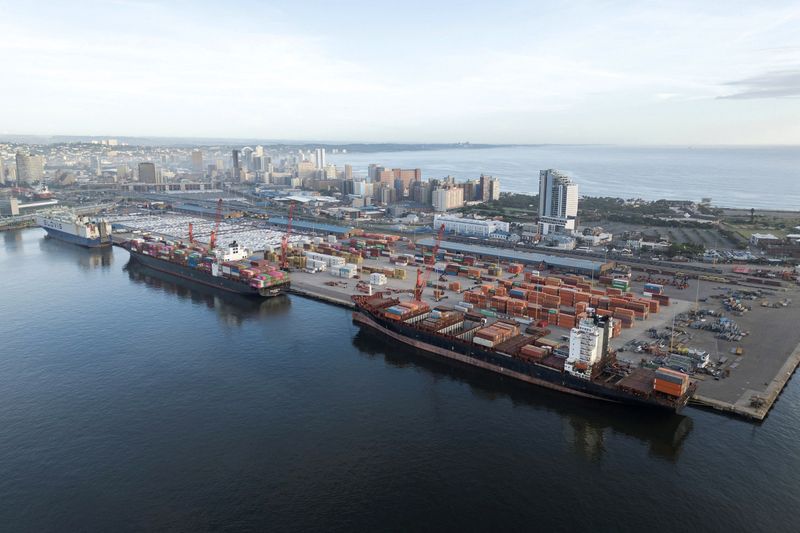
Troubled port: Transnet and foreign operator face scrutiny over backlog at Durban Gateway Terminal
The freight sector and the President are concerned about the serious slowdown of cargo at Durban harbour, but the status of Durban Gateway Terminal as a public-private partnership muddies the waters of accountability.
BUSINESS REFLECTION: Crossed Wires: The internet’s technical debt is due, and we can’t pay
From hospital equipment to bank mainframes, outdated technology is leaving critical infrastructure exposed as AI lowers the barriers to cybercrime.

Investment Outlook: Did Datatec catch an AI tailwind or is it a breeze?
Despite an 18% increase in gross invoiced income, Datatec delivered only 1.4% Heps growth, raising questions about margins, costs and the durability of AI-driven demand.

Top Stories
OUR CITY NEWS: Eighty-three parties contest crowded Joburg local government elections
Troubled port: Transnet and foreign operator face scrutiny over backlog at Durban Gateway Terminal
BUSINESS REFLECTION: Crossed Wires: The internet’s technical debt is due, and we can’t pay
Investment Outlook: Did Datatec catch an AI tailwind or is it a breeze?

Okorocha chasing shadows, Uzodimma says, vows to appeal court judgement
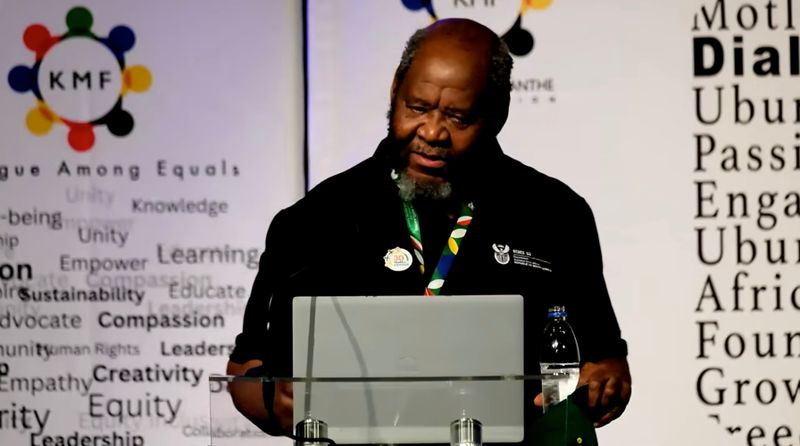
POLITICIANS PUMMELLED: SA’s path to ‘no future’ — former statistician-general Lehohla slams ‘performative’ politics

ANALYSIS: New mayors beware — SA’s local government revolt is waiting for a spark

Mets legend Jerry Koosman dies at 83: Pitcher helped New York win 1969 World Series
Latest
OUR CITY NEWS: Eighty-three parties contest crowded Joburg local government elections
Troubled port: Transnet and foreign operator face scrutiny over backlog at Durban Gateway Terminal
BUSINESS REFLECTION: Crossed Wires: The internet’s technical debt is due, and we can’t pay
Investment Outlook: Did Datatec catch an AI tailwind or is it a breeze?
Okorocha chasing shadows, Uzodimma says, vows to appeal court judgement
POLITICIANS PUMMELLED: SA’s path to ‘no future’ — former statistician-general Lehohla slams ‘performative’ politics
ANALYSIS: New mayors beware — SA’s local government revolt is waiting for a spark
Mets legend Jerry Koosman dies at 83: Pitcher helped New York win 1969 World Series