Madlanga calls for tougher action to make corruption ‘hazardous’
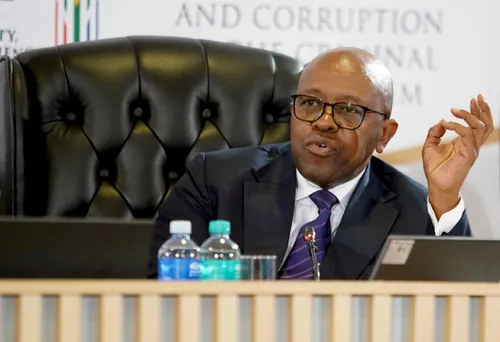
Justice Mbuyiseli Madlanga called for stronger action against corruption at the 2026 Oliver Tambo Memorial Lecture.
Justice Mbuyiseli Madlanga has called for a tougher crackdown on corruption, warning that billions of rands lost annually to graft are undermining South Africa’s ability to fulfil its constitutional obligations and protect the most vulnerable.
Speaking at the 2026 Oliver Tambo Memorial Lecture, Madlanga said corruption had become so deeply entrenched that imagining the country without it was nearly impossible. He urged law enforcement agencies and the courts to intensify their efforts to hold those involved accountable.
Madlanga chairs the Judicial Commission of Inquiry into criminality, political interference and corruption in the criminal justice system, commonly known as the Madlanga Commission.
The lecture, hosted by the Gordon Institute of Business Science (GIBS), the Adelaide and Oliver Tambo Foundation, and Infinity Dynamic Strategy, was held under the theme “The Mirror, Map and Compass”, reflecting on Oliver Tambo’s enduring leadership.
Madlanga said corruption depleted public resources and weakened the state’s ability to deliver essential services, with the greatest consequences for poor and vulnerable communities.
“The glutinous theft of public funds results in the state not being able to deliver on its public obligations as well as it otherwise would,” he said.
He said the billions of rands lost to corruption each year had a direct impact on fundamental rights, particularly socio-economic rights.
“If the promise of socio-economic rights and indeed of other fundamental rights is to be imperiled, law enforcement must step up a notch. In this, I include courts,” Madlanga said.
He described corruption as endemic and pervasive, arguing that its impact extended well beyond financial losses to the country’s ability to meet its constitutional responsibilities.
Madlanga warned against treating corruption as a problem confined to government, saying private individuals and corporations also played a role in corrupt relationships.
“It takes people outside of government and people within public office to have corrupt relationships. If players in the public sector are treated only as victims, we ignore the active bribery that drives corruption, even resulting in state capture,” he said.
He called on courts and other institutions responsible for fighting corruption to intensify their efforts to reduce the financial incentives for corrupt activity and discourage participation in it.
Madlanga acknowledged that revelations of corruption, the deterioration of state-owned enterprises and bureaucratic paralysis could leave people feeling discouraged about the country’s future.
He warned against allowing that disillusionment to undermine democratic participation.
He also described the country’s position as shameful, saying corruption was among the worst betrayals of Tambo’s values.
Political commentator Rebone Tau said the loss of public funds intended to uplift poor communities reflected the damaging consequences of corruption.
“The revelations at the Madlanga Commission have shocked many of us and highlighted how corruption undermines institutions, erodes public trust and delays service delivery,” Tau said.
She called for leaders who regarded public office as a responsibility rather than an opportunity for personal enrichment.
“We desperately need leaders who understand that public office is a responsibility, not an opportunity for personal enrichment. We need selflessness, integrity and incorruptibility,” she said.
Tau added that Tambo’s legacy should be more than an annual commemoration and should serve as a standard against which leaders and their conduct are measured.
Political analyst Gideon Chitanga said Madlanga’s remarks highlighted the depth and cost of corruption and the need for urgent action from government, the private sector and civil society.
“This calls for urgency without delays on the side of the government but also on the side of the private sector and civil society to really start focusing on how these key institutions can play a role to arrest corruption,” Chitanga said.
He said the consequences extended beyond financial and economic damage to public safety, security, and potentially national stability and national security.
Related Topics
Keywords
Related Stories
CSOs urge judiciary to avoid another Imo-style embarrassment in Uzodimma’s Senate case
Coalition of civil society organisations (CSOs) advises the judiciary to use the ongoing court case involving Governor Hope Uzodimma and former governor, Rochas Okorocha to restore public confidence in the courts. The post CSOs urge judiciary to avoid another Imo-style…

Freedom advocates urge Nigeria to grant Africans visa-free entry
They advocated reciprocal arrangements among African countries, citing Kenya and Rwanda as examples of countries that had taken steps to ease entry for other Africans. The post Freedom advocates urge Nigeria to grant Africans visa-free entry appeared first on Premium Times…

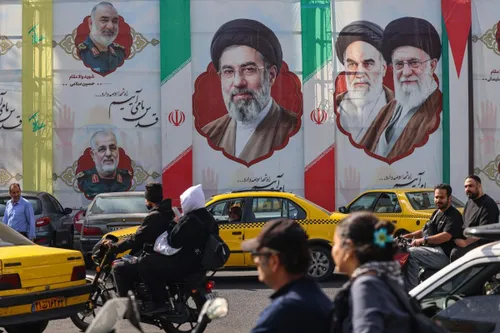
Iran warns next war with US could be longer as Trump threatens further strikes
Iran warns a renewed war with the US could last longer as Donald Trump threatens further strikes, while diplomatic efforts to prevent another escalation remain uncertain.
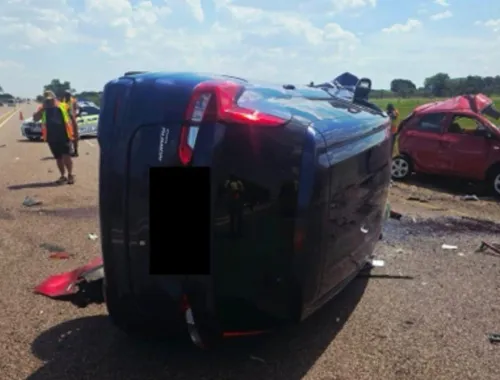
Two women killed in N1 crash near Kranskop as highway closed
Two women have died and five people have been injured in a head-on collision involving four vehicles on the N1 near Kranskop, forcing the closure of the northbound carriageway.
Top Stories
CSOs urge judiciary to avoid another Imo-style embarrassment in Uzodimma’s Senate case

Spence 'very proud' to break WSL appearance record

Referee accidentally fractures college football player's leg
Freedom advocates urge Nigeria to grant Africans visa-free entry
Iran warns next war with US could be longer as Trump threatens further strikes
Two women killed in N1 crash near Kranskop as highway closed
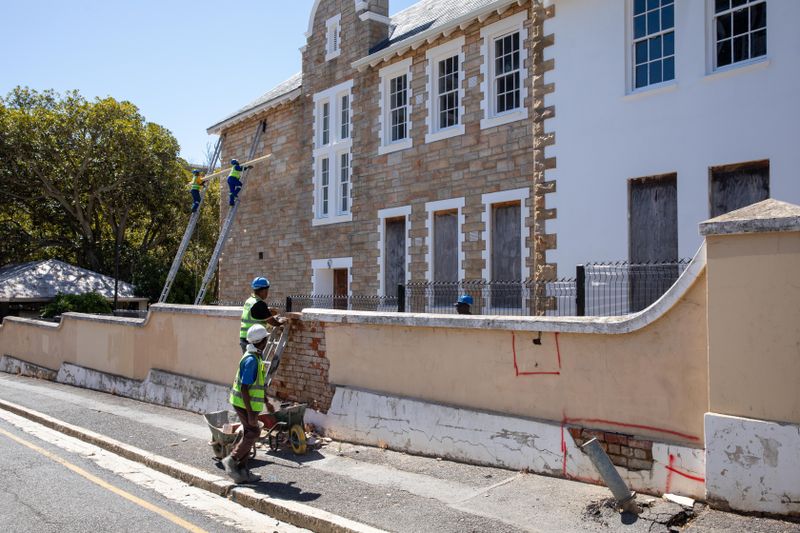
AFFORDABLE HOUSING OP-ED: CT’s Tafelberg social housing units cut by Heritage assessment

Five teenagers stabbed at Halloween party
Latest
CSOs urge judiciary to avoid another Imo-style embarrassment in Uzodimma’s Senate case
Spence 'very proud' to break WSL appearance record
Referee accidentally fractures college football player's leg
Freedom advocates urge Nigeria to grant Africans visa-free entry
Iran warns next war with US could be longer as Trump threatens further strikes
Two women killed in N1 crash near Kranskop as highway closed
AFFORDABLE HOUSING OP-ED: CT’s Tafelberg social housing units cut by Heritage assessment
Five teenagers stabbed at Halloween party