Mkhwanazi Hawks appointment raises questions over national commissioner role
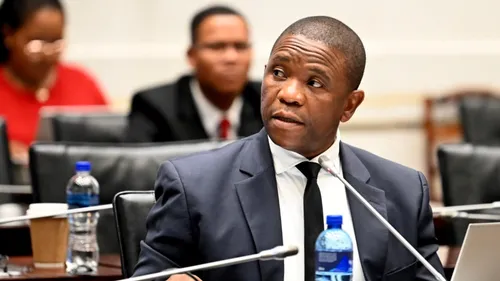
Acting Police Minister Firoz Cachalia wants KZN police commissioner Lt-Gen Nhlanhla Mkhwanazi, above, to be the national head of the Hawks.
The proposed appointment of KwaZulu-Natal police commissioner Lieutenant-General Nhlanhla Mkhwanazi as head of the Hawks has prompted debate about where his experience would have the greatest impact, with some experts arguing he should instead be considered for national police commissioner.
Acting Police Minister Firoz Cachalia’s office announced that he had submitted a Cabinet Memorandum seeking Cabinet’s concurrence for President Cyril Ramaphosa to appoint Mkhwanazi as head of the Directorate for Priority Crime Investigation (DPCI), commonly known as the Hawks.
While some political leaders have welcomed the proposal, others have questioned whether placing Mkhwanazi at the head of the specialist unit would make the best use of his operational experience.
Ministry spokesperson Kamogelo Mogotsi said the Hawks played a critical role in tackling organised crime, corruption and other serious priority offences.
“This is a priority for the Police Reset Agenda,” she said, adding that appointing a national head was important to provide strong leadership, strategic direction and operational effectiveness.
Parliament’s police oversight committee chairperson Ian Cameron said Mkhwanazi’s substantial operational and senior command experience, including his service as acting national commissioner, was an important strength.
However, Cameron said his suitability needed to be assessed against the specific demands of the Hawks, including leading complex investigations, protecting investigative independence and building specialist teams.
He also highlighted the directorate’s severe staffing crisis.
The Hawks reported 2 515 vacant policing posts, including approximately 1 500 investigator positions, when appearing before the Standing Committee on Public Accounts (Scopa) in August.
“No appointment at the top can, on its own, overcome a shortage of that scale,” Cameron said.
He said Mkhwanazi would need a costed recruitment and retention plan, with deadlines for filling critical posts. The minister and SAPS leadership would also have to provide the necessary funding and administrative support.
Cameron said the new head would need to address stalled investigations, strengthen cooperation with the National Prosecuting Authority and ensure prosecutors were involved early in complex cases.
Financial investigations should focus on those directing and benefiting from organised crime, with criminal proceeds traced for possible recovery.
He stressed that the Hawks must follow evidence regardless of political connections or seniority within government and the police. The unit’s own members should also be held to the same standards of integrity and accountability.
Scopa chairperson Songezo Zibi welcomed Mkhwanazi’s possible appointment but warned that a lack of additional funding could undermine it from the outset.
“Gen Mkhwanazi will be the best appointment of the DPCI to date. However, he will need resources urgently. The Hawks have a 50% vacancy rate, poorly paid forensic financial investigators, a dire need for cyber capacity and a variety of other skills,” Zibi said.
“As committed as he is, he will be set up to fail if his appointment is not accompanied by at least R1bn more for investigations. Otherwise we will once again show that we’re not serious about fighting corruption.”
Criminal law expert Dr Lennit Max believes Mkhwanazi’s experience could make a greater contribution across the police service if he were appointed national commissioner when General Fannie Masemola’s term ends in March 2027.
Although Mkhwanazi’s career has largely been shaped by uniformed policing, including service in the Special Task Force and as a provincial commissioner, Max said his operational background could provide a valuable foundation for leading the national police service.
He said the national commissioner’s responsibilities extended beyond specialised investigations to visible policing at station level, where officers interact directly with communities.
“These officers require effective strategic direction, operational support and professional and operational leadership to improve service delivery and strengthen public confidence in the police,” he said.
Security strategist Andy Mashaile also argued that appointing Mkhwanazi to the Hawks could limit his influence.
“It is not advisable to appoint Mkhwanazi in that role because the Hawks are a limited institution that reports to the national commissioner,” he told the Cape Times.
“When you give Mkhwanazi that responsibility, you hamstring his energy, his expertise and his skill set.”
Mashaile said Mkhwanazi had earned public trust and pointed to arrests following recommendations by the Madlanga Commission as evidence of the effectiveness of his intelligence gathering and cooperation with intelligence structures.
He also argued that it would be wise to await the commission’s outcomes before beginning the SAPS reset and committing Mkhwanazi to a particular position.
Willem Els, from the Security Initiative of Africa, an NGO focused on organised crime and counter-terrorism, supported the proposed appointment.
Els said Mkhwanazi could bring stability, direction and renewed public confidence to the Hawks.
Despite budgetary constraints, he believed strong leadership could help address the unit’s challenges.
Els also said Mkhwanazi’s departure would not leave a leadership vacuum in KwaZulu-Natal, as he had built a strong team capable of continuing the work.
Mkhwanazi made national headlines in July 2025 when he held an explosive press conference exposing alleged high-level criminal infiltration and interference within the country’s criminal justice system.
Related Topics
Keywords
Related Stories
Binance sees spike in withdrawals as exchange returns online after $6.3 billion heist
Nov 1 (Reuters) - Binance customers pulled $3.64 billion, or 2.1% of its assets, as the world's biggest cryptocurrency exchange went back online on Sunday after hackers the FBI links to North Korea stole billions from the platform last week.

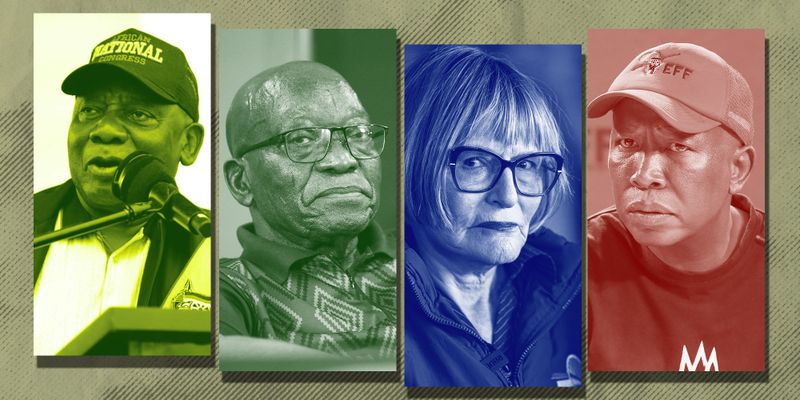
LOCAL ELECTIONS 2026: The top four parties’ final campaign pitches
The ANC, DA, MK party and EFF all held their final campaign rallies this weekend. Here are their final pitches to voters.
Ukraine evacuates civilians from parts of Kherson region as expiry of Oleshky ceasefire nears
Nov 1 (Reuters) - Ukraine's military said it evacuated 167 people from threatened areas of southern Kherson region on Sunday as a temporary local ceasefire neared expiry -- two days after busloads of residents were brought out of the embattled Russian-held town of Oleshky.

ARTIFICIAL INTELLIGENCE OP-ED: Forget future existential threats — AI is automating gendered violence and misogyny right now
The current alarm about the future dangers of agentic AI might distract us from the very real AI harms already happening. As we speculate about whether machines might one day become dangerous to humankind, AI is deepening misogyny, eroding safety and automating gendered abuse.

Top Stories
Binance sees spike in withdrawals as exchange returns online after $6.3 billion heist
LOCAL ELECTIONS 2026: The top four parties’ final campaign pitches
Ukraine evacuates civilians from parts of Kherson region as expiry of Oleshky ceasefire nears
ARTIFICIAL INTELLIGENCE OP-ED: Forget future existential threats — AI is automating gendered violence and misogyny right now
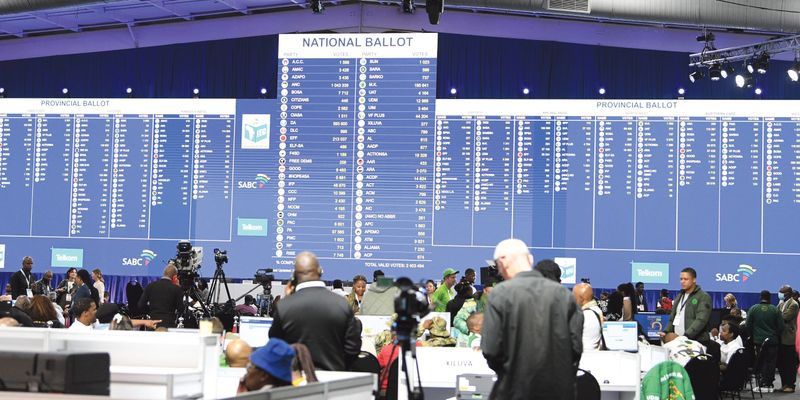
LOCAL ELECTIONS 2026: What happens after the vote? Councils, coalitions and (maybe) controversies
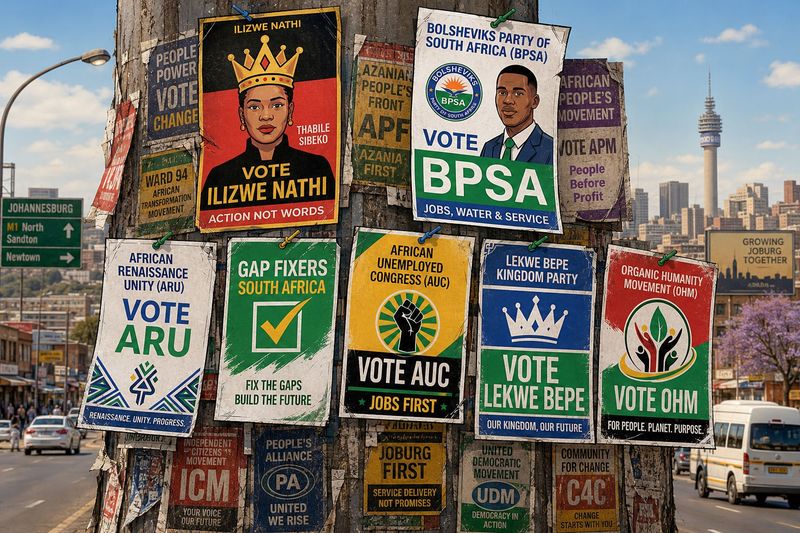
OUR CITY NEWS: Eighty-three parties contest crowded Joburg local government elections
Troubled port: Transnet and foreign operator face scrutiny over backlog at Durban Gateway Terminal

BUSINESS REFLECTION: Crossed Wires: The internet’s technical debt is due, and we can’t pay
Latest
Binance sees spike in withdrawals as exchange returns online after $6.3 billion heist
LOCAL ELECTIONS 2026: The top four parties’ final campaign pitches
Ukraine evacuates civilians from parts of Kherson region as expiry of Oleshky ceasefire nears
ARTIFICIAL INTELLIGENCE OP-ED: Forget future existential threats — AI is automating gendered violence and misogyny right now
LOCAL ELECTIONS 2026: What happens after the vote? Councils, coalitions and (maybe) controversies
OUR CITY NEWS: Eighty-three parties contest crowded Joburg local government elections
Troubled port: Transnet and foreign operator face scrutiny over backlog at Durban Gateway Terminal
BUSINESS REFLECTION: Crossed Wires: The internet’s technical debt is due, and we can’t pay