Morocco reinforces its position in Africa from Rabat on Africa Day

Cooperation, infrastructure and the Atlantic axis as a priority The Sahel, regional stability and Morocco’s diplomatic role Western Sahara and African legitimacy in diplomatic discourse An African identity as the cornerstone of foreign policy Africa Day, celebrated in Rabat in 2026, has served as a new opportunity for Morocco to reiterate its view of the continent as the central focus of its foreign policy. The event, led by Foreign Minister Nasser Bourita, was not conceived as a formal ceremony, but rather as a forum for strategic reaffirmation in which the so-called “royal vision for Africa” was once again brought to the fore. According to the official statement from the Moroccan Ministry of Foreign Affairs, Bourita emphasised that Morocco’s relationship with Africa is not based on a logic of neighbourliness or external cooperation, but on a deep-rooted and structural sense of belonging. In several remarks made during the event, the minister stressed that “Africa is not a sphere of foreign policy, but a sphere of shared identity”, a formulation that has been repeated in various recent diplomatic forums. Peace in Africa In this context, the “royal vision” presented by Rabat is based on a fairly clear idea: Africa as a space for integration and not merely for cooperation. Bourita argued that South-South cooperation must go beyond rhetoric and translate into “tangible projects that change the continent’s economic conditions”. The official discourse speaks of food security, energy transition and water management as structural pillars, all of which are integrated into a framework of continental connectivity linked to the strategy of the Moroccan Government. Nasser Bourita, Morocco’s Minister of Foreign Affairs, alongside Mohamed Methqal, Ambassador and Director-General of the Moroccan Agency for International Cooperation (AMCI), during the Africa Day celebrations - PHOTO/X/MAROC DIPLOMATIE Cooperation, infrastructure and the Atlantic axis as a priority One of the most prominent points in Bourita’s speech was the need to move towards greater African integration through infrastructure and cross-border projects. The minister noted that “no sustainable development in Africa will be possible without efficient logistics corridors and without genuine openness between regions”. The ministerial communiqué directly links this vision to initiatives such as the Nigeria–Morocco gas pipeline, managed by the national hydrocarbons office ONHYM, and the Atlantic Initiative for the Sahel countries, which seeks to facilitate access to the ocean for landlocked states. In several speeches, Bourita described the Atlantic axis as “a new frontier of African integration”, emphasising that the ocean should not be a barrier but a space for economic and political connection. In this framework, Morocco is presented as a link between West Africa, the Atlantic and Europe. The official line insists that these projects are not isolated, but part of a “continental architecture of interdependence”, in which infrastructure is the physical foundation of political integration. 25/05/2026 : Retour sur les moments forts de, la cérémonie de célébration de la Journée de l’Afrique pic.twitter.com/lZUcPopdB2 — Maroc Diplomatie 🇲🇦 (@MarocDiplomatie) May 25, 2026 The Sahel, regional stability and Morocco’s diplomatic role The Sahel context features constantly in the Moroccan narrative. Bourita insisted that “the stability of the Sahel is inseparable from the stability of Africa as a whole”, in an indirect reference to the region’s political situation. The Atlantic Initiative was described as “a proposal for strategic openness for countries that need structural access to international markets”. This approach is set within the institutional framework of the African Union, where Morocco has strengthened its presence since its return in 2017. The result is a narrative in which Morocco is presented not merely as a partner, but as an actor capable of mediating and shaping regional dynamics, particularly in West Africa and the Sahel. Nigerian diplomat Baba Garba, Ambassador of the Federal Republic of Nigeria to Morocco, during his speech on Africa Day - PHOTO/X/MAROC DIPLOMATIE Western Sahara and African legitimacy in diplomatic discourse Although the event focused on Africa Day, the political dimension of Western Sahara was a recurring theme. Bourita stated that “African support for Morocco’s territorial integrity reflects a natural evolution of the state’s relations with its continental environment”. The minister linked this support to the strategy of economic cooperation and institutional presence in Africa, reinforced through multilateral and financial organisations such as the African Development Bank. In this vein, Moroccan diplomacy interprets this backing as an indicator of progressive political integration within the continent, particularly within the framework of the African Union. Incatema and Africa Day 2026: water as the foundation of the future Africa deserves An African identity as the cornerstone of foreign policy The most consistent element throughout the discourse is the emphasis on Morocco’s African identity. Bourita reiterated on several occasions that “Morocco does not address Africa, but is part of it by virtue of its geographical and historical origins”. This approach serves as the basis for justifying a foreign policy that combines investment, diplomacy, infrastructure and technical cooperation under a single conceptual framework. In the minister’s words, “the future of Africa cannot be built without African actors who are fully committed to their own continent”. Africa Day in Rabat served as a reaffirmation of this strategic line, following on from the country’s return to the African Union in 2017, and with an increasingly visible presence on the continental stage.
Related Topics
Keywords
Related Stories
Progressives and moderate Dems are already jockeying to claim credit for Tuesday
A POLITICO Poll found the size of a Democratic victory matters for the party’s ideological war.

Green Party at 'crossroads', says former co-leader
Adrian Ramsay suggested the party needs to focus on its "core values", including environmental issues.

Reeves says UK's future should be inside the EU
In her first major intervention since leaving the Treasury, Rachel Reeves says Brexit has made the UK "poorer, weaker and less secure".

This Sunday, conservative pastors will preach against Democrats’ claims to Christian faith
Evangelical pastors in key battlegrounds plan to warn their congregants about the danger of voting Democratic — even for Christian leaders.

Top Stories

CSOs urge judiciary to avoid another Imo-style embarrassment in Uzodimma’s Senate case

Spence 'very proud' to break WSL appearance record

Referee accidentally fractures college football player's leg

Freedom advocates urge Nigeria to grant Africans visa-free entry
Iran warns next war with US could be longer as Trump threatens further strikes
Two women killed in N1 crash near Kranskop as highway closed
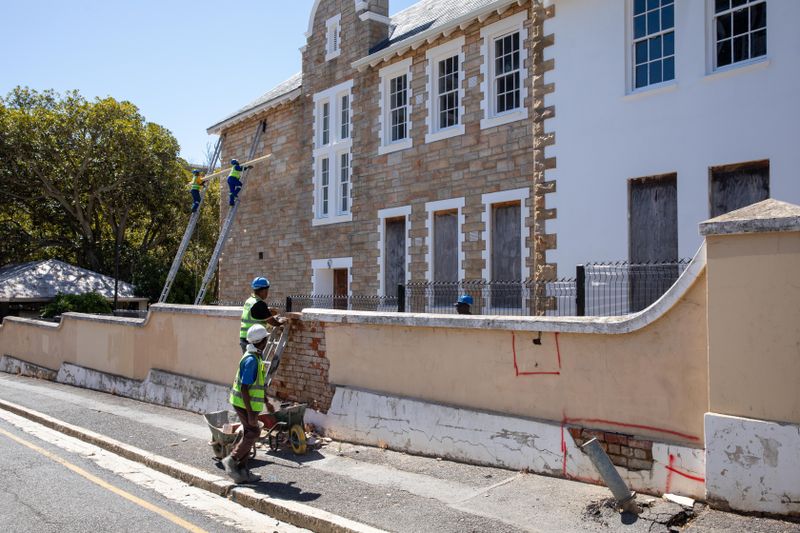
AFFORDABLE HOUSING OP-ED: CT’s Tafelberg social housing units cut by Heritage assessment

Five teenagers stabbed at Halloween party
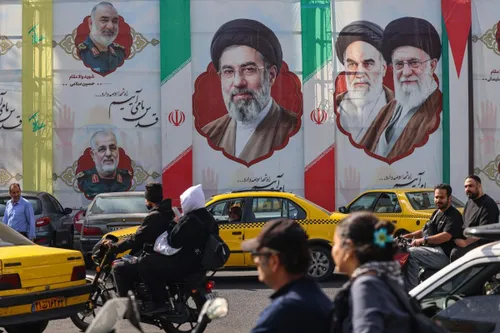

Latest
CSOs urge judiciary to avoid another Imo-style embarrassment in Uzodimma’s Senate case
Spence 'very proud' to break WSL appearance record
Referee accidentally fractures college football player's leg
Freedom advocates urge Nigeria to grant Africans visa-free entry
Iran warns next war with US could be longer as Trump threatens further strikes
Two women killed in N1 crash near Kranskop as highway closed
AFFORDABLE HOUSING OP-ED: CT’s Tafelberg social housing units cut by Heritage assessment
Five teenagers stabbed at Halloween party