O’Sullivan threatens legal challenge to Mkhwanazi’s Hawks appointment
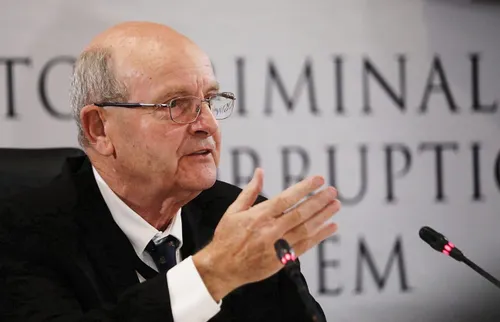
Experts say Paul O’Sullivan’s legal threat against Nhlanhla Mkhwanazi’s appointment as Hawks boss is fueled by past personal friction.
Paul O'Sullivan's threatened legal challenge to Lieutenant-General Nhlanhla Mkhwanazi's appointment as the new Hawks chief could stem from lingering resentment over Mkhwanazi's previous accusations linking him to foreign intelligence.
Experts believe this explains his threats to take legal action to block the appointment.
On Thursday, Acting Police Minister Firoz Cachalia initiated the formal process to appoint Mkhwanazi as the new head of the Hawks.
O’Sullivan, representing his organisation Forensics for Justice, reportedly issued a formal warning his organisation would challenge the appointment unless the government suspends the process or opens it to public scrutiny.
He contends that Mkhwanazi fails to satisfy Section 17CA(1)(b) of the South African Police Service (SAPS) Act, which strictly mandates that the national head of the Hawks must be a “fit and proper person”.
He based his objection on unproven allegations of serious crimes he submitted to Parliament’s ad hoc committee and the Madlanga Commission.
When contacted for comment, KwaZulu-Natal police spokesperson Robert Netshiunda told the Sunday Tribune that Mkhwanazi would not comment on such matters.
However, political analyst Zakhele Ndlovu said O’Sullivan’s fierce opposition against Mkhwanazi’s appointment and his legal threat are driven by a personal vendetta and a fear of losing his investigative access, rather than a genuine public interest.
Ndlovu said the opposition also stems from bitterness over how Mkhwanazi’s public allegations regarding his purported foreign intelligence ties have damaged his professional standing.
O’Sullivan did not respond to questions sent on Friday afternoon.
Mkhwanazi accused O’Sullivan of being a foreign spy and working with foreign intelligence agencies during a historic media briefing in July 2025.
Dressed in Special Task Force combat fatigues and flanked by armed tactical officers, Mkhwanazi used the July 2025 briefing to blow the lid on deep-seated criminal infiltration and political interference within South Africa's security structures. As part of these disclosures, he accused O'Sullivan of operating as a foreign intelligence operative under the guise of an anti-corruption activist.
In testimony delivered on February 10 before an Ad Hoc Committee probing political interference and corruption, O'Sullivan firmly denied being a spy. He stated, “Since living in this country, I have not been involved in any way, shape or form with any intelligence activity whatsoever.”
However, he conceded to having historically worked for British Army counterterrorism and counterintelligence.
The personal feud escalated into a legal battle in the South Gauteng High Court where Mkhwanazi initially filed a R5-million defamation lawsuit against O'Sullivan for separate remarks accusing him of corruption and ties to organised crime. In October 2025, O'Sullivan countersued for R10 million, stating that Mkhwanazi's foreign spy allegations made during parliamentary testimonies and the Madlanga Commission of Inquiry were defamatory.
Chad Thomas, the CEO of IRS Forensic Investigations, a financial and organised crime investigation company, said O’Sullivan was using his organisation as an alter ego to try to force his narrative and pursue his agenda of interfering in state related matters.
O’Sullivan faced intense interrogation before the Ad Hoc Committee over allegations of unlawful interference in South African state organs, political manipulation, and orchestrating the downfalls of former high-ranking police commissioners Jackie Selebi and Khomotso Phahlane.
The hearings centred on whether O'Sullivan captured law enforcement agencies to pursue private vendettas or lawfully assisted the state in uprooting systemic corruption.
Phahlane testified before the same committee, characterising himself as the victim of a co-ordinated “political attack” and a media smear campaign led by O'Sullivan and former IPID boss Robert McBride. He claimed he was targeted because he “refused to hand over control of the SAPS” to O'Sullivan's private interests.
“It’s a mockery for O’Sullivan to compare his organisation with the likes of genuine NGOs and NPCs,” Thomas said.
“Everything with O’Sullivan is personal. He hitched his wagon to Sibiya a long time ago and when Mkhwanazi laid out the facts at his July 2025 presser, O’Sullivan came out blazing against Mkhwanazi and Fannie Masemola (National Police Commissioner).
So far, Mkhwanazi has been right about everything and O’Sullivan has gone very quiet about his support for Sibiya,” he added.
Thomas also said that O’Sullivan’s actions over the years suggest he has been somewhat of an agent provocateur.
“For someone who claimed so vehemently to be anti-corruption, one would have expected him to embrace Mkhwanazi’s exposé on what was happening in the police, instead O’Sullivan chose to deride and vilify him.”
Another political analyst Professor Andre Duvenhage said although he was not sure what O’Sullivan’s issue with Mkhwanazi was, it could be a form of jealousy.
“We have seen that Mkhwanazi came out and took a firm stance on a number of issues. And I believe that he is probably the best person I know about at the moment to be in leadership of the Hawks,” he said.
O’Sullivan previously alleged that Mkhwanazi and Masemola received luxury Louis Vuitton bags, reportedly containing around R100 000 each, from businessman Inbanathan Kistiah (of I-View Integrated Systems), as a reward or kickback tied to irregular or inflated bulletproof vest contracts with the SAPS.
However, during his testimony at the Madlanga Commission in June he conceded that he lacked proof of the allegations.
Related Topics
Keywords
Related Stories
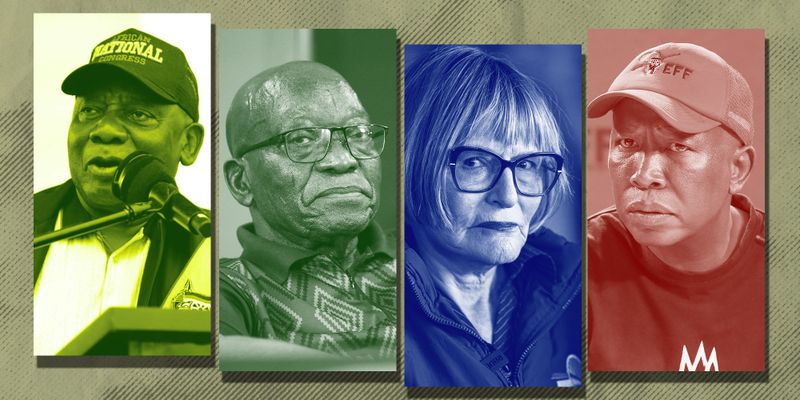
LOCAL ELECTIONS 2026: The top four parties’ final campaign pitches
The ANC, DA, MK party and EFF all held their final campaign rallies this weekend. Here are their final pitches to voters.
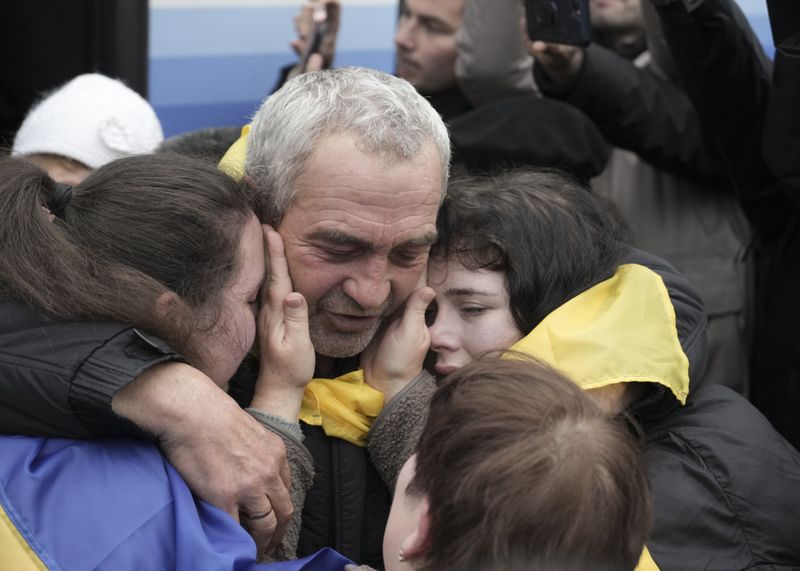
Ukraine evacuates civilians from parts of Kherson region as expiry of Oleshky ceasefire nears
Nov 1 (Reuters) - Ukraine's military said it evacuated 167 people from threatened areas of southern Kherson region on Sunday as a temporary local ceasefire neared expiry -- two days after busloads of residents were brought out of the embattled Russian-held town of Oleshky.
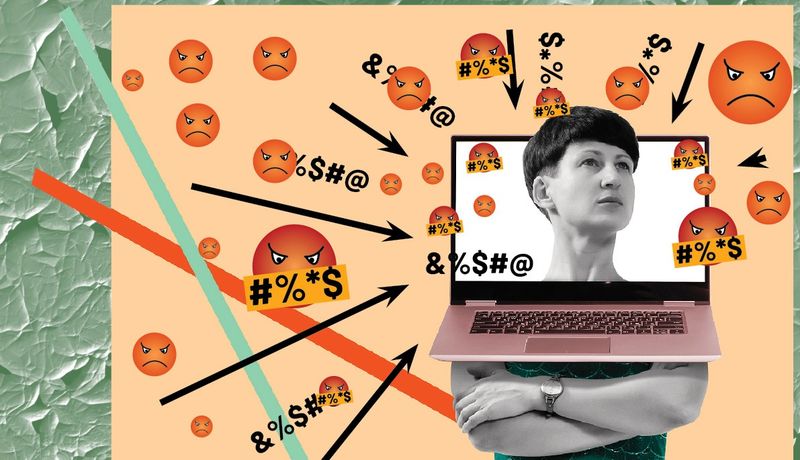
ARTIFICIAL INTELLIGENCE OP-ED: Forget future existential threats — AI is automating gendered violence and misogyny right now
The current alarm about the future dangers of agentic AI might distract us from the very real AI harms already happening. As we speculate about whether machines might one day become dangerous to humankind, AI is deepening misogyny, eroding safety and automating gendered abuse.
LOCAL ELECTIONS 2026: What happens after the vote? Councils, coalitions and (maybe) controversies
When voting in the 4 November local government election is completed, if the pollsters have been proven correct, coalitions will dominate across South Africa’s 257 councils, including most of the eight metros. Here’s what happens once the voting ends and the stations close.
Top Stories
LOCAL ELECTIONS 2026: The top four parties’ final campaign pitches
Ukraine evacuates civilians from parts of Kherson region as expiry of Oleshky ceasefire nears
ARTIFICIAL INTELLIGENCE OP-ED: Forget future existential threats — AI is automating gendered violence and misogyny right now
LOCAL ELECTIONS 2026: What happens after the vote? Councils, coalitions and (maybe) controversies
OUR CITY NEWS: Eighty-three parties contest crowded Joburg local government elections
Troubled port: Transnet and foreign operator face scrutiny over backlog at Durban Gateway Terminal

BUSINESS REFLECTION: Crossed Wires: The internet’s technical debt is due, and we can’t pay

Investment Outlook: Did Datatec catch an AI tailwind or is it a breeze?
Latest
LOCAL ELECTIONS 2026: The top four parties’ final campaign pitches
Ukraine evacuates civilians from parts of Kherson region as expiry of Oleshky ceasefire nears
ARTIFICIAL INTELLIGENCE OP-ED: Forget future existential threats — AI is automating gendered violence and misogyny right now
LOCAL ELECTIONS 2026: What happens after the vote? Councils, coalitions and (maybe) controversies
OUR CITY NEWS: Eighty-three parties contest crowded Joburg local government elections
Troubled port: Transnet and foreign operator face scrutiny over backlog at Durban Gateway Terminal
BUSINESS REFLECTION: Crossed Wires: The internet’s technical debt is due, and we can’t pay
Investment Outlook: Did Datatec catch an AI tailwind or is it a breeze?