Ramaphosa urges parties to put communities first after 2026 local election
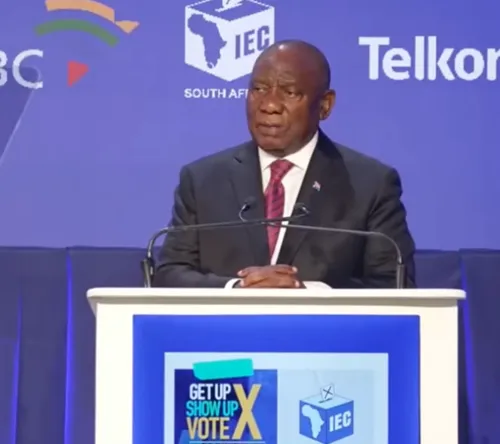
President Cyril Ramaphosa addresses the nation following the announcement of the 2026 Local Government Election results at the IEC's results centre in Midrand on Sunday.
President Cyril Ramaphosa addressed the nation at the Independent Electoral Commission’s (IEC) National Results Operations Centre (ROC) at the Gallagher Convention Centre in Midrand on Sunday evening, as the final results of the 2026 Local Government Elections were announced. His address focused on the state of South Africa’s democracy, the responsibilities facing newly elected councillors and the need for political parties to work together, particularly in municipalities where no party secured an outright majority:
Four days ago, millions of South Africans went to the polls to exercise one of the most fundamental rights of our democracy. Among them were those who have stood in voting queues in every election since the dawn of our democracy in 1994, as well as young South Africans casting their ballots for the very first time.
They came from our cities and towns, from villages and farms, from every province and across our land. They came from different backgrounds and different generations, with different views about where we have come from and where we are going to. But they were all united by a common conviction that their voice matters, that their vote counts and that they have the right to determine who governs them.
Today, we honour that conviction. The right to vote is what gives our democracy its legitimacy. We celebrate the enduring strength of our democracy and the sovereign right of the people of South Africa to choose their representatives.
This year marks 30 years since our Constitution was signed into law. Our Constitution was born out of a long and difficult struggle for freedom, equality and human dignity. At its heart lies a simple but profound principle articulated in the Freedom Charter: that the people shall govern and the authority to govern comes from the people.
It is not inherited. It is not owned by any political party. It is not the permanent possession of those who hold public office. It is entrusted by the people to those whom they elect, and it must always be exercised in their interests. That is the meaning of our democracy, and that is the significance of the elections whose results we are gathered here to acknowledge.
Our Constitution declares South Africa a multi-party democracy, with universal adult suffrage, a common voters' roll and regular elections. The participation of more than 540 political parties and nearly 137,000 candidates who stood for election bears witness to the multi-party nature of our democracy. Greater choice and more competition are the signs of a healthy democracy.
At a time when democracy is under strain in many parts of the world, South Africans have shown once more that ours is a strong and enduring democracy.
These elections have taken place at a time when our people face considerable challenges. Many households are struggling with the high cost of living. Too many people, particularly young people, remain without work. In too many communities, the quality of municipal services falls far short of what our people have a right to expect.
South Africans want to live in communities where they feel safe, where public infrastructure is maintained, where businesses can flourish and where young people can look to the future with hope. These are not unreasonable expectations. They are the basic requirements of a life of dignity.
Through these elections our people have made their political choices freely, and they will hold those they elected to account.
Across the world, political choices are shaped by people's lived realities. As the great African leader Amilcar Cabral said: “[The people] are fighting to win material benefits, to live better and in peace, to see their lives go forward, and to guarantee the future of their children.”
These aspirations remain as relevant today as they were during the struggles for liberation. Our people do not judge government only by the promises that are made or the policies that are adopted. They judge government by what changes in their daily lives. South Africans want to live better and to see their lives go forward.
They want jobs and opportunities. They want water to come out of the tap and electricity that works. They want their refuse collected, their parks maintained and their streets safe.
In pursuit of this, they have made their political choices. Some have placed their faith in established parties. Others have placed their hopes in new formations and independent candidates.
All who seek public office must be judged by one standard: whether they deliver on their promises. This is democracy doing what it is supposed to do. It gives citizens the power to choose and the power to demand more of their public representatives.
The people have spoken. To the incoming councillors, the country wishes you well as you take up your responsibilities. I extend the congratulations and good wishes of the nation.
You have been entrusted with an immense responsibility. You will serve in the sphere of government that is closest to the daily lives of our people. You will be the face of government in communities that have great expectations, but also, in many instances, deep frustrations.
Your responsibility is not simply to occupy a seat in a council chamber. It is to serve the communities that have placed their trust in you. Your responsibility will be to listen to their concerns, respond to their needs and act to address the concerns with honesty and integrity. It is to put the interests of residents above personal ambition and political advantage, and to remember, every day, that public office is a privilege that carries a duty of service.
The election is now over. The work of serving the people must begin.
In municipalities where no political party has secured an outright majority, the elected representatives will need to find common ground. This is not a weakness of democracy. It is an expression of the choices that the people have made. The voters have given their representatives a responsibility to work together, even where they differ.
Political parties must approach this responsibility with maturity, humility and a genuine commitment to the public good. Negotiations over the formation of municipal governments must not become contests over positions, privileges or the distribution of power. They must be guided by what will best serve the people.
The stability of our municipalities cannot be sacrificed to narrow political interests. The delivery of essential services cannot be held hostage by political disagreements. The people did not cast their votes so that their representatives could spend the next five years fighting among themselves. They voted because they expect their lives to improve.
They expect functioning councils, capable administrations and responsible leadership. They expect those whom they have elected to rise above their differences and work together. That is the responsibility that now rests upon every political party and every elected councillor.
As President of the Republic, I call upon all political leaders to place the interests of communities above all else. Let us demonstrate that our democracy is capable not only of managing political competition, but also of producing cooperation in the service of the people.
Being elected to serve the people is a privilege and a responsibility. Being sworn in is only the first step. Throughout your term, you will have to earn the confidence of those who elected you. The work ahead is considerable.
Communities want water, electricity, safe streets and reliable services. Our people's interest must not be drowned by the quest of political parties or representatives to settle political scores or petty squabbles.
Councils must be constituted without delay. Parties must negotiate in good faith to elect office-bearers so that councils can get to work. Budgets must be passed on time. Those elected must find common ground and work together.
Together, we must make local government an engine of service delivery, development and opportunity.
The newly elected councillors take office against the backdrop of far-reaching changes in our system of local government. The revised White Paper on Local Government envisages a bold reset of how municipalities function and are managed. It outlines a broad package of changes to strengthen municipalities, to improve their finances, to direct resources towards infrastructure maintenance and to ensure that services are delivered efficiently and reliably.
The millions who turned out to vote have placed their trust in our democracy. Let us prove ourselves worthy of that trust by putting communities first, by being responsive to their needs, by serving with humility and by never taking their confidence for granted.
Democracy is a work in progress. It is the system that we have chosen together. We must work together to make sure it works for everyone.
We thank all those who made this election free and fair.
Today, we pay tribute to the institutions and individuals who have made these elections possible.
We thank the Chairperson, Commissioners, Chief Electoral Officer and staff of the Independent Electoral Commission for their dedication and professionalism. The IEC occupies a special place in our democracy. The independence, integrity and credibility that the IEC has always been known for are essential to the confidence that South Africans place in the electoral process.
We thank the NATJOINTS, composed of the South African Police Service, the South African National Defence Force, the Department of Home Affairs and all other institutions that have contributed to the conduct of these elections.
We thank the political parties, candidates, election agents, observers and volunteers who participated in the democratic process. We acknowledge the media for its important role in informing the public and enabling citizens to make informed choices.
We thank the many thousands of election officials who worked long hours, often under difficult circumstances, to ensure that South Africans could exercise their democratic rights.
And above all, we thank the people of South Africa. We thank those who travelled long distances to reach voting stations, those who waited patiently in queues, the elderly who have remained steadfast in their commitment to democracy and the young people who participated in shaping the future of their country.
Through your participation, you have reaffirmed the principle upon which our democracy rests.
Let us move ahead with renewed purpose. To all South Africans, our democracy belongs to you. Continue to participate in it, to defend it and to hold those who govern accountable.
The ballots have been counted. The choices have been made. The responsibility now passes to those who have been elected.
Let us move forward with humility, with determination and with a renewed commitment to the people of our country.
The people have spoken. Their verdict must be respected. Their concerns must be heard. And their expectations must now be met.
Let us work together to make local government work for every South African.
Nkosi sikelel’ iAfrika.Morena boloka sechaba sa heso.Hosi katekisa Afrika Dzonga.God seën Suid-Afrika.Mudzimu vha fhatutshedze Afurika Tshipembe.
Originally published and reported by IOL South Africa.
Read original coverage on IOL South AfricaKeywords
Related Stories
LOCAL ELECTIONS 2026: DA goes on coalition offensive as battle for Nelson Mandela Bay begins
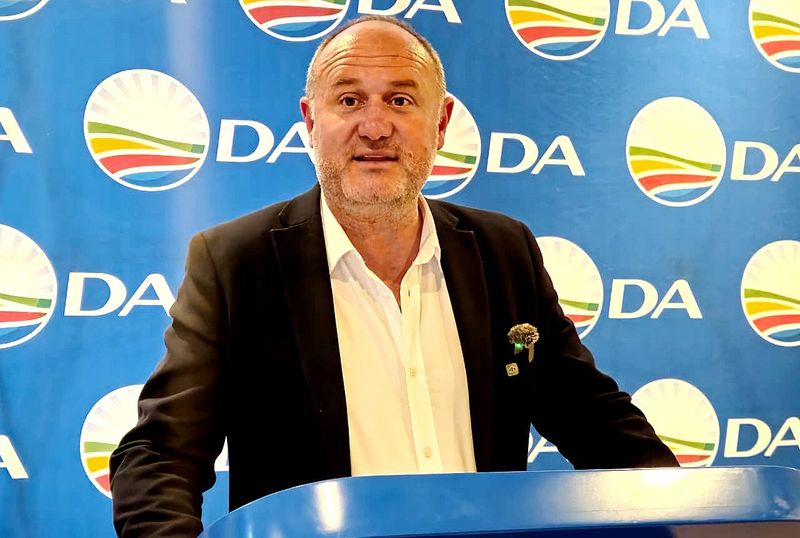
With no outright majority in Nelson Mandela Bay, coalition choices will shape efforts to restore water, electricity, refuse removal and accountable local government. The DA has emerged as the largest party with 53 of the 120 council seats and is approaching potential coalition…
BUSINESS REFLECTION: Crossed Wires: What happens to Big Tech now after the midterms?
Democratic Party midterm victories may tighten AI oversight, but surging demand, vast investment and Big Tech’s global reach will keep the industry expanding.

WORKING MODEL: Beyond state jobs — Thuli Madonsela on the Constitution’s true economic mandate
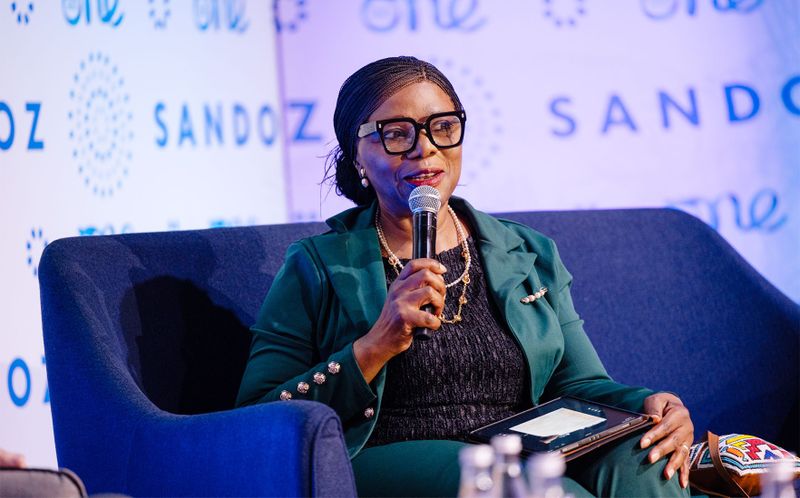
According to Prof Thuli Madonsela, one of the drafters of South Africa’s founding document, it is not the government’s responsibility to provide jobs to citizens; rather, the Constitution guarantees the right to justice within a fair economic system.
14 DAYS TO FIX LOCAL: Herman Mashaba: ‘Very, very slim’ chance of coalitions with the DA
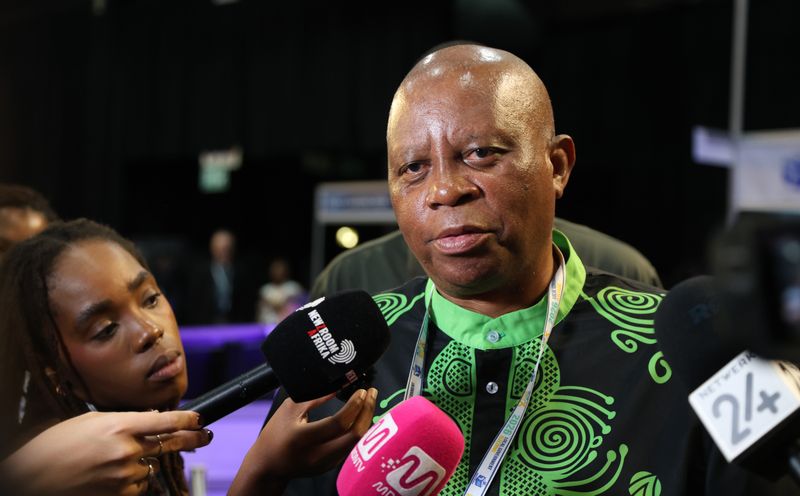
With 14 days from Monday, 8 November, to hammer out coalition agreements in 139 councils across the country, it’s all eyes on the kingmaker party ActionSA, which has won 55 wards to hold the cards in three key Gauteng metros.
Top Stories
LOCAL ELECTIONS 2026: DA goes on coalition offensive as battle for Nelson Mandela Bay begins
BUSINESS REFLECTION: Crossed Wires: What happens to Big Tech now after the midterms?
WORKING MODEL: Beyond state jobs — Thuli Madonsela on the Constitution’s true economic mandate
14 DAYS TO FIX LOCAL: Herman Mashaba: ‘Very, very slim’ chance of coalitions with the DA
TRANSNATIONAL TRAFFICKING: South Africans entering Nigeria and fuelling global cartel drug trafficking, security briefing hears
LOCAL ELECTIONS 2026: KZN coalition dilemma: Will election losers find their way back to power?
ROYAL ADDRESS: Princess Anne praises SA’s agricultural industry in whistle-stop visit to Cape
LOCAL ELECTIONS 2026 OP-ED: The DA hammered the ANC in Emfuleni — the how and the why
Latest
LOCAL ELECTIONS 2026: DA goes on coalition offensive as battle for Nelson Mandela Bay begins
BUSINESS REFLECTION: Crossed Wires: What happens to Big Tech now after the midterms?
WORKING MODEL: Beyond state jobs — Thuli Madonsela on the Constitution’s true economic mandate
14 DAYS TO FIX LOCAL: Herman Mashaba: ‘Very, very slim’ chance of coalitions with the DA
TRANSNATIONAL TRAFFICKING: South Africans entering Nigeria and fuelling global cartel drug trafficking, security briefing hears
LOCAL ELECTIONS 2026: KZN coalition dilemma: Will election losers find their way back to power?
ROYAL ADDRESS: Princess Anne praises SA’s agricultural industry in whistle-stop visit to Cape
LOCAL ELECTIONS 2026 OP-ED: The DA hammered the ANC in Emfuleni — the how and the why