The copper supply-demand gap is widening – can southern Africa bridge it?

AI and data centre growth is emerging as a major new copper demand driver Southern Africa’s copper regions are attracting renewed investor attention ASX explorers are chasing long-term supply upside in future-facing copper plays Copper demand reaches criticality Copper, copper, copper. These days, the world simply can’t get enough of the red metal. Cities may be built on concrete and steel rebar, but the digital world is etched in copper and silicon. With cloud networking, artificial intelligence and quantum computing dominating the modern economic landscape, getting energy and data from A to B has never been more vital. S&P Global Energy & Market Intelligence analysts reckon four key drivers will raise demand for copper by more than 50% by 2040, to 42 million metric tonnes. The first gear in this machine is pure economic growth – rising populations, urbanisation and industrial expansion have long formed the backbone of demand for copper as a structural infrastructure metal. Electricity lines, heating and plumbing, electrical appliances, vehicles – all of it needs copious amounts of copper. The energy transition has further accelerated that driver, adding its own pressures of electrification and a huge expansion of transmission and distribution grids as economies move to decarbonise. Rising geopolitical tensions and a general push to modernise military equipment is also playing a central role, but the biggest new driver of copper demand is the explosive growth of artificial intelligence. “The main push in the copper supply story is really being driven by the AI data centres – which are forecast to require over 400,000 tonnes of copper per year over the next decade,” Belararox (ASX:BRX) CEO Will Dix said. “This means companies are taking a longer-term view on the copper price and are generally more prepared to invest in longer-term projects or earlier-stage projects, where the prize for success can be company-making.” 27 tonnes of copper per MW Microsoft’s US$500 million data centre facility in Chicago used 2,177 tonnes of copper in its construction. That equates to about 27 tonnes of copper for every megawatt (MW) of applied power. The International Energy Agency estimates hyperscale data centres – increasingly the most common type being constructed – require 100MW or more per installation. As of late 2025, there were some 1,297 hyperscale data centres operating worldwide, with another 770 at various stages of planning, construction or commissioning. On those figures, those centres would require roughly 2 million tonnes of copper. The timing couldn’t be worse. Declining ore grades, deeper, more complex deposits, protracted development timelines and a severe shortage of global mining expertise are all lining up like dominoes to cut copper supply just when the world is hungry for more. Pessimistic predictions forecast a 10-million-tonne shortfall will take hold of the market by 2035, with a protracted deficit of 3.5 million tonnes out until 2040 at the least. With global copper supply already under pressure, it begs the question – where is it all going to come from? Untapped African copper While China and South American countries like Chile and Peru dominate global copper production, copper grades in existing mines are falling and new deposits are increasingly more difficult to access. Southern Africa is emerging as an increasingly attractive destination for copper exploration, particularly in Zambia, Namibia and Botswana. They’re home to some of the most prolific copper belts in the world, a red metal bounty that major and small-cap miners alike are increasingly targeting. “Anywhere that identifies new resources and reserves and is able to produce additional copper tonnes will add to the global supply story,” Belararox CEO Will Dix said. “Having jurisdictions that are used to copper production and have a well understood permitting pathway – like Botswana and Namibia – will be able to bring new projects online relatively quickly, making them an attractive investment and exploration destination.” Several southern African countries have been rocketing up the Fraser Institute's Annual Survey of Mining Companies rankings, particularly Botswana, which was ranked seventh out of 68 mining jurisdictions globally in 2025. Botswana boasts the longest uninterrupted democracy in Africa, excellent infrastructure, favourable mining policies and multiple prospective copper belts. Mining Review Africa pointed to Namibia as its strongest pick for emerging mining countries in Africa, describing the country as host to “world-class uranium, lithium, rare earth elements and copper resources”. To ASX-listed Kaoko Metals (ASX:KAO), securing ground in a region with significant untapped copper potential is a no-brainer. “With the recent success of Midas, all eyes are on the Kaoko Copper Belt . It’s just been underappreciated and underexplored,” KAO managing director and CEO Gerard O’Donovan said. Just scratching the surface Botswana and Namibia have a long history of mining, anchored by world-class, large-scale copper mines and processing hubs. Midas Minerals (ASX:MM1) recently made headlines after hitting very high copper and silver grades in drilling at its Otavi project, topping out at 7.24% copper and 144.4g/t silver. Kaoko Metals is looking to replicate that success at its nearby Chalkos project, where outcropping mineralisation has produced rock chip grades of up to 69.6% copper and 2,030g/t silver. Within the same prospective region, the Tschudi mine in Namibia produced more than 80,000 tonnes of copper cathode material until it was placed into maintenance in 2020. Private mining firm Consolidated Copper discovered the mine held four times as much copper in its remaining reserves compared to prior estimates, and promptly kicked the mine back into action. In Botswana, the Khoemacau copper hub produces some 50,000 tonnes of copper per year, and operator MMG is keen to lift that to 130,000 tonnes in the near future. The company acquired the hub and its processing assets just two years ago for US$1.73 billion. Nearby, Sandfire Resources’ (ASX:SFR) Motheo operation produced 42,900 tonnes of copper in 2025, with plans to expand its processing plant and ramp up production as mining moves to higher-grade portions of the multi-deposit asset. The region’s Kalahari Copper Belt is also seeing aggressive greenfields exploration. Belararox has snapped up a 14-licence, 4,268km2 project package directly along strike from the Khoemacau and Motheo hubs, where it’s carrying out geophysical surveys ahead of diamond drilling programs. Cobre (ASX:CBE), Barys Resources (ASX:BRY), Verity Resources (ASX:VRL), Botswana Minerals (LSE:BMIN) and Leviathan Metals (TSXV:LVX) have similarly staked out fresh exploration ground along Botswana’s copper belts. Noronex (ASX:NRX) is splitting the difference, exploring for copper at both its Cgae Cgae project in Botswana and the Powerline project in Namibia alongside earn-in partner and major miner South32 (ASX:S32). “There’s a strong and widely accepted view that much of southern Africa is relatively underdone in terms of copper exploration – not just in Botswana but also across in Namibia and also to the north of us in southern Zambia,” Belararox CEO Will Dix explained. “The simple demand story around AI data centre growth, renewable energy as well as grid infrastructure will provide a need for more copper. “This in turn means that there is more attention on copper exploration and companies and investors are looking for additional exposure – southern Africa provides this.” A handful of southern African states won’t solve the copper crunch on their own. No single region will. But, as AI, electrification, defence spending and grid buildouts keep dragging demand higher, the discovery and development of new copper sources will only become more vital – and more urgent. For explorers already on the ground in Botswana and Namibia, it’s an opportunity to discover the next generation of copper mines in a region that remains relatively underexplored. At Stockhead, we tell it like it is. While Belararox, Kaoko Metals and Verity Resources are Stockhead advertisers, they did not sponsor this article. This article does not constitute financial product advice. You should consider obtaining independent advice before making any financial decisions.
Keywords
Related Stories
CSOs urge judiciary to avoid another Imo-style embarrassment in Uzodimma’s Senate case
Coalition of civil society organisations (CSOs) advises the judiciary to use the ongoing court case involving Governor Hope Uzodimma and former governor, Rochas Okorocha to restore public confidence in the courts. The post CSOs urge judiciary to avoid another Imo-style…

Freedom advocates urge Nigeria to grant Africans visa-free entry
They advocated reciprocal arrangements among African countries, citing Kenya and Rwanda as examples of countries that had taken steps to ease entry for other Africans. The post Freedom advocates urge Nigeria to grant Africans visa-free entry appeared first on Premium Times…

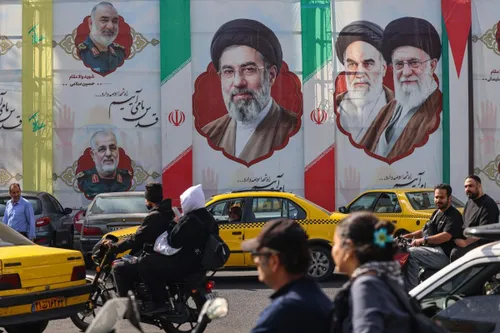
Iran warns next war with US could be longer as Trump threatens further strikes
Iran warns a renewed war with the US could last longer as Donald Trump threatens further strikes, while diplomatic efforts to prevent another escalation remain uncertain.
Two women killed in N1 crash near Kranskop as highway closed
Two women have died and five people have been injured in a head-on collision involving four vehicles on the N1 near Kranskop, forcing the closure of the northbound carriageway.

Top Stories
CSOs urge judiciary to avoid another Imo-style embarrassment in Uzodimma’s Senate case

Spence 'very proud' to break WSL appearance record

Referee accidentally fractures college football player's leg
Freedom advocates urge Nigeria to grant Africans visa-free entry
Iran warns next war with US could be longer as Trump threatens further strikes
Two women killed in N1 crash near Kranskop as highway closed
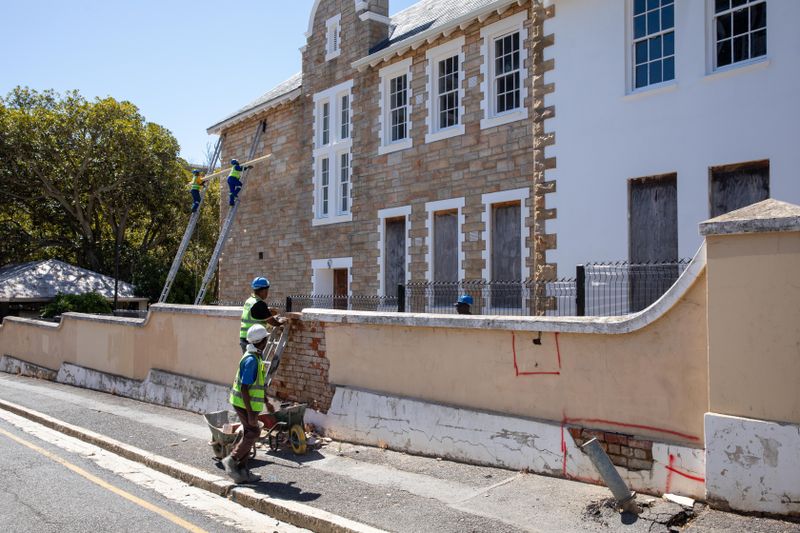
AFFORDABLE HOUSING OP-ED: CT’s Tafelberg social housing units cut by Heritage assessment

Five teenagers stabbed at Halloween party
Latest
CSOs urge judiciary to avoid another Imo-style embarrassment in Uzodimma’s Senate case
Spence 'very proud' to break WSL appearance record
Referee accidentally fractures college football player's leg
Freedom advocates urge Nigeria to grant Africans visa-free entry
Iran warns next war with US could be longer as Trump threatens further strikes
Two women killed in N1 crash near Kranskop as highway closed
AFFORDABLE HOUSING OP-ED: CT’s Tafelberg social housing units cut by Heritage assessment
Five teenagers stabbed at Halloween party