The Korean Telecom Giant at the Center of Anthropic’s Mythos Controversy

Those concerns appear to have compounded when Amazon later flagged vulnerabilities it identified in Fable 5 to the White House. Fable 5 is a highly safeguarded version of Mythos that Anthropic released to the public on June 9. The Amazon researchers claimed that it was possible to circumvent some of Fable 5’s guardrails and access Mythos’ formidable cybercapabilities, though Anthropic and outside cybersecurity experts have argued these risks are not unique to Claude.
The confluence of events is what ultimately led the White House to determine that it could not trust Anthropic to safeguard its most advanced AI technology, according to a person close to the Trump administration. On Friday, it ordered Anthropic to revoke access to Mythos and Fable 5 for all foreign nationals, including immigrants inside the US.
Rather than gate access to its technology based on nationality, a process that would be difficult to implement while also preserving privacy, Anthropic decided it was better to disable access to the models entirely. The White House and Anthropic remain at odds after days of negotiations about bringing Claude Mythos and Fable 5 back online.
Because Claude Mythos is exceptionally skilled at identifying software vulnerabilities, Anthropic restricted early access to a small group of trusted organizations through a program called Project Glasswing. Earlier this month, SK Telecom, South Korea’s largest wireless carrier, became one of roughly 150 companies to receive access to Mythos as Anthropic expanded the program “following several weeks of close collaboration” with outside experts and the US government.
Anthropic declined to comment. The White House and SK Telecom did not immediately respond to a request for comment. The Washington Post previously reported that Trump administration officials were alarmed to learn that the Mythos recipients included a “South Korean telecommunications company” they believed had links to China, though the article did not name the firm. In response to that reporting, SK Telecom told a Korean newspaper that the “anonymous insider’s remarks in foreign media lack verified facts, and our company has no ties to China.”
A person close to Anthropic said the company viewed SK Telecom’s access to Mythos and the vulnerabilities that Amazon identified as separate issues. They noted that the letter the US government sent to Anthropic demanding that it restrict access to Claude Mythos and Fable 5 solely to US nationals doesn’t reference the Korean company or China.
Got a Tip?
Are you a current or former Anthropic or US government employee who wants to talk about what’s happening? We’d like to hear from you. Using a nonwork phone or computer, contact the reporters securely on Signal at louise_matsakis.83 and mzeff.88
Earlier this month, shortly after Anthropic announced Project Glasswing’s latest expansion, the White House asked Anthropic to revoke SK Telecom’s access to Mythos, according to a person close to the AI lab. The company immediately complied, sources tell WIRED, and the US government did not threaten to put export controls on the model at the time.
SK Telecom has poured capital into Anthropic several times, including a $100 million investment in 2023 that coincided with the formation of a commercial partnership to develop an AI model tailored to the telecommunications industry. It was one of several Korean organizations to participate in Project Glasswing, along with Samsung Electronics and the Korea Internet and Security Agency.
While SK Telecom itself does not appear to have large operations in China, it’s part of a much bigger conglomerate called SK Group, whose affiliates maintain extensive business interests in the country spanning semiconductors, energy, and other industries.
In 2024, SK Telecom generated only about $1.9 million in revenue from China, primarily from investment-related activities, and employed just seven people there, according to its annual report.
But its involvement in China's telecom industry stretches back more than 20 years. In 2004, SK Telecom and China Unicom, a state-owned telecommunications operator, formed a joint venture called UNISK to provide wireless internet and mobile content services in China. It was one of the first joint ventures between a foreign company and a Chinese carrier.
In 2006, SK Telecom invested $1 billion in convertible bonds issued by China Unicom's Hong Kong–listed unit, which were eventually converted into a roughly 6.6 percent equity stake. But the partnership began unwinding several years later. SK Telecom sold its stake in China Unicom back to the Chinese carrier in 2009 for approximately $1.3 billion, though it has continued to maintain a small financial interest connected to the venture. In its 2025 annual filing with the US Securities and Exchange Commission, SK Telecom listed an investment in UNISK valued at roughly $17 million.
In 2021, the first Trump administration restricted US investment in China Unicom as part of a broader effort targeting Chinese firms Washington said were linked to the country's military and intelligence sectors. In April of this year, citing national security concerns, the US Federal Communications Commission proposed barring US telecom firms from interconnecting with China Unicom and other Chinese carriers, a move that China Unicom recently warned could disrupt global communications.
Hugo Lowell and Zeyi Yang contributed reporting.
Keywords
Related Stories
Thousands of jobs at Virgin Media O2 to be cut
The broadband provider has not finalised the number of roles to be axed but it will likely be a sizeable chunk of its workforce, the BBC understands.

Shops looted as German cost-of-living protests turn violent
The protests in cities across Germany - including Berlin, Hamburg and Frankfurt - came on the same day hundreds of thousands also protested in France.

Energy bills help 'doesn't go far enough'
Families in the West Midlands say they are worried about paying winter energy bills.

Diwali hampers to bring hope to families in need
The Diwali Basket Brigade volunteers want to help vulnerable households with rising food prices.

Top Stories
Binance sees spike in withdrawals as exchange returns online after $6.3 billion heist

LOCAL ELECTIONS 2026: The top four parties’ final campaign pitches

Ukraine evacuates civilians from parts of Kherson region as expiry of Oleshky ceasefire nears
ARTIFICIAL INTELLIGENCE OP-ED: Forget future existential threats — AI is automating gendered violence and misogyny right now
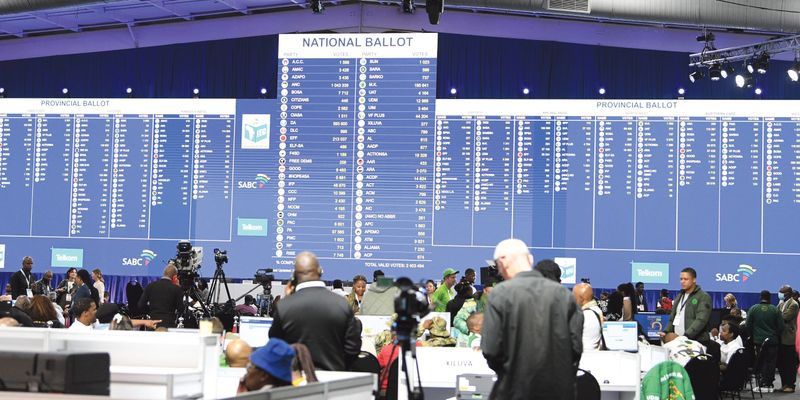
LOCAL ELECTIONS 2026: What happens after the vote? Councils, coalitions and (maybe) controversies
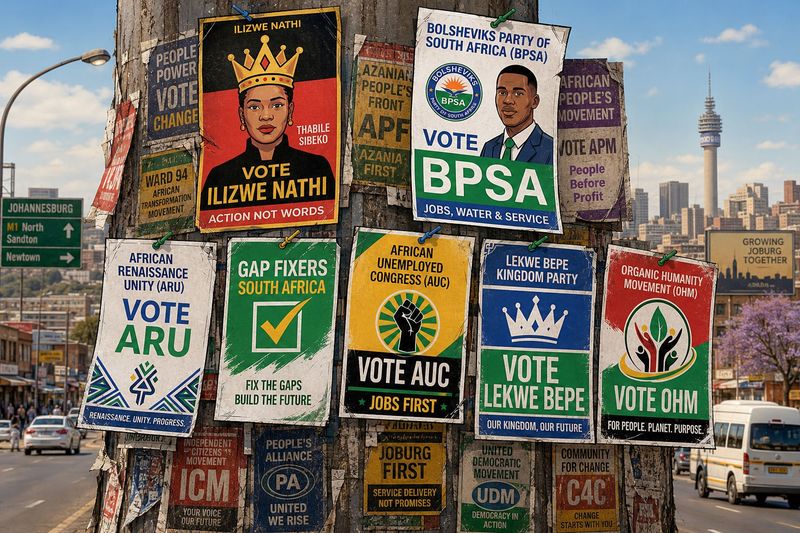
OUR CITY NEWS: Eighty-three parties contest crowded Joburg local government elections

Troubled port: Transnet and foreign operator face scrutiny over backlog at Durban Gateway Terminal

BUSINESS REFLECTION: Crossed Wires: The internet’s technical debt is due, and we can’t pay
Latest
Binance sees spike in withdrawals as exchange returns online after $6.3 billion heist
LOCAL ELECTIONS 2026: The top four parties’ final campaign pitches
Ukraine evacuates civilians from parts of Kherson region as expiry of Oleshky ceasefire nears
ARTIFICIAL INTELLIGENCE OP-ED: Forget future existential threats — AI is automating gendered violence and misogyny right now
LOCAL ELECTIONS 2026: What happens after the vote? Councils, coalitions and (maybe) controversies
OUR CITY NEWS: Eighty-three parties contest crowded Joburg local government elections
Troubled port: Transnet and foreign operator face scrutiny over backlog at Durban Gateway Terminal
BUSINESS REFLECTION: Crossed Wires: The internet’s technical debt is due, and we can’t pay