The Legal Recognition of Same-Sex Marriage in Sub-Saharan Africa: The Barriers to Marriage Equality


When I first began the journey of writing The Legal Recognition of Same-Sex Marriage in Sub-Saharan Africa, I was struck by a persistent, troubling paradox. While the global north has seen a rapid incremental shift toward LGBT+ rights, the narrative in much of sub-Saharan Africa has often been one of stagnation or, more distressingly, active regression. For too long, the conversation has been stifled by the pervasive myth that homosexuality is "un-African"—a rhetorical shield used by political and religious leaders to justify exclusionary legal frameworks.
My goal with this book was to peel back these layers of rhetoric and provide the first comprehensive, multi-jurisdictional analysis of the barriers to marriage equality within the African context. By focusing on four case studies—South Africa, Botswana, Kenya, and Nigeria—I wanted to explore why some nations have moved toward legal expansion of rights while others have doubled down on criminalisation of same-sex relations.
Challenging the "Un-African" Narrative
One of the most vital tasks in this research was situating the current legal landscape within the shadow of history. To understand where we are, we must understand how we got here. The book explores pre-colonial histories of same-sex intimacies, challenging the idea that homophobia is an indigenous value. Instead, I track the origins of anti-sodomy laws, drawing a direct line between colonial-era impositions and current attitudes, and effectively dismantle the common narrative that homosexuality is "un-African." I argue that the "un-African" label is actually a colonial relic, not a cultural truth.
The European Model vs. African Reality
A central theme of the book is the critique of the European model of legal change—what Kees Waaldijk termed "the law of small change." This model suggests a linear progression: decriminalisation leads to anti-discrimination laws, which eventually lead to marriage and family recognition. However, through my research, it became clear that this model— based largely on the experience of the Netherlands —cannot be carbon-copied onto African jurisdictions with their unique socio-political and post-colonial complexities.
To address this gap, I have developed what I call the T.A.P.P. theory. This is the heart of the book’s original contribution and offers a new framework to explain and predict the progression of LGBT+ rights specifically in Africa. T.A.P.P. identifies four essential factors:
- Transformative constitutionalism: The presence of a legal framework designed to address injustices and protect dignity.
- Activism: The strength and strategy of local grassroots movements.
- Political will: The readiness of the state or key leaders to champion or allow change.
- Public support: The level of social acceptance or public opposition.
I examine how these four factors converged in South Africa to make marriage equality an inevitability in the post-Apartheid era. Conversely, I analyse how the absence or suppression of these factors in Botswana, Nigeria or Kenya has created the current landscape.
Why This Matters Now
In a period where countries like Nigeria are implementing increasingly punitive legislation, the T.A.P.P. theory offers more than just academic insight; it offers a roadmap. It identifies the specific levers of change to overcome current barriers, whether that means bolstering judicial independence to support transformative constitutionalism or finding new ways to foster public support in the face of state-sponsored homophobia.
I wrote this book to invite a new, vital conversation about strategy and resistance. While the focus is on same-sex marriage, the implications of this research extend much further. It is a study of how legal change happens in the face of deep-seated institutional resistance and highlights that the path to equality is rarely a straight line. For anyone interested in international law, African studies, or human rights advocacy, this is essential reading.
Related Blogs
Disclaimer
The opinions expressed by our bloggers and those providing comments are personal, and may not necessarily reflect the opinions of Lancaster University. Responsibility for the accuracy of any of the information contained within blog posts belongs to the blogger.
Back to blog listingRelated Topics
Keywords
Related Stories
CSOs urge judiciary to avoid another Imo-style embarrassment in Uzodimma’s Senate case
Coalition of civil society organisations (CSOs) advises the judiciary to use the ongoing court case involving Governor Hope Uzodimma and former governor, Rochas Okorocha to restore public confidence in the courts. The post CSOs urge judiciary to avoid another Imo-style…

Freedom advocates urge Nigeria to grant Africans visa-free entry
They advocated reciprocal arrangements among African countries, citing Kenya and Rwanda as examples of countries that had taken steps to ease entry for other Africans. The post Freedom advocates urge Nigeria to grant Africans visa-free entry appeared first on Premium Times…

Iran warns next war with US could be longer as Trump threatens further strikes
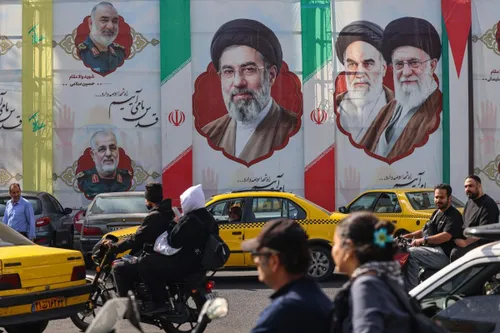
Iran warns a renewed war with the US could last longer as Donald Trump threatens further strikes, while diplomatic efforts to prevent another escalation remain uncertain.
Two women killed in N1 crash near Kranskop as highway closed
Two women have died and five people have been injured in a head-on collision involving four vehicles on the N1 near Kranskop, forcing the closure of the northbound carriageway.

Top Stories
CSOs urge judiciary to avoid another Imo-style embarrassment in Uzodimma’s Senate case

Spence 'very proud' to break WSL appearance record

Referee accidentally fractures college football player's leg
Freedom advocates urge Nigeria to grant Africans visa-free entry
Iran warns next war with US could be longer as Trump threatens further strikes
Two women killed in N1 crash near Kranskop as highway closed

AFFORDABLE HOUSING OP-ED: CT’s Tafelberg social housing units cut by Heritage assessment

Five teenagers stabbed at Halloween party
Latest
CSOs urge judiciary to avoid another Imo-style embarrassment in Uzodimma’s Senate case
Spence 'very proud' to break WSL appearance record
Referee accidentally fractures college football player's leg
Freedom advocates urge Nigeria to grant Africans visa-free entry
Iran warns next war with US could be longer as Trump threatens further strikes
Two women killed in N1 crash near Kranskop as highway closed
AFFORDABLE HOUSING OP-ED: CT’s Tafelberg social housing units cut by Heritage assessment
Five teenagers stabbed at Halloween party