The rise of jihadi groups in West Africa
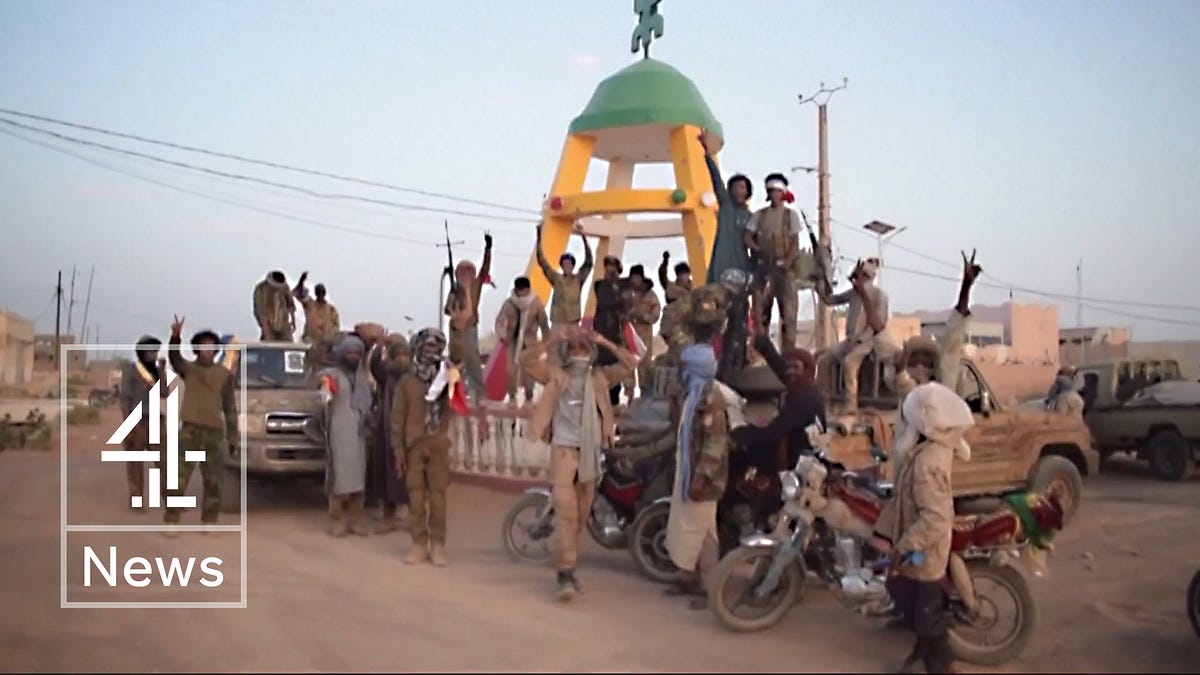
The West has focused on Ukraine and the Middle East rather than Africa, where groups associated with Al Qaeda and Islamic State are operating, writes Lindsey Hilsum.
 Lindsey HilsumApr 28, 20262225Share
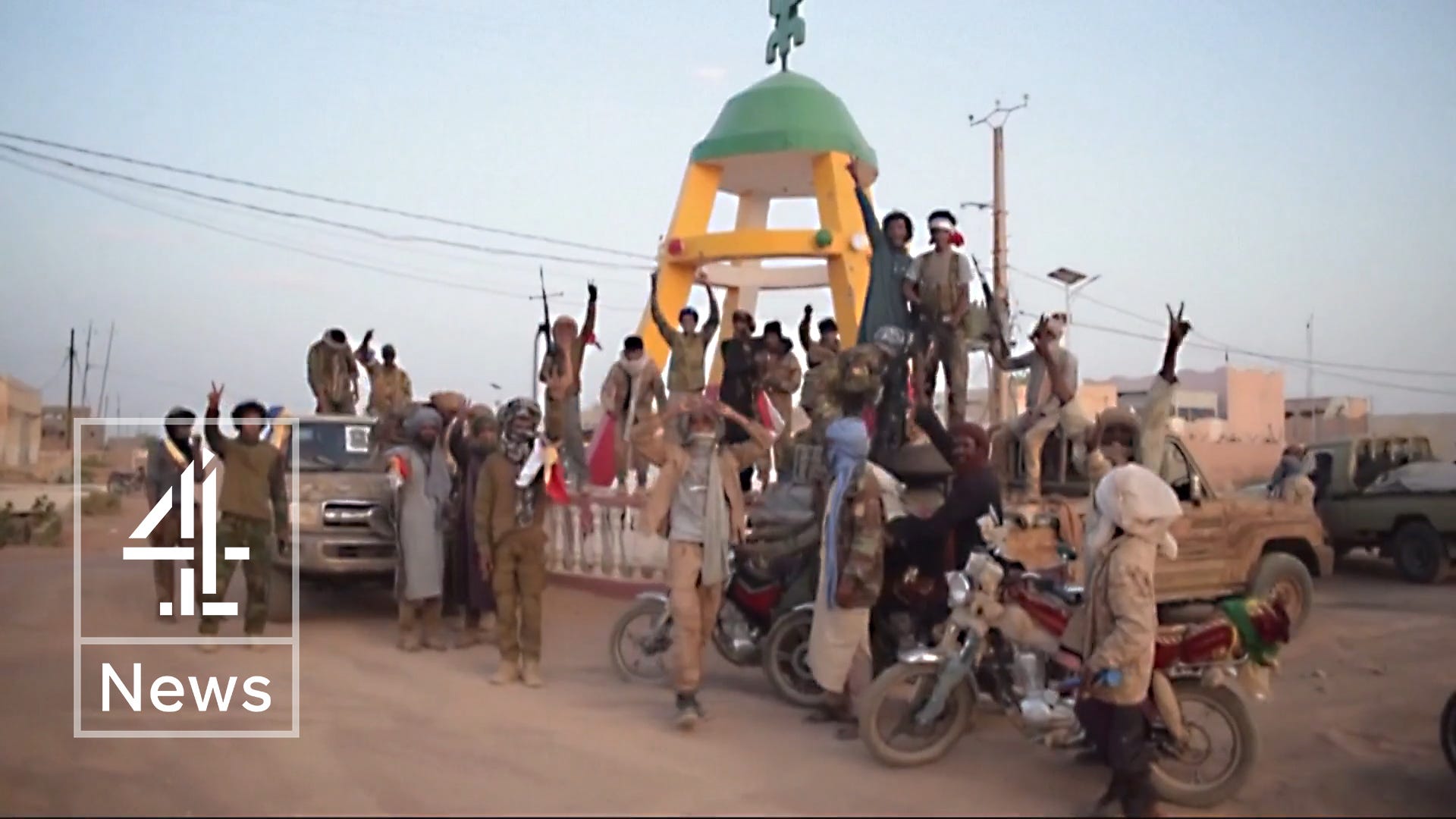
When I heard that Tuareg rebels and jihadis had staged coordinated attacks on half a dozen towns in Mali last weekend, I called my Tuareg friend.
SubscribeHe is a liberal thinker who backs an armed group that wants to create Azawad, an independent state for the nomadic Tuareg people. Why has the Azawad Liberation Front (FLA) teamed up with Jama’at Nasr al-Islam wa Muslimin (JNIM), who are affiliated with Al Qaeda?
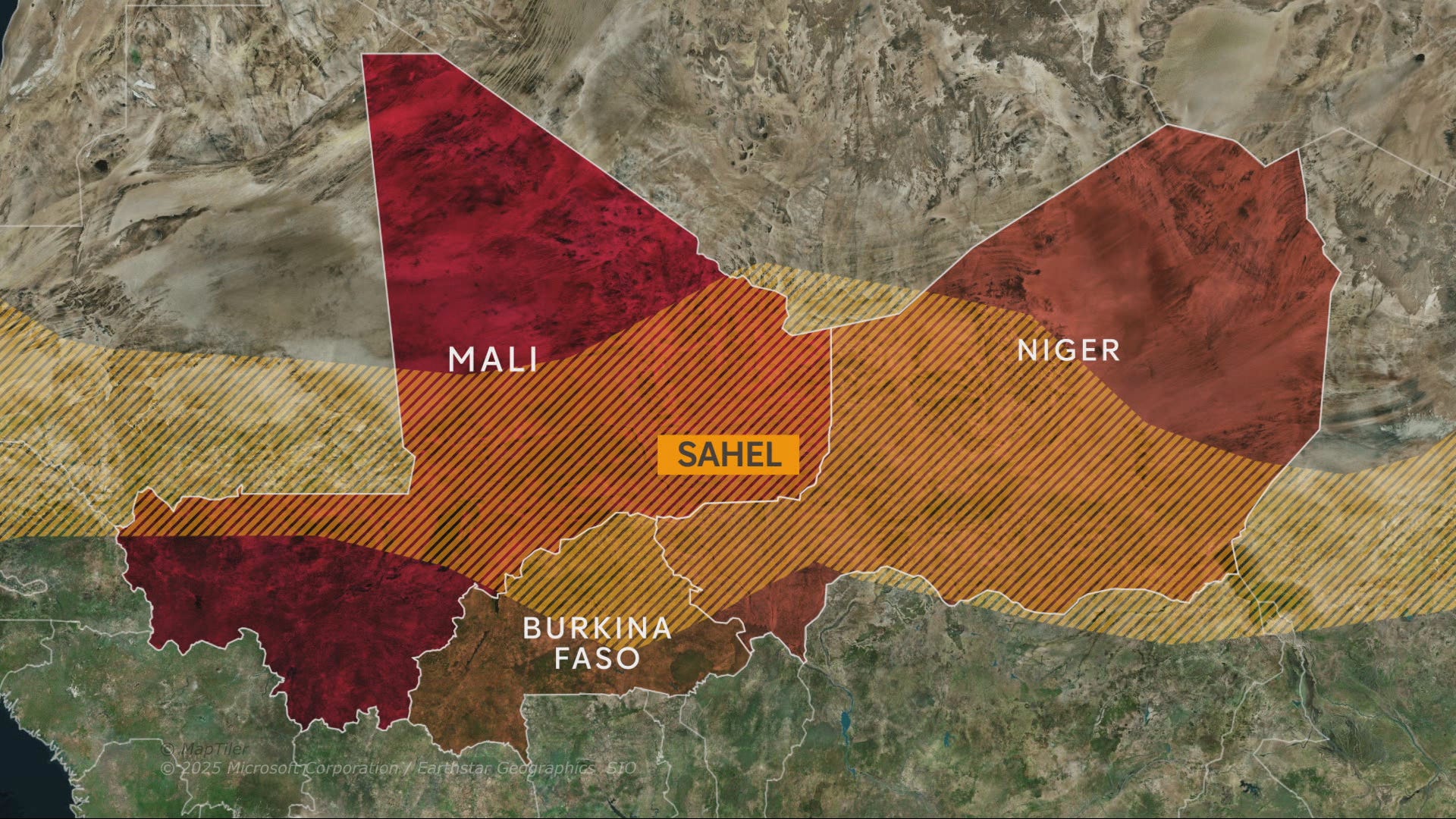
“No one cares about terrorism anymore,” he explained. According to the Global Terrorism Index, the Sahel region - Mali, Burkina Faso, Niger, Chad and Nigeria - accounted for more than half of all terrorism deaths in 2025.
You’re reading the latest edition of FourGround, a bespoke newsletter brought to you by Channel 4 News’ experienced journalists reporting on the ground from locations across the world.

But he’s right. Western governments and journalists, focused on Ukraine and the Middle East, pay little attention to West Africa, even though groups associated with Al Qaeda and Islamic State have proliferated, and the Russians have replaced the French as state backers of military governments in Mali, Niger and Burkina Faso.
‘Changed their flag’
“Anyway, JNIM have changed their black flag to a white one,” he added. “It’s like Syria.”
He was referring to Ahmed al Shara’a, the Syrian leader, who led Hay’at Tahrir al-Sham (HTS), the armed jihadi group that overthrew President Bashar al Assad at the end of 2024.
Shara’a changed his name from Abu Mohammad al-Julani, trimmed his beard, and swapped his robes for a jacket and tie, which is how he was dressed when he was invited to the White House last year, standing awkwardly next to President Trump, who had previously described him as a “young, attractive guy” - quite an accolade for a former Islamist.
The rebranding has been remarkably successful. On the whole, he has managed to restrain his men from enacting extreme Islamic laws, or killing non-Sunni Muslims. The US and Europe are backing him despite his jihadi past. It’s a tempting model for other evolving jihadi groups.
Mali’s recent history
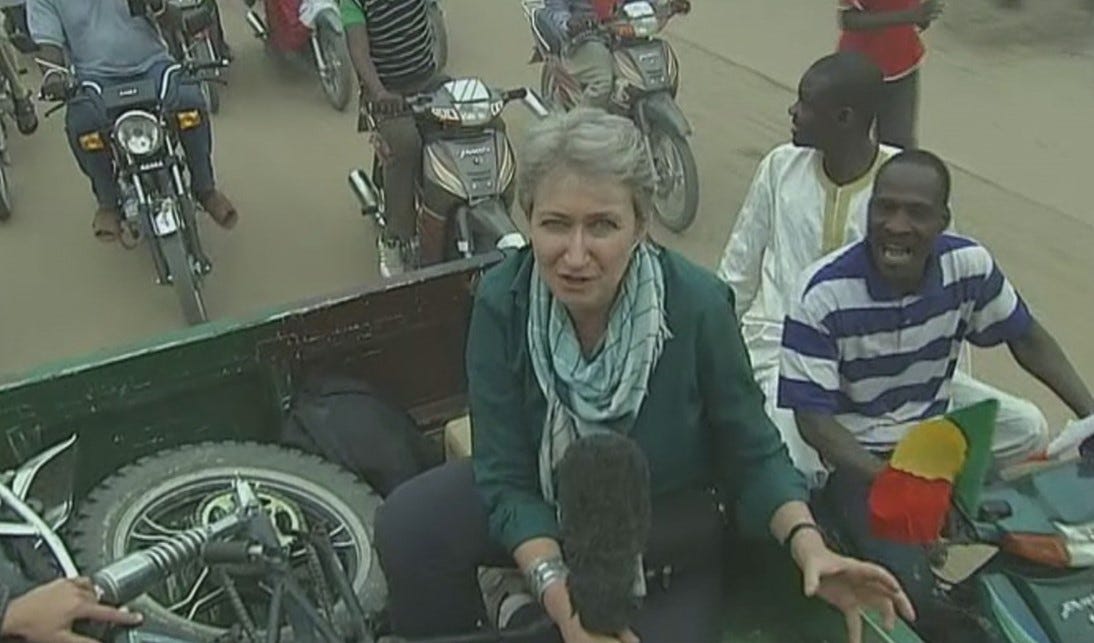
Mali’s recent history is one of corruption and state failure. Successive governments have lost control of northern desert towns. In 2013, I rode on the back of a Malian army pickup, pictured above, as they - backed by French troops - retook the town of Gao, which had been seized by jihadis the previous year. It was thrilling.
Hundreds of people on motorbikes surrounded us waving Malian and French flags, and shouting in joy. Women tore off their headscarves. Men waved bottles of beer that were no longer banned. But the governments that followed were unable to provide for people’s basic needs. Many blamed the French, the former colonialists. Others blamed their own leaders.
A series of coups followed. In 2022, the French withdrew and the military government invited in Russia’s Wagner Group. But Wagner – which has undergone its own rebranding and is now called the Africa Corps – has done no better than the French or the UN in holding back the jihadi tide.
According to Corinne Dufka, an independent analyst who has worked in the region for more than two decades, the weekend attacks in Mali raise questions about the efficacy of a purely military solution to the Sahel dilemma.

“JNIM is first and foremost a local organisation,” she told me. “Their objectives do include, of course, the implementation of Sharia, but they have been in the last 18 months trying to distance themselves from Al Qaeda to lose the terrorism label, to evolve into a more political organisation.” She too points to the Syria model.
JNIM is well organised and appears to be well funded, from a mixture of gold smuggling, extortion (they would say taxation), drug smuggling and cattle rustling. They have some support amongst the nomadic Fulani or Peuhl people of the region. Recently, JNIM indicated that they would like to negotiate with the governments of the region and the Russians.
Earlier this month, they released to the Africa Corps two Russian hostages they had seized in 2024, a sign – apparently – of good will, and a way of opening channels of communication.
‘We need to take Bamako’
As I write, the President of Mali, Assimi Goita, has been neither seen nor heard since the weekend’s attacks, in which the Defence Minister was killed. Russian forces have negotiated their safe exit from the key northern towns of Kidal and Tessit (they did the same in Syria, after Assad fell.)
Will the jihadis and the Tuareg go on to seize the capital, Bamako? In the past the Tuareg have confined their ambition to their traditional lands in the north.
“The world listens only to Bamako,” said my Tuareg friend. “We need to take it. Then the international community will listen to the Tuareg.”
Maybe. I fear that the cause of the Tuareg will get forgotten, because of their alliance with jihadis. Retired Lieutenant General Kees Matthijssen, the former Force Commander of the UN mission in Mali, believes Europe ignores the region at its peril.
“We must re-engage with the Sahel and contribute to building stability there, for the sake of stability here,” he wrote. “We must keep in mind that growing instability, effects of climate change, lack of economic progress and fast-growing populations will affect Europe even more in the (near) future.”
Don’t hold your breath. Europe is looking inward, as it tries to forge a new and looser relationship with the USA. Africa is an afterthought, if that. I fear more violence across the region as governments, jihadis, Russians and different ethnic groups fight for power, and the people of the Sahel struggle to survive.
Mali attack: Army and Russian mercenaries withdraw after attacks by separatists and IslamistsThanks for reading the latest edition of our free FourGround newsletter. Subscribe below to keep up to date with Channel 4 News on Substack.
Subscribe2225SharePreviousNext A guest post byLindsey HilsumInternational Editor, Channel 4 NewsSubscribe to Lindsey
Related Topics
Keywords
Related Stories
CSOs urge judiciary to avoid another Imo-style embarrassment in Uzodimma’s Senate case
Coalition of civil society organisations (CSOs) advises the judiciary to use the ongoing court case involving Governor Hope Uzodimma and former governor, Rochas Okorocha to restore public confidence in the courts. The post CSOs urge judiciary to avoid another Imo-style…

Freedom advocates urge Nigeria to grant Africans visa-free entry
They advocated reciprocal arrangements among African countries, citing Kenya and Rwanda as examples of countries that had taken steps to ease entry for other Africans. The post Freedom advocates urge Nigeria to grant Africans visa-free entry appeared first on Premium Times…

Iran warns next war with US could be longer as Trump threatens further strikes
Iran warns a renewed war with the US could last longer as Donald Trump threatens further strikes, while diplomatic efforts to prevent another escalation remain uncertain.
Two women killed in N1 crash near Kranskop as highway closed
Two women have died and five people have been injured in a head-on collision involving four vehicles on the N1 near Kranskop, forcing the closure of the northbound carriageway.
Top Stories
CSOs urge judiciary to avoid another Imo-style embarrassment in Uzodimma’s Senate case

Spence 'very proud' to break WSL appearance record

Referee accidentally fractures college football player's leg
Freedom advocates urge Nigeria to grant Africans visa-free entry
Iran warns next war with US could be longer as Trump threatens further strikes
Two women killed in N1 crash near Kranskop as highway closed
AFFORDABLE HOUSING OP-ED: CT’s Tafelberg social housing units cut by Heritage assessment

Five teenagers stabbed at Halloween party
Latest
CSOs urge judiciary to avoid another Imo-style embarrassment in Uzodimma’s Senate case
Spence 'very proud' to break WSL appearance record
Referee accidentally fractures college football player's leg
Freedom advocates urge Nigeria to grant Africans visa-free entry
Iran warns next war with US could be longer as Trump threatens further strikes
Two women killed in N1 crash near Kranskop as highway closed
AFFORDABLE HOUSING OP-ED: CT’s Tafelberg social housing units cut by Heritage assessment
Five teenagers stabbed at Halloween party