We do not think, yet here we are, By Uddin Ifeanyi


Thinking, it would seem, is not one of the talents God gifted the Nigerian politician; you apparently do not need much grey matter if your core deliverable is to line your pockets with ill-gotten lucre. Put this way, one runs the risk of being charged with including in the statement of proof that which still has to be proved. A plenitude of anecdotes is at hand, thank God. The strongest of which, so far, is the fact that the Nigerian politician (we have vanishingly few females of this subspecies) is some of the world’s most conservative types.
Thinking, it would seem, is not one of the talents God gifted the Nigerian politician; you apparently do not need much grey matter if your core deliverable is to line your pockets with ill-gotten lucre. Put this way, one runs the risk of being charged with including in the statement of proof that which still has to be proved. A plenitude of anecdotes is at hand, thank God. The strongest of which, so far, is the fact that the Nigerian politician (we have vanishingly few females of this subspecies) is some of the world’s most conservative types.
Take your pick of subject. Subsidies? As part of a government’s policy responses, the tension in their implementation is often between succouring consumers (potential voters, also) under pressure from rising prices (irrespective of the causes) and bleeding government coffers dry. That, at least, is the first level of disorder. Invariably, government interventions in an economy, by creating winners and losers, generate perverse responses. In the conversation around subsidies, the unavoidable adverse consequence is in distortions to an economy’s allocative efficiency.
Join the Premium Times WhatsApp Community For Quick Access To News and Happenings Around You.
What about taxes? Governments slobber at the prospects of the extra revenue that higher tax rates imply. But this increase in the public spending remit is always at a cost. Consumer spending tails of, business investment drops. Except in times of crisis, when increased government spending could jump-start stalling economies, any increase in government spending at the expense of businesses and consumers is nearly always suboptimal (as in, there are more efficient market-based ways to spend the money) and it is nearly always supportive of a rise in domestic prices.
And minimum wages? At this point, the pretence is not necessary anymore. From the incumbent government to the opposition, Nigeria’s policymaking elite struggle to understand basic economics. And “no be today!” “…the inflation was not a direct fallout of the ‘Udoji Award’ payments but of foreign companies jerking (sic) up the prices of their goods.” This is how General Yakubu Gowon (rtd.) explained the price hikes that accompanied Nigeria’s first such major intervention in this space.
If it is no news that the Nigerian politician is not an economic being, it should not surprise us that our outcomes defy economic logic. Nonetheless, the more useful line of enquiry is, “Why is the former the case?” Much of the thinking about economics and the ideological platforms that have arisen on this basis are but derivatives of social and cultural constructs.
If it is no news that the Nigerian politician is not an economic being, it should not surprise us that our outcomes defy economic logic. Nonetheless, the more useful line of enquiry is, “Why is the former the case?” Much of the thinking about economics and the ideological platforms that have arisen on this basis are but derivatives of social and cultural constructs.
Did consumers’ deeper wallet after the Gowon windfall (and subsequent such wage increases) mean too much money pursued the same amount of goods? Yes. Since the Gowon administration, and unlike the possibilities available to that government, successive Nigerian governments have had a money problem. And remarkably, if unfortunately, they have spent it the same way his did. Pinched coffers notwithstanding, our governments have binged on Monopoly® money straight off the central bank’s printing presses.
If it is no news that the Nigerian politician is not an economic being, it should not surprise us that our outcomes defy economic logic. Nonetheless, the more useful line of enquiry is, “Why is the former the case?” Much of the thinking about economics and the ideological platforms that have arisen on this basis are but derivatives of social and cultural constructs. Before the elaboration of fancy economic theories, there were attitudes to wealth and its distribution. Indeed, much of Marxism is one outcome of the person of faith’s outrage at extremes of poverty and affluence nestled cheek-to-jowl in the same suburbs. While the Right’s insistence that the Left’s nannying of the people saps economies of the animal spirits that society needs to thrive is an argument that the history of the United States of America makes impossible to look askance at, we cannot also forget that the Iron Chancellor purloined social welfare from the left in a bit to take the sting out of it.
Is there a middle road to all of these? John Maynard Keynes offered strong arguments for when governments may interfere in an economy, sometimes running against the markets’ grain in the collective interest. This journey down economics’ history underscores how the road we have not taken in these parts matter a lot. Straight of the back of the proverbial envelope, the dearth of much thinking around such matters in these parts is the most obvious shortcoming of our approach to the development challenge.
As a reminder of who we are, and where we have been, much of the beautiful parts of our culture and tradition ought to adorn museums and tourist trails. What about the useful parts? Ideally, these should provide the “lever long enough and a fulcrum on which to place it” that Archimedes argued was sufficient to move the world.
As a reminder of who we are, and where we have been, much of the beautiful parts of our culture and tradition ought to adorn museums and tourist trails. What about the useful parts? Ideally, these should provide the “lever long enough and a fulcrum on which to place it” that Archimedes argued was sufficient to move the world.
Thinking, it would seem, is not one of the talents God gifted the Nigerian politician; you apparently do not need much grey matter if your core deliverable is to line your pockets with ill-gotten lucre. Put this way, one runs the risk of being charged with including in the statement of proof that which still has to be proved. A plenitude of anecdotes is at hand, thank God. The strongest of which, so far, is the fact that the Nigerian politician (we have vanishingly few females of this subspecies) is some of the world’s most conservative types. What does he conserve? Cultural and traditional practices that are in our current context the moral equivalent of surrendering to long-dead black men a veto over the choices we make today. That would, still, be too smug a response. For as it has been demonstrated elsewhere, culture and traditions break up into a beautiful and useful part.
Stay Ahead with Premium Times
Follow us on Google News and never miss breaking stories, investigations, and in-depth reporting.
As a reminder of who we are, and where we have been, much of the beautiful parts of our culture and tradition ought to adorn museums and tourist trails. What about the useful parts? Ideally, these should provide the “lever long enough and a fulcrum on which to place it” that Archimedes argued was sufficient to move the world.
At which point one wonders how our leaders became such frightening caricatures of the American slaveholders’ refusal to concede to black people the one thing that distinguishes our species from the rest of the animal kingdom — self-awareness. You can argue in rebuttal, as Frederick Douglass did so many years ago, that the black man “learns from the past, improves upon the past, looks back upon the past, and hands down his knowledge of the past to after-coming generations”, but no people can tell the difference between the beautiful and useful lines of their heritage, whose leaders cannot think.
Except of course, it is not our intention to “move the world.”
Uddin Ifeanyi, a journalist manqué and retired civil servant, can be reached @IfeanyiUddin.
Share this:
Discover more from Premium Times Nigeria
Subscribe to get the latest posts sent to your email.
Type your email…
Subscribe
‘That’s hard to miss’ – Donald Trump compliments Nicki Minaj’s backside at Michigan rally
EFCC arrests 14 Chinese nationals, one Nigerian over four illegal lithium processing plants
Ifeanyi Uddin
Mr. Udin is Business Intelligence expert. He is a Member of Premium Times Editorial Board and a Columnist par excellence.
More News
From vision to abandonment: Nigeria’s unfinished development, By Dipo Baruwa
$110 oil price: Windfall or warning?, By Posi Olatubosun
Dele Cole (1940-2026) and his public service, By Eric Teniola
Kaduna rally as the North’s referendum on Tinubu, By Abdulaziz Abdulaziz
EDITORIAL: Why the US midterm elections matter
Does Nigeria truly have over 103 million voters?, By Chidi Anselm Odinkalu
Related Topics
Keywords
Related Stories
CSOs urge judiciary to avoid another Imo-style embarrassment in Uzodimma’s Senate case
Coalition of civil society organisations (CSOs) advises the judiciary to use the ongoing court case involving Governor Hope Uzodimma and former governor, Rochas Okorocha to restore public confidence in the courts. The post CSOs urge judiciary to avoid another Imo-style…

Freedom advocates urge Nigeria to grant Africans visa-free entry
They advocated reciprocal arrangements among African countries, citing Kenya and Rwanda as examples of countries that had taken steps to ease entry for other Africans. The post Freedom advocates urge Nigeria to grant Africans visa-free entry appeared first on Premium Times…

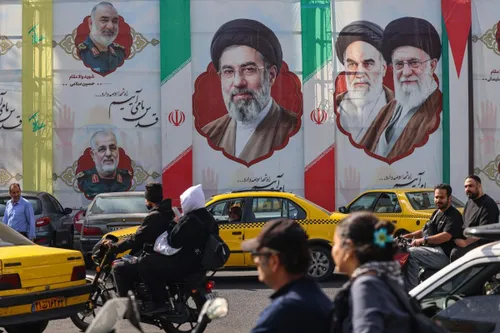
Iran warns next war with US could be longer as Trump threatens further strikes
Iran warns a renewed war with the US could last longer as Donald Trump threatens further strikes, while diplomatic efforts to prevent another escalation remain uncertain.
Two women killed in N1 crash near Kranskop as highway closed
Two women have died and five people have been injured in a head-on collision involving four vehicles on the N1 near Kranskop, forcing the closure of the northbound carriageway.

Top Stories
CSOs urge judiciary to avoid another Imo-style embarrassment in Uzodimma’s Senate case

Spence 'very proud' to break WSL appearance record

Referee accidentally fractures college football player's leg
Freedom advocates urge Nigeria to grant Africans visa-free entry
Iran warns next war with US could be longer as Trump threatens further strikes
Two women killed in N1 crash near Kranskop as highway closed

AFFORDABLE HOUSING OP-ED: CT’s Tafelberg social housing units cut by Heritage assessment

Five teenagers stabbed at Halloween party
Latest
CSOs urge judiciary to avoid another Imo-style embarrassment in Uzodimma’s Senate case
Spence 'very proud' to break WSL appearance record
Referee accidentally fractures college football player's leg
Freedom advocates urge Nigeria to grant Africans visa-free entry
Iran warns next war with US could be longer as Trump threatens further strikes
Two women killed in N1 crash near Kranskop as highway closed
AFFORDABLE HOUSING OP-ED: CT’s Tafelberg social housing units cut by Heritage assessment
Five teenagers stabbed at Halloween party