What's driving growth in Southern Africa's renewable sector?

 What's driving growth in Southern Africa's renewable sector?The renewable energy sector continues to gather momentum across Southern Africa, attracting growing levels of investment as countries look to strengthen energy security, support economic growth and meet climate commitments. At the same time, new technologies and evolving financing models are reshaping how projects are developed and funded. Joining CNBC Africa to discuss the key trends shaping the sector and the outlook for renewable energy investment in the region is Rentia Van Tonder, Head of Power and Renewables at Standard Bank CIB. Thu, 18 Jun 2026 11:35:02 GMTAI SummaryDisclaimer: The following content is generated automatically by a GPT AI and may not be accurate. To verify the details, please watch the videoAI Generated SummaryKey Points:
- Southern Africa’s renewable energy market is gaining momentum as countries pursue energy security, economic growth and climate goals.
- The sector is moving beyond a sole focus on solar PV and wind to include storage technologies, smart systems and grid optimization.
- Energy storage is becoming critical to balance midday solar generation with power demand during other times of the day and across different locations.
- Standard Bank says it has committed to and closed more than 12 gigawatts of renewable energy projects over the past decade.
- Investors and lenders are prioritizing policy certainty, government implementation and the ability for generators to sell power to utilities and end users.
- Financing models are evolving toward innovative banking solutions, portfolio-based sales structures and the emergence of energy traders.
- Transmission infrastructure and interregional grid connections are increasingly important to unlock renewable energy growth and power trade.
- South Africa remains a major opportunity market due to strong demand and the need for transmission expansion.
- Zambia, Namibia and Kenya are drawing attention as open-market and open-access policy reforms improve the investment case.
- Risks remain tied to policy execution, transmission bottlenecks and the pace at which markets can convert investor interest into bankable projects.
Southern Africa’s renewable energy sector is gathering pace as governments, investors and corporates push to strengthen energy security, expand power access and meet climate goals, according to Rentia Van Donder, head of power and renewables at Standard Bank CIB.
In a television interview on the outlook for the region, Van Donder said the market is evolving beyond a narrow focus on solar PV and wind, with storage technologies, smart systems and grid optimization increasingly becoming central to the next phase of growth.
“The renewable energy sector continues to gather momentum,” she said, describing the current period as “quite an interesting time to be part of the sector growing into Africa.”
Her comments underscore a broader shift taking shape across Southern Africa, where countries are seeking to diversify electricity supply away from constrained traditional systems while also making networks more resilient and efficient. Although solar and wind remain the most visible parts of the clean energy buildout, Van Donder said the industry is now paying much closer attention to how electricity is stored, transmitted and dispatched.
That is especially important as more intermittent renewable power is added to national systems. Van Donder noted that rising solar penetration tends to create abundant electricity supply in the middle of the day, while demand patterns require power to be distributed more effectively across different hours and locations.
As a result, storage has become a critical piece of Africa’s renewable energy ecosystem. Battery and other storage technologies can help “flatten the curve,” she said, enabling electricity generated during sunny hours to be shifted into evening demand periods and underserved areas. In practical terms, that means storage is no longer a peripheral technology discussion but a broader system-planning issue tied to reliability, balancing and efficient power management.
Van Donder also pointed to advances in storage performance and smart energy systems as a major trend shaping the market. Grid optimization, she said, is increasingly necessary to ensure power systems can absorb larger volumes of renewable energy without compromising stability. Even as technology costs have come down, the effectiveness of balancing the system remains a central consideration for developers, policymakers and financiers.
Despite a volatile global macroeconomic environment, investment appetite for renewable energy in the region remains firm. Van Donder said one of the sector’s enduring attractions is that its underlying energy resource — such as sun or wind — is effectively free, reducing dependence on fuel procurement and long-term commodity price exposure.
Still, she stressed that policy frameworks remain the decisive factor in unlocking capital. Investors, she said, first assess whether a market has an enabling regulatory environment and whether governments are committed to implementing those policies consistently. They also look closely at whether power producers can sell not only to state utilities but increasingly to a wider set of end customers as electricity markets open up.
That shift is helping reshape financing structures across the region. According to Van Donder, clients are increasingly approaching banks for more innovative solutions, including models that support portfolio-based energy sales and better matching of supply and demand. She said the rise of energy traders is also creating new opportunities to connect generators and consumers more efficiently, potentially accelerating project development and broadening market participation.
Standard Bank’s own activity reflects the scale of that momentum. Van Donder said the bank has committed to and closed more than 12 gigawatts of renewable energy power projects over the past decade. The continued flow of client inquiries, she added, suggests the market is now moving into a more sophisticated phase, where the focus is not only on building generation capacity but also on structuring bankable commercial arrangements around it.
For global investors and lenders, transmission infrastructure is another critical area of focus. Van Donder said there is growing attention on projects that improve interregional connectivity, both within countries and across borders. Stronger transmission networks can help integrate renewable generation, unlock stranded resources and facilitate power trade between markets.
Looking ahead, she said South Africa remains one of the region’s biggest opportunity sets, driven by persistent electricity shortages, strong demand for new capacity and the need to unlock grid and transmission infrastructure. She pointed in particular to the hoped-for progress of the independent transmission program as a potentially important catalyst for faster development.
Beyond South Africa, Van Donder highlighted Zambia as a market gaining traction, particularly as open-access policy reforms create room for private investment and as power demand rises in areas linked to the broader Copperbelt. She also identified Namibia and Kenya as markets adopting more open-market approaches that are attracting investor attention.
While the interview centered on Southern Africa, she noted that opportunities are not confined to the subregion. Van Donder referenced recent gas-to-power transactions in Senegal as an example of how African energy strategies remain shaped by local resource realities and least-cost planning considerations. In that context, she suggested the optimal path is not identical across every market, but instead depends on a country’s fuel mix, infrastructure base and growth requirements.
That broader view reflects an increasingly pragmatic approach to Africa’s energy transition — one in which renewables play a rising role, but where flexibility, transmission buildout, policy clarity and financing innovation are just as important as generation technology itself.
For Southern Africa, the takeaway is clear: capital is available, demand is strong and interest is broadening. But sustained growth will depend on whether governments can move quickly enough on policy implementation, transmission expansion and market reforms to convert momentum into bankable projects at scale.
As Van Donder made clear, the region’s renewable energy story is no longer only about adding solar panels and wind turbines. It is about building a more connected, flexible and financeable power system.
Choose CNBC Africa as your preferred source on Google and never miss a moment from the most trusted name in business news.SIGN UP FOR OUR NEWSLETTER
DAILY UPDATE
Get the best of CNBC Africa sent straight to your inbox with breaking business news, insights and updates from experts across the continent.
Subscribe
Get this delivered to your inbox, and more info about our products and services. By signing up for newsletters, you are agreeing to our Terms of Use and Privacy Policy.
Latest Videos
Related Topics
Keywords
Related Stories
CSOs urge judiciary to avoid another Imo-style embarrassment in Uzodimma’s Senate case
Coalition of civil society organisations (CSOs) advises the judiciary to use the ongoing court case involving Governor Hope Uzodimma and former governor, Rochas Okorocha to restore public confidence in the courts. The post CSOs urge judiciary to avoid another Imo-style…

Freedom advocates urge Nigeria to grant Africans visa-free entry
They advocated reciprocal arrangements among African countries, citing Kenya and Rwanda as examples of countries that had taken steps to ease entry for other Africans. The post Freedom advocates urge Nigeria to grant Africans visa-free entry appeared first on Premium Times…

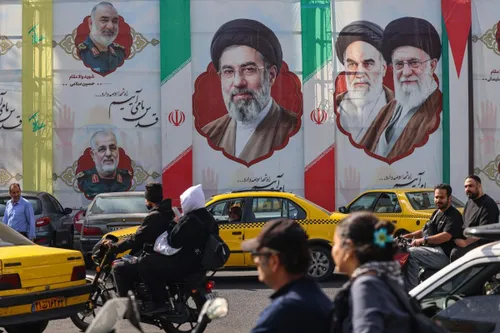
Iran warns next war with US could be longer as Trump threatens further strikes
Iran warns a renewed war with the US could last longer as Donald Trump threatens further strikes, while diplomatic efforts to prevent another escalation remain uncertain.
Two women killed in N1 crash near Kranskop as highway closed
Two women have died and five people have been injured in a head-on collision involving four vehicles on the N1 near Kranskop, forcing the closure of the northbound carriageway.

Top Stories
CSOs urge judiciary to avoid another Imo-style embarrassment in Uzodimma’s Senate case

Spence 'very proud' to break WSL appearance record

Referee accidentally fractures college football player's leg
Freedom advocates urge Nigeria to grant Africans visa-free entry
Iran warns next war with US could be longer as Trump threatens further strikes
Two women killed in N1 crash near Kranskop as highway closed
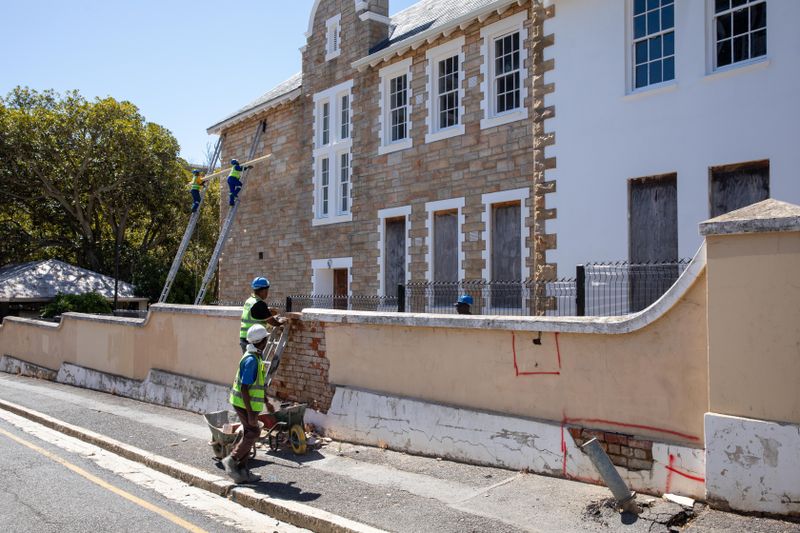
AFFORDABLE HOUSING OP-ED: CT’s Tafelberg social housing units cut by Heritage assessment

Five teenagers stabbed at Halloween party
Latest
CSOs urge judiciary to avoid another Imo-style embarrassment in Uzodimma’s Senate case
Spence 'very proud' to break WSL appearance record
Referee accidentally fractures college football player's leg
Freedom advocates urge Nigeria to grant Africans visa-free entry
Iran warns next war with US could be longer as Trump threatens further strikes
Two women killed in N1 crash near Kranskop as highway closed
AFFORDABLE HOUSING OP-ED: CT’s Tafelberg social housing units cut by Heritage assessment
Five teenagers stabbed at Halloween party