Who will govern Israel? Election deadlock leaves key questions unanswered
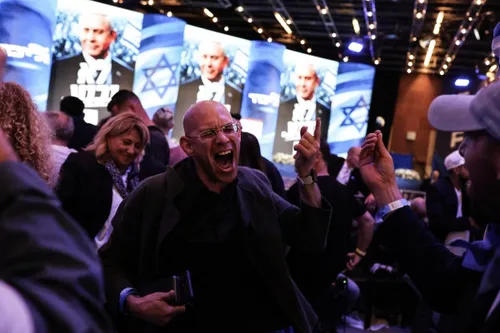
Israelis voted on Tuesday in their highest turnout for decades, with exit polls showing the camp of Prime Minister Benjamin Netanyahu and that of his rival are neck and neck.
Israelis voted on Tuesday in their highest turnout for decades, with exit polls showing the camp of Prime Minister Benjamin Netanyahu and that of his rival are neck and neck.
Exit polls from the three mainstream Israeli television networks gave the two blocs around 51 seats each in the 120-member Knesset -- well below the 61 needed to govern -- after initially giving an edge to the opposition led by ex-army chief Gadi Eisenkot.
Israeli Arab lists made strong gains, with exit polls showing them winning 17 or 18 seats between them.
The parties will immediately begin negotiations to try to reach a 61-seat majority, but the path forward is far from clear.
President Isaac Herzog will name a candidate who has the best chance to form a government -- not necessarily the party with the most seats.
The Arab Israeli parties, particularly Raam, have voiced openness to working with Eisenkot's bloc, but the camp has kept them at arm's length, perceiving their support as a liability during the campaign.
For Netanyahu's bloc, however, there is no obvious place to pick up more seats after some smaller right-wing parties failed to meet the vote threshold for entering parliament.
Coalition negotiations can be arduous, with parties insisting on parochial interests, and can produce unstable governments.
It took Netanyahu 58 days to form his government after the previous election in November 2022.
If no bloc manages to secure 61 seats, a candidate could attempt to govern without a majority but rather through support on an ad hoc basis from other lawmakers.
In this scenario, lawmakers from the Arab Israeli parties -- whose community makes up 20 percent of the population and generally identifies as Palestinian -- could play a critical role.
Raam, led by Mansour Abbas, has been a kingmaker in the past, having been the first Arab party to join an Israeli government in a short-lived 2021-2022 coalition led by Naftali Bennett and Yair Lapid.
Another Arab movement, the Joint List, has said it would be unlikely to join a coalition government outright, but has offered to provide a "safety net" for anyone that ousts Netanyahu from power.
Political commentator Tal Elovitz said that an especially high Arab turnout "indicates a strong desire for partnership".
Eisenkot has not even entertained the possibility publicly, and Netanyahu relentlessly told Jewish voters in his campaign that a vote for the opposition could bring Arabs into government.
"Bottom line, at the moment, it appears there is a possibility of forming a minority government headed by Eisenkot, but this could still shift depending on the final results," Elovitz said.
Considering Israel's extreme polarisation, the prospect of a national unity government would appear fanciful, but it could theoretically create a less extreme government.
Israeli commentators have often mused on the possibility of a national unity government in which Netanyahu would jettison his provocative far-right allies as well as ultra-Orthodox parties and team up with Eisenkot, who shares Netanyahu's views on many security issues.
Such a grand coalition would also exclude Arab parties.
A poll published on October 16 found that 55 percent of Israelis would prefer a national unity government over new elections if the vote did not produce a clear majority.
This scenario has a recent precedent. In 2020, Netanyahu and Benny Gantz, like Eisenkot a retired general appealing to the centre, reached a power-sharing agreement after three elections in less than a year.
The agreement stipulated a rotation of the prime ministership, but the partnership fell apart after a year, triggering another election.
A unity government in the present situation would face strong opposition from both sides, particularly the opposition bloc, which has built its campaign around ousting Netanyahu, casting him as unfit to lead.
If no candidate manages to form a government, Israel will have to return to the polls.
The country held four elections between April 2019 and March 2021 due to the inability of politicians to forge a lasting coalition.
The candidate designated by the president will, in principle, have 28 days to form a coalition, with a possible 14-day extension, although there are other procedural ways to prevent an immediate calling of new elections.
Keywords
Related Stories
Binance sees spike in withdrawals as exchange returns online after $6.3 billion heist
Nov 1 (Reuters) - Binance customers pulled $3.64 billion, or 2.1% of its assets, as the world's biggest cryptocurrency exchange went back online on Sunday after hackers the FBI links to North Korea stole billions from the platform last week.

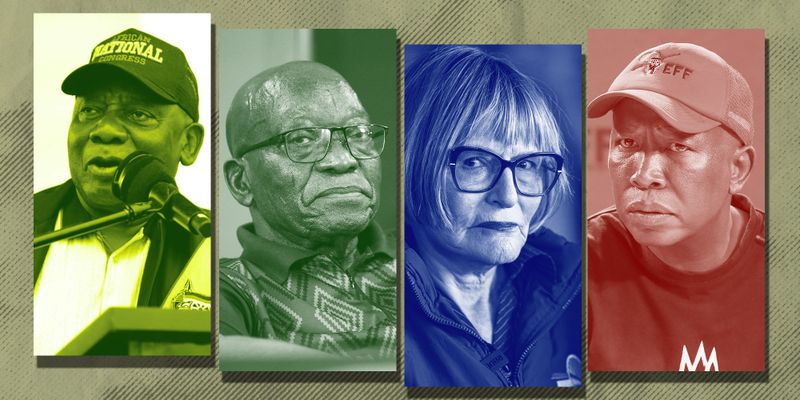
LOCAL ELECTIONS 2026: The top four parties’ final campaign pitches
The ANC, DA, MK party and EFF all held their final campaign rallies this weekend. Here are their final pitches to voters.
Ukraine evacuates civilians from parts of Kherson region as expiry of Oleshky ceasefire nears
Nov 1 (Reuters) - Ukraine's military said it evacuated 167 people from threatened areas of southern Kherson region on Sunday as a temporary local ceasefire neared expiry -- two days after busloads of residents were brought out of the embattled Russian-held town of Oleshky.

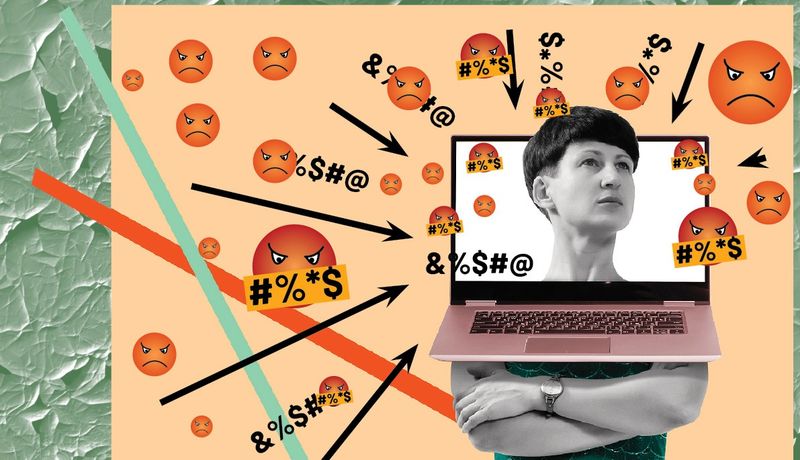
ARTIFICIAL INTELLIGENCE OP-ED: Forget future existential threats — AI is automating gendered violence and misogyny right now
The current alarm about the future dangers of agentic AI might distract us from the very real AI harms already happening. As we speculate about whether machines might one day become dangerous to humankind, AI is deepening misogyny, eroding safety and automating gendered abuse.
Top Stories
Binance sees spike in withdrawals as exchange returns online after $6.3 billion heist
LOCAL ELECTIONS 2026: The top four parties’ final campaign pitches
Ukraine evacuates civilians from parts of Kherson region as expiry of Oleshky ceasefire nears
ARTIFICIAL INTELLIGENCE OP-ED: Forget future existential threats — AI is automating gendered violence and misogyny right now
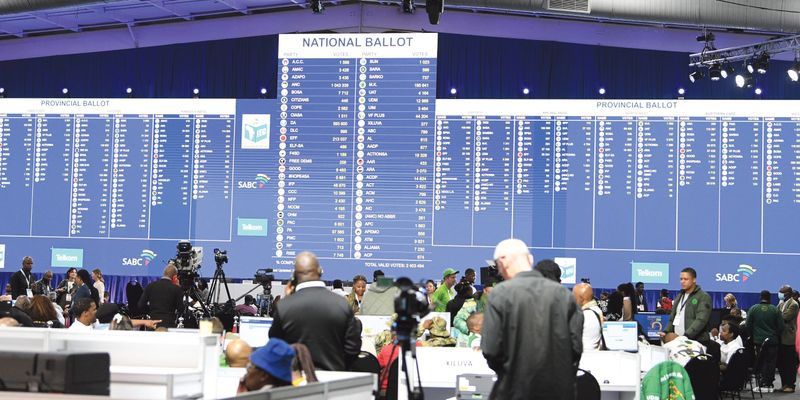
LOCAL ELECTIONS 2026: What happens after the vote? Councils, coalitions and (maybe) controversies
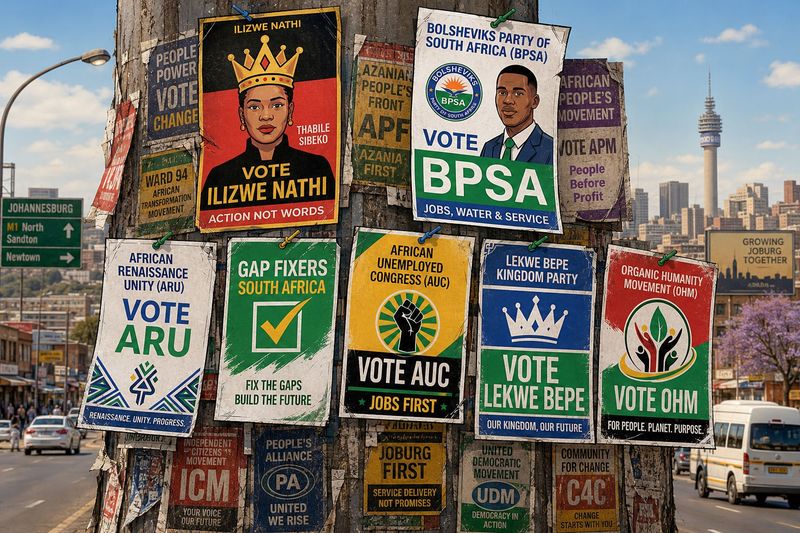
OUR CITY NEWS: Eighty-three parties contest crowded Joburg local government elections
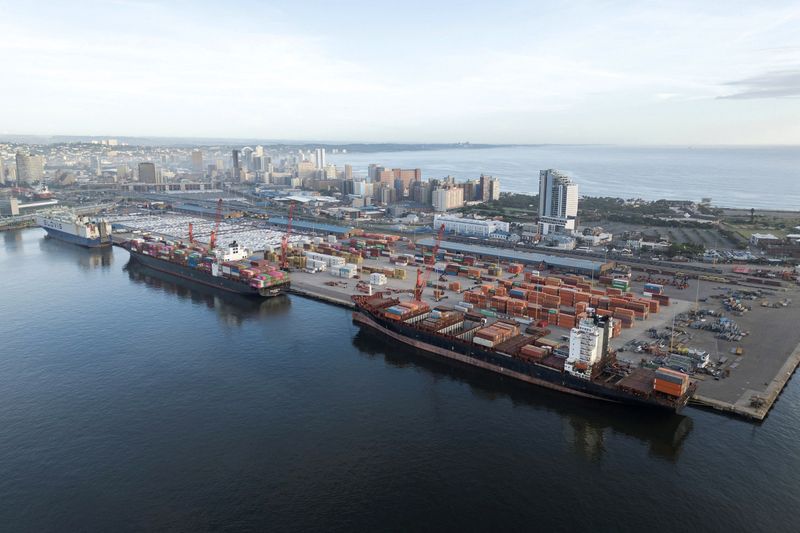
Troubled port: Transnet and foreign operator face scrutiny over backlog at Durban Gateway Terminal

BUSINESS REFLECTION: Crossed Wires: The internet’s technical debt is due, and we can’t pay
Latest
Binance sees spike in withdrawals as exchange returns online after $6.3 billion heist
LOCAL ELECTIONS 2026: The top four parties’ final campaign pitches
Ukraine evacuates civilians from parts of Kherson region as expiry of Oleshky ceasefire nears
ARTIFICIAL INTELLIGENCE OP-ED: Forget future existential threats — AI is automating gendered violence and misogyny right now
LOCAL ELECTIONS 2026: What happens after the vote? Councils, coalitions and (maybe) controversies
OUR CITY NEWS: Eighty-three parties contest crowded Joburg local government elections
Troubled port: Transnet and foreign operator face scrutiny over backlog at Durban Gateway Terminal
BUSINESS REFLECTION: Crossed Wires: The internet’s technical debt is due, and we can’t pay