COP VS COP: Understanding Mkhwanazi’s ‘war’ — a deeper look at SA’s policing and justice crisis
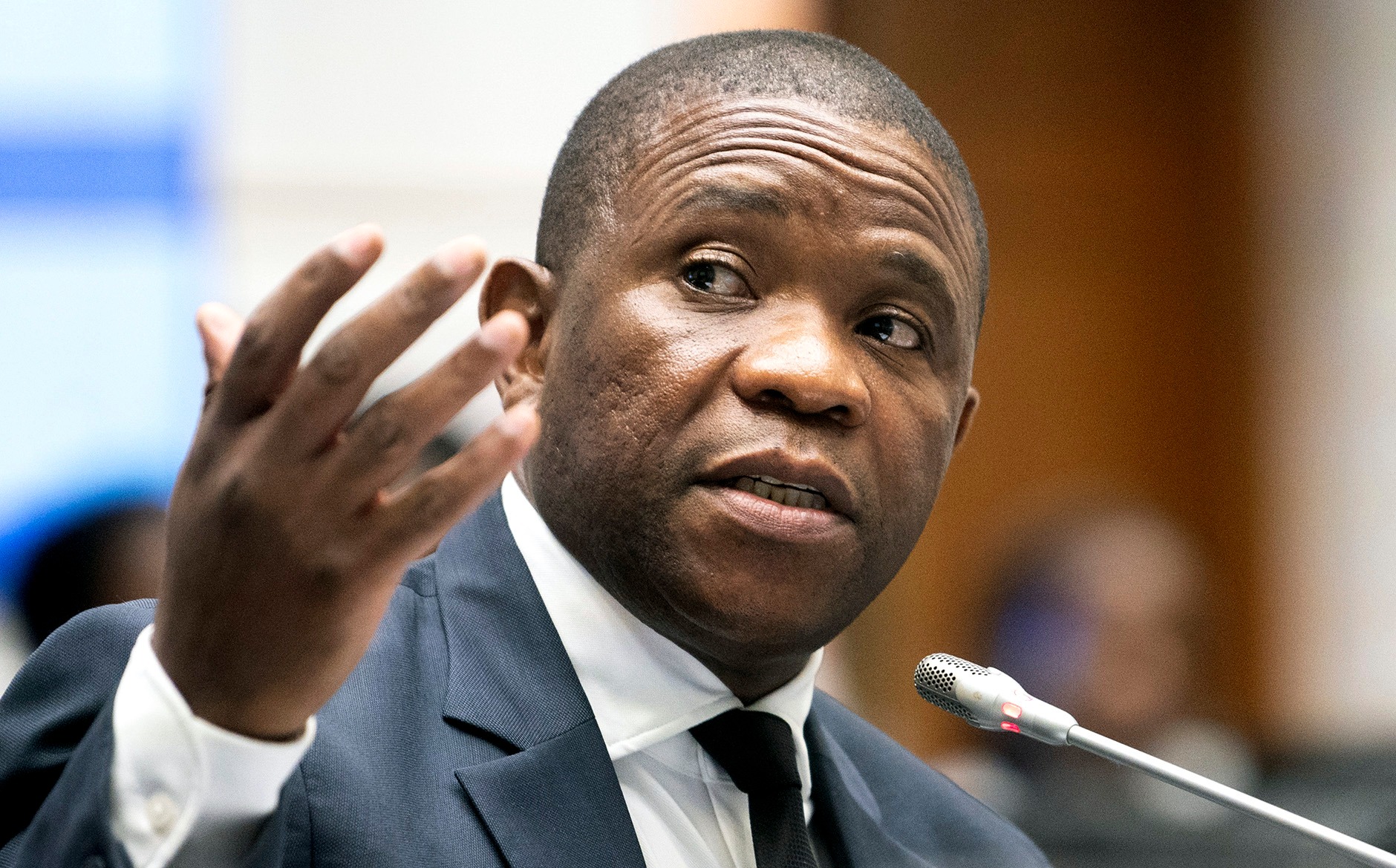
Lieutenant General Nhlanhla Mkhwanazi warns of a metaphorical ‘war’ within South Africa’s law enforcement, highlighting struggles between organised crime and an undermined justice system amid alarming institutional conflict.
Standing outside the Brooklyn Police Station in Pretoria on Thursday, June 18, KwaZulu-Natal Police Commissioner Lieutenant General Nhlanhla Mkhwanazi warned journalists that the SAPS is “facing a war” and that “there are many players in this game”.
His remarks followed a dramatic sequence of events sparked by the Independent Directorate Against Corruption’s (Idac’s) attempt to arrest Crime Intelligence head Lieutenant General Dumisani Khumalo and another high-ranking official, Major General Nosipho Madondo.
The two officers had reported to the Brooklyn Police Station after being informed that warrants had been issued for their arrest.
Media reports indicate that Mkhwanazi also went to the station upon hearing of the impending arrests, only to allegedly discover that a warrant had been authorised for his arrest as well. The chaotic events that followed exposed deep fault lines within South Africa’s law enforcement architecture: despite the active warrants, Idac abruptly halted the arrests before they could be executed. This sudden reversal fuelled intense speculation, conflicting narratives and widespread public confusion.
Idac subsequently rejected reports that Khumalo had been arrested and denied any intention to arrest Mkhwanazi, describing the situation as a misunderstanding.
The episode appeared to highlight concerns that have been simmering within the SAPS and the broader criminal justice system for months. It was against this backdrop that Mkhwanazi said that the country was at war.
National Prosecuting Authority spokesperson Kaizer Kganyago said the warrants were put on hold after investigators were informed that Khumalo and Madondo were members of a Justice, Crime Prevention and Security Cluster team tasked with preparing for anticipated anti-immigration protests later this month.
“In the interest of ensuring synergy and efficiency in the work of that team, Idac thus decided to suspend the execution of the warrants of arrest until the assignment of the two officers is completed,” said Kganyago.
In May, Idac spokesperson Henry Mamothame dismissed the rumours that a J50 warrant of arrest has been issued for Lieutenant-General Mkhwanazi as false.
For some observers, however, the significance of the episode extends beyond whether the arrests were ultimately executed. The public spectacle of senior law-enforcement agencies appearing to work at cross-purposes has raised broader concerns about institutional trust and coordination.
On 23 June, Lizette Lancaster, head of the Institute for Security Studies’ Justice and Violence Prevention Programme, warned that such public confrontations risked further eroding confidence in the criminal justice system.
“While the independence of criminal justice institutions needs to be protected, one would hope that there are conversations about high-profile arrests taking place at a cluster level. These very public standoffs further negatively impact already low levels of public trust,” she said.
The criminalisation of institutions
Professor Kholofelo Rakubu, a criminologist at the Tshwane University of Technology, believes Mkhwanazi’s warning that “we are facing a war and there are many players in this game” reflects a struggle for the integrity, legitimacy and control of South Africa’s criminal justice system.
“From a criminological perspective, the ‘war’ Mkhwanazi describes is one against organised criminal networks, corruption, institutional interference and competing centres of influence that undermine the state’s ability to investigate and prosecute crime effectively,” she states.
Rakubu said Mkhwanazi’s “many players” comment signals a fundamental shift in how to view South African crime. It is no longer a straightforward battle between offenders and the police; rather, it represents a security crisis that conventional policing alone cannot solve.
Rakubu interpreted the commissioner’s words as a warning that organised crime has infiltrated the state, embedding itself within intelligence structures, political entities and the broader criminal justice system. This creates a deeply compromised ecosystem where syndicates, corrupt bureaucrats, business interests and compromised politicians work in tandem to influence legal outcomes and shield illicit activities.
“This reflects the criminological concept of State Capture by criminal networks, where organised crime seeks protection through institutional influence rather than violence alone,” she underlined.
She pointed out that the timing of Mkhwanazi’s remarks is significant, noting that they emerged amid ongoing tensions surrounding Crime Intelligence, scrutiny of the Idac unit, allegations involving senior SAPS leadership and proceedings before the Madlanga Commission.
Rakubu pointed out that the comments appear consistent with concerns Mkhwanazi raised during his July 2025 media briefing, when he alleged political interference in policing, attempts to frustrate sensitive investigations and organised criminal influence within the criminal justice system.
She believes the remarks point to growing factionalism within SAPS.
“One of the clearest indicators of institutional dysfunction is the emergence of competing centres of authority within law enforcement agencies,” she said.
“Organised crime seldom defeats the state through superior force. It succeeds by exploiting institutional fragmentation. The greatest threat to organised crime is an independent criminal justice system. Equally, the greatest threat to the criminal justice system is organised crime that succeeds in influencing the institutions established to combat it. When institutions become the battleground, the rule of law itself becomes the crime scene.”
A complex battlefield
Wayne Duvenage, chief executive of the Organisation Undoing Tax Abuse, believes Mkhwanazi’s warning that “we are facing a war and there are many players in this game” reflects a battle being fought within the state itself: a struggle between those trying to investigate organised crime and corruption, and those seeking to frustrate, capture or manipulate law-enforcement processes.
Duvenage said Mkhwanazi’s choice of words points to a far more complex battlefield than the public may initially appreciate.
The “many players” he refers to are likely to include organised crime syndicates, compromised police officials, political actors, intelligence operatives, business interests, prosecutors and individuals embedded throughout the criminal justice system.
The remarks, Duvenage argues, cannot be viewed in isolation. They echo allegations Mkhwanazi first raised in July 2025 about political interference in policing, the weakening of specialised investigative units and the infiltration of law-enforcement structures by criminal networks.
While acknowledging that such language is unusually forceful for a serving provincial commissioner, Duvenage says that is precisely why it must be taken seriously.
“Ideally, senior police officers should speak through formal channels and evidence-led processes, not through dramatic public warnings. However, when the normal channels are allegedly compromised or being used to frustrate investigations, public exposure by senior officials becomes both understandable and significant,” he said.
The timing of Mkhwanazi’s latest intervention is equally important. Duvenage points to revelations emerging from the Madlanga Commission, allegations involving senior police and political figures, ongoing uncertainty surrounding Crime Intelligence leadership and Idac, as well as governance battles playing out within metro police structures.
Taken together, he says, these developments suggest something more serious than institutional disagreements.
“What we are witnessing appears to be a deepening mistrust between institutions that are supposed to work together in combating crime and corruption,” he added.
For ordinary South Africans, the implications are troubling, he explains. Public confidence depends on the belief that institutions such as the SAPS, Crime Intelligence, the National Prosecuting Authority and other investigative agencies operate independently, lawfully and in the public interest and not as instruments in factional battles.
In Duvenage’s view, Mkhwanazi’s remarks were justified as a warning signal. Now, he needs to provide the evidence and follow through using the proper legal channels.
He suspects that Mkhwanazi is ultimately lobbying for more resources — either to extend the lifespan of the Madlanga Commission or to establish a formal offshoot to continue its investigative work. This would ensure that compromised officials and syndicates continue to be rooted out.
“If this process comes to an end prematurely, the criminal syndicates and compromised networks that survive it will simply continue operating,” he warns.
For that reason, he argues, South Africa cannot afford to treat the commission as another temporary inquiry whose findings gather dust. The country needs sustained investigation, institutional reform and accountability. Ending the process before its work is complete would risk allowing the very networks it seeks to expose to regroup and reassert themselves.
“The country needs truth, accountability and institutional clean-up,” says Duvenage. “I cannot see that work being finished by August when the supposed time period for the Madlanga Commission is up.” DM