Historians say King Verica persuaded Rome to invade Britain. But could Verica actually have been a queen?

It was a moment that changed the course of British history: in AD43, Roman troops under the emperor Claudius landed in Kent. Now, an archaeologist has claimed the British ruler who persuaded Claudius to invade was not a king but a queen.
The controversial conclusion, made by Dr Miles Russell, the director of archaeological fieldwork at Bournemouth University, could throw new light on Britain’s history.
“It’s critical because … without Verica there probably would be no Roman invasion,” he said. “Also, it changes the politics, it changes the dynamics of iron age Britain.”
Verica was a Romanised Briton who ruled the Atrebates tribe who controlled parts of what is now southern Hampshire and West Sussex. After the death of another powerful tribal leader, Cunobelinus, and the rise of Cunobelinus’s son Caratacus, Verica was exiled and fled to Claudius in Rome.
Russell says among the evidence for a rethink of Verica’s sex is that Latin names that end in the letter “a” often belong to women.
What’s more, Verica used the term “Rex” on coins – a word Russell says was used to refer to firm allies on the edge of the Roman empire in the late first century BC and early to mid first century AD. Unlike the words “Regina”(queen) and “Regis” (king), “Rex” did not imply a particular sex, Russell says.
Russell also noted that coins minted under Verica appeared to show a naked woman on horseback, whereas those minted under rulers including Cunobelinus and Caratacus show overtly male naked characters on a horse. “I think the imagery is overtly feminine because that’s basically saying that’s who Verica is,” Russell said.
And while abbreviated Latin inscriptions on the coins have been taken to mean “son of …”, Russell says they could also mean “daughter of”.
Russell’s claims will appear in a new book, Caratacus: Great King of Britain. Work by Russell and colleagues has previously revealed that women were extremely important within iron age society.
The idea that Verica was a woman chimes with criticisms made of Claudius by the Roman writer Cassius Dio, who claimed the emperor was influenced by slaves and women, Russell added.
Prof Roger Tomlin, a British archaeologist specialising in the translation of Latin text and epigraphy based at the University of Oxford, said there were Latin men’s names ending in “a”, but the existence of the masculine form “Vericus” was the best argument that “Verica” was feminine.
However, Tomlin said Cassius Dio assumed the ruler was a man, referring to him as “Bericus” – something Russell argues could be down to a garbling of names, with Dio writing more than 200 years after the events. His work was a result of translating and transcribing by multiple generations.
Tomlin also said there was little evidence the term Rex had been used for both male and female rulers. “Of course the Romans recognised client-queens as well as client-kings, but Russell must prove, by finding other examples, that they referred to them both as Rex,” he said.
He added that the depiction of what appears to be a bare-breasted warrior on the reverse of the coin did not prove Verica was a woman. “It reminds me of the argument that Queen Victoria was really a man, because the reverse of her gold coinage depicts her as a male horseman killing a dragon,” Tomlin said.
Dr Daphne Nash Briggs, a British iron age archaeologist and coin expert, also voiced scepticism, noting that some coins bearing Verica’s name depicted a clearly male form on horseback, while others appeared to show a portrait of Verica in male priestly dress, and some showed Verica’s head and neck – with an Adam’s apple.
Russell argues the latter depicts the emperor, and it is not clear that the figure in priestly dress is male or that it was Verica.
Russell is aware his arguments may cause controversy. “If it does create debate and argument, I think that’s for the better,” he said. “The one-sided story’s been there for so long. We need that to change. We need to have this discussion.”
Related Topics
Keywords
Related Stories
Joshua Wong, face of Hong Kong's pro-democracy protests, jailed for 10 years
Wong, 30, is among hundreds of Hongkongers detained under the controversial national security law.

Italian chef fired after refusing to put pineapple on pizza
He had told his employer, an Australian restaurant, that pineapple on pizza was "offensive" to Italian culture.

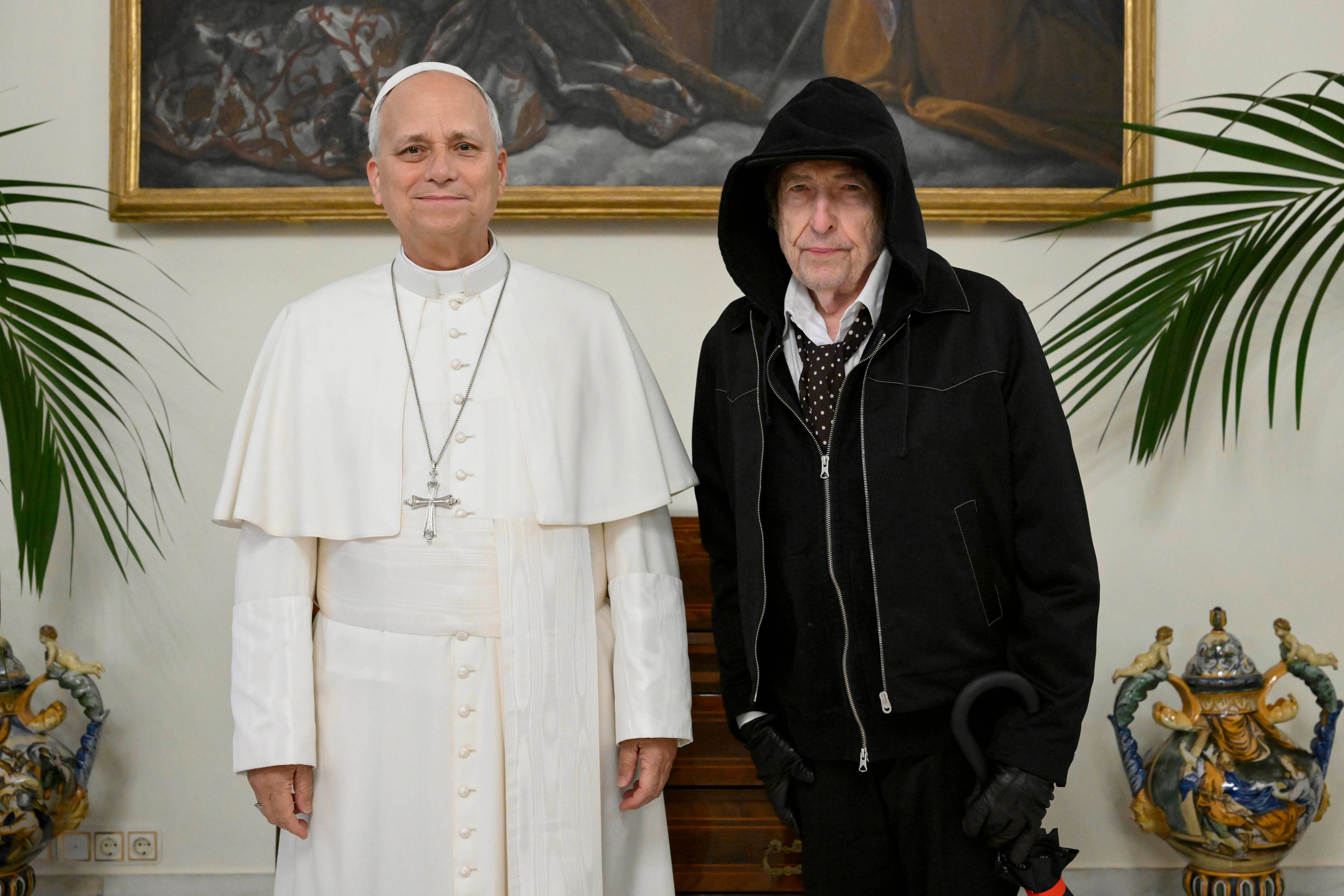
Bob Dylan comes knockin' on pope's door as Leo welcomes legend to Vatican
The American singer-songwriter and poet visited with the American pope at the Vatican during a break between concert dates in Italy. The Vatican said the encounter was brief.
Hong Kong activist Joshua Wong sentenced to 10 years in prison
Wong was sentenced for his second conviction under a Beijing-imposed national security law, in a case that critics say reflects the crackdown on the city's once-thriving pro-democracy movement.

Top Stories

ORIGIN STORY: Georgia’s wines take you on a wild but enjoyable ride

WHAT’S COOKING: Roast chicken with a walnut and date stuffing

Osun govt warns Oluwo over alleged ‘inflammatory’ remarks, fears religious, communal conflicts

Career-best Wembanyama display seals Spurs win

Man shot dead outside Bushbuckridge voting station

England captain Kane signs new Bayern contract

Tomi Falade leads Nigerian writers to 2026 Helsinki Book Fair
Water, electricity failures dominate voters’ concerns across South Africa

Latest
ORIGIN STORY: Georgia’s wines take you on a wild but enjoyable ride
WHAT’S COOKING: Roast chicken with a walnut and date stuffing
Osun govt warns Oluwo over alleged ‘inflammatory’ remarks, fears religious, communal conflicts
Career-best Wembanyama display seals Spurs win
Man shot dead outside Bushbuckridge voting station
England captain Kane signs new Bayern contract
Tomi Falade leads Nigerian writers to 2026 Helsinki Book Fair
Water, electricity failures dominate voters’ concerns across South Africa