India scores FDA approval for breakthrough antibiotic for 'superbugs'
MEDICAL NEWS
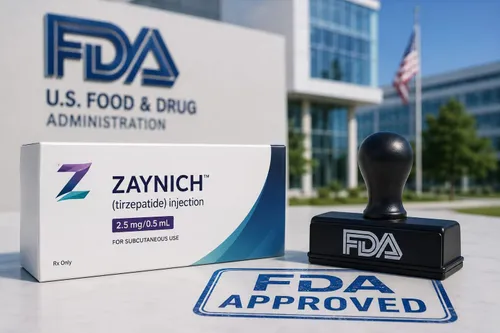
An AI-generated illustration depicting Zaynich's FDA approval.
Image: AI IMAGE
India’s reputation as the “Pharmacy of the World” has been significantly enhanced by the success of Zaynich, an indigenously developed breakthrough intravenous antibiotic designed to combat multidrug-resistant ''superbugs”.
In a landmark achievement, the Indian-manufactured drug has received approval from the US Food and Drug Administration (FDA), elevating India’s status from a leading producer of generic medicines to a global pharmaceutical innovator.
The breakthrough underscores not only India’s growing capabilities in complex research and development (R&D) but also its strength in intellectual property generation. Developed by pharmaceutical company, Wockhardt, Zaynich demonstrates the country’s ability to discover, develop and commercialise novel drugs.
By producing a new chemical entity capable of addressing the global health crisis posed by antimicrobial resistance, India’s biotechnology sector has established itself as a key player in tackling some of the world’s most pressing and unresolved medical challenges.
Although Zaynich’s primary indication is the treatment of complicated urinary tract infections (cUTIs), it has also been approved for several other serious and potentially fatal bacterial infections caused by multidrug-resistant pathogens. These include hospital-acquired bacterial pneumonia, ventilator-associated bacterial pneumonia, severe bloodstream infections and chronic soft-tissue infections.
The drug arrives at a critical time. In recent years, several multinational pharmaceutical companies, including Sanofi, Novartis and AstraZeneca, have scaled back or exited antibiotic research and development due to low commercial returns.
Zaynich therefore fills an important treatment gap while offering a potentially more affordable option than many existing therapies for complicated bacterial and urinary tract infections. Pricing in India is expected to be even more competitive because of the drug’s local origins, in line with the country’s long-standing commitment to making life-saving healthcare accessible and affordable.
In a departure from industry convention, Wockhardt plans to market Zaynich independently rather than through a partnership with a multinational pharmaceutical company. To support this strategy, the company is establishing its own business operations in the United States, while manufacturing will be undertaken by a third-party facility in Italy.
The global antibiotics market is estimated to be worth around $9 billion, and according to Wockhardt founder and chairperson Habil Khorakiwala, Zaynich has the potential to generate peak annual sales of approximately $1.5 billion.
The drug has already been approved by India’s Drug Controller General and Wockhardt has submitted a Marketing Authorisation Application (MAA) to the European Medicines Agency. The company intends to introduce Zaynich to African markets but it is not yet registered or approved for commercial use in South Africa.
However, South African patients may access the drug under special circumstances. A medical practitioner can apply for authorisation from the South African Health Products Regulatory Authority (SAHPRA) to import and administer the medicine for a specific patient when clinically justified.
The FDA approval of Zaynich marks a significant turning point for India’s pharmaceutical industry. Historically reliant on the production of low-margin generic medicines, the country now has direct access to lucrative, highly regulated markets such as the multi-billion-dollar US antibiotics sector. Yet Zaynich’s significance extends beyond commercial success or the enhancement of India’s scientific credentials.
The breakthrough offers renewed hope to patients worldwide battling life-threatening infections that are increasingly resistant to conventional treatments. In an era when antimicrobial resistance is recognised as one of the greatest threats to global health, that may prove to be its most important contribution.