KZN's water crisis: Municipalities fail to provide safe water
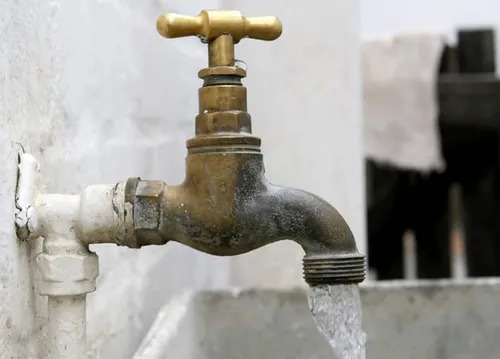
KwaZulu-Natal faces a severe water crisis, as 13 of its 14 municipalities struggle to supply safe and dependable water to residents.
Image: PickPik
KwaZulu-Natal is grappling with a significant water crisis, with a recent assessment highlighting the severity of the situation, revealing that 13 out of the province’s 14 water service authorities (WSAs) are struggling to deliver safe and reliable water to residents.
This was revealed during the provincial water summit held at the Durban ICC on Wednesday.
KZN Cooperative Governance and Traditional Affairs (Cogta) head of department Scelo Duma said the province has 14 municipalities that are water service authorities (WSA).
He said that a recent assessment by the Department of Water and Sanitation revealed that the municipalities performed poorly. Three of the municipalities fell under the critical category, four as poor, six as average and one as good.
Non-revenue water refers to the water that municipalities pay for but do not receive any revenue from. This category includes water losses resulting from leaks and pipe bursts, as well as water that is distributed free of charge to rural residents and low-income communities.
“That water is sitting at 60%. The amount of water that is produced in this province is huge,” Duma said.
He said that non-revenue water in uMkhanyakude in 2023/2024 was assessed to be at 97%. In other words, 97% of the water that uMkhanyakude produces does not bring revenue to the municipality, even though the municipality pays for it.
Duma said current estimates show eThekwini is losing about R1.8 billion per annum from non-revenue water, which sits at about 53%.
He said the main reasons for non-revenue water include ageing infrastructure, failure and absence of maintenance, inaccurate indigent registers, and illegal connections, among others.
Officials at the Durban ICC during the provincial water summit.
Image: Supplied
Duma said that in uMkhanyakude, there is a 41% lack of access to piped water, while it is only 3% in eThekwini.
“In other words, the citizens in eThekwini are more likely to have access to piped water than those in uMkhanyakude. The number that is the average is 16% if you look at the entire province,” Duma said.
He said that analysis revealed that of the 164 protests recorded in KZN between January 2025 and February 2026, the bulk of the protests were about water, with eThekwini as the hotspot.
Duma said the government is investing R10bn over two years. The amount is given to the 14 municipalities over two years, for water only.
Department of Water and Sanitation deputy director-general Dr Risimati Mathye said that, looking at the global water average nationally, KZN receives most of the rain, but at the same time, it is one of the provinces where people are thirsty.
He said that on average, most dam levels sit at 90%.
Mathye said the department has done the five-year reliability plan, which helps them assist WSAs in developing their own water and sanitation master plan so that they can lift up key strategic projects that should be implemented over the next couple of years.
“Give or take the current grants allocation, the projected investment in water and sanitation and all the bulk infrastructure projects, one could say that the projected investment in this province on water and sanitation is roughly around R55bn for the next five years,” Mathye said.
KZN Premier Thamsanqa Ntuli says investments in water infrastructure are crucial for ensuring a safe and reliable water supply in the province.
Image: Supplied
KZN Premier Thamsanqa Ntuli said the province has a water emergency. The water assessment meant that 13 out of 14 municipalities are failing to deliver safe, reliable water to their residents.
He said the non-water revenue or water losses percentage is quite high.
“Apart from the challenges of fiscal pressures, other challenges are caused by the lack of consequence management. Apart from the challenges of skills, other challenges are exaggerated by the lack of consequence management. People who are supposed to deliver, they do not deliver on time. If not, then they don’t deliver at all,” stated Ntuli.
He said that the challenges affecting water provision are complex and multifaceted. They require honest engagement, evidence-based planning, and cooperation across all spheres of government, state entities, the private sector, professional leadership, and local communities.
“The future of water security in KwaZulu-Natal and South Africa will depend on collective action. It will depend on the government investing in infrastructure, communities protecting water resources, businesses supporting sustainable water management, and all citizens embracing responsible water usage,” Ntuli said.
Related Topics: