‘The amabutho are back’: Abahlali warns of rising xenophobic violence
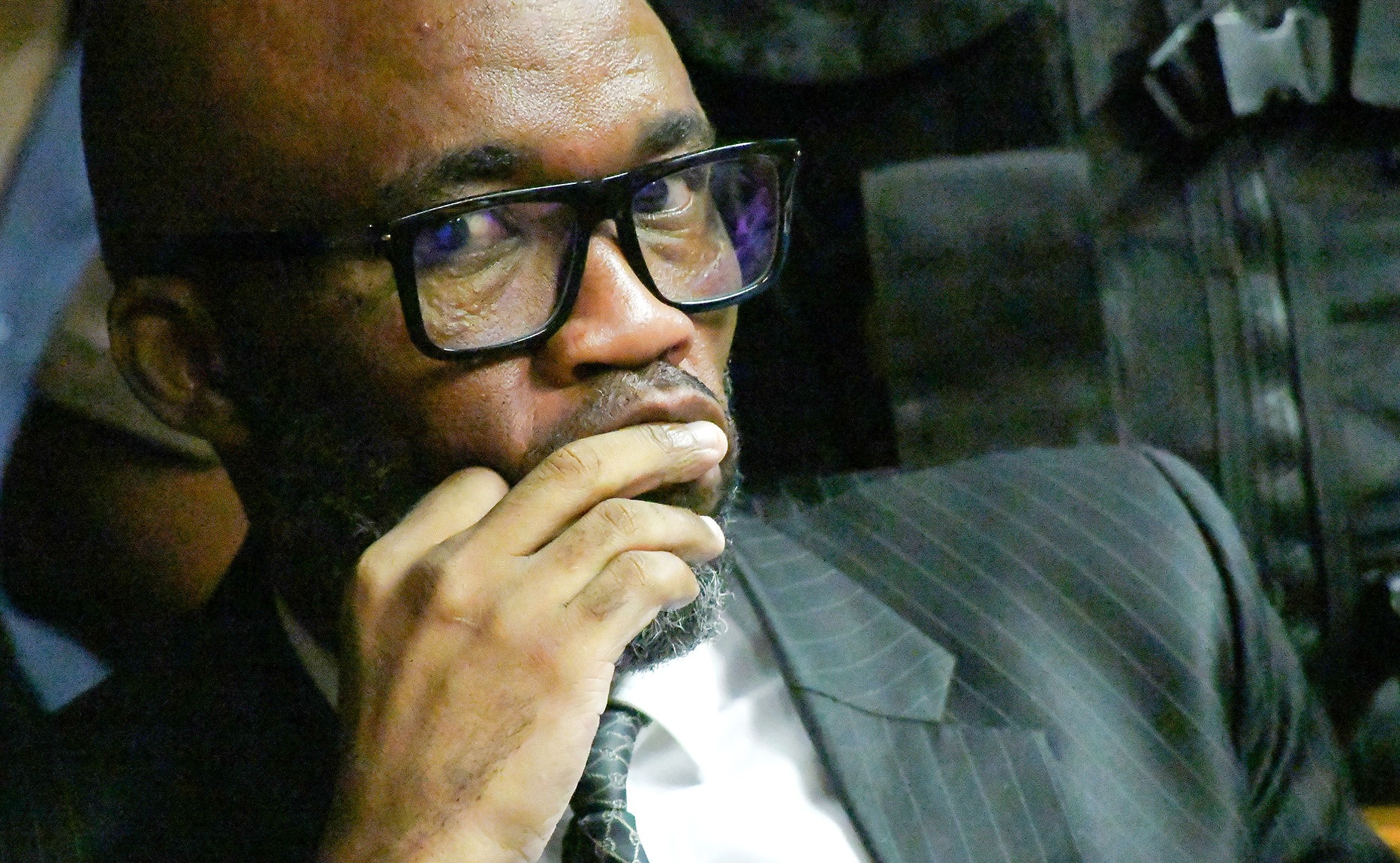
Abahlali baseMjondolo secretary-general Thapelo Mohapi has warned that growing anti-migrant mobilisation in KwaZulu-Natal risks escalating into broader ethnic violence, drawing parallels with the political conflicts that devastated parts of the province in the late 1980s and early 1990s.A
Image: upa Mokoena / African News Agency (ANA)
I grew up in Bhambayi in Inanda, to the north of Durban.
In 1993 more than two hundred people were killed in political violence between Inkatha and the ANC. In 1990, when I was eight, two friends of my father who were visiting from Lesotho were murdered. My brothers and I saw the bodies. In that same year my family moved me to Matatiele in the Eastern Cape so that I would not be forced into anti-ANC marches.
We were not told that the war between Inkatha and the ANC was about ideological differences. We were told that it was a war between amaZulu and amaXhosa. As Basotho my family lived under constant suspicion. That suspicion never fully went away. In 2015, my cousins from Matatiele were visiting me when the xenophobic attacks that would kill at least seven people and displace thousands began. The police banged on the door of my shack and demanded to see our IDs after hearing us speaking Sesotho. The ANC has often told amaMpondo in Durban that they must ‘go back to the Eastern Cape’.
Many of my comrades in Abahlali baseMjondolo carry the scars of this war that devastated places like Bhambayi, Amawoti and Lindelani, along with parts of Ntuzuma, KwaMashu.
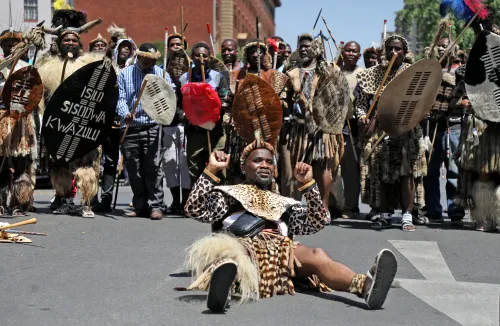
Those of us who lived through those times will not forget the killing, people having to flee their homes and the amabutho armed with pangas, sticks, spears and guns, some homemade from bits of pipe. We will not forget being told to hide under the bed by our parents as children were forced to join Inkatha actions.
That time was supposed to have passed and South Africa was supposed to belong to all who live in it. That goal was achieved in law but never fully in practice. But now the air is full of hate again, the amabutho have been called out of the hostels again, and there are armed men on the streets. Away from the TV cameras that focus on the xenophobic marches in the centre of Durban, and smaller towns like Estcourt, smaller groups of armed men are systematically driving people out of their homes, stealing their property and seizing their homes and businesses. This is happening across KwaZulu-Natal, and elsewhere in the country.
Once again people live in fear. Once again churches and halls have become refugee camps. In Durban four hundred refugees ended up sleeping out in the open on Che Guevara Road after being forced from their homes. More than a month later no attempt has been made to ensure that they can return to their homes in safety.
More than ten thousand migrants fled to the Sherwood Community Hall in Sydenham after being forced from their homes. Instead of defending them the state is carrying out the programme of the xenophobic mobs via mass deportation.
This is not about ‘illegal immigration’.
Documented people who were born in other countries are also being intimidated, beaten and driven from their homes. AmaTsonga and amaMpondo are also at risk. In fact the first person to be killed was a young Tsonga man in Mossel Bay.
We cannot accept the lies of the xenophobic parties and organisations when they say that they are only concerned with enforcing the law. They break the law all the time. They break the law when they demand documents, barricade schools and hospitals, beat people, force them from their homes and seize their property, homes and businesses. Documented people are regularly attacked.
This is about a dangerous form of right-wing politics, sometimes fascist in character, in which vulnerable people are scapegoated for an economic and social crisis created by elites. It is about political parties trying to build their support by targeting vulnerable people. It is about people from dominant ethnic groups trying to show their strength by dominating and sometimes terrorising people from minorities.
The attack on amaTsonga in Mossel Bay was not a mistake. It was a clear warning. First they will come for the migrants from Zimbabwe, Mozambique and Malawi. Next they will come for Xitsonga, Tshivenda, siSwati and isiNdebele speaking South Africans. They will come for those who are from Limpopo, Free State, Northern Cape and parts of the Eastern Cape. Ethnic violence always starts with the outsider and ends with the minority at home.
When a politics of scapegoating and attacking the ‘outsider’ starts it will always move on to new targets. When politicians build power on ‘us vs them’, the ‘us’ will always keep shrinking. Hindu fascism in India, the genocide in Rwanda, the wars in the Congo and ethnic politics in Kenya show us where this politics leads.
We must not be fooled. The poor person who came to Durban from Lusikisiki, Maputo or Harare looking for a better life did not steal our land, deny us housing, make us hungry or create an economy in which most young people will never find work.
It was colonialism and apartheid that made us poor. It was the ANC that kept us poor. It is the Government of National Unity that is trying to pass legislation that would criminalise the struggle for land and make it easier to evict us.
Our real enemies are the capitalists in the boardrooms who keep food prices high, the political gangsters that steal from public budgets, the GNU cabinet that wants to roll back the legal protections that were won after apartheid and all those who are bringing the amabutho back into the streets, driving xenophobic social media campaigns and refusing to act against the mobs driving people from their homes.
Driving out refugees, migrants and people from minority ethnicities will not give us land, jobs, peace, functioning institutions, houses, refuse collection or toilets. It will not restore our dignity. A person who feels powerful because they can be cruel to another person is a broken person, a dangerous person, not a person with dignity.
Xenophobia will only damage us as people and as a society. It will only pave the way to the elections in November with corpses. When a politics that turns us against our neighbours becomes normal we will never have peace. When the family from Malawi have been forced out the mob will move onto the family from Giyani or Bizana.
For as long as we blame our neighbours for our suffering we will never understand the true causes of our suffering or build the forms of political power that will enable us to overcome our suffering. We will keep electing corrupt politicians who will keep stealing from us as they get richer and we get poorer. Xenophobic politics is not just cruel. It is also stupid.
In this crisis many ordinary people are bravely protecting their neighbours. The progressive organisations of the working class and the poor are also holding a principled line. This includes the South African Federation of Trade Unions, led by Zwelinzima Vavi, and Abahlali baseMjondolo which was founded on ubuntu and the principle that every human life matters.
We do not organise against our neighbours based on nationality, language, or name. We organise to unite with our neighbours against poverty, evictions, and poor service delivery, and for land, housing and dignity for all. We organise ourselves to understand the real causes of our suffering and to build real forms of political power to overcome our suffering. We insist that a person is a person wherever they may find themselves. We insist that a neighbour is a neighbour and a comrade is a comrade wherever they come from.
The notion that if you cannot speak isiZulu you are not South African is wrong, divisive and dangerous. South Africa is a non-racial, and ethnically and linguistically diverse country with more than 22 languages and many ethnicities, all of which have equal rights according to our constitution.
We call on all progressive organisations, trade unions, churches, and every poor person in KwaZulu-Natal and across South Africa, to stand between the amabutho and the migrant, between the mob and the child, between lies and the truth.
The media has a responsibility to take the lives of the marginalised seriously, and to report on all forms of intimidation and violence. They should be editorially committed to the values of peace and justice, to the human rights protected in our constitution. But most media have been on the side of the anti-migrant marches. Some have praised those who lead the marches. Today when they see the crisis resulting from the forced displacement of many thousands of people they often act as if they do not know how this humanitarian crisis began.
In this crisis we must all verify information before we share it. We must defend each other. We must understand that whether we were born in South Africa or elsewhere, and whether we speak isiZulu, isiXhosa or Xitsonga we were all made poor by the same systems of colonialism, capitalism and corrupt nationalist parties. If you allow the panga to fall on the migrant from Malawi or the refugee from the Congo today it will fall on your brother from Giyani and your sister from Lusikisiki tomorrow. The same pangas will do the same work.
We cannot stand by while our humanity perishes. We cannot go back to the politics of ethnic nationalism and the wars between Inkatha and the United Democratic Front, and then the African National Congress, in the late 1980s and early 1990s. We cannot be terrorised by the amabutho again. We might have had to hide under our parents’ beds when we were children but now that we are grown men and women we must stand firm and do what is right. If we do not fight for ubuntu we will bury more children.
Unyawo Alunampumulo.
*** Thapelo Mohapi is the General-Secretary of Abahlali baseMjondolo.
** The views expressed here do not necessarily represent those of IOL.
IOL Opinion
1008490829__20251203__0 Abahlali baseMjondolo secretary-general Thapelo Mohapi has warned that growing anti-migrant mobilisation in KwaZulu-Natal risks escalating into broader ethnic violence, drawing parallels with the political conflicts that devastated parts of the province in the late 1980s and early 1990s.
Image: Tumi Pakkies Independent Newspapers