Manamela addresses misinformation on foreign academics in South Africa's higher education
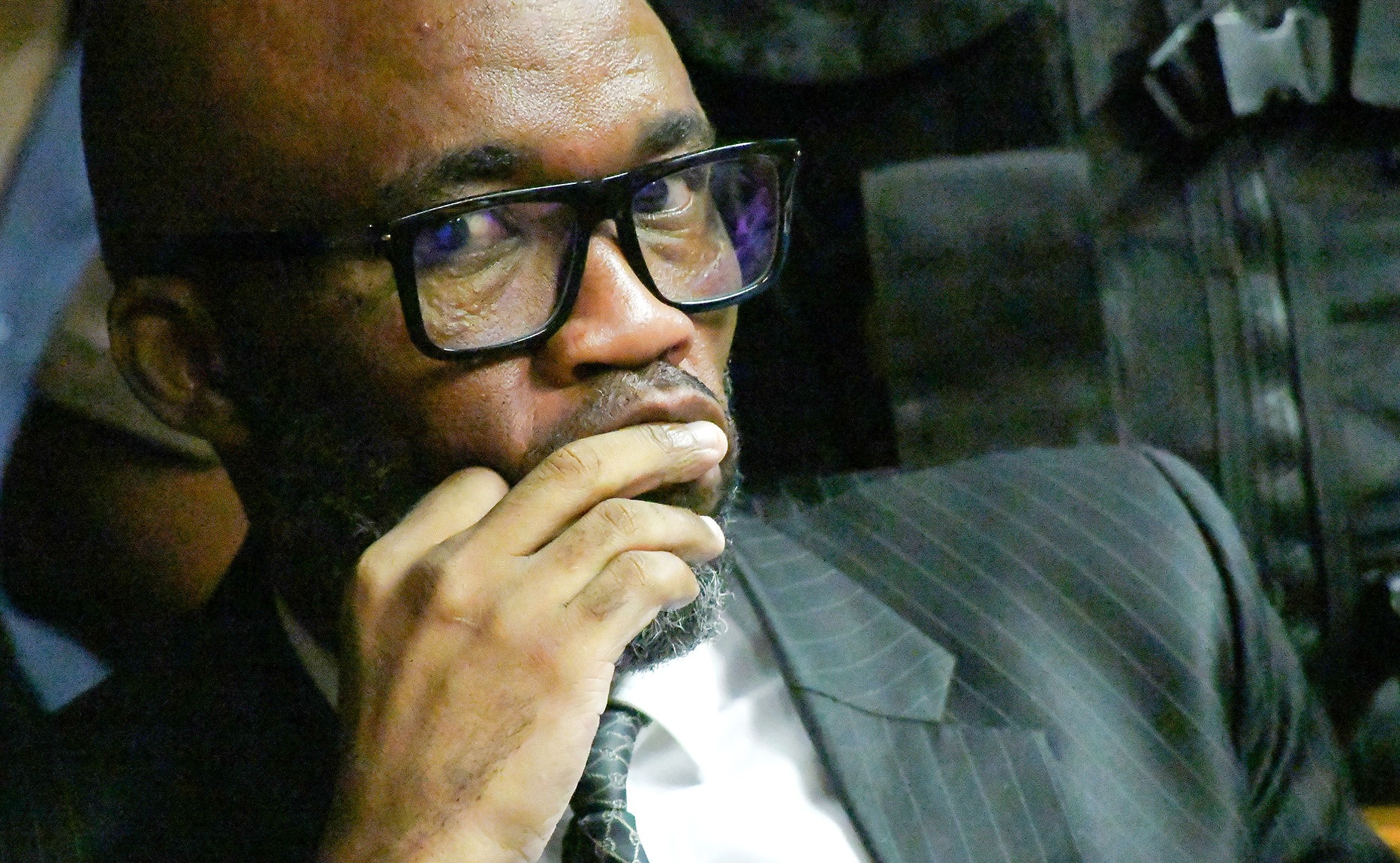
Higher Education and Training Minister Buti Manamela says South Africa must strengthen local academic capacity, while ensuring institutions comply with immigration and labour laws in the employment of foreign academics.
Image: Lilita Gcwabe
Higher Education and Training Minister Buti Manamela has warned against misinformation and vague claims in the debate over the employment of foreign academics in South Africa’s post-school education and training sector, saying institutions must comply with the law while the country strengthens its own academic pipeline.
Manamela appeared before Parliament’s Portfolio Committee on Higher Education and Training on Wednesday to brief MPs on updated figures on the employment of foreign academics across the Post-School Education and Training (PSET) sector.
The briefing followed a request from the committee for more detailed and disaggregated data on foreign nationals employed in higher education institutions.
According to Higher Education and Training spokesperson, Matshepo Seedat, the minister told the committee that the debate had become clouded by vague categories and misinformation, but stressed that the law governing the employment of foreign nationals was "not negotiable".
"There are legitimate concerns in this conversation, and we do not pretend otherwise. South Africans are entitled to expect that public institutions prioritise them for employment, that everyone who teaches does so lawfully, and that transformation is not quietly deferred," Manamela said.
"These are not xenophobic concerns, but we must be careful of the great deal of misinformation and disinformation that circulates around this debate."
Seedat said the minister presented what the department described as the most complete picture currently available across the university, Technical and Vocational Education and Training (TVET) college, and Community Education and Training (CET) sectors.
In the TVET sector, Manamela said there were 265 foreign academics in question, but that the majority, 158, were either naturalised South African citizens or permanent residents.
The remaining group consisted of non-citizens. The department said most of the academics provided critical, scarce skills and were permanently employed. Those in management positions had risen through the ranks of South Africa’s own colleges.
In the CET sector, 31 foreign nationals were employed across five colleges, mainly teaching Mathematics, Physical Sciences, and other scarce-skilled subjects. Seedat said many of the appointments predated the establishment of the sector and were inherited when adult education functions were moved to the national government in 2015.
In universities, the department said international academics were drawn overwhelmingly from the African continent and had a high concentration of doctoral qualifications. Many were concentrated in senior academic ranks, where research is led, and postgraduate students are supervised.
Manamela cautioned that the term "foreign nationals" should not be used as a blanket category.
"When we collapse the citizen, the permanent resident, the holder of a critical-skills visa, and the person on a temporary contract into a single category of suspicion, we are not analysing a policy problem, we are manufacturing a grievance," he said.
"A great many of those at the centre of this debate are South Africans. Our own law says they too must be prioritised for opportunity."
The minister said the genuine issues before the sector included compliance with immigration law, particularly where invalid work visas could create criminal exposure for institutional leadership, and the casualisation of academic work, where reliance on temporary contracts raised labour and transformation concerns.
Manamela said South Africa could not build a stronger local academy by simply removing foreign academics.
"Localisation cannot be achieved by subtraction. Localisation happens by building."
He pointed to programmes supported by the National Research Foundation and the Department of Science and Innovation, including the New Generation of Academics Programme, research chairs, centres of excellence, and postgraduate funding weighted toward South African citizens and permanent residents.
The minister said foreign academics with doctoral qualifications were currently helping to sustain the supervisory capacity needed to produce South African PhD graduates.
The department is also operationalising a joint task team with the Department of Home Affairs and Universities South Africa to clear the visa backlog and tighten compliance.
Manamela has appointed a 19-member advisory panel of internationalisation experts, drawn from all 26 public universities, to develop a standardised framework on approved visa pathways, skills-transfer obligations, and employment-equity expectations.
The framework is expected to be presented to stakeholders by the fourth quarter of 2026.
Universities will also be required to account for how they balance internationalisation with transformation in their annual performance plans.
Related Topics: